

Kirjahaku
Etsi kirjoja tekijän nimen, kirjan nimen tai ISBN:n perusteella.
1000 tulosta hakusanalla Andrew Power
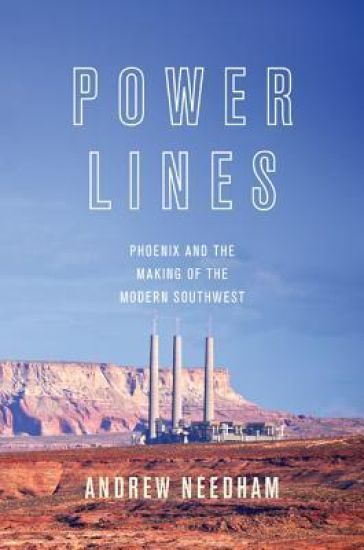
In 1940, Phoenix was a small, agricultural city of sixty-five thousand, and the Navajo Reservation was an open landscape of scattered sheepherders. Forty years later, Phoenix had blossomed into a metropolis of 1.5 million people and the territory of the Navajo Nation was home to two of the largest strip mines in the world. Five coal-burning power plants surrounded the reservation, generating electricity for export to Phoenix, Los Angeles, and other cities. Exploring the postwar developments of these two very different landscapes, Power Lines tells the story of the far-reaching environmental and social inequalities of metropolitan growth, and the roots of the contemporary coal-fueled climate change crisis. Andrew Needham explains how inexpensive electricity became a requirement for modern life in Phoenix--driving assembly lines and cooling the oppressive heat. Navajo officials initially hoped energy development would improve their lands too, but as ash piles marked their landscape, air pollution filled the skies, and almost half of Navajo households remained without electricity, many Navajos came to view power lines as a sign of their subordination in the Southwest. Drawing together urban, environmental, and American Indian history, Needham demonstrates how power lines created unequal connections between distant landscapes and how environmental changes associated with suburbanization reached far beyond the metropolitan frontier. Needham also offers a new account of postwar inequality, arguing that residents of the metropolitan periphery suffered similar patterns of marginalization as those faced in America's inner cities. Telling how coal from Indian lands became the fuel of modernity in the Southwest, Power Lines explores the dramatic effects that this energy system has had on the people and environment of the region.
In 1940, Phoenix was a small, agricultural city of sixty-five thousand, and the Navajo Reservation was an open landscape of scattered sheepherders. Forty years later, Phoenix had blossomed into a metropolis of 1.5 million people and the territory of the Navajo Nation was home to two of the largest strip mines in the world. Five coal-burning power plants surrounded the reservation, generating electricity for export to Phoenix, Los Angeles, and other cities. Exploring the postwar developments of these two very different landscapes, Power Lines tells the story of the far-reaching environmental and social inequalities of metropolitan growth, and the roots of the contemporary coal-fueled climate change crisis. Andrew Needham explains how inexpensive electricity became a requirement for modern life in Phoenix--driving assembly lines and cooling the oppressive heat. Navajo officials initially hoped energy development would improve their lands too, but as ash piles marked their landscape, air pollution filled the skies, and almost half of Navajo households remained without electricity, many Navajos came to view power lines as a sign of their subordination in the Southwest. Drawing together urban, environmental, and American Indian history, Needham demonstrates how power lines created unequal connections between distant landscapes and how environmental changes associated with suburbanization reached far beyond the metropolitan frontier. Needham also offers a new account of postwar inequality, arguing that residents of the metropolitan periphery suffered similar patterns of marginalization as those faced in America's inner cities. Telling how coal from Indian lands became the fuel of modernity in the Southwest, Power Lines explores the dramatic effects that this energy system has had on the people and environment of the region.
Founding Corporate Power in Early National Philadelphia
Andrew Schocket
Northern Illinois University Press
2007
sidottu
During its first heady decades, the United States promised to become a fully democratic society with unprecedented liberty and opportunity. Yet, as political rights spread, a rising elite gained control over the sources of prosperity by means of the institution that has since come to symbolize capitalist America—the corporation. In this study, Andrew M. Schocket analyzes the establishment, growth, and operations of both commercial and municipal corporations in the nation's premier city, Philadelphia. From the 1780s through the 1820s, members of Philadelphia's privileged class formed corporations in order to consolidate their capital and political influence. By controlling regional transportation networks as well as banks and the municipal water supply, they exploited the ambitions of local farmers, artisans, and entrepreneurs who depended upon corporate services. Meanwhile, corporate insiders managed to insulate their decision-making not only from the public but even from the majority of their own stockholders. In short, in this leading commercial city with a reputation for innovation, a corporate aristocracy created a new form of power. At the same time, corporations answered needs that private individuals or partnerships could not—and government, uncertain of its own authority, would not—supply. Resolving the apparent contradiction between the spread of political democracy and the consolidation of economic power, Schocket provocatively argues that corporations helped to generate the relatively diffuse prosperity of the early national period. Though controlled by the few, they offered services that allowed middle-class entrepreneurs to flourish. This mixed legacy has resulted in the continuing ambivalence toward U.S. corporations today.
In this classic exploration of the Scriptures, Andrew Murray leads the reader to a complete understanding of the significance and reality of the power of the shed blood of Christ.

Collected from the works of Andrew Murray, these passages offer daily nuggets of spiritual nourishment. Providing believers with the inspiration to grow closer to God, this 365-day devotional will show how to...Proclaim the gospel boldlyA

Power and Rhetoric in the Ecclesiastical Correspondence of Constantine the Great
Andrew J. Pottenger
TAYLOR FRANCIS LTD
2022
sidottu
This volume closely examines patterns of rhetoric in surviving correspondence by the Roman emperor Constantine on conflicts among Christians that occurred during his reign, primarily the ‘Donatist schism’ and ‘Arian controversy’.Commonly remembered as the ‘first Christian emperor’ of the Roman Empire, Constantine’s rule sealed a momentous alliance between church and state for more than a millennium. His well-known involvement with Christianity led him to engage with two major disputes that divided his Christian subjects: the ‘Donatist schism’ centred, from the emperor's perspective, on determining the rightful bishop of Carthage, and the so-called ‘Arian controversy’, a theological conflict about the proper understanding of the Son's divine nature in relation to that of the Father. This book examines a number of letters associated with Constantine that directly address both of these disagreements, exploring his point of view and motivations to better understand how and why this emperor applied his power to internal church divisions. Based on a close analysis of prominent themes and their functions in the rhetoric of his correspondence, Pottenger argues that three ‘doctrines of power’ served to inform and direct Constantine’s use of power as he engaged with these problems of schism and heresy.Power and Rhetoric in the Ecclesiastical Correspondence of Constantine the Great is of interest to students and scholars of early Christianity and the history of the later Roman Empire.
Power and Rhetoric in the Ecclesiastical Correspondence of Constantine the Great
Andrew J. Pottenger
TAYLOR FRANCIS LTD
2024
nidottu
This volume closely examines patterns of rhetoric in surviving correspondence by the Roman emperor Constantine on conflicts among Christians that occurred during his reign, primarily the ‘Donatist schism’ and ‘Arian controversy’.Commonly remembered as the ‘first Christian emperor’ of the Roman Empire, Constantine’s rule sealed a momentous alliance between church and state for more than a millennium. His well-known involvement with Christianity led him to engage with two major disputes that divided his Christian subjects: the ‘Donatist schism’ centred, from the emperor's perspective, on determining the rightful bishop of Carthage, and the so-called ‘Arian controversy’, a theological conflict about the proper understanding of the Son's divine nature in relation to that of the Father. This book examines a number of letters associated with Constantine that directly address both of these disagreements, exploring his point of view and motivations to better understand how and why this emperor applied his power to internal church divisions. Based on a close analysis of prominent themes and their functions in the rhetoric of his correspondence, Pottenger argues that three ‘doctrines of power’ served to inform and direct Constantine’s use of power as he engaged with these problems of schism and heresy.Power and Rhetoric in the Ecclesiastical Correspondence of Constantine the Great is of interest to students and scholars of early Christianity and the history of the later Roman Empire.
An arsenal of powerful questions that will transform every conversation Skillfully redefine problems. Make an immediate connection with anyone. Rapidly determine if a client is ready to buy. Access the deepest dreams of others. Power Questions sets out a series of strategic questions that will help you win new business and dramatically deepen your professional and personal relationships. The book showcases thirty-five riveting, real conversations with CEOs, billionaires, clients, colleagues, and friends. Each story illustrates the extraordinary power and impact of a thought-provoking, incisive power question. To help readers navigate a variety of professional challenges, over 200 additional, thought-provoking questions are also summarized at the end of the book. In Power Questions you’ll discover: The question that stopped an angry executive in his tracksThe sales question CEOs expect you to ask versus the questions they want you to askThe question that will radically refocus any meetingThe penetrating question that can transform a friend or colleague’s lifeA simple question that helped restore a marriage When you use power questions, you magnify your professional and personal influence, create intimate connections with others, and drive to the true heart of the issue every time.
The Relationship Laws that Drive Success There are powerful but invisible laws that determine whether your relationships —with your clients, colleagues, and friends—will thrive or wither. These relationship laws are ever-present. When you align with them, the results are dramatic. Your network will grow rapidly. You’ll be seen by clients as a trusted partner rather than an expense to be managed. And you’ll find the people around you eager to help you succeed. When you ignore the laws, however, your efforts will falter. Relationship building will seem like very hard work. Power Relationships gives readers a unique, entertaining guide to relationship success at work and in life. Each of the 26 laws is illustrated and explained using a compelling, real-life story that shows how to implement it. The second section of the book presents 16 common relationship challenges with specific solutions. You’ll read about: The top Citigroup executive whose relationship with a CEO was changed forever on a business trip that exploded into chaos, and how you can use the same principle to deepen your own relationships.The philanthropist who, on the verge of being mugged in a dark parking lot, learns how his actions have had an unimaginable ripple effect across several generationsHow one of the authors flew halfway around the world and used Law 18—“Make them curious”—to turn a make-or-break, five-minute meeting with a top executive into a long-term relationship. The chance encounter on an airplane with a famous actor that revealed a simple but profound truth. It’s Law 25: “Build your network before you need it.” Sobel (author of Clients for Life, All for One, and Power Questions (with Panas)) and Panas (author of Asking and Supremely Successful Selling) have sold over half a million books and are the leading authorities in their field. Power Relationships is a unique, road-tested guide to relationship success.

Structuring Economic Power for Stability Operations
Andrew Timothy Wallen
Biblioscholar
2012
pokkari
Structuring Economic Power for Stability Operations
Andrew Timothy Wallen
Biblioscholar
2012
pokkari
Power and Self-Consciousness in the Poetry of Shelley
Andrew J Welburn
Palgrave Macmillan
1986
nidottu
"Them things," said Alfred the chauffeur, tapping the speed indicator with his fingers, "them things are all right for the police. But, Lord, you can fix 'em up if you want to. Did you ever hear about Henery, that used to drive for old John Bull-about Henery and the elephant?"Alfred was chauffeur to a friend of mine who owned a very powerful car. Alfred was part of that car. Weirdly intelligent, of poor physique, he might have been any age from fifteen to eighty. His education had been somewhat hurried, but there was no doubt as to his mechanical ability. He took to a car like a young duck to water. He talked motor, thought motor, and would have accepted-I won't say with enthusiasm, for Alfred's motto was 'Nil admirari'-but without hesitation, an offer to drive in the greatest race in the world. He could drive really well, too; as for belief in himself, after six months' apprenticeship in a garage he was prepared to vivisect a six-cylinder engine with the confidence of a diplomaed bachelor of engineering.Barring a tendency to flash driving, and a delight in persecuting slow cars by driving just in front of them and letting them come up and enjoy his dust, and then shooting away again, he was a respectable member of society. When his boss was in the car he cloaked the natural ferocity of his instincts; but this day, with only myself on board, and a clear run of a hundred and twenty miles up to the station before him, he let her loose, confident that if any trouble occurred I would be held morally responsible.As we flew past a somnolent bush pub, Alfred, whistling softly, leant forward and turned on a little more oil."You never heard about Henery and the elephant?" he said. "It was dead funny. Henery was a bushwacker, but clean mad on motorin'. He was wood and water joey at some squatter's place until he seen a motor-car go past one day, the first that ever they had in the districk."'That's my game, ' says Henery; 'no more wood and water joey for me.'"So he comes to town and gets a job off Miles that had that garage at the back of Allison's. An old cove that they called John Bull-I don't know his right name, he was a fat old cove-he used to come there to hire cars, and Henery used to drive him. And this old John Bull he had lots of stuff, so at last he reckons he's going to get a car for himself, and he promises Henery a job to drive it. A queer cove this Henery was-half mad, I think, but the best hand with a car ever I see.

Three Elephant Power and Other Stories
Andrew Barton Paterson
Createspace Independent Publishing Platform
2014
nidottu