Kirjojen hintavertailu. Mukana 11 342 296 kirjaa ja 12 kauppaa.

Kirjahaku

Etsi kirjoja tekijän nimen, kirjan nimen tai ISBN:n perusteella.

1000 tulosta hakusanalla Ann Marie Ruby

Trinidad and Tobago and Guyana

Trinidad and Tobago and Guyana

Ann Marie Bissessar; John Gaffar La Guerre

Lexington Books
2013
sidottu
In this book an attempt is made to probe more carefully the processes by which social and ethnic problems, as these pertain to Caribbean countries, Trinidad and Tobago and Guyana, are conveyed to the political arena and the mechanisms by which they determine critical outcomes. The authors of this book have accordingly distinguished between predisposing factors and what are described as triggering mechanisms. The factors that trigger dramatic changes will differ between Guyana and Trinidad and Tobago. In short, while in some respects these societies are similar, in others, there are dramatic differences in their respective histories and political developments. This study begins with a survey of the literature on race relations and their connections with politics; it then proceeds to examine the context for the insertion of the two major groups into these societies, the emergence of ethnic groups, and their relationships with political organizations. The nature and politics of the leaders are then analyzed along with the political structures with a view to identifying what factors were responsible for the differing political experiences of both countries.

Fall on Your Knees

Fall on Your Knees

Ann-Marie MacDonald

Simon Schuster
2002
pokkari
The Piper family is steeped in secrets, lies, and unspoken truths. At the eye of the storm is one secret that threatens to shake their lives -- even destroy them. Set on stormy Cape Breton Island off Nova Scotia, Fall on Your Knees is an internationally acclaimed multigenerational saga that chronicles the lives of four unforgettable sisters. Theirs is a world filled with driving ambition, inescapable family bonds, and forbidden love. Compellingly written, by turns menacingly dark and hilariously funny, this is an epic tale of five generations of sin, guilt, and redemption.
Risky Trade

Risky Trade

Ann Marie Kimball

Ashgate Publishing Limited
2006
sidottu
The current value of global trade has reached a staggering annual figure of $6 trillion in merchandise crossing borders. Such prolific global trading has, at the same time, begun to raise fears of pandemics and concerns for global health. Yet, investment in public health infrastructure and disease control was never designed to cope with international trade of this volume and diversity. Indeed, most health systems lag far behind, especially in poor countries. This has created new vulnerabilities for global populations to the introduction and amplification of infection through trade. Public fears have been further heightened by frightening news reports of deadly diseases such as Mad Cow disease and E. Coli. Risky Trade: Infectious Disease in the Era of Global Trade provides a thorough examination of the actual risks posed by disease in the age of globalization. Drawing on the economics of international trade and epidemiology, the author explores the critical health issues arising from the enormous increase in global trade and travel. Issues covered include: ¢ The scale of the problem with particular reference to the Sakai outbreak of E. Coli; ¢ Risks from particular microbes - Enteric and viral infections; Highly infectious agents; Antimicrobial resistance; and, Stealth agents; ¢ Global outbreaks as a result of human travel and trade; ¢ Prevention, surveillance and control; ¢ The future health of global trading. In addition to highlighting the problems, the book also addresses some of the potential benefits the same globalization can bring to epidemic control through surveillance, diagnostics, treatment and investigation. The empirical approach ties together existing descriptions and case studies of epidemics building a comprehensive framework for examining new events and considering historical experience with infectious outbreaks. The volume will be a valuable guide to students, academics, practitioners, and policy makers in the areas of international trade, health economics, epidemiology, international/public health and disease control.
The Identity of Christian Morality

The Identity of Christian Morality

Ann Marie Mealey

Ashgate Publishing Limited
2009
sidottu
This book argues that moral theology has yet to embrace the recommendations of the Second Vatican Council concerning the ways in which it is to be renewed. One of the reasons for this is the lack of consensus between theologians regarding the nature, content and uniqueness of Christian morality. After highlighting the strengths and weaknesses of the so-called autonomy and faith ethic schools of thought, Mealey argues that there is little dividing them and that, in some instances, both schools are simply defending one aspect of a hermeneutical dialectic. In an attempt to move away from the divisions between proponents of the faith-ethic and autonomy positions, Mealey enlists the help of the hermeneutical theory of Paul Ricoeur. She argues that many of the disagreements arising from the Christian proprium debate can be overcome if scholars look to the possibilities opened up by Ricoeur's hermeneutics of interpretation. Mealey also argues that the uniqueness of Christian morality is more adequately explained in terms of a specific identity (self) that is constantly subject to change and revision in light of many, often conflicting, moral sources. She advocates a move away from attempts to explain the uniqueness of Christian morality in terms of one specific, unchanging context, motivation, norm, divine command or value. By embracing the possibilities opened up by Ricoeurian hermeneutics, Mealey explains how concepts such as revelation, tradition, orthodoxy and moral conscience may be understood in a hermeneutical way without being deemed sectarian or unorthodox.
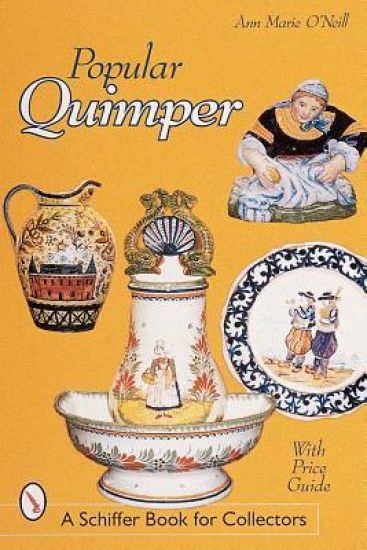
Popular Quimper

Popular Quimper

Ann Marie O'Neill

Schiffer Publishing Ltd
2000
nidottu
What better memento from a sojourn to France than a sweet piece of French fai**ence from the town of Quimper? Produced for over 300 years by several different factories in the region of Quimper, this popular ware is rich in Celtic charm and lavishly decorated with colors, scenes, and patterns that reflect the area's heritage. With over 320 color photos, this handy, pocket-sized guide is great for travel and presents a wonderful potpourri of wares from the Grande Maison HB, Eloury-Porquier, Henriot, Keraluc, and Fouillen fai**enceries. Illustrated and described are charming platters, plates, pitchers, bowls, bottles, tea and coffee pots, rare and unusual pieces, and much more. Includes historical background and information on regional traditions, identification of maker's marks, and up-to-date pricing.
Visual Intelligence

Visual Intelligence

Ann Marie Seward Barry

State University of New York Press
1997
pokkari
Cuts across perceptual psychology, art, television, film, literature, advertising, and political communication to give the reader critical insight into the holistic logic and emotional power of the images that dominate our lives.Today, our environment is dominated by the visual. This book explores "visual intelligence" as a basic and indispensable tool of cultural survival. The author offers a practical manual on a non-superficial level for those who seriously want to know how images are processed, how they function in relation to our innermost beings, and how they form the psychological fabric of our political, social, and economic environment. Barry defines how we derive meaning from images and examines perceptual process, how it has evolved, and the role it plays in our thinking. She critically examines the concept of rationality and explores how visual logic works to create meaning. The book goes behind the obvious and beyond the superficial as it critically examines the visual power and logic of images, cutting across a variety of areas: perceptual psychology, art, television, film, literature, advertising, and politics.The second section of Visual Intelligence examines the role which various media play in creating the images which impact our lives: how visual images create a language with profound psychological meaning, and how print, television, and film media manipulate images to create desired emotional effects. Close-ups explore visual subtleties in such areas as digital manipulation, camera attitudes, and contextual framing, as well as the social consequences of "image" as an abstract concept expressed in concrete visual terms. Part III looks critically at the most controversial areas of image persuasiveness today-advertising, politics, and entertainment.
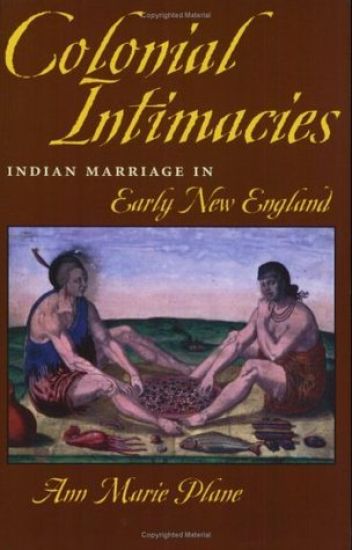
Colonial Intimacies

Colonial Intimacies

Ann Marie Plane

Cornell University Press
2002
pokkari
In 1668 Sarah Ahhaton, a married Native American woman of the Massachusetts Bay town of Punkapoag, confessed in an English court to having committed adultery. For this crime she was tried, found guilty, and publicly whipped and shamed; she contritely promised that if her life were spared, she would return to her husband and "continue faithfull to him during her life yea although hee should beat her againe...."These events, recorded in the court documents of colonial Massachusetts, may appear unexceptional; in fact, they reflect a rapidly changing world. Native American marital relations and domestic lives were anathema to English Christians: elite men frequently took more than one wife, while ordinary people could dissolve their marriages and take new partners with relative ease. Native marriage did not necessarily involve cohabitation, the formation of a new household, or mutual dependence for subsistence. Couples who wished to separate did so without social opprobrium, and when adultery occurred, the blame centered not on the "fallen" woman but on the interloping man. Over time, such practices changed, but the emergence of new types of "Indian marriage" enabled the legal, social, and cultural survival of New England's native peoples. The complex interplay between colonial power and native practice is treated with subtlety and wisdom in Colonial Intimacies. Ann Marie Plane uses travel narratives, missionary tracts, and legal records to reconstruct a previously neglected history. Plane's careful reading of fragmentary sources yields both conclusive and fittingly speculative findings, and her interpretations form an intimate picture, moving and often tragic, of the familial bonds of Native Americans in the first century and a half of European contact.
Dust Bowl Diary

Dust Bowl Diary

Ann Marie Low

University of Nebraska Press
1984
pokkari
"Life in what the newspapers call 'the Dust Bowl' is becoming a gritty nightmare," Ann Marie Low wrote in 1934. Her diary vividly captures that "gritty nightmare" as it was lived by one rural family—and by millions of other Americans. The books opens in 1927—"the last of the good years"—when Ann Marie is a teenager living with her parents, brother, and sister on a stock farm in southeastern North Dakota. We follow her family and friends, descendants of homesteaders, through the next ten years—a time of searing summer heat and desiccated fields, dying livestock, dust to the tops of fence posts and prices at rock bottom—a time when whole communities lost their homes and livelihoods to mortgages and, hardest of all, to government recovery programs. We also see the coming to maturity of the author in the face of economic hardship, frustrating family circumstances, and the stifling restrictions that society then placed on young women. Ann Marie Low's diary, supplemented with reminiscences, offers a rich, circumstantial view of rural life a half century ago: planting and threshing before the prevalence of gasoline-powered engines, washing with rain water and ironing with sadirons, hauling coal on sleds over snow-clogged roads, going to end-of-school picnics and country dances, and hoarding the egg and cream money for college. Here, too, is an iconoclastic on-the-scene account of how a federal work project, the construction of a wildlife refuge, actually operated. Many readers will recognize parts of their own past in Ann Marie Low's story; for others it will serve as a compelling record of the Dust Bowl experience.
Something to Talk About

Something to Talk About

Ann-Marie Cyr; Kellie M. Gillespie

Scarecrow Press
2006
nidottu
There are many books that provide advice and booktalks for adults who work with children and teens. However, Something to Talk About: Creative Booktalking for Adults is the first book to focus solely on adults. Working as Fiction Specialists in a public library, Ann-Marie Cyr and Kellie M. Gillespie have a combined total of 43 years of public library experience and have presented thousands of booktalks to children, teens, and adults, as well as a number of workshops and conference programs on how to create and present booktalks. This is an instruction manual and a material sourcebook in one. The first section provides step-by-step instructions on how to choose a book, write a booktalk, publicize, and present a program for adults. Chapters give information on the benefits of booktalking, explain what a booktalk is, and the difference between a booktalk and a book review. Other chapters discuss what makes a book appealing, how to tailor a program for a specific audience, and the different locations the reader could utilize to reach out to the community. Each booktalk provides bibliographic information on the title as well as a list of genres in which the book could be used. The last chapter in this section provides practical information on what to bring to the program, methods of publicity, checklists, and more. The second section provides nearly 90 sample booktalks in 11 different genres: Chillers, General Fiction, Historical Fiction, Humorous Fiction, Multicultural Fiction, Mysteries, Non Fiction, Romance, Science Fiction, Sea Adventures, and Women's Fiction. If you work with adults or are interested in reaching out to adults in your community, this is an ideal reference that provides practical information and a wide variety of booktalk samples to enhance your next program.
Dreams and the Invisible World in Colonial New England

Dreams and the Invisible World in Colonial New England

Ann Marie Plane

University of Pennsylvania Press
2014
sidottu
From angels to demonic specters, astonishing visions to devilish terrors, dreams inspired, challenged, and soothed the men and women of seventeenth-century New England. English colonists considered dreams to be fraught messages sent by nature, God, or the Devil; Indians of the region often welcomed dreams as events of tremendous significance. Whether the inspirational vision of an Indian sachem or the nightmare of a Boston magistrate, dreams were treated with respect and care by individuals and their communities. Dreams offered entry to "invisible worlds" that contained vital knowledge not accessible by other means and were viewed as an important source of guidance in the face of war, displacement, shifts in religious thought, and intercultural conflict. Using firsthand accounts of dreams as well as evolving social interpretations of them, Dreams and the Invisible World in Colonial New England explores these little-known aspects of colonial life as a key part of intercultural contact. With themes touching on race, gender, emotions, and interior life, this book reveals the nighttime visions of both colonists and Indians. Ann Marie Plane examines beliefs about faith, providence, power, and the unpredictability of daily life to interpret both the dreams themselves and the act of dream reporting. Through keen analysis of the spiritual and cosmological elements of the early modern world, Plane fills in a critical dimension of the emotional and psychological experience of colonialism.
Medieval Badges

Medieval Badges

Ann Marie Rasmussen

University of Pennsylvania Press
2021
sidottu
Mass-produced of tin-lead alloys and cheap to make and purchase, medieval badges were brooch-like objects displaying familiar images. Circulating widely throughout Europe in the High and late Middle Ages, badges were usually small, around four-by-four centimeters, though examples as tiny as two centimeters and a few as large as ten centimeters have been found. About 75 percent of surviving badges are closely associated with specific charismatic or holy sites, and when sewn or pinned onto clothing or a hat, they would have marked their wearers as having successfully completed a pilgrimage. Many others, however, were artifacts of secular life; some were political devices-a swan, a stag, a rose-that would have denoted membership in a civic organization or an elite family, and others-a garland, a pair of clasped hands, a crowned heart-that would have been tokens of love or friendship. A good number are enigmatic and even obscene. The popularity of badges seems to have grown steadily from the last decades of the twelfth century before waning at the very end of the fifteenth century. Some 20,000 badges survive today, though historians estimate that as many as two million were produced in the fourteenth and fifteenth centuries alone. Archaeologists and hobbyists alike continue to make new finds, often along muddy riverbanks in northern Europe. Interdisciplinary in approach, and sumptuously illustrated with more than 115 color and black-and-white images, Medieval Badges introduces badges in all their variety and uses. Ann Marie Rasmussen considers all medieval badges, whether they originated in religious or secular contexts, and highlights the different ways badges could confer meaning and identity on their wearers. Drawing on evidence from England, France, the Low Countries, Germany, and Scandinavia, this book provides information about the manufacture, preservation, and scholarly study of these artifacts. From chapters exploring badges and pilgrimage, to the complexities of the political use of badges, to the ways the visual meaning-making strategies of badges were especially well-suited to the unique features of medieval cities, this book offers an expansive introduction of these medieval objects for a wide readership.
Capturing Children's Meanings in Early Childhood Research and Practice
Capturing Children’s Meanings in Early Childhood Research and Practice draws together contemporary research and established theories to produce a unique take on the meanings children express through a range of creative tools. Drawing on Reggio Emilia and the Mosaic approach, this book provides readers with a range of strategies for accessing, recording and interpreting young children’s perceptions of and responses to their experiences. Providing a synthesis of the multiple imaginative ways we can capture young children’s meanings through observations, art, photo elicitation, mindfulness, music and other creative methods, Halpenny covers topics such as: Negotiating challenges presented by researching with children Frameworks for seeing and hearing children’s intentions Accurately documenting and interpreting research findings Promoting children’s meanings and their performance of them Moving forward with new understandingsThis book is an indispensable resource for students of early childhood education, especially for courses focusing on the lived experiences of children from early to middle childhood. It is also a useful reference for those working with young children in educational and caregiving settings, and for those advocating for young children.
Capturing Children's Meanings in Early Childhood Research and Practice
Capturing Children’s Meanings in Early Childhood Research and Practice draws together contemporary research and established theories to produce a unique take on the meanings children express through a range of creative tools. Drawing on Reggio Emilia and the Mosaic approach, this book provides readers with a range of strategies for accessing, recording and interpreting young children’s perceptions of and responses to their experiences. Providing a synthesis of the multiple imaginative ways we can capture young children’s meanings through observations, art, photo elicitation, mindfulness, music and other creative methods, Halpenny covers topics such as: Negotiating challenges presented by researching with children Frameworks for seeing and hearing children’s intentions Accurately documenting and interpreting research findings Promoting children’s meanings and their performance of them Moving forward with new understandingsThis book is an indispensable resource for students of early childhood education, especially for courses focusing on the lived experiences of children from early to middle childhood. It is also a useful reference for those working with young children in educational and caregiving settings, and for those advocating for young children.
Pathways to Prohibition

Pathways to Prohibition

Ann-Marie E. Szymanski

Duke University Press
2003
pokkari
Strategies for gradually effecting social change are often dismissed as too accommodating of the status quo. Ann-Marie E. Szymanski challenges this assumption, arguing that moderation is sometimes the most effective way to achieve change. Pathways to Prohibition examines the strategic choices of social movements by focusing on the fates of two temperance campaigns. The prohibitionists of the 1880s gained limited success, while their Progressive Era counterparts achieved a remarkable-albeit temporary-accomplishment in American politics: amending the United States Constitution. Szymanski accounts for these divergent outcomes by asserting that choice of strategy (how a social movement defines and pursues its goals) is a significant element in the success or failure of social movements, underappreciated until now. Her emphasis on strategy represents a sharp departure from approaches that prioritize political opportunity as the most consequential factor in campaigns for social change.Combining historical research with the insights of social movement theory, Pathways to Prohibition shows how a locally based, moderate strategy allowed the early-twentieth-century prohibition crusade both to develop a potent grassroots component and to transcend the limited scope of local politics. Szymanski describes how the prohibition movement’s strategic shift toward moderate goals after 1900 reflected the devolution of state legislatures’ liquor licensing power to localities, the judiciary’s growing acceptance of these local licensing regimes, and a collective belief that local electorates, rather than state legislatures, were best situated to resolve controversial issues like the liquor question. "Local gradualism" is well suited to the porous, federal structure of the American state, Szymanski contends, and it has been effectively used by a number of social movements, including the civil rights movement and the Christian right.
Pathways to Prohibition

Pathways to Prohibition

Ann-Marie E. Szymanski

Duke University Press
2003
sidottu
Strategies for gradually effecting social change are often dismissed as too accommodating of the status quo. Ann-Marie E. Szymanski challenges this assumption, arguing that moderation is sometimes the most effective way to achieve change. Pathways to Prohibition examines the strategic choices of social movements by focusing on the fates of two temperance campaigns. The prohibitionists of the 1880s gained limited success, while their Progressive Era counterparts achieved a remarkable-albeit temporary-accomplishment in American politics: amending the United States Constitution. Szymanski accounts for these divergent outcomes by asserting that choice of strategy (how a social movement defines and pursues its goals) is a significant element in the success or failure of social movements, underappreciated until now. Her emphasis on strategy represents a sharp departure from approaches that prioritize political opportunity as the most consequential factor in campaigns for social change.Combining historical research with the insights of social movement theory, Pathways to Prohibition shows how a locally based, moderate strategy allowed the early-twentieth-century prohibition crusade both to develop a potent grassroots component and to transcend the limited scope of local politics. Szymanski describes how the prohibition movement’s strategic shift toward moderate goals after 1900 reflected the devolution of state legislatures’ liquor licensing power to localities, the judiciary’s growing acceptance of these local licensing regimes, and a collective belief that local electorates, rather than state legislatures, were best situated to resolve controversial issues like the liquor question. "Local gradualism" is well suited to the porous, federal structure of the American state, Szymanski contends, and it has been effectively used by a number of social movements, including the civil rights movement and the Christian right.
Health, Safety, and Accident Management in the Chemical Process Industries
"Analyzes health and hazard risk assessment in commercial, industrial, and refining industries. Emphasizes legal requirements, emergency planning and response, safety equipment, process implementation, and occupational and environmental protection exposure guidelines. Presents applicatoins and calculations for risk analysis of real systems, as well as numerous end-of-chapter examples and references."
Ensuring Software Reliability

Ensuring Software Reliability

Ann Marie Neufelder

CRC Press Inc
1992
sidottu
Explains how software reliability can be applied to software programs of all sizes, functions and languages, and businesses. This text provides real-life examples from industries such as defence engineering, and finance. It is aimed at software and quality assurance engineers and graduate students.
Essential Trade

Essential Trade

Ann Marie Leshkowich

University of Hawai'i Press
2014
sidottu
“My husband doesn’t have a head for business,” complained Ngoc, the owner of a children’s clothing stall in B?n Thành market. “Naturally, it’s because he’s a man.” When the women who sell in Ho Chi Minh City’s iconic marketplace speak, their language suggests that activity in the market is shaped by timeless, essential truths: Vietnamese women are naturally adept at buying and selling, while men are not; Vietnamese prefer to do business with family members or through social contacts; stallholders are by nature superstitious; marketplace trading is by definition a small-scale enterprise.Essential Trade looks through the façade of these “timeless truths” and finds active participants in a political economy of appearances: traders’ words and actions conform to stereotypes of themselves as poor, weak women in order to clinch sales, manage creditors, and protect themselves from accusations of being greedy, corrupt, or “bourgeois” – even as they quietly slip into southern Vietnam’s growing middle class. But Leshkowich argues that we should not dismiss the traders’ self-disparaging words simply because of their essentialist logic. In B?n Thành market, performing certain styles of femininity, kinship relations, social networks, spirituality, and class allowed traders to portray themselves as particular kinds of people who had the capacity to act in volatile political and economic circumstances. When so much seems to be changing, a claim that certain things or people are inherently or naturally a particular way can be both personally meaningful and strategically advantageous.Based on ethnographic fieldwork and life history interviewing conducted over nearly two decades, Essential Trade explores how women cloth and clothing traders like Ng?c have plied their wares through four decades of political and economic transformation: civil war, post-war economic restructuring, socialist cooperativization, and the frenetic competition of market socialism. With close attention to daily activities and life narratives, this ground-breaking work of critical feminist economic anthropology combines theoretical insight, vivid ethnography, and moving personal stories to illuminate how the interaction between gender and class has shaped people’s lives and created market socialist political economy. It provides a compelling account of post-war southern Vietnam as seen through the eyes of the dynamic women who have navigated forty years of profound change while building their businesses in the stalls of B?n Thành market.