
Kirjahaku
Etsi kirjoja tekijän nimen, kirjan nimen tai ISBN:n perusteella.
1000 tulosta hakusanalla Arthur M. Saltzman
What happens when a practicing witch/astrologer (i.e., idolater) -- a former Lutheran minister -- suddenly meets Jesus? He learns a lot about Jesus in a hurry. This book is the second in a series of observations concerning commitment to Jesus and the state of the Christian religion today, flavored by flight from occultism and its fears and horrors, and written not to "instruct" but to share. It deals with topics as various as evolution, demons, and most importantly, the "born again" experience. It is unashamedly conservative in emphasis, as befits Christian commitment in the last days before the return of the Lord. The author's primary concern is that the meaning of Jesus' command, "You must be born again," must be understood once again for what it really means. The day of "interpreting" the Bible to make it say politically correct things is over; God will not tolerate that any longer. Maranatha! Come, Lord Jesus!

A Thousand Days: John F. Kennedy in the White House
Arthur M. Schlesinger
Mariner Books
2002
nidottu
An account of John F. Kennedy's campaign, election, and days as President.
The Politics of Upheaval, 1935-1936, volume three of Pulitzer Prize-winning historian and biographer Arthur M.Schlesinger, Jr.'s Age of Roosevelt series, concentrates on the turbulent concluding years of Franklin D.Roosevelt's first term. A measure of economic recovery revived political conflict and emboldened FDR's critics to denounce 'that man in the White house.' To his left were demagogues - Huey Long, Father Coughlin, and Dr.Townsend. To his right were the champions of the old order - ex-president Herbert Hoover, the American Liberty League, and the august Supreme Court.For a time, the New Deal seemed to lose its momentum. But in 1935 FDR rallied and produced a legislative record even more impressive than the Hundred Days of 1933 - a set of statutes that transformed the social and economic landscape of American life.In 1936 FDR coasted to reelection on a landslide.Schlesinger has his usual touch with colorful personalities and draws a warmly sympathetic portrait of Alf M.Landon, the Republican candidate of 1936.

From two-time Pulitzer Prize–winning historian Arthur M. Schlesinger, Jr., comes one of the most important and influential investigations of the American presidency. The Imperial Presidency traces the growth of presidential power over two centuries, from George Washington to George W. Bush, examining how it has both served and harmed the Constitution and what Americans can do about it in years to come. The book that gave the phrase “imperial presidency” to the language, this is a work of “substantial scholarship written with lucidity, charm, and wit” (The New Yorker).

All soccer formations: the ultimate guide to positioning
Arthur M. Mutebi
Arthur M Mutebi
2015
nidottu



Boston Capitalists and Western Railroads
Arthur M Johnson; Barry E Supple
Harvard University Press
1967
sidottu

Arthur M. Schlesinger (1888-1965) was one of America's most distinguished and influential historians. The basis of his conception of history, as he put it in a note found among his papers, is that "nothing stands still," The moral he drew from this was the need for "a liberal, flexible attitude" on the part of both the historian and the citizen. This volume, with an introduction by Arthur M. Schlesinger, Jr., brings together eleven of Professor Schlesinger's essays not previously collected in book form. Written between 1929 and 1965, they fall into two sections--"The Scholar," which includes essays dealing with historical questions, and "The Citizen," which includes those dealing with public affairs. Illustrating the wide range of Professor Schlesinger's professional and humane interests, these essays set forth some of his views on the nature of the historical enterprise and record his own involvement in and hopes for American democracy.

Petroleum Pipelines and Public Policy, 1906-1959
Arthur M Johnson
Harvard University Press
1967
sidottu
The Politics of Hope and The Bitter Heritage
Arthur M. Schlesinger; Sean Wilentz
Princeton University Press
2007
pokkari
The Politics of Hope and The Bitter Heritage brings together two important books that bracket the tempestuous politics of 1960s America. In The Politics of Hope, which historian Arthur Schlesinger, Jr., published in 1963 while serving as a special assistant to President Kennedy, Schlesinger defines the liberalism that characterized the Kennedy administration and the optimistic early Sixties. In lively and incisive essays, most of them written between 1956 and 1960, on topics such as the basic differences underlying liberal and conservative politics, the writing of history, and the experience of Communist countries, Schlesinger emphasizes the liberal thinker's responsibility to abide by goals rather than dogma, to learn from history, and to look to the future. Four years later, following Kennedy's assassination and the escalation of America's involvement in Vietnam, Schlesinger's tone changes. In The Bitter Heritage, a brief but penetrating appraisal of the "war that nobody wanted," he recounts America's entry into Vietnam, the history of the war, and its policy implications. The Bitter Heritage concludes with an eloquent and sobering assessment of the war's threat to American democracy and a reflection on the lessons or legacies of the Vietman conflict. With a new foreword by Sean Wilentz, the James Madison Library edition of The Politics of Hope and The Bitter Heritage situates liberalism in the convulsive 1960s--and illuminates the challenges that still face liberalism today.

The Origins of the Platonic Academy of Florence
Arthur M. Field
Princeton University Press
2014
pokkari
Founded by Cosimo de' Medici in the early 1460s, the Platonic Academy shaped the literary and artistic culture of Florence in the later Renaissance and influenced science, religion, art, and literature throughout Europe in the early modern period. This major study of the Academy's beginnings presents a fresh view of the intellectual and cultural life of Florence from the Peace of Lodi of 1454 to the death of Cosimo a decade later. Challenging commonly held assumptions about the period, Arthur Field insists that the Academy was not a hothouse plant, grown and kept alive by the Medici in the splendid isolation of their villas and courts. Rather, Florentine intellectuals seized on the Platonic truths and propagated them in the heart of Florence, creating for the Medici and other Florentines a new ideology. Based largely on new or neglected manuscript sources, this book includes discussions of the earliest works by the head of the Academy, Marsilio Ficino, and the first public, Platonizing lectures of the humanist and poet Cristoforo Landino. The author also examines the contributions both of religious orders and of the Byzantines to the Neoplatonic revival. Originally published in 1988. The Princeton Legacy Library uses the latest print-on-demand technology to again make available previously out-of-print books from the distinguished backlist of Princeton University Press. These editions preserve the original texts of these important books while presenting them in durable paperback and hardcover editions. The goal of the Princeton Legacy Library is to vastly increase access to the rich scholarly heritage found in the thousands of books published by Princeton University Press since its founding in 1905.

The Origins of the Platonic Academy of Florence
Arthur M. Field
Princeton University Press
2016
sidottu
Founded by Cosimo de' Medici in the early 1460s, the Platonic Academy shaped the literary and artistic culture of Florence in the later Renaissance and influenced science, religion, art, and literature throughout Europe in the early modern period. This major study of the Academy's beginnings presents a fresh view of the intellectual and cultural life of Florence from the Peace of Lodi of 1454 to the death of Cosimo a decade later. Challenging commonly held assumptions about the period, Arthur Field insists that the Academy was not a hothouse plant, grown and kept alive by the Medici in the splendid isolation of their villas and courts. Rather, Florentine intellectuals seized on the Platonic truths and propagated them in the heart of Florence, creating for the Medici and other Florentines a new ideology. Based largely on new or neglected manuscript sources, this book includes discussions of the earliest works by the head of the Academy, Marsilio Ficino, and the first public, Platonizing lectures of the humanist and poet Cristoforo Landino. The author also examines the contributions both of religious orders and of the Byzantines to the Neoplatonic revival. Originally published in 1988. The Princeton Legacy Library uses the latest print-on-demand technology to again make available previously out-of-print books from the distinguished backlist of Princeton University Press. These editions preserve the original texts of these important books while presenting them in durable paperback and hardcover editions. The goal of the Princeton Legacy Library is to vastly increase access to the rich scholarly heritage found in the thousands of books published by Princeton University Press since its founding in 1905.

The Constitution and the Conduct of American Foreign Policy
Arthur M. Schlesinger Jr
University Press of Kansas
1996
nidottu
Challenging ""business as usual"" in American foreign policy-making, this work argues that the president is not the supreme crafter of foreign policy and that Congress must provide more than a rubber stamp for the president's agenda.
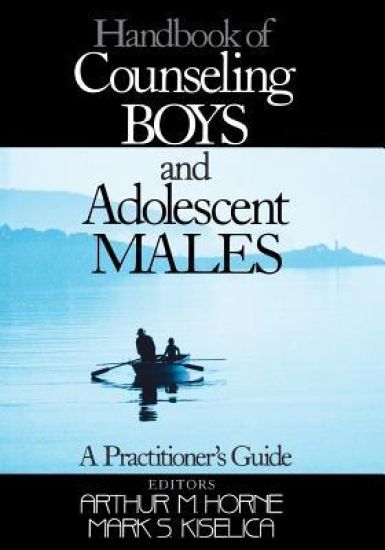
Handbook of Counseling Boys and Adolescent Males
Arthur M Horne; Mark S. Kiselica
SAGE Publications Inc
2000
sidottu
Arthur M. Horne and Mark S. Kiselica have gathered a large and impressive team of authorities from around the United States and New Zealand to produce a comprehensive volume on counseling boys. The contributing authors address a wide variety of developmental and cultural considerations pertaining to counseling boys, and they offer extremely useful recommendations for helping 11 special clinical populations of boys. I know of no other book on boys that is as broad in its scope or as practical in its approach as is this groundbreaking work.—Arnold A. Lazarus, Ph.D., ABPP,Distinguished Professor Emeritus of Psychology, Rutgers University "This wonderful volume represents the advancing developments of the field, is broad and comprehensive in scope, offers outstanding clinical and practical suggestions, and includes a veritable 'who's who' of counselors and psychologists among its contributors. Mental health professionals and graduate students will treasure this reference work." —Ronald F. Levant, Ed.D., ABPP, Dean, Center for Psychological Studies, Nova Southeastern University, Ft.Lauderdale, Florida "The Handbook of Counseling Boys and Adolescent Males fills a gap in the counseling field by providing counselors in schools and community agencies with information that will guide them in expanding their services to the males with whom they work. The developmental background is very helpful to counselors in expanding their understanding of the nature of problems boys' experience in growing up; the section on cultural considerations illustrates sensitivity to the varying racial, ethnic intervention, and treatment programs that may be used in schools and community agencies. This book will be an extremely helpful resource for counselors in their work with boys and adolescent males, it is highly recommended for all mental health practitioners." --Pamela Paisley, Ed.D The University of Georgia, President, Association of Counselor Education and Supervision "As we try to understand the violence that has rocked our schools, one common denominator stands out: The perpetrators are all young males. School counselors confirm that there are a lot of angry young men out there. Why are they so angry? What can we do to better understand them? How can we help? This book promises to be a 'must read' for all school counselors." —Nancy S. Perry, NCC, NCSC, American School Counselor Association "Arthur M. Horne and Mark S. Kiselica have produced a timely compendium which offers an exciting glimpse at important developments related to boys and men. This well thought out volume boldly ranges beyond conventional boundaries and will be a useful addition to the available literature on boys and men."--Don C. Locke, Ph.D., North Carolina State University The Handbook of Counseling Boys and Adolescent Males provides the reader with a context for understanding the developmental dilemmas experienced by male youth and how male development, both adaptive and maladaptive, is shaped by a complex interaction of biological, cultural, and economic forces. This book is organized into three parts. Part I provides the reader with an understanding of how the psychological, career, and athletic development of boys is shaped by a complex interaction of biological, social, cultural, and economic forces. Part II covers cultural considerations pertaining to counseling with African American, Asian American, Hispanic American, Native American, and White, Non-Hispanic boys. Part III addresses special populations of boys, including gay boys, teenage fathers, sexually abused boys, boy sexual offenders, developmentally disabled boys, shy and anxious boys, depressed boys, bullies, male youth gangs, and boy substance abusers.
Handbook of Counseling Boys and Adolescent Males
Arthur M Horne; Mark S. Kiselica
SAGE Publications Inc
2000
nidottu
Arthur M. Horne and Mark S. Kiselica have gathered a large and impressive team of authorities from around the United States and New Zealand to produce a comprehensive volume on counseling boys. The contributing authors address a wide variety of developmental and cultural considerations pertaining to counseling boys, and they offer extremely useful recommendations for helping 11 special clinical populations of boys. I know of no other book on boys that is as broad in its scope or as practical in its approach as is this groundbreaking work.—Arnold A. Lazarus, Ph.D., ABPP,Distinguished Professor Emeritus of Psychology, Rutgers University "This wonderful volume represents the advancing developments of the field, is broad and comprehensive in scope, offers outstanding clinical and practical suggestions, and includes a veritable 'who's who' of counselors and psychologists among its contributors. Mental health professionals and graduate students will treasure this reference work." —Ronald F. Levant, Ed.D., ABPP, Dean, Center for Psychological Studies, Nova Southeastern University, Ft.Lauderdale, Florida "The Handbook of Counseling Boys and Adolescent Males fills a gap in the counseling field by providing counselors in schools and community agencies with information that will guide them in expanding their services to the males with whom they work. The developmental background is very helpful to counselors in expanding their understanding of the nature of problems boys' experience in growing up; the section on cultural considerations illustrates sensitivity to the varying racial, ethnic intervention, and treatment programs that may be used in schools and community agencies. This book will be an extremely helpful resource for counselors in their work with boys and adolescent males, it is highly recommended for all mental health practitioners." --Pamela Paisley, Ed.D The University of Georgia, President, Association of Counselor Education and Supervision "As we try to understand the violence that has rocked our schools, one common denominator stands out: The perpetrators are all young males. School counselors confirm that there are a lot of angry young men out there. Why are they so angry? What can we do to better understand them? How can we help? This book promises to be a 'must read' for all school counselors." —Nancy S. Perry, NCC, NCSC, American School Counselor Association "Arthur M. Horne and Mark S. Kiselica have produced a timely compendium which offers an exciting glimpse at important developments related to boys and men. This well thought out volume boldly ranges beyond conventional boundaries and will be a useful addition to the available literature on boys and men."--Don C. Locke, Ph.D., North Carolina State University The Handbook of Counseling Boys and Adolescent Males provides the reader with a context for understanding the developmental dilemmas experienced by male youth and how male development, both adaptive and maladaptive, is shaped by a complex interaction of biological, cultural, and economic forces. This book is organized into three parts. Part I provides the reader with an understanding of how the psychological, career, and athletic development of boys is shaped by a complex interaction of biological, social, cultural, and economic forces. Part II covers cultural considerations pertaining to counseling with African American, Asian American, Hispanic American, Native American, and White, Non-Hispanic boys. Part III addresses special populations of boys, including gay boys, teenage fathers, sexually abused boys, boy sexual offenders, developmentally disabled boys, shy and anxious boys, depressed boys, bullies, male youth gangs, and boy substance abusers.


Struggle Between Science and Superstition (1915)
Arthur M. Lewis
KESSINGER PUBLISHING CO
2003
pokkari

Rover Boys in Camp or the Rivals of Pine Island
Arthur M. Winfield
KESSINGER PUBLISHING CO
2005
pokkari