
Kirjahaku
Etsi kirjoja tekijän nimen, kirjan nimen tai ISBN:n perusteella.
1000 tulosta hakusanalla Austin J. Stack

Purchase one of 1st World Library's Classic Books and help support our free internet library of downloadable eBooks. Visit us online at www.1stWorldLibrary.ORG - - The last day of October! said the Sun to himself, "the last day of my favorite month, and the birthday of my little namesake! See if I don't make the most of it!" So the Sun called to all the winds and all the breezes, who, poor things! had but just gone to bed after a terrible night's work, ordering them to get up directly, and sweep the sky as clear as a bell; and bid all the clouds, whether big white mountains, little pinky islands, sweeping mares'-tails, or freckled mackerel-back, to put themselves out of the way, and keep out of it until November; when, as the Sun remarked with a sigh, they would have it all their own way.
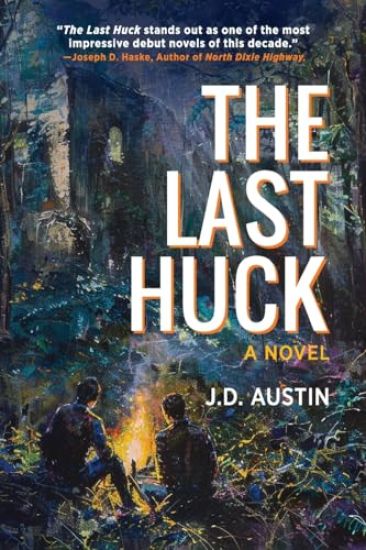
"The Last Huck stands out as one of the most impressive debut novels of this decade." --Joseph D. Haske, author of North Dixie HighwayJakob, Niklas and Peter Kinnunen grew up playing together on their family's berry farm on the Keweenaw Peninsula in Michigan's U.P. The three of them inherit the land when their beloved uncle passes away, but Jakob goes to prison and Peter, who goes broke during the 2008 financial crash, calls Niklas and suggests they sell the land for fast cash. Niklas fights back against Peter, but Peter convinces Niklas to take a trip up north, from their homes in Milwaukee, to visit the place and get closure. Haunted by their childhoods and the absence of their beloved Jakob, they spend the weekend drinking, fighting, reminiscing and trying to figure out whether or not to sell. Woven together with moments going back four generations, The Last Huck is the saga of a family ravaged by time and modernity, yet holding on to one another for dear life."...an honest, absorbing, and ultimately redemptive saga with the expansive reach of Steinbeck, the spare immediacy of Carver, and the relentless plot and slashing irony of Franzen. It reads at times like like a fairy tale and at times like a dispatch from the cultural front lines, where young men must navigate the roughness and tenderness required to be fully human in modern times." -- George F. Lewis, Daily Mining Gazette"In his first novel, J.D. Austin vividly captures the painful conflicts among the young men as they spend one last weekend in a place that were the scenes of their happiest childhood memories." --Jon C. Stott, author, Summers at the Lake: Upper Michigan Moments and Memories"We are a large country with many regional literatures. I find the analogy between the 19th-century regional novel and J.D. Austin's The Last Huck provocative and literate." -Donald M. Hassler, Professor Emeritus of English, Kent State University"The adventure that ensues not only immediately draws the reader in, but does so in a fashion that makes it virtually impossible to put the book down. It is always a joy for seasoned sojourners to witness young talent, such as J. D. Austin, blossom and flourish as we pass through this life." --Michael Carrier (MA NYU), author, Jack Handler Murder Mysteries / Hardboiled Thrillers"The Last Huck stands out as one of the most impressive debut novels of this decade. The characters, sardonic, clever, and intensely authentic, efficaciously propel Austin's masterful narrative through the backdrop of Michigan's Upper Peninsula like skate blades cutting Lake Superior ice in late winter. With this splendid, unforgettable, first effort, J.D. Austin proves himself a name to watch out for in American letters." --Joseph D. Haske, author of North Dixie HighwayJ.D. AUSTIN has resided in the Keweenaw since 2019. He has worked as a kayak guide, ski technician and stage carpenter, among other vocations. Austin's fiction has appeared in The Incandescent Review and U.P. Reader Vol. 7. The Last Huck is his first novel.
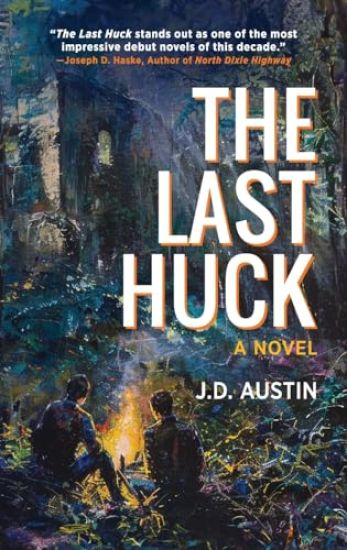
"The Last Huck stands out as one of the most impressive debut novels of this decade." --Joseph D. Haske, author of North Dixie HighwayJakob, Niklas and Peter Kinnunen grew up playing together on their family's berry farm on the Keweenaw Peninsula in Michigan's U.P. The three of them inherit the land when their beloved uncle passes away, but Jakob goes to prison and Peter, who goes broke during the 2008 financial crash, calls Niklas and suggests they sell the land for fast cash. Niklas fights back against Peter, but Peter convinces Niklas to take a trip up north, from their homes in Milwaukee, to visit the place and get closure. Haunted by their childhoods and the absence of their beloved Jakob, they spend the weekend drinking, fighting, reminiscing and trying to figure out whether or not to sell. Woven together with moments going back four generations, The Last Huck is the saga of a family ravaged by time and modernity, yet holding on to one another for dear life."...an honest, absorbing, and ultimately redemptive saga with the expansive reach of Steinbeck, the spare immediacy of Carver, and the relentless plot and slashing irony of Franzen. It reads at times like like a fairy tale and at times like a dispatch from the cultural front lines, where young men must navigate the roughness and tenderness required to be fully human in modern times." -- George F. Lewis, Daily Mining Gazette"In his first novel, J.D. Austin vividly captures the painful conflicts among the young men as they spend one last weekend in a place that were the scenes of their happiest childhood memories." --Jon C. Stott, author, Summers at the Lake: Upper Michigan Moments and Memories"We are a large country with many regional literatures. I find the analogy between the 19th-century regional novel and J.D. Austin's The Last Huck provocative and literate." -Donald M. Hassler, Professor Emeritus of English, Kent State University"The adventure that ensues not only immediately draws the reader in, but does so in a fashion that makes it virtually impossible to put the book down. It is always a joy for seasoned sojourners to witness young talent, such as J. D. Austin, blossom and flourish as we pass through this life." --Michael Carrier (MA NYU), author, Jack Handler Murder Mysteries / Hardboiled Thrillers"The Last Huck stands out as one of the most impressive debut novels of this decade. The characters, sardonic, clever, and intensely authentic, efficaciously propel Austin's masterful narrative through the backdrop of Michigan's Upper Peninsula like skate blades cutting Lake Superior ice in late winter. With this splendid, unforgettable, first effort, J.D. Austin proves himself a name to watch out for in American letters." --Joseph D. Haske, author of North Dixie HighwayJ.D. AUSTIN has resided in the Keweenaw since 2019. He has worked as a kayak guide, ski technician and stage carpenter, among other vocations. Austin's fiction has appeared in The Incandescent Review and U.P. Reader Vol. 7. The Last Huck is his first novel.From Modern History Press -- ModernHistoryPress.com
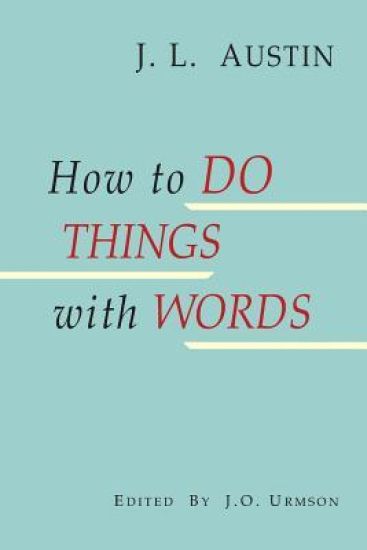
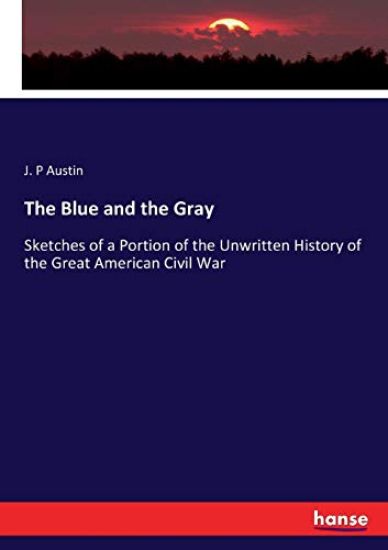
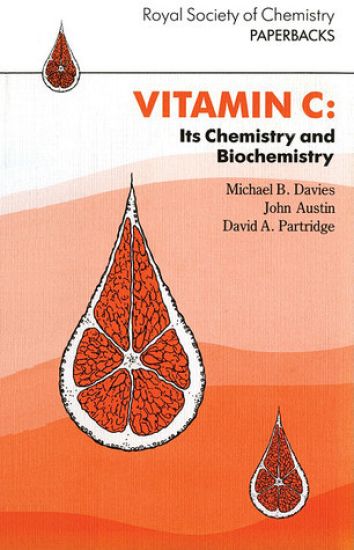
Vitamin C is the first book to cover the history, chemistry, biochemistry, and medical importance of vitamin C and is the first to provide an in-depth, interdisciplinary study of this essential and fascinating compound. The book provides a comprehensive and systematic account of the vitamin C story, fully surveying the history of scurvy and how its cure led to the suggestion, discovery, and isolation of the vitamin, later named L-ascorbic acid. It describes in detail the vitamin's structure determination, synthesis and manufacture, and its oxidation products, derivatives and related compounds. Its key biochemical roles are fully categorized and explained, and the medical importance of the vitamin, including the recent use of so-called megadoses, is thoroughly discussed. Vitamin C will be of interest to a very wide readership and will provide useful background information and inspiration for students at various levels. It will also be relevant to the interested chemist or lay person, as well as those carrying out research in this area.
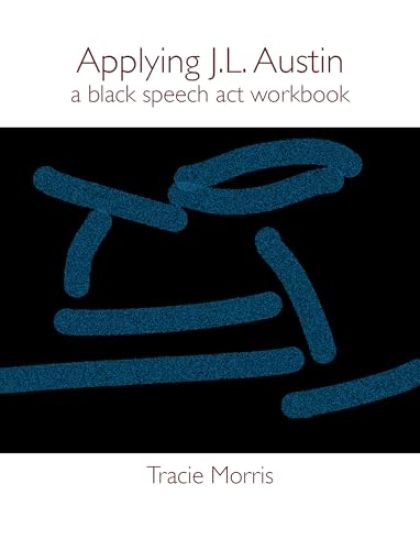

In investigating the relationship between accusation and excuse, this study uncovers something about the criminal law's peculiar way of interpreting human action. Identifying that something can move us a little closer to discovery or agreement and just what it is that is staked in criminal law. What is staked in any discussion of criminal law is the meaning and operation of 'responsibility,' which makes human action and its consequences so tragic. The author confronts the idea of responsibility by mapping the work of J. L. Austin onto the criminal law. Doing so entails considering the extent to which the language of criminal law can be reconciled with ordinary language, a project that entails considering whether the language of criminal law is ordinary language. This method of philosophizing attempts to get a sharpened perception of the world by seeking to understand why we speak as we do in specific speech situations. Ordinary-language philosophy presupposes that to attain knowledge of our language is to attain knowledge of whatever
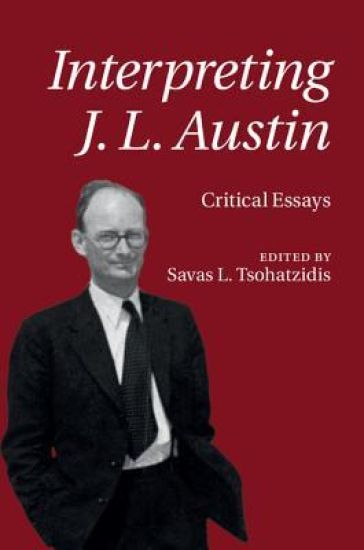
Interpreting J. L. Austin
Cambridge University Press
2017
sidottu
In this volume, Savas L. Tsohatzidis brings together a team of leading experts to provide up-to-date perspectives on the work of J. L. Austin, a major figure in twentieth-century philosophy and an important contributor to theories of language, truth, perception, and knowledge. Focusing on aspects of Austin's writings in these four areas, the volume's ten original essays critically examine central elements of his philosophy, exploring their interrelationships, their historical context, their reception, and their implications for key issues of contemporary philosophical research. The volume deepens our understanding of Austin's philosophy while illustrating its continuing significance, and will appeal to students and scholars of modern philosophy, particularly those interested in the philosophy of language and epistemology.
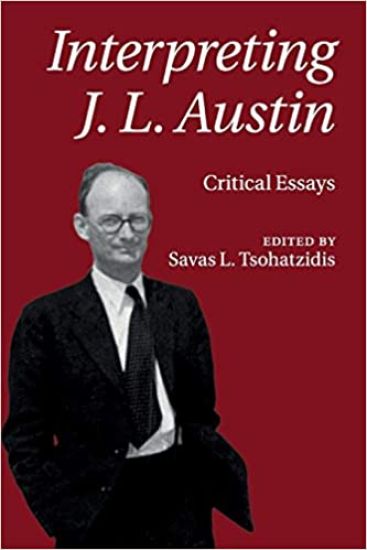
Interpreting J. L. Austin
Cambridge University Press
2019
pokkari
In this volume, Savas L. Tsohatzidis brings together a team of leading experts to provide up-to-date perspectives on the work of J. L. Austin, a major figure in twentieth-century philosophy and an important contributor to theories of language, truth, perception, and knowledge. Focusing on aspects of Austin's writings in these four areas, the volume's ten original essays critically examine central elements of his philosophy, exploring their interrelationships, their historical context, their reception, and their implications for key issues of contemporary philosophical research. The volume deepens our understanding of Austin's philosophy while illustrating its continuing significance, and will appeal to students and scholars of modern philosophy, particularly those interested in the philosophy of language and epistemology.

The first biography of the philosopher who became a mastermind of Allied intelligence in World War Two. Austere, witty, and formidable, J. L. Austin (1911-1960) was the leader of Oxford Ordinary Language Philosophy and the founder of speech-act theory. This book--the first full-length biography of Austin--enhances our understanding of his dominance in 1950s Oxford, examining the significance of his famous Saturday morning seminars, and his sometimes tense relationships with Gilbert Ryle, Isaiah Berlin, A. J. Ayer, and Elizabeth Anscombe. Throwing new light on Austin's own intellectual development, it probes the strengths and weaknesses of his mature philosophy, and reconstructs his late unpublished work on sound symbolism. Austin's philosophical work remains highly influential, but much less well known is his outstanding contribution to British Intelligence in World War Two. The twelve central chapters thus investigate Austin's part in the North African campaign, the search for the V-weapons, the preparations for D-Day, the Battle of Arnhem, and the Ardennes Offensive, and show that, in the case of D-Day, he played a major role in the ultimate Allied victory. While exploring Austin's dramatic and romantic personal history, Rowe pays close attention to his harsh schooling and pre-war affair with a married Frenchwoman; his wartime marriage, bomb injury, and response to a colleague's murder; and his post-war family life, the growing influence of America, and his tragically premature death. Adding considerably to our knowledge of World War Two, and Austin's diverse and enduring influence, this biography reveals the true complexity of his character, and the full range and significance of his achievements.
J. L. Austin (1911-1960) exercised in Post-war Oxford an intellectual authority similar to that of Wittgenstein in Cambridge. Although he completed no books of his own and published only seven papers, Austin became through lectures and talks one of the acknowledged leaders in what is called ‘Oxford philosophy’ or ‘ordinary language philosophy’. Few would dispute that among analytic philosophers Austin stands out as a great and original philosophical genius. Three volumes of his writing, published after his death, have become classics in analytical philosophy: Philosophical Papers; Sense and Sensibilia; and How to Do Things with Words.First published in 1969, this book is a collection of critical essays on Austin’s philosophy written by well-known philosophers, many of whom knew Austin personally. A number of essays included were especially written for this volume, but the majority have appeared previously in various journals or books, not all easy to obtain.
JL Austin (1911-1960) exercised in Post-war Oxford an intellectual authority similar to that of Wittgenstein in Cambridge. Although he completed no books of his own and published only seven papers, Austin became through lectures and talks one of the acknowledged leaders in what is called ‘Oxford philosophy’ or ‘ordinary language philosophy’. Few would dispute that among analytic philosophers Austin stands out as a great and original philosophical genius. Three volumes of his writing, published after his death, have become classics in analytical philosophy: Philosophical Papers; Sense and Sensibilia; and How to Do Things with Words.First published in 1979, this book is a collection of critical essays on Austin’s philosophy written by well-known philosophers, many of whom knew Austin personally. A number of essays included were especially written for this volume, but the majority have appeared previously in various journals or books, not all easy to obtain.