Kirjojen hintavertailu. Mukana 12 390 323 kirjaa ja 12 kauppaa.

Kirjahaku

Etsi kirjoja tekijän nimen, kirjan nimen tai ISBN:n perusteella.

1000 tulosta hakusanalla Barbara Raue

Simcoe Ontario in Colour Photos: Saving Our History One Photo at a Time

Simcoe Ontario in Colour Photos: Saving Our History One Photo at a Time

Barbara Raue

On Demand Publishing, LLC-Create Space
2014
nidottu
Simcoe is a town in Southwestern Ontario located near Lake Erie at the junction of Highways 3 and 24, south of Brantford. From Hamilton take Highway 6 to Simcoe.Simcoe was founded in 1795 by Lieutenant-Governor John Graves Simcoe. He gave a grant to Aaron Culver, one of the earliest settlers, with the condition that he was to build mills. In 1801 he built a saw mill and a few years later added a grist mill. The combined operation known as Union Mill was instrumental in the development of Simcoe. By 1812 a hamlet had grown up around the mills. The mills were burnt and the adjacent houses looted by U.S. troops in 1814. In 1819-23, Culver laid out a village which he called Simcoe. The mill was rebuilt by Duncan Campbell around 1825. By the 1870s, Nathan Ford operated a large flour mill, grain elevator and distillery on this site. The last water-powered mill on this site ceased operations in 1928.The book includes a few pictures taken in Colborne, Ontario.
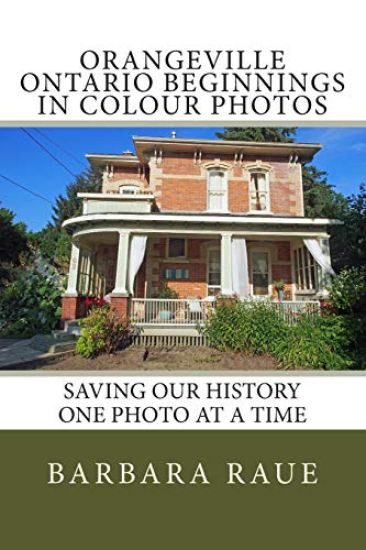
Orangeville Ontario Beginnings in Colour Photos: Saving Our History One Photo at a Time
John Corbit acquired land in the area in 1829 and is one of the earliest settlers. Spring Brook (also called Mill Creek), a tributary of the Credit River, provided water for power for several mills located downstream. Seneca Ketchum and George Grigg arrived soon after. By 1844 when Orange Lawrence and his wife Sarah arrived from Connecticut, a well-established community called Grigg's Mill existed beside Mill Creek.Orange Lawrence helped to develop the community, laying out the southeast part of town; he opened a general store and a tavern, built a second mill, founded the first school, and became the village's first postmaster in 1847. He left a strong mark on the community which took the appropriate name of Orangeville.Immigrants from Ireland and other parts of the British Isles and Canada West came throughout the 1840s and 1850s with some establishing successful mixed farms while others settled in the village and became the landowners, merchants, and tradesmen whose needs led to the development of good transportation routes. By the 1860s it was increasingly difficult to deliver and receive goods to and from the supply centres in the south with gravel roads that were difficult to traverse by horse and wagon for much of the year. Winter was the season when most goods were transported by sleigh over frozen roads.By 1871 two daily stage lines were operating between Orangeville and Brampton, and that year the Toronto, Grey and Bruce Railway reached Orangeville, thanks to the efforts of the town fathers such as Jesse Ketchum Jr., Samuel and Robert McKitrick, Johnston Lindsey, Thomas Jull, John Foley, and R. William Armstrong.By 1875 there was a foundry, three planning mills, two saw mills, a tannery, a carding mill, several carriage and wagon manufacturers, and a successful pottery business in operation, along with four grocers, three hardware merchants, two drugstores, three watchmakers, three bakeries, and three establishment proving boots and shoes.It was the foresight of Orange Lawrence and Jesse Ketchum that had large sections of land on either side of the main street laid out for both commercial and residential building lots. The south side followed Mill creek while a regular grid pattern was determined for the streets on the north side from first to Fifty Streets both east and west and north to Fifth Avenue, with a wide main street called Broadway. This 30-metre (100-foot) avenue was not typical of Ontario towns of the time but has proven to be very valuable over the years. In 1875 the Town Hall was construction, and in 1887 the first telephone exchange was established.Orangeville is proud of its roots and seeks to preserve its heritage. With two of our children and five grandchildren living in Orangeville, we often make the trek to the town. I have walked and driven the streets of Orangeville discovering its beauty. There are hundreds of old buildings which have retained their 1800s architectural styles and character. The pictures are divided into four books with colour photos. The first book covers the beginnings of Orangeville with colour pictures from the south side of town. The second book covers buildings on Broadway. Two more books will follow. An appendix is included to describe architectural styles and terms which are referred to throughout the book. The second book covers buildings to the north of the town, as well as pictures taken in surrounding villages of Laurel, Caledon Village and Mono Centre.
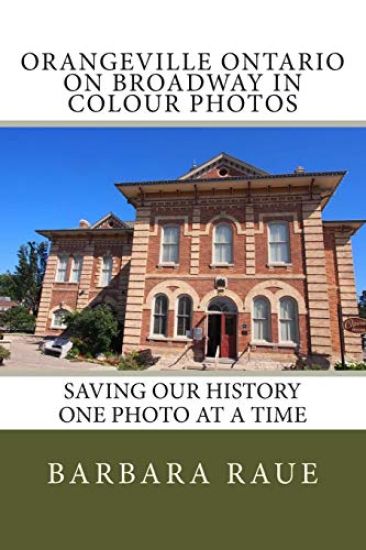
Orangeville Ontario on Broadway in Colour Photos: Saving Our History One Photo at a Time
John Corbit acquired land in the area in 1829 and is one of the earliest settlers. Spring Brook (also called Mill Creek), a tributary of the Credit River, provided water for power for several mills located downstream. Seneca Ketchum and George Grigg arrived soon after. By 1844 when Orange Lawrence and his wife Sarah arrived from Connecticut, a well-established community called Grigg's Mill existed beside Mill Creek.Orange Lawrence helped to develop the community, laying out the southeast part of town; he opened a general store and a tavern, built a second mill, founded the first school, and became the village's first postmaster in 1847. He left a strong mark on the community which took the appropriate name of Orangeville.Immigrants from Ireland and other parts of the British Isles and Canada West came throughout the 1840s and 1850s with some establishing successful mixed farms while others settled in the village and became the landowners, merchants, and tradesmen whose needs led to the development of good transportation routes. By the 1860s it was increasingly difficult to deliver and receive goods to and from the supply centres in the south with gravel roads that were difficult to traverse by horse and wagon for much of the year. Winter was the season when most goods were transported by sleigh over frozen roads.By 1871 two daily stage lines were operating between Orangeville and Brampton, and that year the Toronto, Grey and Bruce Railway reached Orangeville, thanks to the efforts of the town fathers such as Jesse Ketchum Jr., Samuel and Robert McKitrick, Johnston Lindsey, Thomas Jull, John Foley, and R. William Armstrong.By 1875 there was a foundry, three planning mills, two saw mills, a tannery, a carding mill, several carriage and wagon manufacturers, and a successful pottery business in operation, along with four grocers, three hardware merchants, two drugstores, three watchmakers, three bakeries, and three establishment proving boots and shoes.It was the foresight of Orange Lawrence and Jesse Ketchum that had large sections of land on either side of the main street laid out for both commercial and residential building lots. The south side followed Mill creek while a regular grid pattern was determined for the streets on the north side from first to Fifty Streets both east and west and north to Fifth Avenue, with a wide main street called Broadway. This 30-metre (100-foot) avenue was not typical of Ontario towns of the time but has proven to be very valuable over the years. In 1875 the Town Hall was construction, and in 1887 the first telephone exchange was established.Orangeville is proud of its roots and seeks to preserve its heritage. With two of our children and five grandchildren living in Orangeville, we often make the trek to the town. I have walked and driven the streets of Orangeville discovering its beauty. There are hundreds of old buildings which have retained their 1800s architectural styles and character. The pictures are divided into four books with colour photos. The first book covers the beginnings of Orangeville with colour pictures from the south side of town. The second book covers buildings on Broadway. Two more books will follow. An appendix is included to describe architectural styles and terms which are referred to throughout the book. The second book covers buildings to the north of the town, as well as pictures taken in surrounding villages of Laurel, Caledon Village and Mono Centre.
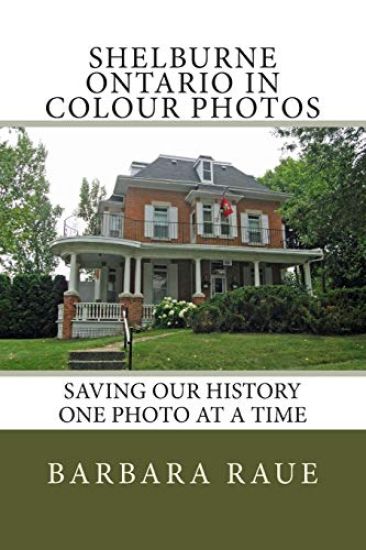
Shelburne Ontario in Colour Photos: Saving Our History One Photo at a Time

Shelburne Ontario in Colour Photos: Saving Our History One Photo at a Time

Barbara Raue

Createspace Independent Publishing Platform
2014
nidottu
Settlement of Melancthon Township began in the late 1840s at the time of the construction of the Toronto-Sydenham Road. By the 1860s settlers had moved into the Shelburne area and in 1865 William Jelly, one of the community's earliest inhabitants, opened the British Canadian Hotel commonly known as Jelly's Tavern. Within a year, the settlement included a post office named Shelburne, after the Earl of Shelburne of Ireland. In 1872, William and his brother John surveyed a village plot in anticipation of the arrival of the Toronto, Grey and Bruce Railway. Rapid economic growth followed.Shelburne is a town in Dufferin County, Ontario located at the intersection of Highway 10 and Highway 89. Shelburne is best known for the Annual Canadian Championship Fiddling Contest that is held each August.The hamlet of Laurel is located on the 5th Line (or Country Road 12) in the Township of Amaranth.
Alton, Mono and Caledon Ontario in Colour Photos: Saving Our History One Photo at a Time
CaledonThe County of Peel was created in 1805 following the purchase by the British Crown of the southern part of the Mississauga Tract on the shore of Lake Ontario. Surveyed in 1818-1819, the townships of Albion, Caledon and Chinguacousy were opened for settlement in 1820. Early settlements in the townships developed around water-powered mill sites on the Credit and Humber rivers, and at various crossroads. The arrival of the Toronto Grey & Bruce, Hamilton & Northwestern and Credit Valley railways in the 1870s spurred further settlements at various junctions. Development was also influenced by the area's major landforms, including the Peel Plain, the Niagara Escarpment and the Oak Ridges Moraine. The Town of Caledon was established on January 1, 1974 in conjunction with the creation of regional government. Representing an amalgamation of the townships of Albion, Caledon and the northern half of Chinguacousy, the Town of Caledon forms the northern municipality of the Region of Peel. The name Caledon was chosen through public referendum in 1973.The primary administrative and commercial centre of Caledon is the town of Bolton.Smaller communities in the town of Caledon include Albion, Alloa, Alton, Belfountain, Boston Mills, Brimstone, Caledon, Caledon East, Caledon Village, Campbell's Cross, Castlederg, Cataract, Cedar Meadows, Cedar Mills, Cheltenham, Claude, Coulterville, Ferndale, Forks of the Credit, The Grange, Humber, Humber Grove, Inglewood, Kilmanagh, Lockton, Mayfield West, Macville, Melville, McLeodville, Mono Mills, Mono Road, New Glasgow, Palgrave, Queensgate, Rockside, Rosehill, Sandhill, Silver Creek, Sleswick, Sligo, Snelgrove, Stonehart, Taylorwoods, Terra Cotta, Tormore, Valleywood and Victoria. The region is otherwise very sparsely populated with farms being the only residential centres.AltonAlton is located 5 km south of Orangeville.Caledon VillageCaledon is located northwest of Brampton. Caledon Village is one of the small communities in the town of Caledon.Mono CentreMono Centre is located in south-central Ontario north of Orangeville on Mono Centre Road (County Road 8). The Turnbull and Henry families settled here in 1823. The village included a general store, Mechanic's Library, hotel, blacksmith, grist mill, saw mill, wagon maker, and church and township hall.
London Ontario in Colour Photos: Saving Our History One Photo at a Time

London Ontario in Colour Photos: Saving Our History One Photo at a Time

Barbara Raue

Createspace Independent Publishing Platform
2014
nidottu
London, Ontario in Colour Photos, Saving Our History One Photo at a Time is the subject of Book 1 in the Cruising Ontario series of books of photographs of towns and cities in Ontario. The photos show the architecture and design of old buildings, many that are over 100 years old. Descriptions of the buildings and background information with the pictures now in full colour add greatly to the book. It is a visual experience to enjoy. London is the home of Linda, a very good friend of Barbara's. In 1793 on the River Thames, Lieutenant-Governor John Graves Simcoe selected a site for the capital of Upper Canada. York (Toronto) became the seat of government, but in 1826 London was selected as the judicial and administrative centre of the London District. A courthouse and gaol (1829) and homes for the government officials were built, stores and hotels were opened. A British garrison stationed at London in 1838 stimulated its growth. The Thames River in southern Ontario begins near Tavistock and Mitchell and flows 273 kilometres southwest to Lake St. Clair. The river winds through Carolinian forests, farmlands, rural and urban communities.
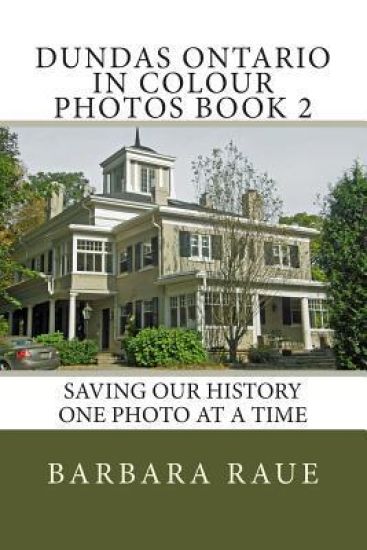
Dundas Ontario in Colour Photos Book 3: Saving Our History One Photo at a Time

Dundas Ontario in Colour Photos Book 3: Saving Our History One Photo at a Time

Barbara Raue

Createspace Independent Publishing Platform
2014
nidottu
Dundas, Ontario in Colour is the subject of Books 53, 54 and 55 in the Cruising Ontario series of books of photographs of towns and cities in Ontario. The photos show the architecture and design of old buildings, many that are over 100 years old, with descriptions of the buildings and some background information. Dundas was originally known as Cootes Paradise, named after Captain Cootes of the Kings Royal 8th Regiment and was incorporated as a town in 1847. Its tree-lined streets, heritage homes and picturesque downtown reflect the nostalgic quality of the past. Businesses, found in renovated Victorian buildings, were mostly built of limestone or brick after a fire in 1881 destroyed original wooden buildings. Downtown consists of two blocks along King Street West with specialty stores. The arts helped shape the destiny of Dundas which is home to many artists who have achieved international fame. Off the main street is the Dundas Valley School of Art set in a 1830s one-time munitions factory on Ogilvie Street. Drive slowly or walk down Victoria Street to admire gorgeous stately historical homes.Dundas has been our home for the past eighteen years.
Hanover Ontario in Colour Photos: Saving Our History One Photo at a Time

Hanover Ontario in Colour Photos: Saving Our History One Photo at a Time

Barbara Raue

Createspace Independent Publishing Platform
2014
nidottu
Hanover is located on Grey/Bruce County Road 4, east of Walkerton and west of Durham. Hanover marks the boundary between Grey County and Bruce County.In 1849, the first pioneer, Abraham Buck, stood on the banks of the Saugeen River and looked about him at the thick forest of hardwood timber where the deer, bear and wolf ran free. The sky was filled with wild pigeons and the streams teamed with fish. He expressed the words, "It is good for us to be here."Entrepreneur Henry Proctor Adams built the dam and the first mill and drew up plans for the village; he was a man of vision who could foresee the future growth of the town. Daniel Knechtel, an eager, hard-working man arrived in 1864 with a bag of tools on his back and began making furniture in a small barn behind his house. His vision and determination guided Hanover for more than a century.The village grew and prospered with large factories and new businesses manufacturing furniture, knitted goods, cement, milled products and other items. Roads were improved, street lighting was added, and facilities for education and recreation were built.The coming of the railway enabled the factories to ship their goods from coast to coast. By the 1920s, the town was known for its fine furniture and given the title of "The Furniture Capital of Canada". During the depression, the large furniture factories and other associated plants kept on working with a reduced work force.Hanover moved forward into the 1950s with factories continuing to manufacture fine, hardwood furniture, textiles, flour, processed food and kitchen cabinets.The milk wagons were pulled by horses plodding from door to door along the shady streets, but this ended as larger grocery stores with refrigeration opened. New schools and additions were needed to meet the expanding numbers of children; the population of one school in 1959 included twelve sets of twins and two sets of triplets.The decades from 1970 to the year 2000 saw the decline of manufacturing, especially in the large factory settings. The older factories producing hardwood furniture could not compete with the cheaper, imported products. Railway freight began to decrease as highways improved and transport trucking took over.Smaller businesses replaced the giant factory complexes. The unused rail lines are now scenic walking trails. The Carnegie library was expanded to include the Civic Centre, Town Hall and refurbished Library quarters.
Orangeville Ontario Book 3 in Colour Photos: Saving Our History One Photo at a Time

Orangeville Ontario Book 3 in Colour Photos: Saving Our History One Photo at a Time

Barbara Raue

Createspace Independent Publishing Platform
2014
nidottu
John Corbit acquired land in the area in 1829 and is one of the earliest settlers. Spring Brook (also called Mill Creek), a tributary of the Credit River, provided water for power for several mills located downstream. By 1844 when Orange Lawrence and his wife Sarah arrived from Connecticut, a well-established community called Grigg's Mill existed beside Mill Creek.Orange Lawrence helped to develop the community, laying out the southeast part of town; he opened a general store and a tavern, built a second mill, founded the first school, and became the village's first postmaster in 1847. He left a strong mark on the community which took the appropriate name of Orangeville.Immigrants from Ireland and other parts of the British Isles and Canada West came throughout the 1840s and 1850s with some establishing successful mixed farms while others settled in the village and became the landowners, merchants, and tradesmen whose needs led to the development of good transportation routes.By 1871 two daily stage lines were operating between Orangeville and Brampton, and that year the Toronto, Grey and Bruce Railway reached Orangeville.By 1875 there was a foundry, three planning mills, two saw mills, a tannery, a carding mill, several carriage and wagon manufacturers, and a successful pottery business in operation, along with four grocers, three hardware merchants, two drugstores, three watchmakers, three bakeries, and three establishment proving boots and shoes.Orange Lawrence and Jesse Ketchum had large sections of land on either side of the main street laid out for both commercial and residential building lots. The south side followed Mill creek while a regular grid pattern was determined for the streets on the north side from first to Fifty Streets both east and west and north to Fifth Avenue, with a wide main street called Broadway. This 30-metre (100-foot) avenue was not typical of Ontario towns of the time.Orangeville is proud of its roots and seeks to preserve its heritage. With two of our children and five grandchildren living in Orangeville, we often make the trek to the town. I have walked and driven the streets of Orangeville discovering its beauty. There are hundreds of old buildings which have retained their 1800s architectural styles and character. The pictures are divided into three books with colour photos. The first book covers the beginnings of Orangeville with colour pictures from the south side of town. The second book covers buildings on Broadway. Book 3 covers buildings on the north side of town, plus pictures of some of the town's tree sculptures; also included are pictures taken in surrounding areas of Caledon Village and Mono Centre.. An appendix is included to describe architectural styles and terms which are referred to throughout the books.
Stratford Ontario in Colour Photos: Saving Our History One Photo at a Time

Stratford Ontario in Colour Photos: Saving Our History One Photo at a Time

Barbara Raue

Createspace Independent Publishing Platform
2014
nidottu
Stratford is a city on the Avon River in Perth County in southwestern Ontario located at the junction of Highways 7-8 and 19. When the area was first settled by Europeans in 1832, the town site and the river were named after Stratford-upon-Avon, England.In 1832, the Canada Company initiated the development of "Little Thames" as the market centre for the eastern Huron Tract. By 1834, a tavern, sawmill, and gristmill were built and a year later a post office called Stratford was opened. With the coming of the railroad in the 1850s, the village became a thriving administrative and commercial centre. Railway repair yards were opened here in 1871, and the town continued to expand.The town is the home of the Stratford Shakespeare Festival which began in 1953. The annual festival brings thousands of theatre goers and tourists to the area. The world-renowned festival takes place in four theatres throughout the city.The Stratford Summer Music Festival has been held for several seasons and features indoor and outdoor performances by international, classical, and world music artists as well as young Canadian performers around downtown Stratford.Each year twenty-four white swans and two black swans are released into the Avon River.
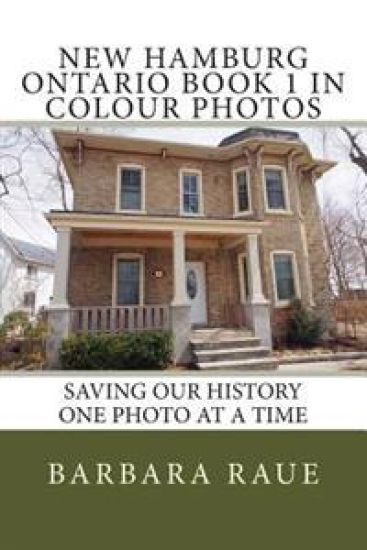
New Hamburg Ontario Book 1 in Colour Photos: Saving Our History One Photo at a Time

New Hamburg Ontario Book 1 in Colour Photos: Saving Our History One Photo at a Time

Barbara Raue

Createspace Independent Publishing Platform
2014
nidottu
New Hamburg was established in the early 1830s by William Scott. In 1834, cholera killed many of the original settlers of New Hamburg. A grist-mill built by Josiah Cushman about 1834 formed the nucleus around which a small community of Amish Mennonites and recent German immigrants developed. More German and Scottish settlers arrived in the late 1830s and early 1840s. The Grand Trunk railway arrived in the 1850s and the village became an important centre for milling and the production of farm machinery.New Hamburg is located in the rural township of Wilmot in the Regional Municipality of Waterloo. It is bordered by Baden to the east and is within easy driving distance of the cities of Kitchener, Waterloo and Stratford.The Nith River winds through town and flows through the downtown core, which is home to a 50-foot waterwheel built in 1990, the largest operating water wheel in North America; a symbol of the importance of the Nith River, and of the water-powered mills which were the first industries in pioneer New Hamburg.
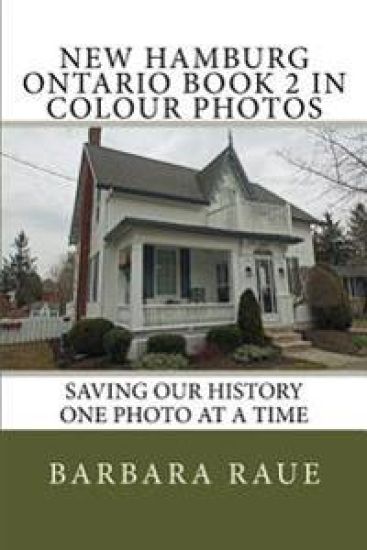
New Hamburg Ontario Book 2 in Colour Photos

New Hamburg Ontario Book 2 in Colour Photos

Barbara Raue

Createspace Independent Publishing Platform
2014
pokkari
New Hamburg was established in the early 1830s by William Scott. In 1834, cholera killed many of the original settlers of New Hamburg. A grist-mill built by Josiah Cushman about 1834 formed the nucleus around which a small community of Amish Mennonites and recent German immigrants developed. More German and Scottish settlers arrived in the late 1830s and early 1840s. The Grand Trunk railway arrived in the 1850s and the village became an important centre for milling and the production of farm machinery. Haysville Haysville, where the historic Huron Road crossed the Nith River, was settled by immigrants from the British Islea in the 1830s. Robert Hays settled there and built a sawmill and grist mill. He was the first postmaster appointed in 1837 of what was then known as Wilmont. The town was renamed Haysville in 1848 in his honor. His son John succeeded him as postmaster of Haysville in 1853 and also took over the mills.In 1827, Dr. William 'Tiger' Dunlop of the Canada Company opened the 95-mile corduroy Huron Road which connected the towns of Guelph and Goderich.
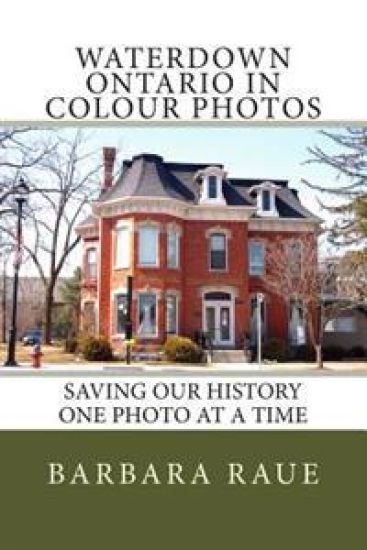
Waterdown Ontario in Colour Photos: Saving Our History One Photo at a Time

Waterdown Ontario in Colour Photos: Saving Our History One Photo at a Time

Barbara Raue

Createspace Independent Publishing Platform
2014
nidottu
Waterdown is located east of the junction of Highways 5 and 6, the intersection known as Clappison's Corners.Established in 1792, the Township of Flamborough was named after a prominent geographical formation, the Flamborough Head, and the Town of Flamborough in East Yorkshire, England. The most striking aspect of Flamborough Head are the white chalk cliffs that surround it. The chalk lies in distinct horizontal layers with a layer of glacial deposits at the top of the cliffsAlexander Brown of the North West Fur Company purchased 800 acres and built a log cabin and sawmill at the top of the Great Falls in present-day Smokey Hollow in 1805. He was the first European settler in the region and was a key figure in the community throughout his lifetime. He moved down Grindstone Creek to the site of present-day LaSalle Park and built "Brown's Wharf". Smokey Hollow was the site of saw, grist, and flour mills, a woolen mill, a brass foundry, tanneries, rake, cradle, and basket factories. Brown built the first school of the village in 1815 on the site of the present-day American House, and employed Mary Hopkins as its first teacher. Entrepreneur Ebenezer Culver Griffin arrived in 1823, purchased more than half of Alexander Brown's property, and had his property surveyed in village lots, the true beginning of the Village of Waterdown.In 1854, Flamborough was divided into two separate townships, East and West Flamborough. Included within East Flamborough was the town of Waterdown, named because of its close proximity to the place where Grindstone Creek tumbles over the Niagara Escarpment. Mills were built along the creek with the water harnessed to provide power.
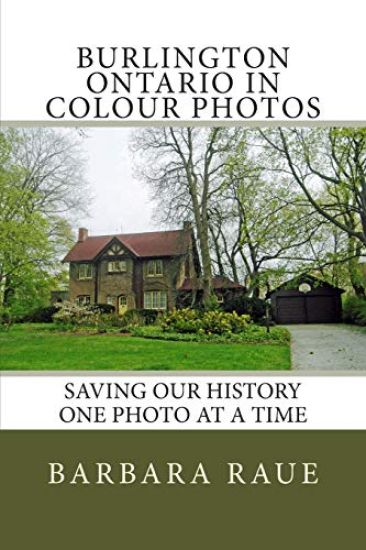
Burlington Ontario in Colour Photos: Saving Our History One Photo at a Time

Burlington Ontario in Colour Photos: Saving Our History One Photo at a Time

Barbara Raue

Createspace Independent Publishing Platform
2014
nidottu
In 1669 Rene-Robert de Cavelier de La Salle set out on the first of his many journeys of exploration intent on reaching the Ohio River, finding a way to the Southern Sea and thereby the route to China. Accompanied by the Sulpician missionaries Dollier and Gallinee, he left Montreal in July and reached Burlington Bay at the head of Lake Ontario two months later. La Salle continued inland to Tinaouataoua, a Seneca hamlet midway between present-day Dundas and Brantford, where he met Adrien Jolliet, an explorer returning from a mission to the Great Lakes. La Salle decided not to proceed westward and returned to Montreal by 1670. Burlington is located at the western end of Lake Ontario, lying between the north shore of the lake and the Niagara Escarpment, north of Hamilton. Before pioneer settlement in the 19th century, the area was covered by old-growth forest and was home to various First Nations peoples. In 1792, John Graves Simcoe, the first lieutenant governor of Upper Canada, named the western end of Lake Ontario "Burlington Bay" after the town of Bridlington in Yorkshire, England. Land beside the bay was deeded to Captain Joseph Brant at the turn of the nineteenth century. With the completion of the local survey after the War of 1812, the land was opened for settlement. Early farmers prospered because of the fertile soil and moderate temperatures. Lumber from the surrounding forests was a thriving business. In the latter half of the 19th century, local farmers switched to fruit and vegetable production. The first peaches grown in Canada were cultivated in the Grindstone Creek watershed in the south-west part of the city. Hamilton Harbor, the western end of Lake Ontario, is bounded on its western shore by a large sandbar. A canal bisecting the sandbar allows ships access to Hamilton Harbour. The Burlington Bay James N. Allan Skyway, part of the Queen Elizabeth Way, and the Canal Lift Bridge allow access over the canal. The leading industrial sectors are food processing, packaging, electronics, motor vehicle/transportation, business services, chemical/pharmaceutical and environmental. Burlington is home to the Royal Botanical Gardens, which has the world's largest lilac collection.
Stoney Creek Ontario in Colour Photos: Saving Our History One Photo at a Time

Stoney Creek Ontario in Colour Photos: Saving Our History One Photo at a Time

Barbara Raue

Createspace Independent Publishing Platform
2014
nidottu
Stoney Creek is located on the south-western shore of Lake Ontario into which feed the watercourse of Stoney Creek as well as several other minor streams. It was settled by Loyalists after the American Revolution. The Battle of Stoney Creek during the War of 1812 occurred near Centennial Parkway and King Street. In a surprise night-time attack, the outnumbered British overwhelmed the Americans and forced their retreat to Forty Mile Creek (the present location of Grimsby). In this forty minute battle, hundreds were killed and the two American Generals were captured. Battlefield Park has a monument and museum to preserve the history of this area.Branches of the Bruce Trail provide access to Battlefield Park as well as the Devil's Punch Bowl which is marked by a large illuminated cross and offers an excellent lookout for Stoney Creek and Hamilton.The Stoney Creek Dairy on King Street, with a stylized Battlefield Monument in its logo, offered frozen treats for decades. In 2013, the dairy was torn down for re-development. Eastgate Square Mall straddles the former border between Hamilton and Stoney Creek.Due to the temperate environment, the Stoney Creek area is known for fruit growing. Most of the land mass of Stoney Creek remains agricultural. The communities of Elfrida, Fruitland, Tapleytown, Tweedside, Vinemount, and Winona are agricultural areas.Stoney Creek became a centre for light industry, road transportation and commuting residences, since its land costs were much lower than in neighbouring Hamilton.Stoney Creek is served by the Queen Elizabeth Way and an irregular network of residential streets.E.D. Smith was established in 1878 in the Niagara Peninsula when a young farmer earnestly scratched his plans and dreams into his diary. The place was 120 acres tucked under the protective shadow of the Escarpment in Ontario's Niagara Peninsula. The dream was to establish a prosperous farm for future generations, even though he was still a bachelor. He had experimented with grapes, onions, hens, cows, sheep, grain, and that year, a little patch of strawberries. He wrote that after five years tending his little acre of strawberries, he hoped he could make as much as $150 for planting, harvesting and taking the fruit to market. By 1882, his hard work began to pay off. The juicy strawberries that grew so well in this rich soil were the beginning of a food empire. After the start of the Second World War, E.D. Smith & Sons Ltd. acquired the Canadian rights to H.P. Sauce Ltd. of Britain and in 1948 the latter's subsidiary Lea & Perrins Ltd. In October 2007 E.D. Smith became a subsidiary of Tree House Foods, Inc. Its current product line includes jams and spreads, syrups, pie fillings, ketchup, sauces, and salad dressings.
Seaforth Ontario in Colour Photos: Saving Our History One Photo at a Time

Seaforth Ontario in Colour Photos: Saving Our History One Photo at a Time

Barbara Raue

Createspace Independent Publishing Platform
2014
nidottu
Seaforth is a southern Ontario community in Huron County.Originally known as Four Corners and Steene's Corners after an early settler, much of the area of what is now Seaforth was acquired by brothers Christopher and George Sparling in anticipation of the construction of the Buffalo, Brantford and Goderich Railway. Developer James Patton of Barrie purchased the land and laid out a town site in 1855.Seaforth's Main Street is a Provincially Designated Heritage Conservation District, and architectural critics consider it to be one of the finest late 19th century streetscapes remaining in the Province.A post office was established in Seaforth in 1859. In September 1876, a fire broke out in Mrs. Griffith's Candy and Grocery store which raged through Main Street and destroyed twelve acres of the business section. The town rebounded and Main Street was rebuilt with the brick and block structures which we see today. Property owners have been encouraged to restore and preserve the architectural characteristics of their buildings so that this valuable resource may continue to be a reminder of Seaforth's history. The street is lined with uniquely homogeneous buildings.In 2001, Seaforth was amalgamated with Brussels, Grey Township, McKillop Township and Tuckersmith Township to form the Municipality of Huron East.
Aberfoyle, Morriston and Rockton in Colour Photos: Saving Our History One Photo at a Time
AberfoylePuslinch is a township in south-central Ontario in Wellington County south of Guelph. The area is rich in natural gas resources. About half of the township is forested, and a conservation area lies to the southwest. Near the western edge of the township, just outside of Cambridge, Ontario is Puslinch Lake, the largest kettle lake in North America. A kettle lake is a shallow, sediment-filled body of water formed by retreating glaciers or draining floodwaters.The township includes the communities of Aberfoyle, Aikensville, Arkell, Badenoch, Barbers Beach, Corwhin, Crieff, Killean, Little Lake, Morriston and Puslinch.Aberfoyle is the administrative centre for Puslinch Township and the municipality's administrative offices and fire station are located here. Aberrfoyle is located at the headwaters of Mill Creek, about ten kilometres south of Guelph. Aberfoyle was first settled in the 1840s and is named for Aberfoyle, Scotland. It is famous for its spring water.MorristonMorriston is located in Puslinch Township at Highway 6 and County Road 36, one kilometer south of Highway 401, and sixteen kilometres southeast of Guelph. In 1847 Mr. R. B. Morriston opened a store in one end of his blacksmith shop and two years later built a store on the east side of the road.RocktonRockton is located northwest of Dundas and has been the home of the Rockton's World Fair since 1853.
Eden Mills, Eramosa, Everton, and Hillsburgh Ontario in Colour Photos: Saving Our History One Photo at a Time
Eden MillsEden Mills was established in 1842 and called Kribbs Mill. When Adam Argo bought the mill he changed the name to Eden Mills, the name for the post office in 1851 with Mr. Argo as the postmaster. In the early days Eden Mills had a hotel, a flour mill, a wagon maker, blacksmith, general store, shoe store, cooper shop and a daily stage. The first church was of the Congregation Faith.EramosaEramosa is located at the crossroads of Highway 124 and Wellington Road 29 east of Guelph.EvertonGuelph/Eramosa is a township in Wellington County in mid-western Ontario. It partly encircles the city of Guelph from northeast to south southwest of the city.Rockwood is the main community in the township. Rockwood is located on Highway 7 between Acton and Guelph. The Eramosa River runs through the centre of the village and the river was the source of power for several mills that were built for the original settlement. Limestone was also extracted from the area. The Rockwood Conservation Area is used for swimming, hiking, canoeing, picnicking and camping.The township also includes the smaller communities of Ariss, Armstrong Mills, Birge Mills, Blue Springs, Brucedale, Centre Inn, Eden Mills, Eramosa, Everton, Marden, Colbertville, Mosborough, Oakvale, Redwood Hills, and Rockcut.HillsburghHillsburgh is located southwest of Orangeville on Wellington Road 24.