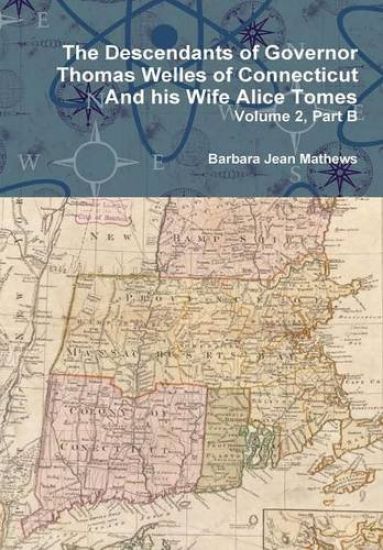
Gov. Thomas Welles came to New England in 1635, settling in Hartford in 1636 and moving to Wethersfield in 1646. The Welles Family Association presents in Volume 2 the fifth-generation descendants of Gov. Thomas Welles and his first wife, Alice Tomes. The genealogy includes descendants in both the male and female lines. Part B covers those descended from Thomas Welles, Samuel Welles, and Sarah (Welles) Chester. This generation fought in the French & Indian and Revolutionary Wars. It included farmers, generals, judges, government leaders, college presidents, silversmiths, housewives, poets, ministers, deacons, and medical doctors. Family names include Baldwin, Bostwick, Chester, Curtis(s), Clarke, Hawley, Judson, Lewis, Nichols, Shelton, Walker, Welles, and Wells. From Hartford, Wethersfield, Milford, Farmington, and Stratford, families spread to new towns in the Connecticut Hills, and to Massachusetts and upstate New York.
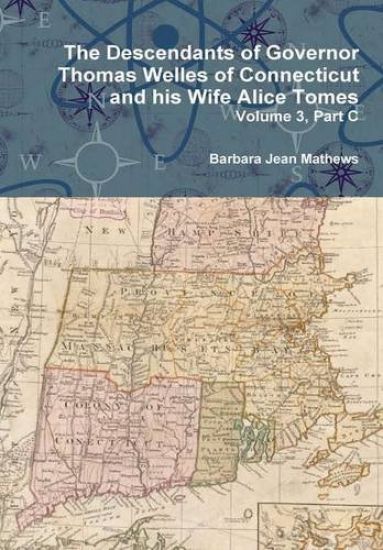
Gov. Thomas Welles came to New England in 1635, settling in Hartford in 1636 and moving to Wethersfield in 1646. Volume 3, Part C, for the first time publishes the sixth-generation descendants of Gov. Welles through his daughter Sarah2 (Welles) Chester. Her descendants populated the towns of Northern Connecticut and Western Massachusetts and provided leadership during the Revolutionary War. The farmers, generals, judges, ministers, sheriff, Loyalists and Patriots, legislators and sea captains had surnames including Burnham, Chester, Eliot, Kellogg, Loomis, Williams and Wolcott.
He was literally floating in crude, repeatedly plummeted by the hell of the oil pump. The unrecognizable body of a man led Jeffrey Thomas, writer of mysteries and all things unusual, on a murder chase from Bakersfield, California to the shale rich Rockies of Wyoming. More than once, Jeffrey was nearly silence. The unknown, unseen killer seemed to be just steps away, silently watching from the shadows. Barbara K. Krueger began her writing career in the world of advertising. She also taught and practice evangelism in several churches, and later, when she became a women and children's advocate, she used her writing skills to script her puppets. Later, she home schooled Jr. High girls for 3 years, who w3ere regularly targeted in school. Barbara never stopped writing. Her love of a good mystery prompted her to write who-don-it's and presently she has a new inspirations series, Escape from Sodom. Just released, the larger than life prophet, Elijah.
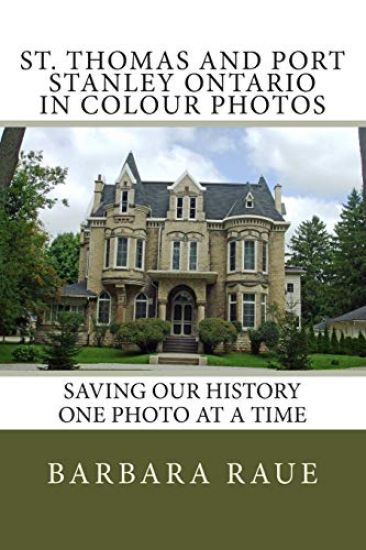
St. ThomasColonel The Honourable Thomas Talbot (1771-1853), the founder of the "Talbot Settlement", was born at Castle Malahide, Ireland. In 1803, after serving in the British Army, he was granted 5,000 acres and settled in Dunwich Township. He promoted colonization by building mills, supervising the construction of a three hundred mile long road paralleling Lake Erie, and helping establish thousands of settlers in the area. In 1817 St. Thomas, located south of London and north of Port Stanley, was named for him. St. Thomas, located in Southwestern Ontario at the intersection of two historical roads, was first settled in 1810. It was named the seat of the new Elgin County in 1844 and became a city in 1881.The founder of the settlement that became St. Thomas was Captain Daniel Rapelje. In 1820, Rapelje divided his land into town lots for a village. He donated two acres of land for the building of Old St. Thomas Church.In 1871, the developing village of Millersburg, which included lands east of the London and Port Stanley Railway, amalgamated with St. Thomas.In the late nineteenth century and early twentieth century several railways were constructed through the city and St. Thomas became an important railway junction. A total of twenty-six railways have passed through the city since the first railway was completed in 1856. In the 1950s and 1960s, with the decline of the railway as a mode of transportation, other industry began to locate in the city, mainly primary and secondary automotive manufacturing.In 1824, Charles Duncombe and John Rolph established the first medical school in Upper Canada, in St. Thomas, under the patronage of Colonel Thomas Talbot. Duncombe's house now forms part of The Elgin Military Museum complex. Between 1881 and 1988 the city had a private woman's school operating called Alma College which was destroyed by fire in 2008.Port StanleyLieutenant-Colonel John Bostwick - 1780-1849 - Born in Massachusetts, Bostwick came as a child to Norfolk County. He was appointed high constable of the London District in 1800 and sheriff in 1805. A deputy-surveyor, he laid out some of the earliest roads in the Talbot Settlement and in 1804 was granted 600 acres at the mouth of Kettle Creek. After serving as a militia officer throughout the War of 1812, he settled on the site of Port Stanley and founded this community. Bostwick represented Middlesex in the legislative assembly 1821-24. He donated the land for this church, which was completed in 1845, and he is buried in its churchyard.Port Stanley is located on the north shore of Lake Erie at the mouth of Kettle Creek. It was part of an important early route from Lake Erie to other inland waterways for a succession of explorers and travellers of the seventeenth and eighteenth centuries, serving as an important landing point and camping spot. Adrien Jolliet, brother of Louis Jolliet, landed here in 1669 during the first descent of the Great Lakes by Europeans. A settlement named Kettle Creek was founded here in 1812 by Lieutenant-Colonel John Bostwick. Around 1824, it was renamed Port Stanley after Edward Smith-Stanley, 14th Earl of Derby, who had visited nearby Port Talbot. Lord Stanley later became Prime Minister of the United Kingdom and the father of Frederick Stanley, 16th Earl of Derby, Governor General of Canada, and an ice hockey enthusiast and donor of the first Stanley Cup in 1893.
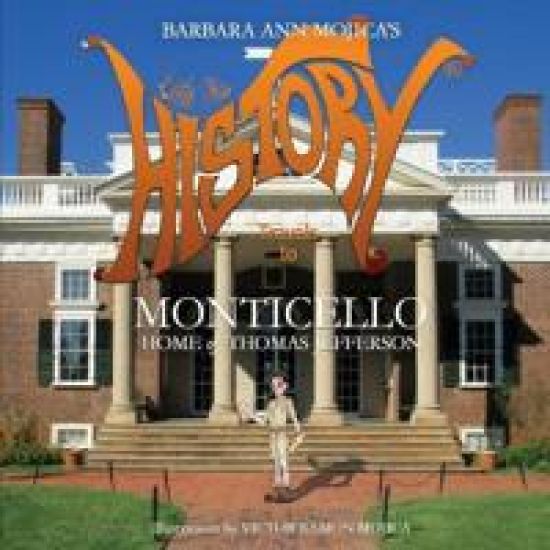
Join award-winning children's book author Barbara Ann Mojica's Little Miss HISTORY as she reveals the mysteries of Monticello, Home of Thomas Jefferson, her newest release. Discover the hidden treasures of Thomas Jefferson's home, the author of The Declaration of Independence. An agriculturalist, philosopher, scientist, architect, patriot, and president, Jefferson's complex role in history teaches today's Americans why, "If you don't know your history, you don't know what you're talking about."
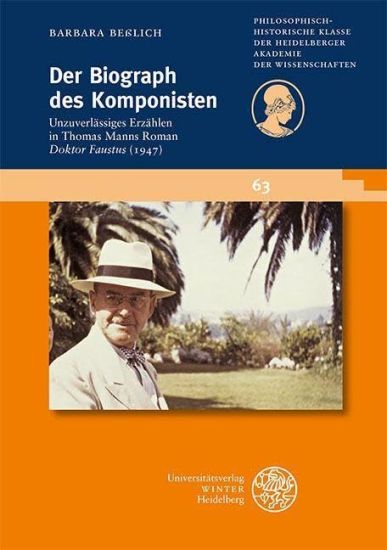
Thomas Manns Roman 'Doktor Faustus' schildert 'Das Leben des deutschen Tonsetzers Adrian Leverkuhn, erzahlt von einem Freunde'. Dieser Freund ist der Latein- und Geschichtslehrer Serenus Zeitblom, der sich in vielerlei Hinsicht als ein unzuverlassiger Erzahler entpuppt. Vorliegende narratologische Studie untersucht die unterschiedlichen Facetten dieses unzuverlassigen Erzahlens, beleuchtet Zeitbloms politische Haltung und problematisiert den Realitatsstatus des Teuflischen in der erzahlten Welt. Es wird diskutiert, ob Zeitblom eine Biographie oder einen Roman uber Leverkuhn schreibt, und gefragt, in welchem Verhaltnis die literarische Leitmotivik zum unzuverlassigen Erzahlen steht. Dabei interessiert sich die Studie dafur, was Zeitblom missversteht und was er bewusst verfalschend darstellt. Um was fur einen Text es sich bei dem von Leverkuhn verfassten Teufelsgesprach eigentlich handelt, wird ebenso analysiert wie die Verfahren, mit denen Zeitblom Leverkuhns Musik erzahlend politisiert.
Der Gang der Analyse versucht durch die strenge Ruckfuhrung von linguistisch erfassten Formelementen auf logische Kategorien die textrhetorische Betrachtung literarischer Produkte zu versohnen mit dem soziologischen und philosophischen Anspruch, dem sich die Literaturwissenschaft nicht entziehen darf."
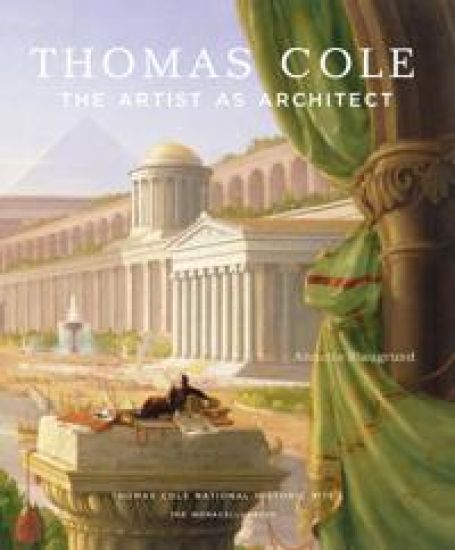
At the height of his career as the leader of the Hudson River School of American landscape painting, Thomas Cole listed himself in the New York City Directory as an architect. Why would this renowned painter, who had never before designed a building, advertise himself as such? The importance of Cole s paintings and the significance of his essays, poems, and philosophy are well established, yet an analysis of his architectural endeavors and their impact on his painting has not been undertaken until now. In celebration of the recreation of the artist s self-designed Italianate studio at Cedar Grove in Catskill, New York, now the Thomas Cole National Historic Site, this book focuses on Cole s architectural interests through architectural elements found in his paintings and drawings as well as in his realized and visionary projects, expanding our understanding of the breadth of his talents and interests. An essay by noted art historian Annette Blaugrund and a contribution by Franklin Kelly, illustrated with Cole s famous works, sketches, and architectural renderings, reveal an unexplored, yet fascinating, aspect of the career of this beloved artist and thus, a crucial moment in the development of the Hudson River School and American art. Published to coincide with the exhibition Thomas Cole: The Artist as Architect at the Thomas Cole National Historic Site and travelling to the Columbus Art Museum, the book adds a new dimension to scholarship on the artist."
Electronic mail, personal organizers, voice mail, all were introduced as time-saving devices designed to promote an easier and more efficient workplace. Yet many professionals find that making effective use of these new forms of communication technology can become a time-consuming task. In this handbook written for the office of the 21st century, Barbara Etzel and Peter J. Thomas provide guidance for those struggling to manage the growing volume of mail, memos, e-mail messages, and electronic documents that arrives daily. Personal Information Management details the skills professionals need to process this information, save time, and work more effectively. Etzel and Thomas present common organizational difficulties and enumerate concrete techniques for overcoming them. They guide the reader through a variety of computer software and hardware products, paper-based information products, and personal time management techniques, helping the reader to develop and individually-tailored Personal Information Management Strategy.Technologies covered include accounting and business software, word processors, databases, personal organizers, e-mail programs, tracking and storage packages, personal digital assistants, CD-Roms, computer backup devices, scanning device, voice mail, cellular phones, beepers, and fax machines, to name only a few. including an appendix listing the names and addresses of companies that Produce information technologies, Personal Information Technologies is essential reading for anyone suffering from information overload. Designed to be adaptable to emerging technologies, the techniques they provide will be applicable regardless for what the information age brings next.
Electronic mail, personal organizers, voice mail, all were introduced as time-saving devices designed to promote an easier and more efficient workplace. Yet many professionals find that making effective use of these new forms of communication technology can become a time-consuming task. In this handbook written for the office of the 21st century, Barbara Etzel and Peter J. Thomas provide guidance for those struggling to manage the growing volume of mail, memos, e-mail messages, and electronic documents that arrives daily. Personal Information Management details the skills professionals need to process this information, save time, and work more effectively. Etzel and Thomas present common organizational difficulties and enumerate concrete techniques for overcoming them. They guide the reader through a variety of computer software and hardware products, paper-based information products, and personal time management techniques, helping the reader to develop and individually-tailored Personal Information Management Strategy.Technologies covered include accounting and business software, word processors, databases, personal organizers, e-mail programs, tracking and storage packages, personal digital assistants, CD-Roms, computer backup devices, scanning device, voice mail, cellular phones, beepers, and fax machines, to name only a few. including an appendix listing the names and addresses of companies that Produce information technologies, Personal Information Technologies is essential reading for anyone suffering from information overload. Designed to be adaptable to emerging technologies, the techniques they provide will be applicable regardless for what the information age brings next.
In this book, Barbara Ellison and Thomas B. W. Bailey lay out and explore the mystifying and evanescent musical territory of 'sonic phantoms': auditory illusions within the musical material that convey a 'phantasmatic' presence. Structured around a large body of compositional work developed by Ellison over the past decade, sonic phantoms are revealed and illustrated as they arise through a diverse array of musical sources, materials, techniques, and compositional tools: voices (real and synthetic), field recordings, instrument manipulation, object amplification, improvisation, and recording studio techniques. Somehow inherent in all music--and perhaps in all sound--sonic phantoms lurk and stalk with the promise of mystery and elevation. We just need to conjure them.