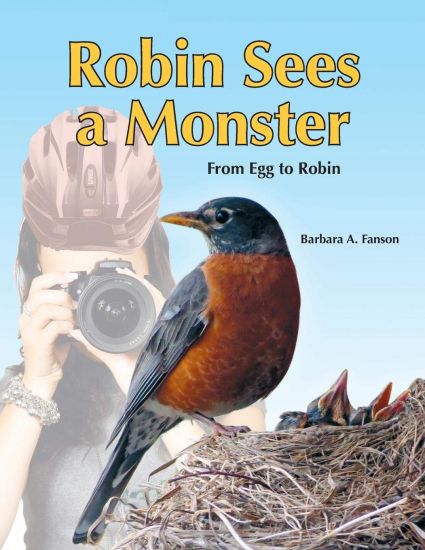
It's not easy building a nest with only a beak to carry dried weeds and mud. Robin has to fight the wind while building a nest. Then protect her baby birds from a monster with a gadget and a cat that can hear the peeps of her baby birds. From egg to Robin, this photographic book shares the life cycle of four robin eggs. Add two predators and you have an interesting story of survival. Get more activity sheets on our website: http: //fanson.ne
It's not easy building a nest with only a beak to carry dry weeds and mud. Robin has to fight the wind while building a nest. Then she has to protect her baby birds and look for food constantly.From egg to Robin, this photographic book shares the life cycle of four robin eggs. Add two predators and you have an interesting story of survival.Robin Sees a Monster is an educational and interesting fiction book based on facts.
Fiction or Non-Fiction? It's not easy building a nest with only a beak to carry dry weeds and mud. Robin has to fight the wind while building a nest. Then she has to protect her baby birds and look for food constantly.From egg to Robin, this photographic book shares the life cycle of four robin eggs. Add two predators and you have an interesting story of survival. Will the baby birds or fledglings learn to fly?An engaging and educational story about a robin, who builds a nest, feeds her baby chicks, watches the fledglings leave the nest, and protects them from 2 predators.
Shirl the Squirrel, Foxy and other animals are preparing for winter. Add 3 villains and you have a fun, but educational story. Can Shirl the Squirrel and Foxy get away from a dog, goose, and a hawk? Did Shirl fall or did she have a nice autumn? Some squirrels stash their cache in a dark, cool midden (hiding place) for years. Learn more about other animals, cones, acorns, and leaves in this adventurous tale. Read all of the Shirl the Squirrel Adventure books.
Islands of the Emotional and Moral Imagination is for all those who are on a search for inspiration in their life. If one is dwelling in fear, they may choose not to take this new path. When confronted with the unknown, fear can discourage a chance to seek and find courage, truth, and faith, hidden within. Let us take you on a journey to the islands. Step into our currach weaving through the waves. You will find comfort when one of the islands becomes visible through the mist. You will be introduced to our friends as we step off on the islands to explore a wonder of mystery awaiting our curious hearts and minds. We will be delighted with new aesthetic experiences, growing closer in wisdom of the divine imagination. Let us weave the threads from life's memories into a tapestry of ideas and possibilities. Breathe in and out each memory that surfaces from the deep shadowed regions of your mind, heart, and soul. Feel the toss of your life's waves, as unexplained storms are remembered, always knowing that an island of hope will appear on your soul's horizon.
When you experience troubles of any kind, how do you respond? Do you look to God, trusting that He will rescue you? Or do you let doubt control your thoughts and anxiety overwhelm your heart? No matter how dark your circumstances appear or how desperate you may feel-God has not abandoned you. In fact, the Lord longs to be gracious to you. In Jesus Wept: A Call to Action, author and ordained minister Barbara A. Thomas uses her own spiritual journey to illustrate how it is through these very challenges that you grow closer to God and deepen into the person you were created to be. Grounding her insights in biblical wisdom, Thomas draws from Jesus's faithful example to clarify how you, too, can participate in God's kingdom no matter what trials you face and experience the fruit that comes from obeying the Father. Serving as a candid and inspiring testament to the grace and mercy of God, Jesus Wept reminds you to lift your eyes to the God of all hope, whose love never fails, and whose light the darkness can never blot out.
The student affairs market has experienced a great boom in the last decade. Based on the fourth edition of the indispensable guide to the laws that bear on the conduct of higher education, this updated student affairs edition provides a reference and guide for student affairs practitioners and graduate students in student affairs administration courses. This volume combines sections that are pertinent to student affairs practitioners, as well as the government regulatory and administrative issues found in the full Fourth Edition. It is thus the most comprehensive and easy-to-use volume for student affairs officers and students.
From birth, one is infused with a bright glowing spiritual light of the breath of life from the Creator that moves and pulsates quickly to create a life that empowers one to experience and anticipate all its mysteries, its joys, its hopes for finding happiness in life. For those of Christian persuasion, everything in God's creation is centered in the traditional nuclear family-- the structure of the first family, Adam and Eve--for the management and development of children. From 1880-1960, Daniel Patrick Moynihan's "The Negro Family, the Case for National Action, 1965," indicates that there were two distinct features of African-American family structure; Blacks were more likely than whites to become single parents, and to reside in "extended families". However, other theorist argued that Moynihan got it backwards. The disadvantaged position of Blacks is not the consequence of single-parent families, but rather the cause of them. When an African-American man that desires to become one that can be the head of and primary provider for a traditional nuclear family, especially during the 1900s, is thwarted by the beliefs of those who would undermine this goal by actions generated from beliefs of superiority of a certain racial group, defined by Wikipedia as "scientific racism", it causes devastating economic and educational deprivation, and psychological malfunction in the Black family. I, being a product of the strength, creativity and resilience of a strong Black extended male dominated communal family have persevered, primarily alone, and benefited from the strong survival skills that were taught, learned, and internalized by many in the Black family community. Because of my early acceptance of faith in Jesus Christ, I was, later in life, enlightened by God's Word that He had a predestined plan of equality and free will for every man, including Black Families. At the height of Jim Crow Laws and race riots of the 1920s, 1930s and 1940s, many Black families because of the God-given innate drive to survive, and in the face of the many morally unjust attacks against them, lived in constant and inconsolable fear. Yet many Black families continued to persevere and carved new avenues for achieving their life's goals of finding greater economic security, freedom and protection by living in "extended family" communal environments, especially in the South. Communal wisdom covered a widespread lack of education among Blacks, whose primary source of instruction post slavery was the Bible. Christian ideology provided the basic design for post slavery black family living structure, much like the ideology of the early Jewish Kibbutz of a sharing agricultural community.I, Mary Rose, the second child, was born into a thriving and growing communal extended family environment of Childresses, Harpers, and Cooks, not realizing how the Number 14 and 7, 14 being a double digit of 7, with Biblical inference of a double measure (2x7) of spiritual perfection, would continue to impact my life's journey. As a God creation, I believe we remain under "numerical construction" by our Creator until all "free will" effort on our behalf here on earth is complete, and then our Creator completes His plan of "spiritual construction" in eternity. God had designed His plan to bring children into this world and back to himself. Throughout God's plan of creation, it is as if God used numbers as a slide rule for calculating conclusion, salvation, perfection, and deliverance. God stressed numbers in much of His creation plan as He strives to "Teach us to number our days that we may gain a heart of wisdom," Psalms 90:12. until the light of life "flicker" out.
This richly illustrated history of the School of Health, Physical Education, and Recreation (HPER) is a revealing portrait of some of the people, events, and accomplishments of the school from its founding, subsequent evolution, and transition to the IU School of Public Health–Bloomington in 2012. Throughout this period, Indiana University provided a fertile environment for the HPER professions to grow and flourish. As the health needs and conditions of Americans changed throughout the 20th century and into the 21st century, so did the educational programs for HPER professions. The school was instrumental in leading the development in professional preparation, research, and service in response to these changing needs. This book offers an appreciation of the historical importance of the school to Indiana University, the state, and the nation, and it provides the framework for understanding the significance of the school's transformation into a school of public health.
This book offers a personal insight into the experience of Alex Jelly, a professional fundraiser who developed a rare brain tumour, a papillary meningioma, which was successfully removed. She was left with Supplementary Motor Area Syndrome and associated problems including motor and speech impairments and a temporary psychosis. Discussing Alex’s struggles and triumphs throughout her rehabilitation, this book offers an honest account of her journey from diagnosis to recovery.Part I introduces Alex’s early life and employment, symptom onset and diagnosis, treatment and rehabilitation. Part II presents her neurosurgeon, Adel Helmy, and a clinical neuropsychologist, Barbara A. Wilson. Adel provides a medical context by explaining Alex’s successful surgery and her post-operative experience. Finally, Barbara concludes with a comprehensive view of Alex’s recovery and gives a voice to the therapists and psychologists who worked with Alex throughout her in and outpatient rehabilitation journey.This book provides support, understanding and hope for patients who have suffered a brain tumour, and their families. It is valuable reading for any professional involved in neurorehabilitation, studemts of clinical neuropsychology and those touched by brain injury.
This book offers a personal insight into the experience of Alex Jelly, a professional fundraiser who developed a rare brain tumour, a papillary meningioma, which was successfully removed. She was left with Supplementary Motor Area Syndrome and associated problems including motor and speech impairments and a temporary psychosis. Discussing Alex’s struggles and triumphs throughout her rehabilitation, this book offers an honest account of her journey from diagnosis to recovery.Part I introduces Alex’s early life and employment, symptom onset and diagnosis, treatment and rehabilitation. Part II presents her neurosurgeon, Adel Helmy, and a clinical neuropsychologist, Barbara A. Wilson. Adel provides a medical context by explaining Alex’s successful surgery and her post-operative experience. Finally, Barbara concludes with a comprehensive view of Alex’s recovery and gives a voice to the therapists and psychologists who worked with Alex throughout her in and outpatient rehabilitation journey.This book provides support, understanding and hope for patients who have suffered a brain tumour, and their families. It is valuable reading for any professional involved in neurorehabilitation, studemts of clinical neuropsychology and those touched by brain injury.
A Practical Guide to Statistical Quality Improvement: Opening Up the Statistical Toolbox is designed as a reference guide for the engineer, supervisor, and manager. The intent of the text is to present conventional statistical quality improvement tools in a user-friendly form. We have worked to take some of the "mystique" out of the statistics and help others put these powerful tools to effective use in a Total Quality Manage Management (TQM) environment. This isn't a text on TQM. TQM has three elements (as shown in Figure i.1): 1. Creating the environment 2. The continuous improvement toolbox 3. Employee empowerment This text focuses almost exclusively on the middle element, the continuous improvement (CI) toolbox. Further, Opening Up the Statistical Toolbox does not present a complete set of tools intended to "fill" the CI toolbox; only the statistical tools and some of the basic team process tools are covered. The CI toolbox, in reality, will never get "filled". A comprehensive toolbox will include extensive team process skills and technology specific tools complimentary to the statistical tools included here. THE THREE KEY ELEMENTS OF TQM THE CONTINUOUS IMPROVEMENT TOOLBOX EMPLOYEE EMPOWERMENT FIGURE i.I.
This book is about Case-Based Collaborative Learning (CBCL) for medical educators. CBCL combines elements from team-, case- and problem-based based learning using a flipped classroom model. This book presents a detailed “how to” guide on how to create CBCL classroom materials, how to facilitate vivid discussions, and how to support students and faculty in a CBCL curriculum. The first chapter explores the CBCL method in context of established educational principles. The second chapter provides a step-wise guide to creating CBCL teaching materials from scratch or adapting existing resources. Chapter three discusses how to support both - faculty and students - in making the most out of in-class case discussions. The last chapter explores modifications to the CBCL method that have evolved over time in adapting to teaching remotely, as well as promoting self-directed learning skills in students. While originally developed in context of undergraduate medical education, the CBCL method is of interest to anyone in higher education that values flipped classroom methods and discussion-based teaching.
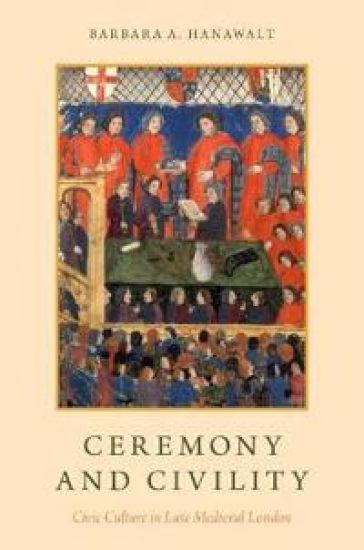
In Ceremony and Civility, Barbara Hanawalt shows how, in the late Middle Ages, London's elected officials and elites used ceremony and ritual to establish their legitimacy and power. These civic ceremonies helped delineate the relationship between London's mayors and the crown, but also between denizens and their government, between gild wardens and their members, between masters and apprentices, and between parishioners and their churches. London, like all premodern cities, had a largely immigrant population--only a small proportion of the inhabitants were citizens--and the newly arrived needed to be taught the civic culture of the city in order for that city to function peacefully. Ritual and ceremony played key roles in this acculturation process. In a society in which hierarchical authority was most commonly determined by inheritance of title and office, or sanctified by ordination, civic officials who had been elected to their posts relied on rituals to cement their authority, power, and dominance. Since the typical term of elected office was a year, elections and inaugurations had to be very public and visually distinct in order to quickly communicate with the masses: the robes of office needed to distinguish the officers so that everyone would know who they were. The result was a colorful civic pageantry. Newcomers themselves found their places within this structure in various ways. Apprentices entering the city to take up a trade were educated in civic culture by their masters. Gilds similarly used rituals, oath swearing, and distinctive livery to mark their members' belonging. But these public shows of belonging and orderly civic life also had a dark side. Those who rebelled against authority and broke the civic ordinances were made spectacles through ritual humiliations and public parades through the streets so that others could take heed of these offenders of the law. At the parish level, and even at the level of the street, civic behavior was taught through example, through proclamations, and even through performances, like ballads. An accessible look at late medieval London through the lens of civic ceremonies and dispute resolution, Ceremony and Civility synthesizes archival research in London with existing scholarship to show how newcomers in an ever-shifting population were enculturated into premodern London.
In Ceremony and Civility, Barbara Hanawalt shows how, in the late Middle Ages, London's elected officials and elites used ceremony and ritual to establish their legitimacy and power. These civic ceremonies helped delineate the relationship between London's mayors and the crown, but also between denizens and their government, between gild wardens and their members, between masters and apprentices, and between parishioners and their churches. London, like all premodern cities, had a largely immigrant population--only a small proportion of the inhabitants were citizens--and the newly arrived needed to be taught the civic culture of the city in order for that city to function peacefully. Ritual and ceremony played key roles in this acculturation process. In a society in which hierarchical authority was most commonly determined by inheritance of title and office, or sanctified by ordination, civic officials who had been elected to their posts relied on rituals to cement their authority, power, and dominance. Since the typical term of elected office was a year, elections and inaugurations had to be very public and visually distinct in order to quickly communicate with the masses: the robes of office needed to distinguish the officers so that everyone would know who they were. The result was a colorful civic pageantry. Newcomers themselves found their places within this structure in various ways. Apprentices entering the city to take up a trade were educated in civic culture by their masters. Gilds similarly used rituals, oath swearing, and distinctive livery to mark their members' belonging. But these public shows of belonging and orderly civic life also had a dark side. Those who rebelled against authority and broke the civic ordinances were made spectacles through ritual humiliations and public parades through the streets so that others could take heed of these offenders of the law. At the parish level, and even at the level of the street, civic behavior was taught through example, through proclamations, and even through performances, like ballads. An accessible look at late medieval London through the lens of civic ceremonies and dispute resolution, Ceremony and Civility synthesizes archival research in London with existing scholarship to show how newcomers in an ever-shifting population were enculturated into premodern London.
For Kennedy devotees, as well as readers unfamiliar with the "lion of the Senate," this book presents the compelling story of Edward Kennedy's unexpected rise to become one of the most consequential legislators in American history and a passionate defender of progressive values, achieving legislative compromises across the partisan divide. What distinguishes Edward Kennedy: An Oral History is the nuanced detail that emerges from the senator's never-before-published, complete descriptions of his life and work, placed alongside the observations of his friends, family, and associates. The senator's twenty released interviews reveal, in his own voice, the stories of Kennedy triumph and tragedy--from the Oval Office to the waters of Chappaquiddick. Spanning the presidencies of JFK to Barack Obama, Edward Kennedy was an iconic player in American political life, the youngest sibling of America's most powerful dynasty; he candidly addresses this role: his legislative accomplishments and failures, his unsuccessful run for the White House, his impact on the Supreme Court, his observations on Washington gridlock, and his personal faults. The interviews and introductions to them create an unsurpassed and illuminating volume. Gathered as part of the massive Edward Kennedy Oral History Project, conducted by the University of Virginia's Miller Center, the senator's interviews allow readers to see how oral history can evolve over a three-year period, drawing out additional details as the interviewee becomes increasingly comfortable with the process and the interviewer. Yet, given the Kennedys' well-known penchant for image creation, what the senator doesn't say or how he says what he chooses to include, is often more revealing than a simple declarative statement.
Barbara A. Hanawalt's richly detailed account offers an intimate view of everyday life in Medieval England that seems at once surprisingly familiar and yet at odds with what many experts have told us. She argues that the biological needs served by the family do not change and that the ways fourteenth- and fifteenth-century peasants coped with such problems as providing for the newborn and the aged, controlling premarital sex, and alleviating the harshness of their material environment in many ways correspond with our twentieth-century solutions.Using a remarkable array of sources, including over 3,000 coroners' inquests into accidental deaths, Hanawalt emphasizes the continuity of the nuclear family from the middle ages into the modern period by exploring the reasons that families served as the basic unit of society and the economy. Providing such fascinating details as a citation of an incantation against rats, evidence of the hierarchy of bread consumption, and descriptions of the games people played, her study illustrates the flexibility of the family and its capacity to adapt to radical changes in society. She notes that even the terrible population reduction that resulted from the Black Death did not substantially alter the basic nature of the family.
After a discussion of current theory and research findings relating to rehabilitation of brain injury, this book presents 20 case studies of adults with severe brain injuries sustained several years earlier. The causes of their brain damage include traumatic head injuries, encephalitis, stroke and hypoxia. Problems that follow such injuries including loss of self-care skills, memory impairment, language, reading, visuoperceptual and behavioural difficulities, are analysed in detail. The book describes the premorbid lifestyle of each of the 20 individuals, the onset of their brain damage, subsequent symptoms, neuropsychological assessment, rehabilitation, and long-term outcome. Most chapters include a report by the patient and/or family member, thus providing an extra dimension that helps to increase the reader's understanding of the predicaments faced by brain-injured individuals as they learn to cope with traumatic changes in lifestyle. Although improvement for most brain-injured people is slow and limited, all those described in this book made some progress after their admission to rehabilitation services. The exhaustive analysis of each case and step-by-step description of treatment will encourage professionals and other care-givers that much can be done for this severely injured group. For students of neuropsychology and rehabilitation, the book should serve as an inspiring and informative supplementary text.