

Kirjahaku
Etsi kirjoja tekijän nimen, kirjan nimen tai ISBN:n perusteella.
1000 tulosta hakusanalla Barry G. Webb




Nazis, Islamists, and the Making of the Modern Middle East
Barry Rubin; Wolfgang G. Schwanitz
Yale University Press
2014
sidottu
A groundbreaking account of the Nazi-Islamist alliance that changed the course of World War II and influences the Arab world to this day During the 1930s and 1940s, a unique and lasting political alliance was forged among Third Reich leaders, Arab nationalists, and Muslim religious authorities. From this relationship sprang a series of dramatic events that, despite their profound impact on the course of World War II, remained secret until now. In this groundbreaking book, esteemed Middle East scholars Barry Rubin and Wolfgang G. Schwanitz uncover the complete story of this dangerous alliance and explore its continuing impact on Arab politics in the twenty-first century. Rubin and Schwanitz reveal, for example, the full scope of Palestinian leader Amin al-Husaini’s support of Hitler’s genocidal plans against European and Middle Eastern Jews. In addition, they expose the extent of Germany’s long-term promotion of Islamism and jihad. Drawing on unprecedented research in European, American, and Middle East archives, many never before written about, the authors offer new insight on the intertwined development of Nazism and Islamism and its impact on the modern Middle East.
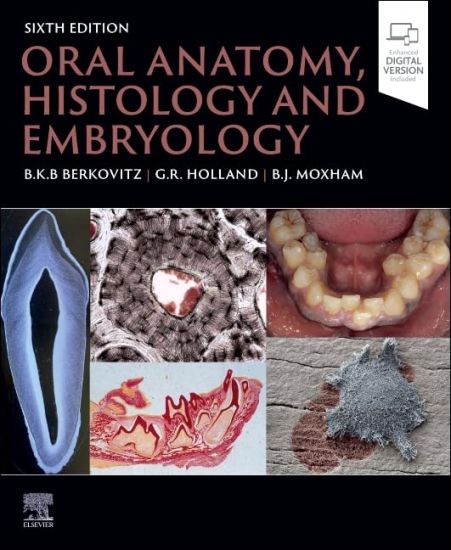
Oral Anatomy, Histology and Embryology
Barry K.B Berkovitz; G.R. Holland; Bernard J. Moxham
Elsevier - Health Sciences Division
2024
nidottu
**Selected for 2025 Doody’s Core Titles® in Dental Hygiene & Auxiliaries** Oral Anatomy, Histology and Embryology, Sixth Edition is unique in offering easy-to-understand explanations of all three of these complex topics in the one book. This popular textbook is designed to help students develop a deep understanding of these subjects to support their study and future clinical careers. Learning is made easy with clear diagrams, photographs and explanations. Now in its sixth edition, the book has been fully updated to incorporate latest developments in the field. It provides full coverage of topics including tooth morphology, functional anatomy, oro-dental histology, craniofacial and oral development and clinical considerations. Over 1,000 images including schematic artworks, radiological images, electron-micrographs, cadaveric and clinical photographs and memory maps - all specially selected to make learning and recall as easy as possible Numerous clinical case histories help relate the basic science to clinical practice Includes comprehensive coverage of the soft tissues of the oral region and skeletal structures of the head, including vasculature and innervation Includes information on mastication, swallowing, speech, radiology and archaeological applications of tooth structure Addresses physical, chemical and structural properties of the tooth (enamel, dentine, pulp and cementum) and of the periodontium and oral mucosa Explores bone structure and remodelling - including potential bone atrophy following tooth extraction, its relevance to orthodontic treatment and implantology, trauma and malignancy Images and text have been considered in terms of human diversity Online self-assessment quizzes supports learning and exam preparation Online bibliography for each topic provides options for further reading An enhanced eBook version is included with purchase. The eBook allows you to access all the text, figures and references, with the ability to search, customise your content, make notes and highlights, and have content read aloud New chapter on reparative and regenerative dentistry Memory maps to support learning

Synoptic and Dynamic Climatology provides the first comprehensive account of the dynamical behaviour and mechanisms of the global climate system and its components, together with a modern survey of synoptic-scale weather systems in the tropics and extratropics, and of the methods and applications of synoptic climate classification. It is unrivalled in the scope and detail of its contents. The work is thoroughly up to date, with extensive bibliographies by chapter. It is illustrated with nearly 300 figures and plates.*Part 1 provides an introduction to the global climate system and the space-time scales of weather and climate processes, followed by a chapter on climate data and their analysis*Part 2 describes and explains the characteristics of the general circulation of the global atmosphere and includes the nature and causes of global teleconnection patterns*Part 3 discusses synoptic weather systems in the extratropics and tropics and satellite-based climatologies of synoptic features. It also describes the applications of synoptic climatology and summarises current climatic research and its directions.

Synoptic and Dynamic Climatology provides the first comprehensive account of the dynamical behaviour and mechanisms of the global climate system and its components, together with a modern survey of synoptic-scale weather systems in the tropics and extratropics, and of the methods and applications of synoptic climate classification. It is unrivalled in the scope and detail of its contents. The work is thoroughly up to date, with extensive bibliographies by chapter. It is illustrated with nearly 300 figures and plates.*Part 1 provides an introduction to the global climate system and the space-time scales of weather and climate processes, followed by a chapter on climate data and their analysis*Part 2 describes and explains the characteristics of the general circulation of the global atmosphere and includes the nature and causes of global teleconnection patterns*Part 3 discusses synoptic weather systems in the extratropics and tropics and satellite-based climatologies of synoptic features. It also describes the applications of synoptic climatology and summarises current climatic research and its directions.
This book presents a comprehensive introduction to weather processes and climatic conditions around the world, their observed variability and changes, and projected future trends. Extensively revised and updated, this ninth edition retains its tried and tested structure while incorporating recent advances in the field. From clear explanations of the basic physical and chemical principles of the atmosphere, to descriptions of regional climates and their changes, the book presents a comprehensive coverage of global meteorology and climatology. In this new edition the latest scientific ideas are again expressed in a clear, non-mathematical matter.New features include: extended and updated treatment of atmospheric models final chapter on climate variability and change has been completely rewritten to take account of the IPCC 2007 scientific assessment. new four-colour text design featuring over 30 colour plates over 360 diagrams have been redrawn in full colour to improve clarity and aid understanding.Atmosphere, Weather and Climate continues to be an indispensable source for all those studying the earth’s atmosphere and world climate, whether from environmental and earth sciences, geography, ecology, agriculture, hydrology, or related disciplinary perspectives. Its pedagogic value is enhanced by several features: learning points at the opening of each chapter and discussion topics at their ending, boxes on topical subjects and on twentieth century advances in the field.

This book presents a comprehensive introduction to weather processes and climatic conditions around the world, their observed variability and changes, and projected future trends. Extensively revised and updated, this ninth edition retains its tried and tested structure while incorporating recent advances in the field. From clear explanations of the basic physical and chemical principles of the atmosphere, to descriptions of regional climates and their changes, the book presents a comprehensive coverage of global meteorology and climatology. In this new edition the latest scientific ideas are again expressed in a clear, non-mathematical matter.New features include: extended and updated treatment of atmospheric models final chapter on climate variability and change has been completely rewritten to take account of the IPCC 2007 scientific assessment. new four-colour text design featuring over 30 colour plates over 360 diagrams have been redrawn in full colour to improve clarity and aid understanding.Atmosphere, Weather and Climate continues to be an indispensable source for all those studying the earth’s atmosphere and world climate, whether from environmental and earth sciences, geography, ecology, agriculture, hydrology, or related disciplinary perspectives. Its pedagogic value is enhanced by several features: learning points at the opening of each chapter and discussion topics at their ending, boxes on topical subjects and on twentieth century advances in the field.
Clinical Neuropsychology of Alcoholism
Robert G Knight; Barry E. Longmore
Psychology Press Ltd
1994
sidottu
Alcohol abuse is a major health problem in most parts of the world. This book focuses on the way in which alcohol affects the brain, with the aim of describing advances in the neuropsychology of alcoholism in a way that makes this work accessible to clinicians from a variety of backgrounds who treat people with alcohol-related problems.; The book is divided into four parts. Part One provides an introduction to the medical and neurological conditions that can result from alcoholism, and to the process of neuropsychological assessment. The problems involved in conducting research in this area are also considered. In Part Two, research that focuses directly on changes to the nervous system is surveyed. This includes studies of both the short-term and the chronic neurological changes in the brain caused by alcohol. In Part Three, studies of the neuropsychological effects of acute intoxication, social drinking and alcohol abuse are described. Finally, in Part Four, the implications of neuropsychological research for the assessment and management of patients with alcohol problems are considered. The objective of this book is to collate the range of research work that is relevant to understanding how alcohol affects the brain. This includes both the acute and the chronic effects, at both the biological and physiological levels.

Clinical Neuropsychology of Alcoholism
Robert G Knight; Barry E. Longmore
Psychology Press Ltd
1996
nidottu
Alcohol abuse is a major health problem in most parts of the world. This book focuses on the way in which alcohol affects the brain, with the aim of describing advances in the neuropsychology of alcoholism in a way that makes this work accessible to clinicians from a variety of backgrounds who treat people with alcohol-related problems.; The book is divided into four parts. Part One provides an introduction to the medical and neurological conditions that can result from alcoholism, and to the process of neuropsychological assessment. The problems involved in conducting research in this area are also considered. In Part Two, research that focuses directly on changes to the nervous system is surveyed. This includes studies of both the short-term and the chronic neurological changes in the brain caused by alcohol. In Part Three, studies of the neuropsychological effects of acute intoxication, social drinking and alcohol abuse are described. Finally, in Part Four, the implications of neuropsychological research for the assessment and management of patients with alcohol problems are considered. The objective of this book is to collate the range of research work that is relevant to understanding how alcohol affects the brain. This includes both the acute and the chronic effects, at both the biological and physiological levels.

Microclimate and Local Climate
Roger G. Barry; Peter D. Blanken
Cambridge University Press
2016
sidottu
This book provides an up-to-date, comprehensive treatment of the variables and processes of microclimate and local climate, including radiation balance and energy balance. It describes and explains the climate within the lower atmosphere and upper soil, the region critical to life on Earth. Topics that are covered include not only the physical processes that affect microclimate, but also biological processes that affect vegetation and animals, including people. A geographic tour of the microclimates of the major ecosystems around the world is included. All major biomes and surface types, including urban areas, are examined, and the effects of climate change on microclimate are described. This book is invaluable for advanced students and researchers in climatology in departments of environmental science, geography, meteorology, agricultural science, and forestry.
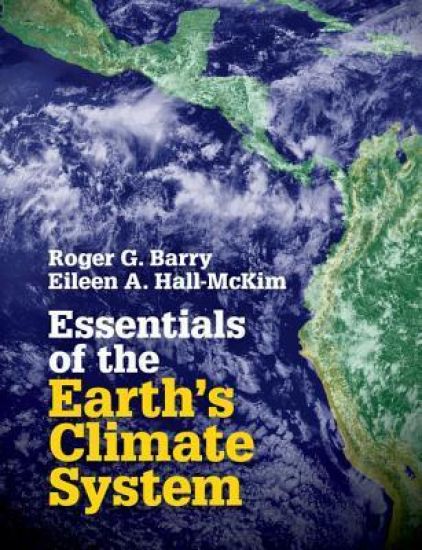
Essentials of the Earth's Climate System
Roger G. Barry; Eileen A. Hall-McKim
Cambridge University Press
2014
pokkari
This concise introduction to modern climatology covers the key topics for intermediate undergraduate students on one-semester courses. The treatment of topics is non-mathematical wherever possible, instead focusing on physical processes to allow students to grasp concepts more easily. Full-color illustrations support the text and supplementary topics are covered in boxes, enabling students to further increase their knowledge and awareness. A historical perspective of climatology is woven throughout, providing students with an insight into key scientists and technological developments. Each chapter concludes with a summary of the main points and a mixture of review and discussion questions, encouraging students to check their understanding and think critically. A list of key web links to data and other resources, and solutions and hints to answers to the student questions (password-protected for instructors) are provided online to complete the teaching package.
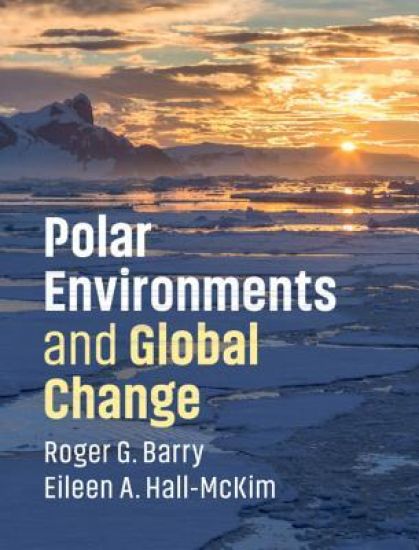
Polar Environments and Global Change
Roger G. Barry; Eileen A. Hall-McKim
Cambridge University Press
2018
pokkari
The polar regions are the 'canary in the coal mine' of climate change: they are likely to be hit the hardest and fastest. This comprehensive textbook provides an accessible introduction to the scientific study of polar environments against a backdrop of climate change and the wider global environment. The book assembles diverse information on polar environmental characteristics in terrestrial and oceanic domains, and describes the ongoing changes in climate, the oceans, and components of the cryosphere. Recent significant changes in the polar region caused by global warming are explored: shrinking Arctic sea ice, thawing permafrost, accelerating loss of mass from glaciers and ice sheets, and rising ocean temperatures. These rapidly changing conditions are discussed in the context of the paleoclimatic history of the polar regions from the Eocene to the Anthropocene. Future projections for these regions during the twenty-first century are discussed. The text is illustrated with many color figures and tables, and includes further reading lists, review questions for each chapter, and a glossary.
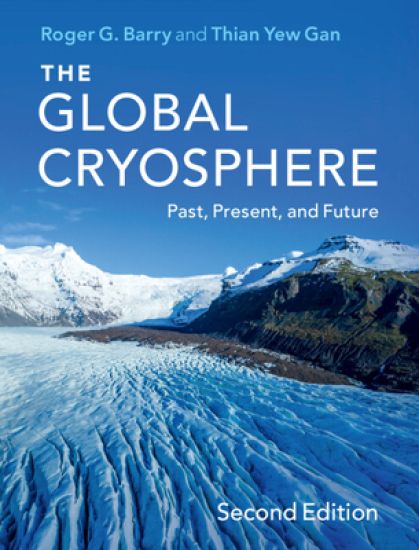
Recent studies indicate that - due to climate change - the Earth is undergoing rapid changes in all cryospheric components, including polar sea ice shrinkage, mountain glacier recession, thawing permafrost, and diminishing snow cover. This book provides a comprehensive summary of all components of the Earth's cryosphere, reviewing their history, physical and chemical characteristics, geographical distributions, and projected future states. This new edition has been completely updated throughout, and provides state-of-the-art data from GlobSnow-2 CRYOSAT, ICESAT, and GRACE. It includes a comprehensive summary of cryospheric changes in land ice, permafrost, freshwater ice, sea ice, and ice sheets. It discusses the models developed to understand cryosphere processes and predict future changes, including those based on remote sensing, field campaigns, and long-term ground observations. Boasting an extensive bibliography, over 120 figures, and end-of-chapter review questions, it is an ideal resource for students and researchers of the cryosphere.
Recent studies indicate that - due to climate change - the Earth is undergoing rapid changes in all cryospheric components, including polar sea ice shrinkage, mountain glacier recession, thawing permafrost, and diminishing snow cover. This book provides a comprehensive summary of all components of the Earth's cryosphere, reviewing their history, physical and chemical characteristics, geographical distributions, and projected future states. This new edition has been completely updated throughout, and provides state-of-the-art data from GlobSnow-2 CRYOSAT, ICESAT, and GRACE. It includes a comprehensive summary of cryospheric changes in land ice, permafrost, freshwater ice, sea ice, and ice sheets. It discusses the models developed to understand cryosphere processes and predict future changes, including those based on remote sensing, field campaigns, and long-term ground observations. Boasting an extensive bibliography, over 120 figures, and end-of-chapter review questions, it is an ideal resource for students and researchers of the cryosphere.

Virgo gives Birth: 23-24th September 2017
Barry D. G. Gumm
Createspace Independent Publishing Platform
2014
nidottu
Virgo gives Birth, is when in Revelation Chapter 12. The Woman gives Birth in the Heavens. In this study, we use History "the prelude highlights prophesies from the Book of Daniel which are relevant to prophecy of Virgo (the Woman) in Arabic (the Undefended one) giving birth". We use High level Cycle analysis, Numerology, some Astrology, Astronomy and Bible numeric (s) among others. We look into the future which is less than 3.5 years away. In verse one of chapter 12, it says a sign will be in the Heavens, looking up at the stars and matching the verse's with the cycles we discover that they align incredibly well with the weekend of the 23-24th September 2017 and around 7:00 am Israel time. As v1 says in the Amplified Bible there will be the sign of ominous events are about to take place thereafter. Therefore this day is both a warning to be prepared and a celebratory because time is so much closer to the Lords return. It will certainly be celebratory in Heaven as Satan is cast out with all his angels are thrown down to Earth.....No Longer will the Devils Angels in stuck in the dark regions of space as it says in the Book of Jude in the Hold Bible, but now they will be on Earth We start with the history of last 3500 years in the prelude and then with various translations of Chapter 12 of Revelation in Chapter one and move on into the Analysis of Cycles of the planets and stars, Astronomy, Bible Numeric (s), Maths and so forth proving that God is in control, whatever takes place and we make some suggestions on how to prepare for what is coming. The cycle analysis in this book is of a very high level. Most people including the vast majority of Brokers (who are looking after a lot of Christians Money) do not know why cycles change, you will find out in the pages within. This is very important if one wishes to protect there money from the falls or crashes in the financial markets. You will see that is it all written in the stars and planets. Barry encourages Stockbrokers, Economists, Accountants, Financial Planners and Advisers, Lawyers, Fund Managers and Market Analysts (Christian or not) to read this book as it will help you also to understand cycles and why they change. You will see that God set it all in motion and he made the Angels the Stars including the Law of Vibration and harmony to control it all. After all God is interested in People. Jesus did not die for the planets "for God so love the world he gave his only begotten Son for us so that if we only believe we might have Eternal life". So God made the laws and the Angels to control it all while he focused on his most precious creation - Human beings.
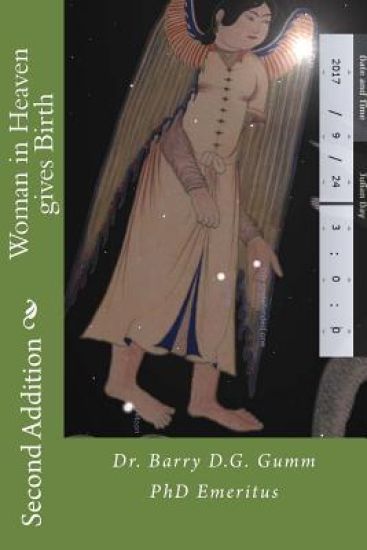
Woman in Heaven gives Birth - Second Addition
Barry D. G. Gumm
Createspace Independent Publishing Platform
2017
nidottu

The NWO & The Woman in Heaven gives Birth: Second Addition Black & White
Barry D. G. Gumm Phd
Createspace Independent Publishing Platform
2017
nidottu