

Kirjahaku
Etsi kirjoja tekijän nimen, kirjan nimen tai ISBN:n perusteella.
1000 tulosta hakusanalla Beam Alex

Beam-forming Algorithm for 60 GHz Transceiver
Khan Muhammad N
LAP Lambert Academic Publishing
2015
pokkari

Beam Search Techniques for Mixed Model Assembly Line Sequencing
Yasin Gocgun
Lap Lambert Academic Publishing
2017
nidottu

Beam Design by Particle Swarm Optimization Technique
Abhijeet Wadekar; Pooja Yerekar
Lap Lambert Academic Publishing
2021
nidottu
BEAM STEERING ARRAY ANTENNA
Lap Lambert Academic Publishing
2023
nidottu

This volume lays down the foundations of a theory of rings based on finite maps. The purpose of the ring is entirely discussed in terms of the global properties of the one-turn map. Proposing a theory of rings based on such maps, this work offers another perspective on storage ring theory.

This volume lays down the foundations of a theory of rings based on finite maps. The purpose of the ring is entirely discussed in terms of the global properties of the one-turn map. Proposing a theory of rings based on such maps, this work offers another perspective on storage ring theory.

Beam Acceleration In Crystals And Nanostructures - Proceedings Of The Workshop
World Scientific Publishing Co Pte Ltd
2020
sidottu
Recent advancements in generation of intense X-ray laser ultrashort pulses open opportunities for particle acceleration in solid-state plasmas. Wakefield acceleration in crystals or carbon nanotubes shows promise of unmatched ultra-high accelerating gradients and possibility to shape the future of high energy physics colliders. This book summarizes the discussions of the 'Workshop on Beam Acceleration in Crystals and Nanostructures' (Fermilab, June 24-25 , 2019), presents next steps in theory and modeling and outlines major physics and technology challenges toward proof-of-principle demonstration experiments.
Beam Dynamics In High Energy Particle Accelerators
Andrzej Wolski
WORLD SCIENTIFIC PUBLISHING CO PTE LTD
2023
sidottu
High-energy particle accelerators are as diverse as their uses, which range from scientific research in fields such as high-energy physics, materials science and the life sciences, to applications in industry and medicine. Despite the diversity of accelerators, the particle beams that they are designed to produce behave in ways that share many common features. Beam Dynamics in High Energy Particle Accelerators aims to provide an introduction to phenomena regularly encountered when working with beams in accelerators; from the basic principles of motion of relativistic particles in electromagnetic fields, to instabilities that can affect beam quality in machines operating at high current. This book assumes no prior experience with accelerator physics and develops the subject in a way that provides a solid foundation for more advanced study of specific topics.As well as including numerous revisions and improvements in the text, this second edition features substantial new material, including sections on fringe fields in multipole magnets, Verlet integration for particle tracking, and measurement of beam emittances. References and discussions of current topics have been updated. As with the first edition, the aim is to provide practical and powerful tools and techniques for the study of beam dynamics, while emphasizing the elegance of the subject and helping the reader develop a deep understanding of the relevant physics.

Beam Dynamics and High Energy Particle Accelerators: Volume 1
Willford Press
2025
sidottu
Beam dynamics in high-energy particle accelerators involves the study and control of particle beams as they travel through complex accelerator structures. These dynamics are crucial for maintaining beam stability, minimizing losses, and achieving desired energy levels. Key aspects include the manipulation of electromagnetic fields to guide and focus beams, understanding collective effects like space charge and beam-beam interactions, and mitigating instabilities such as synchrotron radiation. High-energy accelerators, such as synchrotrons and linear accelerators, rely on precise beam dynamics to achieve the extreme conditions necessary for probing fundamental physics, from particle collisions in colliders like the Large Hadron Collider (LHC) to high-intensity beams in facilities like the European X-ray Free Electron Laser (XFEL). Advancements in this field drive innovations in accelerator technology, enabling new discoveries in particle physics, material science, and medical applications. This book outlines the processes and applications of beam dynamics in detail. Such selected concepts that redefine particle physics have been presented in this book. It serves as an essential guide for both academicians and those who wish to pursue this discipline further.

Beam Dynamics and High Energy Particle Accelerators: Volume 2
Willford Press
2025
sidottu
Beam dynamics in high-energy particle accelerators involves the study and control of particle beams as they travel through complex accelerator structures. These dynamics are crucial for maintaining beam stability, minimizing losses, and achieving desired energy levels. Key aspects include the manipulation of electromagnetic fields to guide and focus beams, understanding collective effects like space charge and beam-beam interactions, and mitigating instabilities such as synchrotron radiation. High-energy accelerators, such as synchrotrons and linear accelerators, rely on precise beam dynamics to achieve the extreme conditions necessary for probing fundamental physics, from particle collisions in colliders like the Large Hadron Collider (LHC) to high-intensity beams in facilities like the European X-ray Free Electron Laser (XFEL). Advancements in this field drive innovations in accelerator technology, enabling new discoveries in particle physics, material science, and medical applications. This book outlines the processes and applications of beam dynamics in detail. Such selected concepts that redefine particle physics have been presented in this book. It serves as an essential guide for both academicians and those who wish to pursue this discipline further.

Beam Dynamics and High Energy Particle Accelerators: Volume 3
Willford Press
2025
sidottu
Beam dynamics in high-energy particle accelerators involves the study and control of particle beams as they travel through complex accelerator structures. These dynamics are crucial for maintaining beam stability, minimizing losses, and achieving desired energy levels. Key aspects include the manipulation of electromagnetic fields to guide and focus beams, understanding collective effects like space charge and beam-beam interactions, and mitigating instabilities such as synchrotron radiation. High-energy accelerators, such as synchrotrons and linear accelerators, rely on precise beam dynamics to achieve the extreme conditions necessary for probing fundamental physics, from particle collisions in colliders like the Large Hadron Collider (LHC) to high-intensity beams in facilities like the European X-ray Free Electron Laser (XFEL). Advancements in this field drive innovations in accelerator technology, enabling new discoveries in particle physics, material science, and medical applications. This book outlines the processes and applications of beam dynamics in detail. Such selected concepts that redefine particle physics have been presented in this book. It serves as an essential guide for both academicians and those who wish to pursue this discipline further.
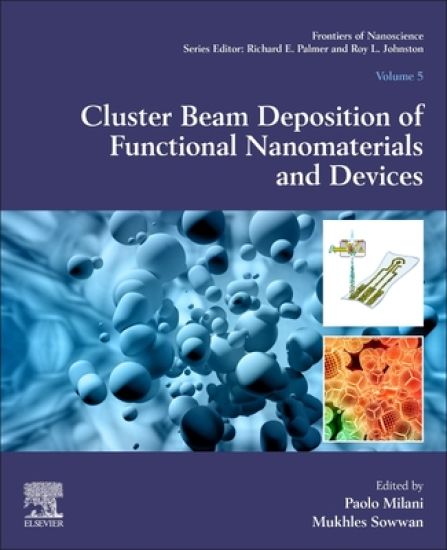
Cluster Beam Deposition of Functional Nanomaterials and Devices
Elsevier / The Lancet
2020
nidottu
Cluster Beam Deposition of Functional Nanomaterials and Devices, Volume 15, provides up-to-date information on the CBD of novel nanomaterials and devices. The book offers an overview of gas phase synthesis in a range of nanoparticles, along with discussions on the development of several devices and applications. Applications include, but are not limited to catalysis, smart nanocomposites, nanoprobes, electronic devices, gas sensors and biosensors. This is an important reference source for materials scientists and engineers who want to learn more about this sustainable, innovative manufacturing technology.
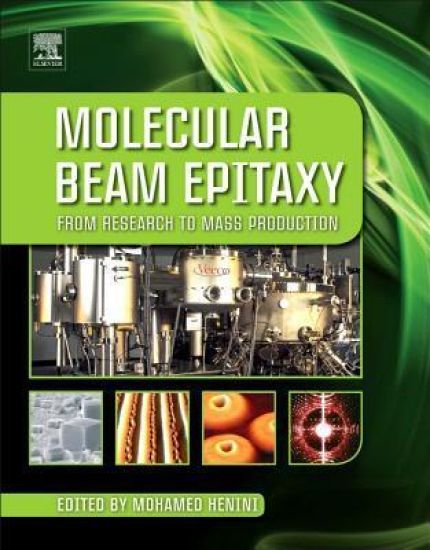
Molecular Beam Epitaxy
Elsevier Science Publishing Co Inc
2012
sidottu
This multi-contributor handbook discusses Molecular Beam Epitaxy (MBE), an epitaxial deposition technique which involves laying down layers of materials with atomic thicknesses on to substrates. It summarizes MBE research and application in epitaxial growth with close discussion and a ‘how to’ on processing molecular or atomic beams that occur on a surface of a heated crystalline substrate in a vacuum. MBE has expanded in importance over the past thirty years (in terms of unique authors, papers and conferences) from a pure research domain into commercial applications (prototype device structures and more at the advanced research stage). MBE is important because it enables new device phenomena and facilitates the production of multiple layered structures with extremely fine dimensional and compositional control. The techniques can be deployed wherever precise thin-film devices with enhanced and unique properties for computing, optics or photonics are required. This book covers the advances made by MBE both in research and mass production of electronic and optoelectronic devices. It includes new semiconductor materials, new device structures which are commercially available, and many more which are at the advanced research stage.
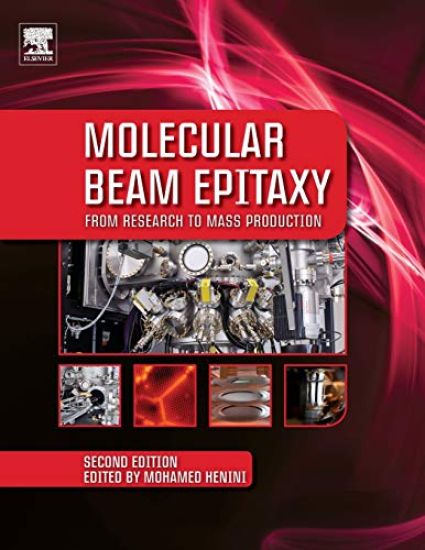
Molecular Beam Epitaxy
Elsevier Science Publishing Co Inc
2018
nidottu
Molecular Beam Epitaxy (MBE): From Research to Mass Production, Second Edition, provides a comprehensive overview of the latest MBE research and applications in epitaxial growth, along with a detailed discussion and ‘how to’ on processing molecular or atomic beams that occur on the surface of a heated crystalline substrate in a vacuum. The techniques addressed in the book can be deployed wherever precise thin-film devices with enhanced and unique properties for computing, optics or photonics are required. It includes new semiconductor materials, new device structures that are commercially available, and many that are at the advanced research stage. This second edition covers the advances made by MBE, both in research and in the mass production of electronic and optoelectronic devices. Enhancements include new chapters on MBE growth of 2D materials, Si-Ge materials, AIN and GaN materials, and hybrid ferromagnet and semiconductor structures.

“Thou hypocrite, first cast out the beam out of thine own eye; and then shalt thou see clearly to cast out the mote out of thy brother's eye” says the Bible. In other words: there is something problematic about one person blaming another, when the blamer's faults are even greater. Many believe that even if one has done something blameworthy, one can dismiss blame when coming from a hypocritical blamer. Kasper Lippert-Rasmussen examines the nature and ethics of standingless, hypocritical blame. It argues that hypocrites lack standing to blame in virtue of their lack of commitment to the norms to which they appeal in their blame; that hypocritical blame is pro tanto morally wrong because it involves treating the blamee as an inferior; and that there are many other sources of lacking standing to blame than hypocrisy, e.g., complicity. Lippert-Rasmussen extrapolates these analyses to other moral responses, notably praising and forgiving. So far, philosophers interested in standing have focused narrowly on blaming, but many other moral responses require standing as well. Indeed, Lippert-Rasmussen argues that considerations about standing apply to illocutionary acts not involving appeals to moral norms, e.g., non-moral encouragements and epistemic blame. In closing, Lippert-Rasmussen uses insights related to the idea of standing as a basis for making a grand claim about how part of morality is interpersonal in a sense often ignored in discussions of mainstream first-order moral theories, and to elucidate the nature of the moral wrong involved in relying on negative statistical generalizations about certain groups of people.

External beam therapy is the most common form of radiotherapy, delivering ionizing radiation such as high-energy x-rays, gamma rays, or electron beams directly into the location of the patient's tumour. Now in its third edition, this book is an essential, practical guide to external beam radiotherapy planning and delivery, covering the rapid technological advances made in recent years. The initial chapters give a detailed insight into the fundamentals of clinical radiotherapy. This is followed by systematic details for each tumour site commonly treated with radiotherapy, covering indications, treatment, and planning. The final chapter covers the all important aspect of quality assurance in radiotherapy delivery. This third edition has been fully updated and revised to reflect new techniques, including details of intensity modulated radiotherapy (IMRT), image guided radiotherapy (IGRT), stereotactic body radiotherapy (SBRT), and proton therapy. Written by experts in each field, External Beam Therapy is an invaluable companion to professionals and trainees in medical physics, therapeutic radiology, and clinical or radiation oncology. ABOUT THE SERIES Radiotherapy remains the major non-surgical treatment modality for the management of malignant disease. It is based on the application of the principles of applied physics, radiobiology, and tumour biology to clinical practice. Each volume in the series takes the reader through the basic principles of the use of ionizing radiation and then develops this by individual sites. This series of practical handbooks is aimed at physicians both training and practising in radiotherapy, as well as medical physics, dosimetrists, radiographers, and senior nurses.

The book is a history of Molecular Beam Epitaxy (MBE) as applied to the growth of semiconductor thin films (note that it does not cover the subject of metal thin films). It begins by examining the origins of MBE, first of all looking at the nature of molecular beams and considering their application to fundamental physics, to the development of nuclear magnetic resonance and to the invention of the microwave MASER. It shows how molecular beams of silane (SiH4) were used to study the nucleation of silicon films on a silicon substrate and how such studies were extended to compound semiconductors such as GaAs. From such surface studies in ultra-high vacuum the technique developed into a method of growing high quality single crystal films of a wide range of semiconductors. Comparing this with earlier evaporation methods of deposition and with other epitaxial deposition methods such as liquid phase and vapour phase epitaxy (LPE and VPE). The text describes the development of MBE machines from the early âhome-madeâ variety to that of commercial equipment and show how MBE was gradually refined to produce high quality films with atomic dimensions. This was much aided by the use of various in-situ surface analysis techniques, such as reflection high energy electron diffraction (RHEED) and mass spectrometry, a feature unique to MBE. It looks at various modified versions of the basic MBE process, then proceed to describe their application to the growth of so-called âlow-dimensional structuresâ (LDS) based on ultra-thin heterostructure films with thickness of order a few molecular monolayers. Further chapters cover the growth of a wide range of different compounds and describe their application to fundamental physics and to the fabrication of electronic and opto-electronic devices. The authors study the historical development of all these aspects and emphasise both the (often unexpected) manner of their discovery and development and the unique features which MBE brings to the growth of extremely complex structures with monolayer accuracy.