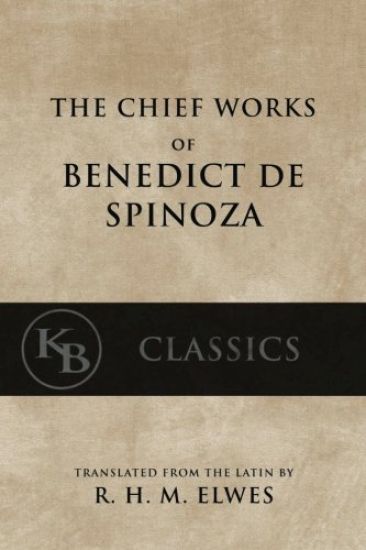
The Chief Works of Benedict de Spinoza Volume 2 is a collection of two of the most significant works of the renowned philosopher Benedict de Spinoza - De Intellectus Emendatione and Ethica. De Intellectus Emendatione is a philosophical treatise that explores the nature of knowledge and the means by which one can attain true knowledge. It presents Spinoza's ideas on the nature of reality, the limitations of human understanding, and the role of reason in acquiring knowledge. Ethica, on the other hand, is a monumental work that presents Spinoza's comprehensive ethical theory. In this work, Spinoza explores the nature of God, the human mind, and the relationship between them. He argues that the highest good is the attainment of knowledge of God and the realization of one's own nature as a part of God's infinite substance. The Chief Works of Benedict de Spinoza Volume 2 is a must-read for anyone interested in philosophy, ethics, and the nature of reality.This Is A New Release Of The Original 1889 Edition.This scarce antiquarian book is a facsimile reprint of the old original and may contain some imperfections such as library marks and notations. Because we believe this work is culturally important, we have made it available as part of our commitment for protecting, preserving, and promoting the world's literature in affordable, high quality, modern editions, that are true to their original work.
The Chief Works of Benedict de Spinoza Volume 1 is a collection of three of the most important works by the renowned Dutch philosopher Benedict de Spinoza. The book begins with an introduction that provides an overview of Spinoza's life and philosophical contributions. The first work included in the collection is the Tractatus Theologico-Politicus, which was originally published anonymously in 1670. The book is a critical analysis of the Bible and the role of religion in society. Spinoza argues that the Bible is a product of its time and that its teachings should not be taken literally. He also advocates for the separation of church and state, arguing that religious institutions should not have political power.The second work in the collection is the Tractatus Politicus, which was also published anonymously in 1677. This book is a political treatise that explores the nature of government and the relationship between the state and the individual. Spinoza argues that the purpose of government is to protect the rights of its citizens and that the state should be based on reason rather than tradition or religion.Overall, The Chief Works of Benedict de Spinoza Volume 1 is an essential read for anyone interested in philosophy, politics, and religion. Spinoza's ideas continue to influence modern thought and his works remain relevant today.This Is A New Release Of The Original 1889 Edition.This scarce antiquarian book is a facsimile reprint of the old original and may contain some imperfections such as library marks and notations. Because we believe this work is culturally important, we have made it available as part of our commitment for protecting, preserving, and promoting the world's literature in affordable, high quality, modern editions, that are true to their original work.
From the tender age of seven, Lillian knew there was only one man she would ever love. Her love was intense and strong, and totally oblivious of the fact that the object of her attention didn't care about her. Orphaned in her early twenties, she agreed to meet a man who was interested in marrying her, but realized she couldn't. Her love was too strong. When she went to explain she couldn't meet the man, she overheard something that turned her life upside down. When she was crying on the street, her only love, Benedict, came to her rescue, but made it clear he would only help her for a short time. Benedict was the oldest of three brother's and the second child in a family of six. He'd always known what he wanted from life, and he knew how he was going to get there. When his parents' reputation and their family mercantile were ruined by the three deacons who had tried to marry his sisters, he knew he had to find a new plan for his life. It couldn't possibly include his childhood nemesis, Lillian, could it? Could he possibly make a fresh start with her? Could Lillian convince him that they were destined to be together forever?
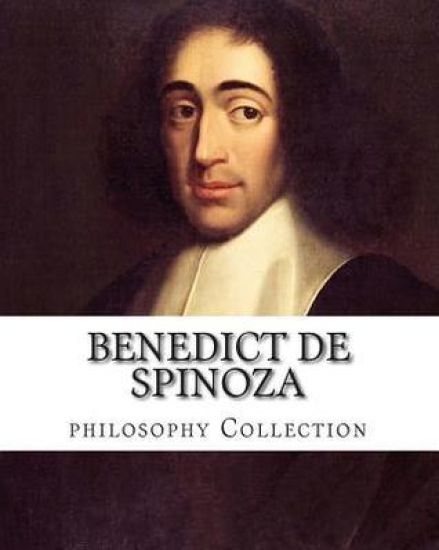
Benedict de Spinoza was one of the great rationalists of 17th century philosophy, he helped lay the groundwork for the 18th century Enlightenment and modern biblical criticism. His correspondences help shed light on his ethical opinions and positions. Required reading for those who wish a deeper understanding of the writings of Benedict de Spinoza.
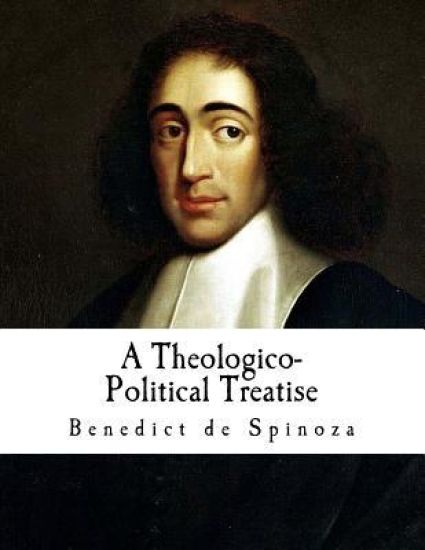
A Theologico-Political Treatise Benedict de Spinoza Tractatus Theologico-Politicus Men would never be superstitious, if they could govern all their circumstances by set rules, or if they were always favoured by fortune: but being frequently driven into straits where rules are useless, and being often kept fluctuating pitiably between hope and fear by the uncertainty of fortune
The present collection of writings includes all the most critical works of Spinoza, including the Theologico-Political Treatise, the Political Treatise, the Ethics, "On the Improvement of the Understanding", and a collection of Spinoza's Correspondence. It was originally published as two volumes in 1884, and is here reformatted into a single volume. From the Introduction: "Spinoza conceived as a vast unity all existence actual and possible; indeed, between actual and possible he recognizes no distinction, for, if a thing does not exist, there must be some cause which prevents its existing, or in other words renders it impossible. This unity he terms indifferently Substance or God, and the first part of the Ethics is devoted to expounding its nature. Being the sum of existence, it is necessarily infinite (for there is nothing external to itself to make it finite), and it can be the cause of an infinite number of results. It must necessarily operate in absolute freedom, for there is nothing by which it can be controlled; but none the less necessarily it must operate in accordance with eternal and immutable laws, fulfilling the perfection of its own nature."
Who was Benedict Arnold and why was he dubbed as both an American hero and a traitor. Don't you think it's confusing if someone is named as both hero and traitor? Understand the reason why Benedict Arnold is labelled as he is. Study his role in the American Revolution. Retell his stories and try to understand his decisions. Read this book today.
It's time for the "girls only" trip of a lifetime. Sonja and Alison have won a fully paid five-day vacation to a fancy resort and spa. Unfortunately, Sonja is worried about the trip because the historic Rocky Mountain landmark is notoriously haunted, and she wants nothing more than a ghost-free week. The much-needed trip becomes a bit chilling when the girls are invited on the exclusive Haunted Lantern Tour of the hotel, and stumble upon a gruesome murder scene. Is one of the ghosts in this creaky hotel seeking an vengeance for a misdeed long ago, or does one of the staff members have a thirst for blood? It's up to Sonja to discover the truth hidden in the hotel's catacombs in this spooky and stormy mystery.