Kirjojen hintavertailu. Mukana 12 274 241 kirjaa ja 12 kauppaa.

Kirjahaku

Etsi kirjoja tekijän nimen, kirjan nimen tai ISBN:n perusteella.

1000 tulosta hakusanalla Benjamin J. Harbert

The Pauline Book and the Dilemma of Ephesians

The Pauline Book and the Dilemma of Ephesians

Benjamin J. Petroelje

BLOOMSBURY PUBLISHING PLC
2024
nidottu
Benjamin J. Petroelje argues that how one reads Ephesians is a function of deeper questions about how to read the Pauline book. Petroelje suggests the contemporary consensus—that Ephesians depicts development of/away from the “real Paul”—is largely a construct of modern criticism, rooted in shifting strategies about how to read a letter collection that developed in the 19th-century.Using Ephesians 3:1-13 as a point of analysis, Petroelje theorizes that the text’s “image of Paul” not only anticipates recent revisionist interpretations of Paul’s Jewish identity and gentile gospel, but also holds together tensions in the collection itself surrounding these questions. By analysing ancient letter collections beside their own hermeneutical priorities, and applying this method to the late-antique and modern reception of the corpus Paulinum, Petroelje is able to historicize the origins of the split of Paul's corpus, revealing the constructed nature of the critical consensus on Ephesians and the effect that such modern reading strategies have on interpreting the letter. Urging a return to reading Ephesians alongside Pauline co-texts, Petroelje advocates for Ephesians as a crucial source for the study of Paul, whether Paul wrote it or not.

Cino's Big Adventure

Cino's Big Adventure

Benjamin J Hill

HILL
2023
pokkari
The True story of Cino's amazing life and journey to the other side of the world and back.From his journey around Australia, to travelling across Canada its a story that Kids love.This is a beautifully illustrated rhyming story.
Divided by Faith

Divided by Faith

Benjamin J. Kaplan

The Belknap Press
2009
nidottu
As religious violence flares around the world, we are confronted with an acute dilemma: Can people coexist in peace when their basic beliefs are irreconcilable? Benjamin Kaplan responds by taking us back to early modern Europe, when the issue of religious toleration was no less pressing than it is today.Divided by Faith begins in the wake of the Protestant Reformation, when the unity of western Christendom was shattered, and takes us on a panoramic tour of Europe's religious landscape--and its deep fault lines--over the next three centuries. Kaplan's grand canvas reveals the patterns of conflict and toleration among Christians, Jews, and Muslims across the continent, from the British Isles to Poland. It lays bare the complex realities of day-to-day interactions and calls into question the received wisdom that toleration underwent an evolutionary rise as Europe grew more "enlightened." We are given vivid examples of the improvised arrangements that made peaceful coexistence possible, and shown how common folk contributed to toleration as significantly as did intellectuals and rulers. Bloodshed was prevented not by the high ideals of tolerance and individual rights upheld today, but by the pragmatism, charity, and social ties that continued to bind people divided by faith.Divided by Faith is both history from the bottom up and a much-needed challenge to our belief in the triumph of reason over faith. This compelling story reveals that toleration has taken many guises in the past and suggests that it may well do the same in the future.
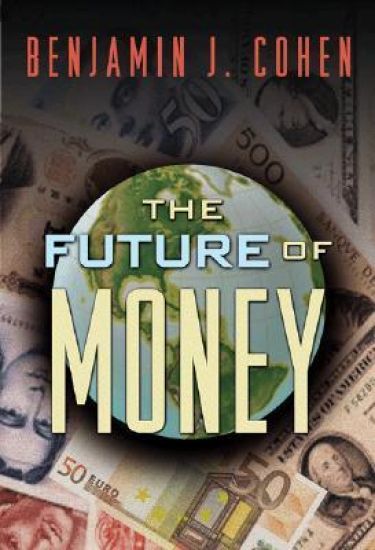
The Future of Money

The Future of Money

Benjamin J. Cohen

Princeton University Press
2006
pokkari
Is globalization leading us toward a world of fewer and fewer currencies and, consequently, simplified monetary management? Many specialists believe this is the case, as the territorial monopolies national governments have long claimed over money appears to be eroding. In The Future of Money, Benjamin Cohen argues that this view--which he calls the "Contraction Contention"--is wrong. Rigorously argued, written with extraordinary clarity, and thoroughly up-to-date, this book demonstrates that the global population of currencies is set to expand greatly, not contract, making monetary governance more difficult, not less. At the book's core is an innovative theoretical model for understanding the strategic preferences of states in monetary management. Should governments defend their traditional monetary sovereignty, or should they seek some kind of regional consolidation of currencies? The model offers two broad advances. First, whereas most scholarly work evaluates strategic options individually or in comparison to just one other alternative, this model emphasizes the three-dimensional nature of the decisions involved. Second, the model emphasizes degrees of currency regionalization as a central determinant of state preferences. Cohen also systematically explores the role of the private sector as an alternative source of money. The book concludes with two key policy proposals. First, fiscal policy should be resurrected as a tool of macroeconomic management, to offset the present-day erosion in the effectiveness of monetary policy. Second, the International Monetary Fund should more actively help coordinate the decentralized strategic decision-making of governments. The future of money will be perilous. But, by mapping out the alternative policies countries can follow, The Future of Money shows it need not be chaotic.
International Political Economy

International Political Economy

Benjamin J. Cohen

Princeton University Press
2008
pokkari
The field of international political economy gained prominence in the early 1970s--when the Arab oil embargo and other crises ended the postwar era of virtually unhindered economic growth in the United States and Europe--and today is an essential part of both political science and economics. This book offers the first comprehensive examination of this important field's development, the contrasting worldviews of its American and British schools, and the different ways scholars have sought to meet the challenges posed by an ever more complex and interdependent world economy. Benjamin Cohen explains the critical role played by the early "intellectual entrepreneurs," a generation of pioneering scholars determined to bridge the gap between international economics and international politics. Among them were brilliant thinkers like Robert Keohane, Susan Strange, and others whose legacies endure to the present day. Cohen shows how their personalities and the historical contexts in which they worked influenced how the field evolved. He examines the distinctly different insights of the American and British schools and addresses issues that have been central to the field's development, including systemic transformation, system governance, and the place of the sovereign state in formal analysis. The definitive intellectual history of international political economy, this book is the ideal volume for IPE scholars and those interested in learning more about the field.
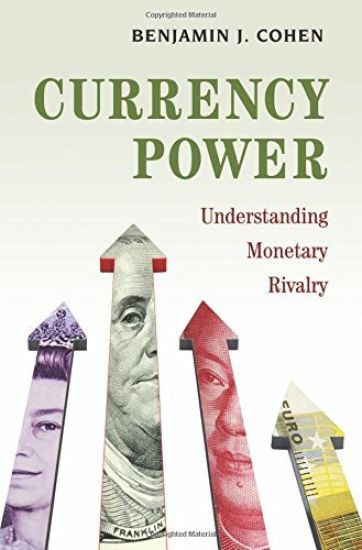
Currency Power

Currency Power

Benjamin J. Cohen

PRINCETON UNIVERSITY PRESS
2015
sidottu
Monetary rivalry is a fact of life in the world economy. Intense competition between international currencies like the US dollar, Europe's euro, and the Chinese yuan is profoundly political, going to the heart of the global balance of power. But what exactly is the relationship between currency and power, and what does it portend for the geopolitical standing of the United States, Europe, and China? Popular opinion holds that the days of the dollar, long the world's dominant currency, are numbered. By contrast, Currency Power argues that the current monetary rivalry still greatly favors America's greenback. Benjamin Cohen shows why neither the euro nor the yuan will supplant the dollar at the top of the global currency hierarchy. Cohen presents an innovative analysis of currency power and emphasizes the importance of separating out the various roles that international money might have. After systematically exploring the links between currency internationalization and state power, Cohen turns to the state of play among today's top currencies. The greenback, he contends, is the "indispensable currency"--the one that the world can't do without. Only the dollar is backed by all the economic and political resources that make a currency powerful. Meanwhile, the euro is severely handicapped by structural defects in the design of its governance mechanisms, and the yuan suffers from various practical limitations in both finance and politics. Contrary to today's growing opinion, Currency Power demonstrates that the dollar will continue to be the leading global currency for some time to come.
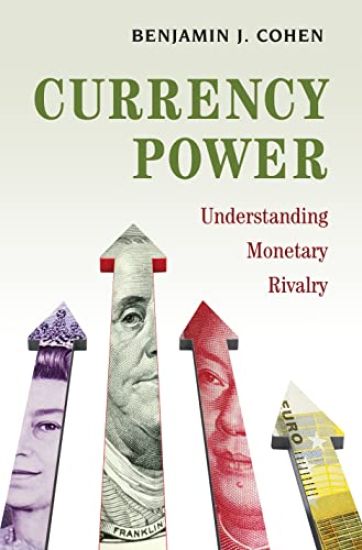
Currency Power

Currency Power

Benjamin J. Cohen

Princeton University Press
2018
pokkari
Why the dollar will remain the world's most powerful currencyMonetary rivalry is a fact of life in the world economy. Intense competition between international currencies like the US dollar, Europe's euro, and the Chinese yuan is profoundly political, going to the heart of the global balance of power. But what exactly is the relationship between currency and power, and what does it portend for the geopolitical standing of the United States, Europe, and China? Popular opinion holds that the days of the dollar, long the world’s dominant currency, are numbered. By contrast, Currency Power argues that the current monetary rivalry still greatly favors America’s greenback. Benjamin Cohen shows why neither the euro nor the yuan will supplant the dollar at the top of the global currency hierarchy.Cohen presents an innovative analysis of currency power and emphasizes the importance of separating out the various roles that international money might have. After systematically exploring the links between currency internationalization and state power, Cohen turns to the state of play among today’s top currencies. The greenback, he contends, is the "indispensable currency"—the one that the world can’t do without. Only the dollar is backed by all the economic and political resources that make a currency powerful. Meanwhile, the euro is severely handicapped by structural defects in the design of its governance mechanisms, and the yuan suffers from various practical limitations in both finance and politics.Contrary to today’s growing opinion, Currency Power demonstrates that the dollar will continue to be the leading global currency for some time to come.
Kaplan and Sadock's Concise Textbook of Child and Adolescent Psychiatry

Kaplan and Sadock's Concise Textbook of Child and Adolescent Psychiatry

Benjamin J. Sadock; Virginia Alcott Sadock

Lippincott Williams and Wilkins
2008
pokkari
This book presents updated clinical material on child and adolescent psychiatry from the best-selling Kaplan and Sadock's Synopsis of Psychiatry, Tenth Edition . Coverage includes clinically relevant information on normal and abnormal development; examination; neuroimaging; learning, communication and behavioral disorders; adolescent substance abuse; forensic issues; and the spectrum of psychiatric problems such as depression and bipolar disorders. Treatment chapters include a broad range of psychopharmacotherapeutic and psychotherapeutic techniques, and the many controversies related to appropriate use of medication in children are addressed. The book is DSM-IV-TR compatible and replete with case studies and tables, including DSM-IV-TR tables.
The Flying Firsts of Walter Hinton

The Flying Firsts of Walter Hinton

Benjamin J. Burns

McFarland Co Inc
2012
pokkari
Walter Hinton was a pilot on the first plane to cross the Atlantic (eight years before Lindbergh)--a four-engine, Navy-Curtiss flying boat with a crew of six, in May 1919. Based on more than 40 hours of personal interviews with Hinton, this volume chronicles that first flight and Hinton's other remarkable adventures in aviation--which include being lost in a downed balloon in the Canadian Arctic and believed dead, making the first flight to Rio de Janeiro from New York, pursuing the first aerial exploration of the Amazon, and undertaking a nationwide promotion of aviation and airports for the Exchange Clubs in the United States. With the dramatic and adventurous story of Hinton, a lost chapter in the history of flight in America is uncovered.
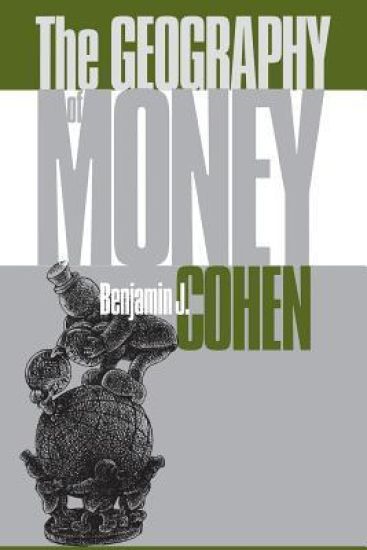
The Geography of Money

The Geography of Money

Benjamin J. Cohen

Cornell University Press
2000
pokkari
The traditional assumption holds that the territory of money coincides precisely with the political frontiers of each nation state: France has the franc, the United Kingdom has the pound, the United States has the dollar. But the disparity between that simple mental landscape and the actual organization of currency spaces has grown in recent years, as territorial boundaries of individual states limit currency circulation less and less. Many currencies are used outside their "home" country for transactions either between nations or within foreign states. In this book, Benjamin J. Cohen asks what this new geography of money reveals about financial and political power. Cohen shows how recent changes in the geography of money challenge state sovereignty. He examines the role of money and the scope of cross-border currency competition in today's world. Drawing on new work in geography and network theory to explain the new spatial organization of monetary relations, Cohen suggests that international relations, political as well as economic, are being dramatically reshaped by the increasing interpenetration of national monetary spaces. This process, he explains, generates tensions and insecurities as well as opportunities for cooperation.
Sacred Signposts

Sacred Signposts

Benjamin J. Dueholm

William B Eerdmans Publishing Co
2018
nidottu
The church isn't a building or an institution. The church is what it does. At the very heart of Christianity are its central, sacred, subversive practices-the sacred signposts that have always shown the way to practice Christian faith, even when the terrain around it changes."These Christian practices," writes Benjamin Dueholm, "represent and enact a different vision of what it means to be good, or even to be human, from the ones offered by our prominent political and economic ideologies. Christians have names for this different vision. We call it `the Kingdom of God' or `the beloved community.' And it is realized, in ways that are small and fleeting but also urgent and poignant, every time we gather around our holy possessions."In this book Dueholm unpacks Christianity's seven "holy possessions," which function as signposts-words, water, bread and wine, confession and forgiveness, ministry, worship, and suffer-ing-and he offers a visionary account of the critical, radical, life-affirming role that faith can play in a secular, post-Christian world.
Valor and Courage

Valor and Courage

Benjamin J. Hruska

THE UNIVERSITY OF ALABAMA PRESS
2022
nidottu
Recounts the stories of the USS Block Island CVE 21 and CVE 106 and their crews, many of whom served on both ships in the Atlantic and Pacific theatres In Valor and Courage: The Story of the USS Block Island Escort Carriers in World War II Benjamin Hruska explores the history and commemoration of the USS Block Island—or, more properly, the Block Islands, as two escort carriers bore that name during WWII. The first, CVE 21, bears the distinction of having been the only American aircraft carrier sunk in the Atlantic Theatre after being torpedoed by a German U-boat off the coast of North Africa. Of the CVE 21’s 957 crew members, six sailors were killed and eighteen injured in the strike, and four of the Block Island’s fighter pilots were lost later in the day searching for a safe place to land their planes. When the CVE 106 was commissioned to replace its predecessor, Captain Massie Hughes successfully persuaded the Navy to keep the CVE 21’s crew together in manning the new ship. After resurrection as the CVE 106, the Block Island was assigned to the Pacific theater where it fought until the end of the war. The saga of these two ships and the crew that navigated two very different theaters of war offers a unique lens on naval strategy and engineering as it evolved during WWII, especially as pertains to the escort carrier class—generally underappreciated both in naval studies and in public memory. Using archival materials, dozens of oral histories, primary sources, and official records, Hruska traces the life of the Block Island from the CVE 21’s construction through its missions in the Atlantic, its work as an antisubmarine hunter, its destruction, and the lasting impact of those experiences on its crew. Hruska’s study juxtaposes traditional military history with an examination of the acts of remembrance and commemoration by veterans who served on the escort carriers, how those practices evolved over time, and how the meanings of personal wartime experiences and memories gradually shifted throughout that process.