

Kirjahaku
Etsi kirjoja tekijän nimen, kirjan nimen tai ISBN:n perusteella.
1000 tulosta hakusanalla Benjamin Schmidt

Die Entwicklung des Anlegerschutzes beim regulaeren Delisting in Deutschland
Benjamin Marc Schmitz
Peter Lang AG
2020
nidottu

Carl Schmitt's State and Constitutional Theory
Benjamin Schupmann
Oxford University Press
2017
sidottu
Can a constitutional democracy commit suicide? Can an illiberal antidemocratic party legitimately obtain power through democratic elections and amend liberalism and democracy out of the constitution entirely? In Weimar Germany, these theoretical questions were both practically and existentially relevant. By 1932, the Nazi and Communist parties combined held a majority of seats in parliament. Neither accepted the legitimacy of liberal democracy. Their only reason for participating democratically was to amend the constitution out of existence. This book analyses Carl Schmitt's state and constitutional theory and shows how it was conceived in response to the Weimar crisis. Right-wing and left-wing political extremists recognized that a path to legal revolution lay in the Weimar constitution's combination of democratic procedures, total neutrality toward political goals, and positive law. Schmitt's writings sought to address the unique problems posed by mass democracy. Schmitt's thought anticipated 'constrained' or 'militant' democracy, a type of constitution that guards against subversive expressions of popular sovereignty and whose mechanisms include the entrenchment of basic constitutional commitments and party bans. Schmitt's state and constitutional theory remains important: the problems he identified continue to exist within liberal democratic states. Schmitt offers democrats today a novel way to understand the legitimacy of liberal democracy and the limits of constitutional change.

Raumordnungsverfahren anhand des Beispiels "Geplante Erdgasfernleitung Lauterbach - Scheidt der Firma E.ON Ruhrgas AG, Essen"
Benjamin Küster
Grin Publishing
2011
pokkari

Die Hauptfigur in "Soloalbum" von Benjamin von Stuckrad-Barre. Ein typischer Vertreter der Generation Golf nach Florian Illies
Sascha Schmitt
Grin Publishing
2007
pokkari
Seminararbeit aus dem Jahr 2003 im Fachbereich Germanistik - Neuere Deutsche Literatur, einseitig bedruckt, Note: 1,7, Universität Trier (Fachbereich II), Veranstaltung: Proseminar III: Tristesse Royale - zur neuen deutschen Pop-Literatur, Sprache: Deutsch, Abstract: Um die Jahrtausentwende traten Benjamin von Stuckrad-Barre und Florian Illies als Protagonisten der neuen deutschen Popliteratur in Erscheinung. Während der eine vor allem durch seine Romane auffiel lieferte der andere einen Teil der theoretischen Grundlage, die sich vor allem im Lebensgefühl der sogenannten Generation Golf wiederspiegelt. In diesem Zusammenhang verweist Illies auch auf das Werk Stuckrad-Barres, insbesondere den Roman "Soloalbum", in dem das Lebensgefühl der Generation Golf besonders stark zum AUsdruck kommen soll. Diese Verbindung ist Ausgangspunkt einer UNtersuchung, die klären soll, wie weit die Hauptfigur in Solalbum dem in "Generation Golf" geschilderten Prototypen entspricht.

Analyse Der Verwendung Von Substantivkomposita Bei Benjamin Von Stuckrad-Barre
Sascha Schmitt
Grin Publishing
2007
nidottu

Nähe und Distanz in der Pädagogik. Überlegungen zur Auratheorie von Walter Benjamin
Stephan Schmider
Grin Publishing
2016
pokkari

Zivilprozess- Und Verhandlungstaktik
Stephan Schmitz-Herscheidt; Benjamin Wagner
Nomos Verlagsgesellschaft
2023
nidottu
Fragen der Prozess- und Verhandlungstaktik spielen nicht erst im Referendariat und im Berufsleben eine wichtige Rolle. Bereits im Studium konnen Sie mit der Frage nach der optimalen Durchsetzung ermittelter Anspruche konfrontiert werden. Die rechtlich moglichen Losungen sind dabei nicht immer die zielfuhrendsten. Zahlreiche Beispiele und Zusammenfassungen am Ende jedes Kapitels erlauben es Ihnen, in der konkreten Anwendung der abstrakt zivilprozessualen Regelungen ein tiefergehendes Verstandnis des Zivilprozesses zu entwickeln. Die 2. Aufl. berucksichtigt die fortschreitende Digitalisierung im Bereich des Zivilprozesses, ebenso die neueste Rechtsprechung.
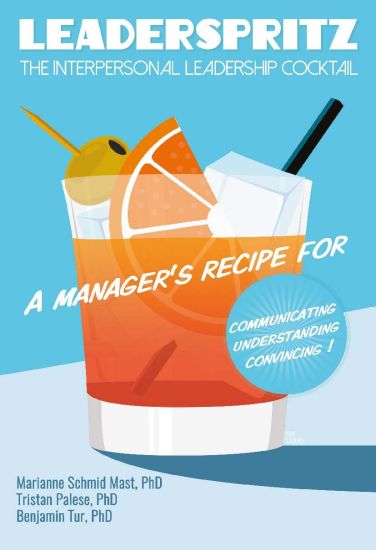
Leaderspritz – The Interpersonal Leadership Cocktail
Marianne Schmid Mast; Tristan Palese; Benjamin Tur
Epfl Press
2021
nidottu
Successful leaders tend to have one thing in common: They are experts in social interaction. They express themselves clearly and effectively, understand their colleagues, and adapt to all situations. A leader needs to not only be able to inspire, motivate, and convince those around them, but also listen, be attentive, and adapt to their coworkers. It is by combining these skills that the authors of this book have come up with the Leaderspritz: an interpersonal leadership cocktail. Written by experts in the field of leadership education in universities and corporations, Leaderspritz is based exclusively on scientific research. Whether a person is currently in a leadership position or about to become a leader, this accessible, interactive reference, which is rich in empirical results, anecdotes, scientific theories, and practical tools, will allow them to improve their skills and successfully carry out their responsibilities.
Staffing Organizations
Robert E. Ployhart; Benjamin Schneider; Neal Schmitt
CRC Press Inc
2005
sidottu
Staffing Organizations: Contemporary Practice and Theory, the new third edition of a classic in the field, shows how organizations of all sizes can use effective staffing procedures as a source of sustained competitive advantage. Practically, the book shows how to choose, develop, and administer effective staffing procedures, including conducting job analyses, defining and measuring job performance, identifying predictors of performance that are both valid and legally defensible, and using this information to make sound hiring decisions. All three authors are active practitioners and recommendations based on their experiences are interwoven throughout the chapters. The authors are also grounded in a scientific, conceptual perspective that informs what they say and do in the staffing area. They review cutting-edge theory and research in diverse areas of importance to the practice of staffing, and identify scientific advances as well as areas that should be informed by additional research.Examples of such cutting-edge issues include:*multilevel staffing models linking individual, group, and organizational levels;*comprehensive consideration of diversity and cross-cultural challenges;*the opportunities and challenges of the use of information technology in staffing;*the legal, professional, and ethical challenges facing staffing practitioners;*modern statistical approaches (e.g., structural equation modeling, item response theory, hierarchical linear modeling); and*integrated models of staffing predictors and frameworks for understanding predictor and criterion spaces.Each chapter contains real-world examples and illustrations, a discussion of best practices, practical recommendations, and directions for future research. In doing so, Staffing Organizations: Contemporary Practice and Theory is a modern version of a genuine classic.
Staffing Organizations
Robert E. Ployhart; Benjamin Schneider; Neal Schmitt
CRC Press Inc
2005
nidottu
Staffing Organizations: Contemporary Practice and Theory, the new third edition of a classic in the field, shows how organizations of all sizes can use effective staffing procedures as a source of sustained competitive advantage. Practically, the book shows how to choose, develop, and administer effective staffing procedures, including conducting job analyses, defining and measuring job performance, identifying predictors of performance that are both valid and legally defensible, and using this information to make sound hiring decisions. All three authors are active practitioners and recommendations based on their experiences are interwoven throughout the chapters. The authors are also grounded in a scientific, conceptual perspective that informs what they say and do in the staffing area. They review cutting-edge theory and research in diverse areas of importance to the practice of staffing, and identify scientific advances as well as areas that should be informed by additional research.Examples of such cutting-edge issues include:*multilevel staffing models linking individual, group, and organizational levels;*comprehensive consideration of diversity and cross-cultural challenges;*the opportunities and challenges of the use of information technology in staffing;*the legal, professional, and ethical challenges facing staffing practitioners;*modern statistical approaches (e.g., structural equation modeling, item response theory, hierarchical linear modeling); and*integrated models of staffing predictors and frameworks for understanding predictor and criterion spaces.Each chapter contains real-world examples and illustrations, a discussion of best practices, practical recommendations, and directions for future research. In doing so, Staffing Organizations: Contemporary Practice and Theory is a modern version of a genuine classic.

Knowledge-Based Vocabulary Lists
Laurence Anthony; Karen Dunn; Benjamin Kremmel; Barry O'Sullivan; Norbert Schmitt
EQUINOX PUBLISHING LTD
2024
sidottu
In teaching second language (L2) vocabulary, it is useful to have a way of prioritizing words to teach from among the multitude available. Word frequency, i.e. how often various words appear in written and spoken discourse, has typically been used to inform the emphasis taken. This volume explores the need for word lists based on direct tests of learner knowledge to inform L2 pedagogy. The Knowledge-based Vocabulary Lists (KVL) are introduced, and a description of the theoretical and practical basis for their development is given, highlighting pedagogical and assessment situations in which it is beneficial to know whether learners are likely to be able produce and correctly spell the words they know. A focus on L2 learners of English from Chinese, German, and Spanish L1 backgrounds resulted in three ranked lists of English-language word knowledge. The comparative probability of learners from these language backgrounds knowing each word are presented, and the correspondence with existing information about word frequency, word acquisition sequence, and word difficulty is explored. The value of the KVL is discussed in terms of providing one of the few evidence-based descriptions of L2 form-recall vocabulary knowledge available to teachers and researchers.

Knowledge-Based Vocabulary Lists
Laurence Anthony; Karen Dunn; Benjamin Kremmel; Barry O'Sullivan; Norbert Schmitt
EQUINOX PUBLISHING LTD
2024
pokkari
In teaching second language (L2) vocabulary, it is useful to have a way of prioritizing words to teach from among the multitude available. Word frequency, i.e. how often various words appear in written and spoken discourse, has typically been used to inform the emphasis taken. This volume explores the need for word lists based on direct tests of learner knowledge to inform L2 pedagogy. The Knowledge-based Vocabulary Lists (KVL) are introduced, and a description of the theoretical and practical basis for their development is given, highlighting pedagogical and assessment situations in which it is beneficial to know whether learners are likely to be able produce and correctly spell the words they know. A focus on L2 learners of English from Chinese, German, and Spanish L1 backgrounds resulted in three ranked lists of English-language word knowledge. The comparative probability of learners from these language backgrounds knowing each word are presented, and the correspondence with existing information about word frequency, word acquisition sequence, and word difficulty is explored. The value of the KVL is discussed in terms of providing one of the few evidence-based descriptions of L2 form-recall vocabulary knowledge available to teachers and researchers.

Benjamin
University of Chicago Press
1989
nidottu
Walter Benjamin (1896-1940) has been called by Hannah Arendt the "greatest critic of the century." While an increasing number of Anglo-American literary critics draw upon Benjamin's writings in their own works, their colleagues in the philosophical community remain relatively unacquainted with his legacy. In the European intellectual world, by contrast, Benjamin's critical epistemological program, his philosophies of history and language, and his aesthetics have long since become part of philosophical discourse. The present collection of articles, many of which were contained in earlier versions in the Winter 1983 special issue of the journal The Philosophical Forum, initiates the project of establishing Benjamin's importance to philosophy. A balance of original work by Benjamin and important commentary on his works, this volume includes the crucial chapter from Benjamin's magnum opus The Arcades Project, his "Program of the Coming Philosophy," and "Central Park," as well as essays by leading scholars (including Theodor W. Adorno, Leo Lowenthal, and Rolf Tiedemann) that treat single philosophical themes and relate his ideas to those of other thinkers such as Gadamer, Goodmann, and Rosenzweig. Gary Smith's introduction to the volume provides an extremely useful and sophisticated entrée for readers unaccustomed to the breadth of Benjamin's philosophical allusions, as well as an informative summation of the contents of the volume. This book will be of interest to philosophers, literary theorists, art historians, anthropologists, and other social scientists.

Photographic model turned minor actor Benjamin Zambraia feels mocked by his spurious sort of fame. He is also haunted by Castana Beatriz, a love he lost 30 years before, but whose double has begun to crop up around town. Could Arieta Muse be Castana's daughter?

The harsh winter and great outdoors of upstate New York provide Benjamin with the only solace from an otherwise agonizing existence. His mother's abusive alcoholic boyfriend, the bully on the bus, and a Math teacher who pays a little too much attention to schoolboys are slowly chipping away at his dignity and feelings of self-worth. Benjamin clings to any sense of normalcy, until a series of escalating events drives him to the very edge of suicide. He begs God for help-a divine intervention-but his prayers go unanswered until he has an epiphany: God helps those who help themselves.

Benjamin is a talented seven year old artist who was given the gift of clairvoyance from God to help his family and friends cope with tragedies from the past and tragedies yet to come. Benji's older brother Billy and Billy's best friend Trevor are jealous of Benji's artistic ability until he shows them how he envisions a picture on the canvas. Together, the three of them create a painting and use it to locate a missing toddler. Through Benji's gift of foresight, God informs him about a death in the family in the not-so-distant future. Benji has accepted this to be true, but will his family?


