

Kirjahaku
Etsi kirjoja tekijän nimen, kirjan nimen tai ISBN:n perusteella.
1000 tulosta hakusanalla Benjamin T Wells




The Autobiography of Benjamin Franklin (Royal Collector's Edition) (Case Laminate Hardcover with Jacket)
Benjamin T Franklin
Royal Classics
2024
sidottu
The Autobiography of Benjamin Franklin is an iconic memoir written by one of America's Founding Fathers. It covers Franklin's life from his early years in Boston through his rise as a successful printer, scientist, and statesman. The autobiography reflects Franklin's journey from humble beginnings to becoming a key figure in the American Enlightenment. Franklin shares anecdotes and insights into his experiences, values, and philosophies, particularly focusing on self-improvement, hard work, and the pursuit of knowledge. The narrative showcases his belief in the virtues of frugality, industriousness, and community service, which shaped his achievements and leadership.The autobiography holds historical significance as both a personal account and a blueprint for success in early American society. Franklin's reflections on civic duty, scientific inquiry, and personal development provide a window into the ideals that influenced the formation of the United States. The book is widely regarded as a classic in American literature, offering timeless lessons on ambition, ethics, and the value of education. It has also influenced generations of readers worldwide, inspiring individuals to follow Franklin's example of self-determination and civic responsibility.This case laminate collector's edition includes a Victorian-inspired dust jacket.
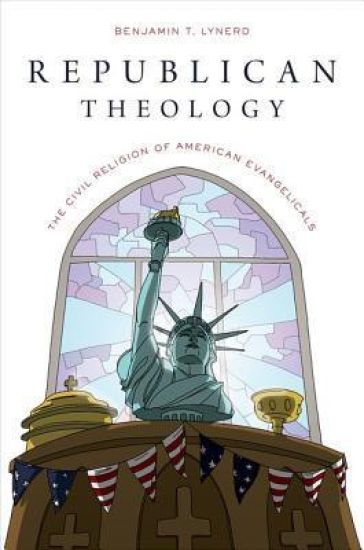
As an electoral bloc, contemporary white evangelical Christians maintain a remarkable ideological and partisan conformity, perhaps unmatched by any other community outside of African Americans. Historically, evangelicals have supported various political parties, but their approach to civil religion, or the way that they apply the spiritual to the public realm, has, as Republican Theology argues, been consistent in its substance since the founding of the nation. Put simply, this civil religion holds that limited government and a free-market are essential to the cultivation of Christian virtue, while the livelihood of the republic depends on the virtue of its citizens. While evangelicals have long promoted conservative moral causes, from temperance and anti-obscenity in the nineteenth century to abstinence education in the twentieth, they have also aligned themselves on many other seemingly unrelated agendas: in support of the Revolution in the 1770s, on antislavery in the 1820s, against labor unionism in the 1880s, against the New Deal in the 1930s, on assertive anticommunism in the 1950s (a major theme in Billy Graham's early sermons), and in favor of deregulation and lower taxes in the 1980s. As Benjamin T. Lynerd contends, the rise of the "New Right " movement at the end of the twentieth century had as much to do with small-government ideology as with a recovery of traditional morality. This libertarian ethos combined with restrictive public moralism is conflicted, and it creates friction both within the New Right alliance and within the church, particularly among evangelicals interested in social justice. Still, it has formed the entire subtext of evangelical participation in American politics from the 1770s into the twenty-first century. Lynerd looks at the evolution of evangelical civil religion, or "republican theology " to demonstrate how evangelicals navigate this logic.
As an electoral bloc, contemporary white evangelical Christians maintain a remarkable ideological and partisan conformity, perhaps unmatched by any other community outside of African Americans. Historically, evangelicals have supported various political parties, but their approach to civil religion, or the way that they apply the spiritual to the public realm, has, as Republican Theology argues, been consistent in its substance since the founding of the nation. Put simply, this civil religion holds that limited government and a free-market are essential to the cultivation of Christian virtue, while the livelihood of the republic depends on the virtue of its citizens. While evangelicals have long promoted conservative moral causes, from temperance and anti-obscenity in the nineteenth century to abstinence education in the twentieth, they have also aligned themselves on many other seemingly unrelated agendas: in support of the Revolution in the 1770s, on antislavery in the 1820s, against labor unionism in the 1880s, against the New Deal in the 1930s, on assertive anticommunism in the 1950s (a major theme in Billy Graham's early sermons), and in favor of deregulation and lower taxes in the 1980s. As Benjamin T. Lynerd contends, the rise of the "New Right " movement at the end of the twentieth century had as much to do with small-government ideology as with a recovery of traditional morality. This libertarian ethos combined with restrictive public moralism is conflicted, and it creates friction both within the New Right alliance and within the church, particularly among evangelicals interested in social justice. Still, it has formed the entire subtext of evangelical participation in American politics from the 1770s into the twenty-first century. Lynerd looks at the evolution of evangelical civil religion, or "republican theology " to demonstrate how evangelicals navigate this logic.

There is hope in Alzheimer's disease, but it isn't where most people look for it...Any form of dementia is terrifying and lonely for both the one suffering it and for those close to them. How do our relationships with those we love change with loss of memory or clarity of thought? What happens to our relationship with God?For those suffering from early-stage Alzheimer's, for their friends and family, community and church, this book will help you understand the disease itself, how to love and care for those affected by it, and how to see the hope that's greater than it: we may forget, but God always remembers.With pastoral tenderness and gospel confidence, Dr. Benjamin Mast shares his expertise on the subject and displays the power of the gospel that remains intact even when memory fades. Second Forgetting provides:Up-to-date answers to common questions about the disease and its effect on personal identity and faith.Personal stories of those affected and the loved ones who care for them and what their experiences were like—where they found hope and how they most needed support.Practical suggestions for how the church can come alongside families and those struggling or hurting.When a person is diagnosed with Alzheimer's, they face great uncertainty, knowing that they can expect to live their remaining years with increasing confusion and progressively greater reliance upon other people to care for them. Dr. Mast will help you see how Alzheimer's disease cannot have the final say on God's unforgotten children.
The Kings of Celtic Scotland examines the formation and development of the early medieval Scottish Kingdom. Using a study of the individual monarchs, from the 9th to 11th centuries, the supremacy of the Scots in northern Britain is placed in the wider context of Irish and English history. This study uses family history and literature in conjunction with political narrative and places medieval Celtic history into the tradition of Scottish historical research.
This book gives a text, an English translation, and a commentary on a medieval verse history of the kings of Ireland and Scotland from the ninth to the 11th centuries. This study examines the Prophecy of Berchán as a historical record with much to offer students of kingship among the Irish and Scots. Biographies of individual monarchs provided therein present the important events of each ones career, the length of his reign, and the circumstances of his death. This study suggests new interpretations of British and Irish history during the early middle ages.
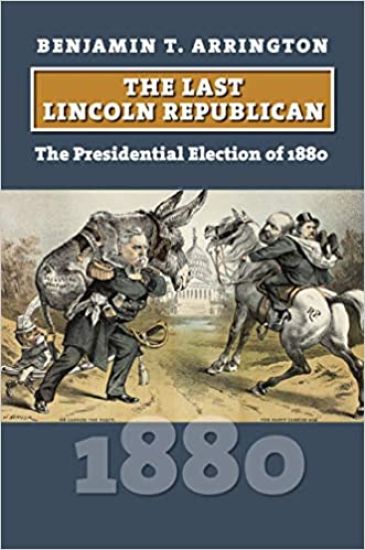
Of all the great 'what if' scenarios in American history, the aftermath of the presidential election of 1880 stands out as one of the most tantalizing. The end of the Civil War and the assassination of Abraham Lincoln had thrown the future of Lincoln's vision for the country into considerable doubt; the years that followed - marked by impeachment, constitutional change, presidential scandals, and the contested election of 1876 - saw Republicans fighting to retain power as they transitioned into the party of 'big business.' Enter James A. Garfield, a seasoned politician known for his advocacy of civil rights, who represented the last potential Reconstruction presidency: truly, Benjamin T. Arrington suggests in this book, the last 'Lincoln Republican.'The story of the presidential election of 1880, fully explored for the first time in The Last Lincoln Republican, is a political drama of lasting consequence and dashed possibilities. A fierce opponent of slavery before the war, Garfield had fought for civil rights for African Americans for years in Congress. Holding true to the original values of the Republican Party, Garfield wanted to promote equal opportunity for all; meanwhile, Democrats, led by Winfield Scott Hancock, sought to return the South to white supremacy and an inferior status for African Americans. With its in-depth account of the personalities and issues at play in 1880, Arrington's book provides a unique perspective on how this critical election continues to resonate through our national politics and culture to this day.A close look at the contest of 1880 reveals that Garfield's victory could have been the start of a period of greater civil rights legislation, a continuation of Lincoln's vision. This was the choice made by the American people - and, as The Last Lincoln Republican makes poignantly clear, the great opportunity forever lost when Garfield was assassinated just a few months into his term.
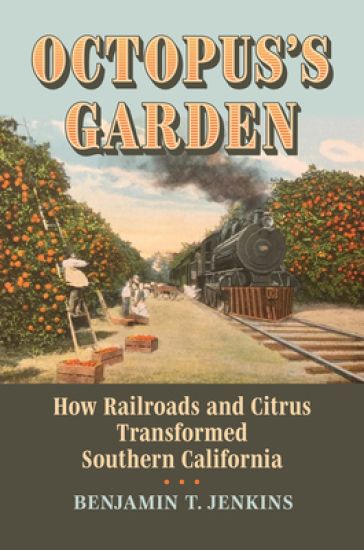
As Southern California recovered from the collapse of the cattle industry in the 1860s, the arrival of railroads—attacked by newspapers as the greedy “octopus”—and the expansion of citrus agriculture transformed the struggling region into a vast, idealized, and prosperous garden. New groves of the latest citrus varieties and new towns like Riverside quickly grew directly along the tracks of transcontinental railroads. The influx of capital, industrial technology, and workers, especially people of color, energized Southern California and tied it more closely to the economy and culture of the United States than ever before.Benjamin Jenkins’s Octopus’s Garden argues that citrus agriculture and railroads together shaped the economy, landscape, labor systems, and popular image of Southern California. Orange and lemon growing boomed in the 1870s and 1880s while railroads linked the region to markets across North America and ended centuries of geographic isolation for the west coast. Railroads competed over the shipment of citrus fruits from multiple counties engulfed by the orange empire, resulting in an extensive rail network that generated lucrative returns for grove owners and railroad businessmen in Southern California from the 1890s to the 1950s.While investment from white Americans, particularly wealthy New Englanders, formed the financial backbone of the Octopus’s Garden, citrus and railroads would not have thrived in Southern California without the labor of people of color. Many workers of color took advantage of the commercial developments offered by railroads and citrus to economically advance their families and communities. However, these people of color also suffered greatly under the constant realities of bodily harm, low wages, and political and social exclusion. Promoters of the railroads and citrus cooperatives touted California as paradise for white Americans and minimized the roles of non-white laborers by stereotyping them in advertisements and publications. These practices fostered conceptions of California’s racial hierarchy by praising privileged whites and maligning the workers who made them prosper.The Octopus’s Garden continues to shape Southern Californians’ understanding of their past. In bringing together multiple storylines, Jenkins provides a complex and fresh perspective on the impact of citrus agriculturalists and railroad companies in Southern Californian history.
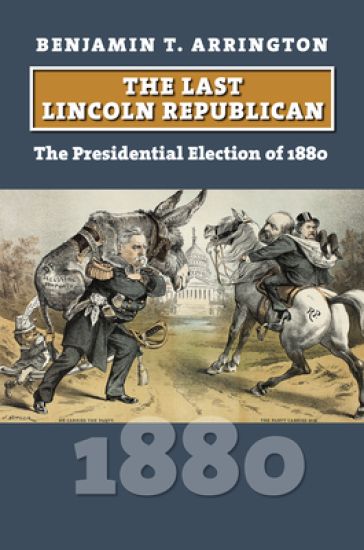
Of all the great “what if” scenarios in American history, the aftermath of the presidential election of 1880 stands out as one of the most tantalizing. The end of the Civil War and the assassination of Abraham Lincoln had thrown the future of Lincoln’s vision for the country into considerable doubt; the years that followed—marked by impeachment, constitutional change, presidential scandals, and the contested election of 1876—saw Republicans fighting to retain power as they transitioned into the party of “big business.” Enter James A. Garfield, a seasoned politician known for his advocacy of civil rights, who represented the last potential Reconstruction presidency: truly, Benjamin T. Arrington suggests in this book, the last “Lincoln Republican.”The story of the presidential election of 1880, fully explored for the first time in The Last Lincoln Republican, is a political drama of lasting consequence and dashed possibilities. A fierce opponent of slavery before the war, Garfield had fought for civil rights for African Americans for years in Congress. Holding true to the original values of the Republican Party, Garfield wanted to promote equal opportunity for all; meanwhile, Democrats, led by Winfield Scott Hancock, sought to return the South to white supremacy and an inferior status for African Americans. With its in-depth account of the personalities and issues at play in 1880, Arrington’s book provides a unique perspective on how this critical election continues to resonate through our national politics and culture to this day.A close look at the contest of 1880 reveals that Garfield’s victory could have been the start of a period of greater civil rights legislation, a continuation of Lincoln’s vision. This was the choice made by the American people—and, as The Last Lincoln Republican makes poignantly clear, the great opportunity forever lost when Garfield was assassinated just a few months into his term.
Republicanism and Responsible Government
Benjamin T. Jones
McGill-Queen's University Press
2014
sidottu
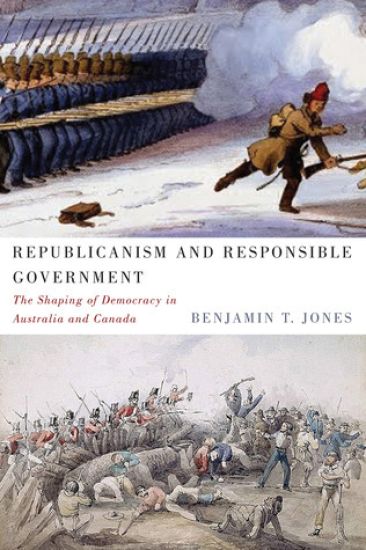
Despite remarkable similarities, little attempt has been made to compare the political development of colonial-era Australia and Canada. Both nations were born as British colonies and used violent and non-violent means to agitate for democratic freedoms. Republicanism and Responsible Government explores how these sister colonies transformed the very nature of the British Empire by insisting on democratic self-rule. Focusing on the middle of the nineteenth century, Benjamin Jones explores key points in colonial Australian and Canadian history - Canada's Rebellions of 1837-38 and the Durham Report, and Australia's anti-transportation movement and the Eureka Stockade. Previously, historians have looked to liberalism when explaining radicalism and democratization. Jones, however, contends that Canadian and Australian radicals and reformers were influenced by the ancient political philosophy of civic republicanism, with its focus on collectivism, civic duty, and virtue. William Lyon Mackenzie and John Dunmore Lang, he argues, did not champion republicanism to achieve individual rights but to create a virtuous society free from the corruption they saw in the status quo. Republicanism and Responsible Government challenges traditional interpretations of key events in Australian and Canadian history and shows that even though both nations remain constitutional monarchies, republican ideas have shaped their foundations since the earliest days of settlement.
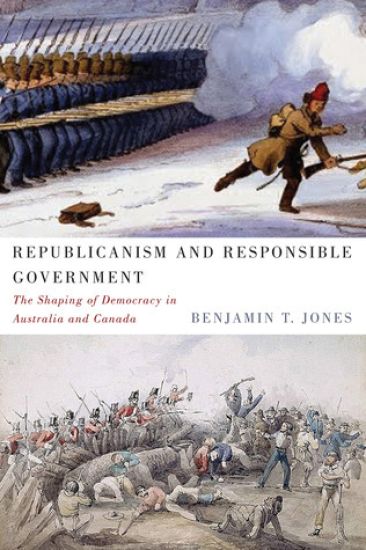
Republicanism and Responsible Government
Benjamin T. Jones
McGill-Queen's University Press
2014
nidottu
Despite remarkable similarities, little attempt has been made to compare the political development of colonial-era Australia and Canada. Both nations were born as British colonies and used violent and non-violent means to agitate for democratic freedoms. Republicanism and Responsible Government explores how these sister colonies transformed the very nature of the British Empire by insisting on democratic self-rule. Focusing on the middle of the nineteenth century, Benjamin Jones explores key points in colonial Australian and Canadian history - Canada's Rebellions of 1837-38 and the Durham Report, and Australia's anti-transportation movement and the Eureka Stockade. Previously, historians have looked to liberalism when explaining radicalism and democratization. Jones, however, contends that Canadian and Australian radicals and reformers were influenced by the ancient political philosophy of civic republicanism, with its focus on collectivism, civic duty, and virtue. William Lyon Mackenzie and John Dunmore Lang, he argues, did not champion republicanism to achieve individual rights but to create a virtuous society free from the corruption they saw in the status quo. Republicanism and Responsible Government challenges traditional interpretations of key events in Australian and Canadian history and shows that even though both nations remain constitutional monarchies, republican ideas have shaped their foundations since the earliest days of settlement.
How might a church infused with missional theology change the way it approaches Christian practices? Interacting both with the missional theology of George Hunsberger and Darrell Guder and with the theology of Christian practices laid out by Craig Dykstra and Dorothy Bass, Benjamin T. Conner argues that allowing these two disciplines to inform one another can enhance the nature of the church's witness, its congregational discipleship, and its theological education. Framing his work with real-world narratives and applications inspired by his work as a minister to adolescents with special needs, Conner shows how a practical missional mindset can redefine and reinvigorate the spirit and purpose of a congregation.

Nearly twenty percent of adolescents have developmental disabilities, yet far too often they are marginalized within churches. Amplifying Our Witness challenges congregations to adopt a new, practice-centered approach to congregational ministry -- one that includes and amplifies the witness of adolescents with developmental disabilities. Replete with stories taken from Benjamin Conner's own extensive experience with befriending and discipling adolescents with developmental disabilities, Amplifying Our Witness Shows how churches exclude the mentally disabled in various structural and even theological waysStresses the intrinsic value of kids with developmental disabilitiesReconceptualizes evangelism to adolescents with developmental disabilities, emphasizing hospitality and friendship.
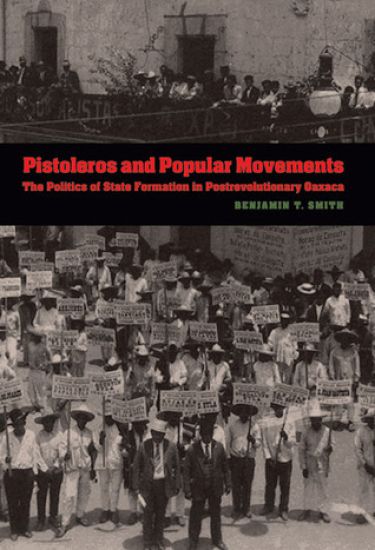
The postrevolutionary reconstruction of the Mexican government did not easily or immediately reach all corners of the country. At every level, political intermediaries negotiated, resisted, appropriated, or ignored the dictates of the central government. National policy reverberated through Mexico's local and political networks in countless different ways and resulted in a myriad of regional arrangements. It is this process of diffusion, politicking, and conflict that Benjamin T. Smith examines in Pistoleros and Popular Movements.Oaxaca's urban social movements and the tension between federal, state, and local governments illuminate the multivalent contradictions, fragmentations, and crises of the state-building effort at the regional level. A better understanding of these local transformations yields a more realistic overall view of the national project of state building. Smith places Oaxaca within this larger framework of postrevolutionary Mexico by comparing the region to other states and linking local politics to state and national developments. Drawing on an impressive range of regional case studies, this volume is a comprehensive and engaging study of postrevolutionary Oaxaca's role in the formation of modern Mexico.
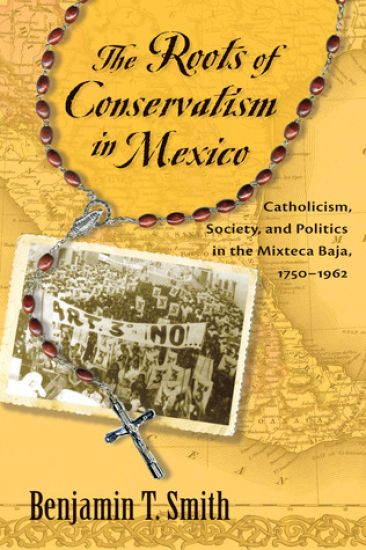
The Roots of Conservatism is the first attempt to ask why over the past two centuries so many Mexican peasants have opted to ally with conservative groups rather than their radical counterparts. Blending socioeconomic history, cultural analysis, and political narrative, Smith’s study begins with the late Bourbon period and moves through the early republic, the mid-nineteenth-century Reforma, the Porfiriato, and the Revolution, when the Mixtecs rejected Zapatista offers of land distribution, ending with the armed religious uprising known as the “last Cristiada,” a desperate Cold War bid to rid the region of impious “communist” governance. In recounting this long tradition of regional conservatism, Smith emphasises the influence of religious belief, church ritual, and lay-clerical relations both on social relations and on political affiliation. He posits that many Mexican peasants embraced provincial conservatism, a variant of elite or metropolitan conservatism, which not only comprised ideas on property, hierarchy, and the state, but also the overwhelming import of the church to maintaining this system.
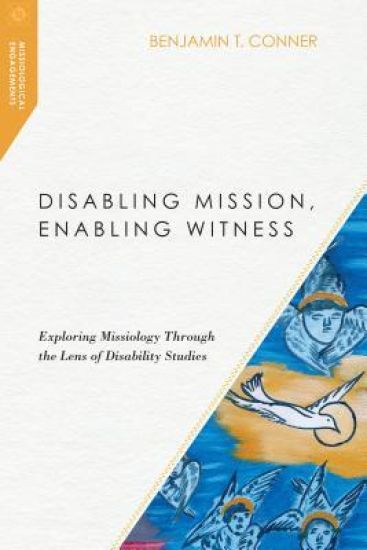
Disabling Mission, Enabling Witness – Exploring Missiology Through the Lens of Disability Studies
Benjamin T. Conner
IVP Academic
2018
nidottu
In recent decades churches have accommodated people with disabilities in various ways. Through access ramps and elevators and sign language, disabled persons are invited in to worship. But are they actually enfolded into the church's mission? Have the able-bodied come to recognize and appreciate the potential contributions of people with disabilities in the ministry and witness of the church? Benjamin Conner wants to stimulate a new conversation between disability studies and Christian theology and missiology. How can we shape a new vision of the entire body of Christ sharing in the witness of the church? How would it look if we "disabled" Christian theology, discipleship, and theological education? Conner argues that it would in fact enable congregational witness. He has seen it happen and he shows us how. Imagine a church that fully incorporates persons with disabilities into its mission and witness. In this vision, people with disabilities contribute to the church’s pluriform witness, and the congregation embodies a robust hermeneutic of the gospel. Picture the entire body of Christ functioning beyond distinctions of dis/ability, promoting mutual flourishing and growing into fullness. Here is an enlargement of the church’s witness as a sign, agent, and foretaste of the kingdom of God. Here is a fresh and inspiring look at the mission of the church when it enfolds people with disabilities as full members. Missiological Engagements charts interdisciplinary and innovative trajectories in the history, theology, and practice of Christian mission, featuring contributions by leading thinkers from both the Euro-American West and the majority world whose missiological scholarship bridges church, academy, and society.