In a remarkable combination of personal reflections, official dispatches, and sophisticated political analysis, Berlin Witness recounts the dramatic story of the erosion of Communism in East Germany and the forging of the new Germany. Jonathan Greenwald arrived in East Berlin in the summer of 1987, when discontented East German youths were shouting "Gorby, Gorby!" on Unter den Linden and Erich Honecker was still received in Bonn as the respected leader of the Soviet Union's most powerful ally. Germany was divided, and Honecker's GDR was a cornerstone of the armed but apparently stable security order that grew up after the Second World War.As Political Counselor of the American Embassy, Greenwald expected to chronicle Europe's evolution away from East-West confrontation and to assess for the State Department the implications of strengthening ties between the two German states that were beginning to cause unease in the alliances of both superpowers. Instead, he found and described a revolution that climaxed with the fall of the Berlin Wall, the collapse of the Soviet Empire, and the unification of Germany.The daily entries, beginning with a traditional Communist May Day 1989 when time seemed to stand still, tell the story of that astonishing year from the unique perspective of a senior American diplomat. Greenwald had access not only to the leading personalities of the GDR, including Honecker, Egon Krenz, and Gregor Gysi, but also to the idealistic young people and churchmen who set in motion the events that astonished the world and changed all our lives. He participated in the often frustrating efforts to shape an American policy response to the accelerating crisis. In his Afterword, he offers insightful, and sometimes skeptical, observations about the rush to unification that has left Germany whole and free but racked by new tensions and self-doubts.Provocative and personal, Berlin Witness is likely to be the definitive American description of the first phase of the German Revolution until the government opens its archives in the next century and will be a valuable resource for anyone wishing to understand the background of the new Germany.
In a remarkable combination of personal reflections, official dispatches, and sophisticated political analysis, Berlin Witness recounts the dramatic story of the erosion of Communism in East Germany and the forging of the new Germany. Jonathan Greenwald arrived in East Berlin in the summer of 1987, when discontented East German youths were shouting "Gorby, Gorby!" on Unter den Linden and Erich Honecker was still received in Bonn as the respected leader of the Soviet Union's most powerful ally. Germany was divided, and Honecker's GDR was a cornerstone of the armed but apparently stable security order that grew up after the Second World War.As Political Counselor of the American Embassy, Greenwald expected to chronicle Europe's evolution away from East-West confrontation and to assess for the State Department the implications of strengthening ties between the two German states that were beginning to cause unease in the alliances of both superpowers. Instead, he found and described a revolution that climaxed with the fall of the Berlin Wall, the collapse of the Soviet Empire, and the unification of Germany.The daily entries, beginning with a traditional Communist May Day 1989 when time seemed to stand still, tell the story of that astonishing year from the unique perspective of a senior American diplomat. Greenwald had access not only to the leading personalities of the GDR, including Honecker, Egon Krenz, and Gregor Gysi, but also to the idealistic young people and churchmen who set in motion the events that astonished the world and changed all our lives. He participated in the often frustrating efforts to shape an American policy response to the accelerating crisis. In his Afterword, he offers insightful, and sometimes skeptical, observations about the rush to unification that has left Germany whole and free but racked by new tensions and self-doubts.Provocative and personal, Berlin Witness is likely to be the definitive American description of the first phase of the German Revolution until the government opens its archives in the next century and will be a valuable resource for anyone wishing to understand the background of the new Germany.
This book meticulously follows the volatile and frequently threatening relationship between the Western powers and the Soviet Union with regard to Berlin. The authors begin their study at that point when the State Department first considered the fate of Berlin during World War II and take the reader through to the 1971 Four Power Agreement that governs the present operation of the city ending with their assessment of its implications for the future. The book provides an in-depth understanding of the 1971 agreement as well as the disputes and interests which defined the major powers' positions on Berlin and, to a large extent, determined the city's post-war fate. The authors examine in detail the negotiations that culminated in the Four Powers Agreement and include much heretofore unpublished information stemming from their personal roles in the negotiating process.Sutterlin and Klein contend that after the extended period of dangerous tension and confrontation surrounding Berlin after World War II, the four powers have succeeded in defining a modus vivendi for Berlin that has substantially improved the conditions of life for the residents of West Berlin and removed the city as a serious hindrance to the normalization of East-West relations. The book also asserts that the agreement led to more constructive relations between the Soviet Union and the United States in dealing with other world problems. At the same time the authors view the sensitive areas of the quadripartite relationship from the perspective of the East and West Germans presenting a situation less than totally satisfactory. The book assesses the negotiations leading to the 1971 agreement as successful from the Western perspective, and probably from the Soviet Perspective as well. The authors contend that the particular negotiating procedure followed by Henry Kissinger and other U.S. representatives were needlessly deceptive and dangerous as a precedent.
Expatriates posing as detached yet patriotic American commentators, and using the news-of-the-day voice of the stereotypical radio announcer, sought to turn U.S. opinion against the British and achieve the political objectives of their media-savvy employer--master propagandist Paul Josef Goebbels. Riveting biographies in Berlin Calling put real names and faces behind the voices of The Georgia Peach, Mr. O.K., Paul Revere, and others. Were they motivated by antipathy towards New Deal programs or were they simply hucksters in search of a payroll check? Ten years on historical research have culminated in a landmark book with intriguing answers to these puzzling questions.Published to coincide with the 50th anniversary of America's entry into World War II, this volume chronicles the careers of eight U.S.A. Zone commentators who worked for Nazi propagandist Josef Goebbels. Drawing upon a variety of documentary sources--letters written by the subjects to family, friends, and colleagues; treason trial transcripts; the contents of the BBC's wartime monitoring service; and FBI case files on the broadcasters--the author explores each broadcaster's political and personal motivations, and the influence of their broadcasts.
This collection of essays breaks new ground in looking at Berlin after the fall of the Wall as the city struggles to re-establish itself as the cultural and political capital of Germany. The essays offer insightful readings of the metropolis, its people and institutions, as a paradigm for modern Germany. They focus on important cultural developments and changes as they occurred especially, but not exclusively, in Berlin. Issues explored include women's role in the restructuring of higher education in Berlin, the impact of State Security at Humboldt University, problems of a growing immigrant population, and the innovative counter-culture ventures in the Prenzlauer Berg district. Other chapters address major cinematic responses to the city by reknowned filmmakers Wim Wenders, Walter Ruttman, and Helke Sander; and the representation of Berlin and the Berlin Wall in modern fiction. This volume makes an important contribution to the discourse on German identity.
44 SCOTLAND STREET - Book 7 The residents and neighbors of 44 Scotland Street and the city of Edinburgh come to vivid life in these gently satirical, wonderfully perceptive serial novels, featuring six-year-old Bertie, a remarkably precocious boy--just ask his mother. If you haven't met the residents of 44 Scotland Street yet, there is no better time, since everyone seems to be in the midst of new beginnings. New parents Matthew and Elspeth must muddle through the difficulties of raising their triplets Rognvald, Tobermory and Fegus--there's normal sleep deprivation, and then there's trying to tell the children apart from one another. Angus and Domenica are newly engaged, and now they must negotiate the complex merger of two households. Domenica is also forced to deal with the return of an old flame, while Big Lou has begun the search for a new one, boldly exploring the new world of online dating and coming up with an Elvis impersonator on the first try. And in Bertie's family, there's a shift in power as his father Stuart starts to stand up to overbearing mother, Irene--and then there's Bertie, who has been thinking that he might want to start over with a new family and so puts himself up for adoption on eBay. With his signature charm and gentle wit Alexander McCall Smith vividly portrays the lives of Edinburgh's most unique and beloved characters.
What is the real purpose of Soviet pressure on Berlin? Why has it been the scene of crisis after crisis ever since the Declaration of 1945? Mander reviews the events in Berlin over the past 17 years to illuminate the many faces of this intractable situation.
In the tenth anniversary year of his beloved series, Alexander McCall Smith returns with more delightful adventures from the charming eccentrics who reside in Scotland Street.
Book 18 in the hugely popular 44 Scotland Street series by worldwide bestselling author Alexander McCall Smith "It's like ice cream, Mr Flynn," Bertie continued. "When you have ice cream, you need to eat it straight away, otherwise it melts. If there are people who haven't got any, you should share it, if you can." When despair for the world grows, Bertie's theory of ice cream reminds us that it's the simple pleasures in life that we should hold onto. And everyone's favourite seven-year-old has a lot to put up with: at home, Irene is planning lessons on Irish Culture for Bertie; at school, he is forced to join Olive and Pansy's book group, and during a day out with his best friend Ranald Braveheart Macpherson, the boys find themselves unexpectedly invited to a wedding. Meanwhile, Bruce's latest property venture goes horribly wrong after trying to move a flat's front door to give it a more prestigious address. At Nine Mile Burn, Matthew and the triplets try to adopt an unwillingly-vegan dog. And Sister Maria-Fiori dei Fiore Montagna discovers the missing part of the Stone of Scone in Drummond Place Gardens. Filled with Alexander McCall Smith's trademark warmth and humour, this latest book in the series is a must-read.
Berlin has been a central issue in the postwar dispute between East and West and was often the spark that brought the Soviet bloc and the West to the brink of confrontation. Although the city's role in international politics has been muted in the nearly quarter century since the erection of the Berlin Wall, its political status remains unsettled, and its potential to precipitate a crisis and even a military conflict has lessened only by degree. The contributors to this volume discuss Berlin's future from the perspective of all the major national actors involved. Just as the Quadripartite Agreement of 1971 was a necessary prerequisite for East-West detente, any future change in the division of Germany or in East-West relations will require fundamental shifts in long-held positions on the status of Berlin. The authors show how the perceptions, stakes, and even risks of the Berlin issue vary by nation and explore the reasons why Berlin is likely to continue to be an obstacle to East-West cooperation.
This book discusses Berlin's future from the perspective of all the major national actors involved. It shows how the perceptions, stakes, and even risks of the Berlin issue vary by nation and explores the reasons why Berlin is likely to continue to be an obstacle to East-West cooperation.
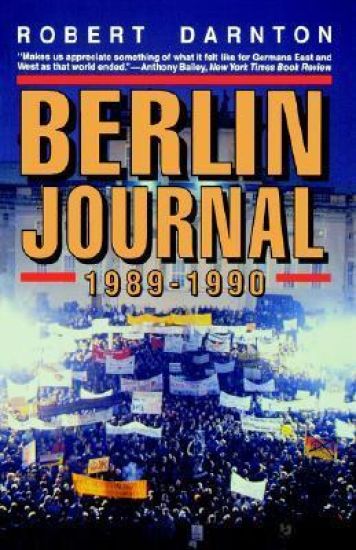
Shock waves from the fall of the Berlin Wall in November 1989 continue to pulse through German society. As the difficult process of reunification continues, it is worth recalling the revolutionary moment when immense crowds took to the streets of Leipzig and Berlin under the banner “We Are the People” and brought down one of the world’s most oppressive dictatorships. Robert Darnton’s eyewitness account of those historic days “is direct and vivid. His prose conveys the immediacy of the drama.” He gives us a memorable cast of characters, from two experts on the repair of broken-down Trabis to the environmental councilor for the polluted city of Bitterfeld, and Isaak Behar, a Jew who managed to survive the Holocaust while hiding in wartime Berlin. With wit and insight Darnton takes us behind the scenes to meet “ordinary people grappling with great change, humanizing history.”
The secret diaries of a twenty-three-year-old White Russian princess who worked in the German Foreign Office from 1940 to 1944 and then as a nurse, these pages give us a unique picture of wartime life in that sector of German society from which the 20th of July Plot -- the conspiracy to kill Hitler -- was born. "A skillful weaving of history, memoir, and autobiography...full of colorful characters...When she began writing in 1940, Missie, as she was called, was...concerned mainly with beaux and parties....By 1945 she has no more illusions. She has foraged for food....She has smelled the decaying flesh of corpses buried in the bombed ruins of Berlin and Vienna and lost some of her best friends." -- Washington Post Book World"Neither a set of reflections flor a philippic, but a record ...The best eyewitness account we possess of the bombing of Berlin."-- Gordon A. Craig, The New York Times Book Review"A rare opportunity to see the Second World War from an unusual perspective: the view from Berlin and Vienna, not Washington or London. [The author] has a sharp eye and a witty tongue." -- Cleveland Plain Dealer"A vivid insider's view of Nazi Germany." -- Vanity Fair"One of the most remarkable documents to come out of the war, and nothing will ever quite match its calm and grace in utterly hideous circumstances."-- John Kenneth Galbraith
This volume consists of a book and downloadable resources containing a facsimile collection of diplomatic documents covering British reactions to critical developments regarding Berlin, its quadripartite administration, and role in the Cold War during the crises of 1948-49, 1959-61 and 1988-90. These events were each set within very different international contexts, but four interrelated themes are nevertheless common to each of the three chapters of the volume: the British Government’s insistence, in conjunction with the Americans and the French, on upholding and safeguarding the rights of the four occupying powers in Berlin; British concerns with broader matters of military security in Western Europe as a whole and Germany in particular; the interaction of the four occupying powers with one another; and the questions raised by demographic change, especially population movements from east to west. All of the documents dealing with the events of 1989-90 fall within the UK’s 30-year rule and are therefore not yet in the public domain.