Kirjojen hintavertailu. Mukana 12 390 323 kirjaa ja 12 kauppaa.

Kirjahaku

Etsi kirjoja tekijän nimen, kirjan nimen tai ISBN:n perusteella.

1000 tulosta hakusanalla Bernard

Bernard Shaw and Nancy Astor

Bernard Shaw and Nancy Astor

University of Toronto Press
2005
sidottu
George Bernard Shaw and Nancy Lady Astor enjoyed a close friendship for over twenty years, from the late 1920s until Shaw's death in 1950. Although opposites in many matters - particularly politics - Shaw and Astor were irresistibly attracted to each other, both being unconventional firebrands with ready wits. This collection of nearly 250 letters between Shaw and Astor - as well as between Astor and Shaw's wife, Charlotte, and Shaw's secretary, Blanche Patch - illustrates the rewarding friendship the two shared and the numerous issues they debated.Perhaps the most fascinating letters occur after Charlotte's death in 1943. Astor became concerned for Shaw's well-being, but his letters at this point reveal his growing resentment with her suffocating attentions. However, the friendship endured and the correspondence continued.More than half of the letters in this volume have never been published and many more appear in their entirety for the first time. Headnotes to the letters provide a contextual narrative and identify political, historical, literary, and theatrical references, allusions, and other relevant information. This is a crucial edition in the highly praised Selected Correspondence of Bernard Shaw series.
Bernard Shaw and William Archer

Bernard Shaw and William Archer

University of Toronto Press
2017
sidottu
Bernard Shaw and William Archer is the final volume in the series on the Selected Correspondence of Bernard Shaw. Throughout their four decades of friendship the two men campaigned for the ‘New Drama’ and the ‘New Theatre." In the early years of their activities, Archer led the campaigns with his theatre reviews and his books on contemporary British theatre. He also translated, published, and helped stage the London premieres of Henrik Ibsen’s plays. During the 1890s both Archer and Shaw used their theatre reviews to support their campaigns, and Shaw began to step forward as a playwright. As Shaw established himself as a leading modern playwright, Archer wrote dozens of reviews and articles, often arguing with Shaw over his philosophical ideas that increasingly became a defining feature of his discussion plays such as Man and Superman and Major Barbara. The two colleagues loved to debate with one another in public, and these feisty arguments regularly carried over to the letters, which bear witness to the vital partnership between a theatre critic and a playwright.
Bernard Shaw and the Webbs

Bernard Shaw and the Webbs

Bernard Shaw

University of Toronto Press
2002
sidottu
Bernard Shaw was twenty-four and Sidney Webb twenty-one when they met in October 1880 at a gathering of a debating club called the Zetetical Society. Having sympathetic interests, both men decided, after some personal and joint exploration, to devote their lives to improving the human condition. This collection of 140 annotated letters, 74 of which have never been published, documents the subsequent friendship and collaboration shared by Shaw, Webb, and Webb's wife Beatrice, throughout their lives. The letters, written between 1883 and 1946, discuss the founding of the Fabian Society, the British Labour Party, the London School of Economics, and the New Statesman through the Boer, First, and Second World Wars. Fully annotated with headnotes and footnotes, this collection will expand the general view of Shaw the dramatist to incorporate Shaw the political activist and lifelong friend of the Webbs.
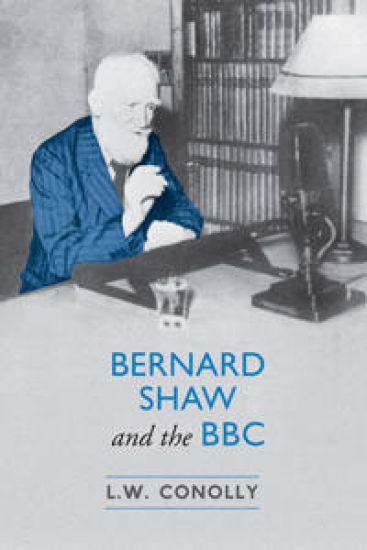
Bernard Shaw and the BBC

Bernard Shaw and the BBC

L.W. Conolly

University of Toronto Press
2009
sidottu
George Bernard Shaw's frequently stormy but always creative relationship with the British Broadcasting Corporation was in large part responsible for making him a household name on both sides of the Atlantic. From the founding of the BBC in 1922 to his death in 1950, Shaw supported the BBC by participating in debates, giving talks, permitting radio and television broadcasts of many of his plays - even advising on pronunciation questions. Here, for the first time, Leonard Conolly illuminates the often grudging, though usually mutually beneficial, relationship between two of the twentieth century's cultural giants. Drawing on extensive archival materials held in England, the United States, and Canada, Bernard Shaw and the BBC presents a vivid portrait of many contentious issues negotiated between Shaw and the public broadcaster. This is a fascinating study of how controversial works were first performed in both radio and television's infancies. It details debates about freedom of speech, the editing of plays for broadcast, and the protection of authors' rights to control and profit from works performed for radio and television broadcasts. Conolly also scrutinizes Second World War-era censorship, when the British government banned Shaw from making any broadcasts that questioned British policies or strategies. Rich in detail and brimming with Shaw's irrepressible wit, this book also provides links to online appendices of Shaw's broadcasts for the BBC, texts of Shaw's major BBC talks, extracts from German wartime propaganda broadcasts about Shaw, and the BBC's obituaries for Shaw.
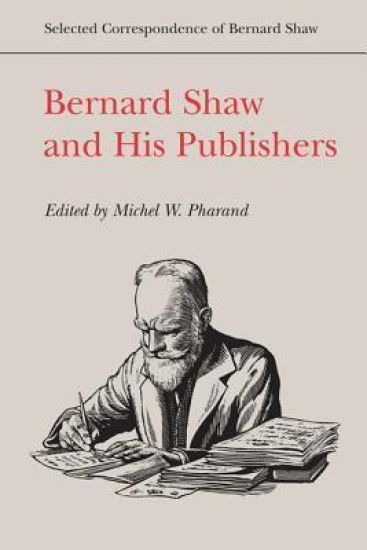
Bernard Shaw and His Publishers

Bernard Shaw and His Publishers

Michael W. Pharand

University of Toronto Press
2009
sidottu
George Bernard Shaw (1856-1950) once quipped that it is "up to the author to take care of himself." This rich selection of Shaw's correspondence with his US and UK publishers proves how much the dramatist lived up to his own words by providing the details of his steady involvement in the publication of his works. Covering nearly sixty years of a very productive career, Bernard Shaw and His Publishers is a first-hand account of Shaw's efforts to control all aspects of his works. The letters reveal Shaw's thoughts on issues ranging from pricing, advertising, copyright, and royalties, to typeface, margin size, paper choice, binding, and colour. Complete with full annotations by Michel W. Pharand, this volume sheds new light on Shaw and his working habits, as well as on the history of early-twentieth-century publishing, and will appeal to Shaw scholars and theatre researchers, as well as book and print-culture historians.
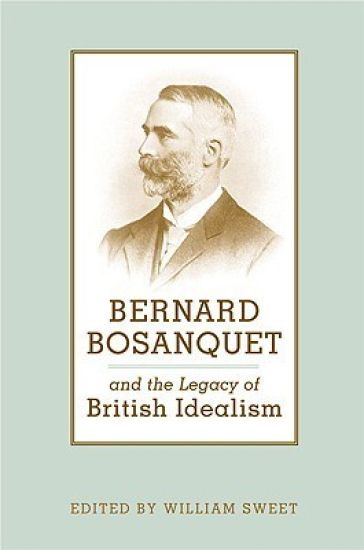
Bernard Bosanquet and the Legacy of British Idealism
Bernard Bosanquet (1848–1923) was one of the leading figures of the idealist movement in the late nineteenth and early twentieth centuries, and in his obituary in the London Times, was described as having been ‘the central figure of British philosophy for an entire generation.’ Bosanquet's views fell out of favour in the decades after his death, but recently there has been a lively renewal of interest in European and British Idealism, the Idealist approach being recognized as providing valuable insights for contemporary debates in political philosophy, ethics, aesthetics, epistemology, and logic. Idealism also serves as a bridge between the dominant philosophical traditions of twentieth century Anglo-American and continental thought, and, indeed, Bosanquet was among the first British philosophers to address the work of Benedetto Croce, Giovanni Gentile, and Edmund Husserl and to introduce these thinkers to an English-language audience.In Bernard Bosanquet and the Legacy of British Idealism, William Sweet and other leading scholars examine Bosanquet's contribution to some of philosophy's central questions. They provide a solid introduction to British Idealism and the idealist movement as a whole, and bring the scholarship on Bosanquet fully up-to-date.
The Collected Plays of Bernard Pomerance

The Collected Plays of Bernard Pomerance

Bernard Pomerance

Black Cat
2001
pokkari
In this collection of four plays, Tony Award winner Bernard Pomerance demonstrates once again that he is a writer unafraid to address, in the words of The New York Times, "challenging -- and very human -- historical subjects." In his fiction and plays, from The Elephant Man to Melons, Pomerance explores greed, despair, darkness, redemption, and most of all the human impulse to try to make sense of the world we live in. Superhighway presents the relatives of a woman ill with cancer who are unable to cope with her death. The protagonist of Quantrill in Lawrence, set during the Civil War, leads the townspeople of Lawrence into chaos. In Melons, an Apache chief and a retired army major reprise the Indian wars and embody, respectively, an imperiled traditional way of life and the century just dawning. Hands of Light is a contemporary exploration of the story of King Midas and an allegory for greed's power to disrupt the world's natural balance.
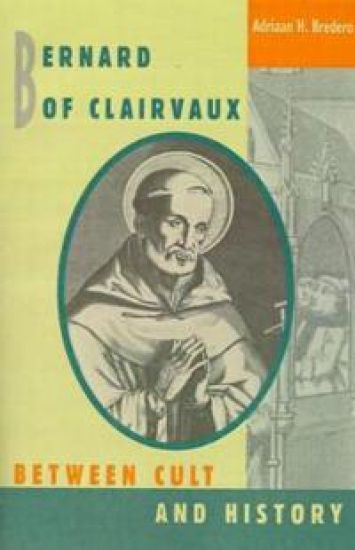
Bernard of Clairvaux

Bernard of Clairvaux

Adriaan H. Bredero

William B Eerdmans Publishing Co
2001
pokkari
Bernard of Clairvaux between Cult and History summarizes Bredero's lifelong study of Bernard, the Cistercian monk who was arguably the most influential ecclesiastical figure of the twelfth century and who remains one of the church's most venerated saints. This volume, which Bredero himself calls his "final report of a long investigation," does not pretend to offer yet another biography of Bernard. Rather, it paves the way for future biographical scholarship by pointing out - and often suggesting resolutions to - the many problems that beset this field of inquiry. Toward this end, Bredero deals care fully with three key areas in the field of Bernard studies. First, he examines the textual problems surrounding the earliest hagiography of Bernard, in particular the vita prima, and the relationship between the authors of this work and Bernard. Second, Bredero evaluates Bernard as he has been discussed in historiography and literature. Third, he deals with the question of how Bernard ought to be viewed in his own historical context, his actions during his "earthly" life. For Bredero, the "chimera" nature of Bernard the man derives from a disjunction between "history" and "cult," between Bernard as historical actor and Bernard as object of cult. This volume will be invaluable to anyone interested in these parallel strains of fact and legend and particularly so to those who would attempt to reconcile them.
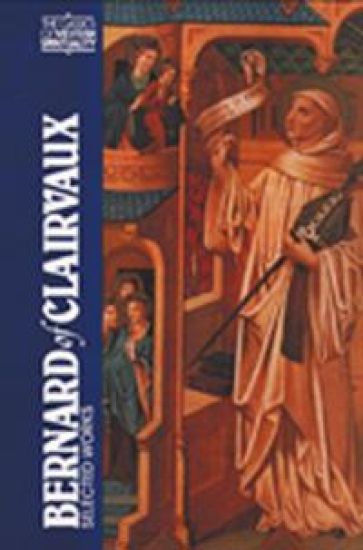
Bernard of Clairvaux

Bernard of Clairvaux

Paulist Press International,U.S.
1987
nidottu
"...a milestone in American religious publishing." New Catholic World Bernard of Clairvaux-Selected Works translation and foreword by G.R. Evans introduction by Jean Leclercq, O.S.B. preface by Ewert H. Cousins "Lord, you are good to the soul which seeks you. What are you then to the soul which finds? But this is the most wonderful thing, that no one can seek you who has not already found you. You therefore seek to be found so that you may be sought for, sought so that you may be found." —Bernard of Clairvaux (1090–1153) Born in Fontaines-lès-Dijon in 1090, Bernard had become, by his twenty-fifth birthday, the abbot of a Cistercian monastery which he had founded in the valley of Clairvaux near Aube, France, some four years earlier. There in those isolated and rugged surroundings he became the spokesman for a revival of monastic life in an age when the radical spirit of religious life was endangered by a movement, best seen in the excesses of the monks of Cluny, that stressed the adaptation of the rule of St. Benedict to the exigencies-and taste for princely comforts-of the royal courts of twelfth-century France. But Bernard's dedication to the strict observance of Benedict's rule was mingled not with the abrasive, shrill style of the prophet but with a sweetness and purity of vision that earned him the title Doctor mellifluous. For he possessed a sense of the love of God, the importance of humility, and the sheer beauty of holiness that has made his writings favorites of scholars and laymen alike throughout the ages. Here in a new translation by G.R. Evans are the writings that have had such a major role in shaping the Western monastic tradition and influencing the development of catholic mystical theology. Together with an introduction by the master of Bernard studies, Jean Leclercq, they comprise a volume that occupies a place of special importance in the chronicle of the history of the Western spiritual adventure. †
Bernard Herrmann's The Ghost and Mrs. Muir
Regarded as one of the greatest film composers of all time, Bernard Herrmann was responsible for some of the most memorable music in film. His work with Alfred Hitchcock produced a slew of classics including Vertigo (1958), North by Northwest (1959), and Psycho (1960). Several years before collaborating with Hitchcock, however, Herrmann composed the brilliant score for The Ghost and Mrs. Muir (1947), which remained a personal favorite of the composer's. Herrmann's score reinforces the film's romantic theme, and much of the music has an appropriately elegiac quality. In mood, orchestration, and even to some extent thematic identity, it seems to prefigure his music for Vertigo. In this latest addition to the Scarecrow Film Score Guide series, author David Cooper examines Herrmann's career in general, as well as the specific elements that went into the creation of The Ghost and Mrs. Muir's score. Cooper traces the development of Herrmann's craft as a film composer, especially through his radio work, where he made contact with many of the great artists of the age, most notably Orson Welles. This association was to give him a passport to Hollywood and led to the scoring of his first film, Citizen Kane. Herrmann's subsequent film scores of the 1940s included The Devil and Daniel Webster, The Magnificent Ambersons, and Jane Eyre. In this guide, Cooper considers Herrmann's musical technique and offers a theorization of some of the ways in which music can be "meaningful" in film. He also explores non-musical contexts of the film, including the screenplay's relationship to the popular novel from which it was adapted, as well as the contribution of director Joseph L. Mankiewicz, the performances of Gene Tierney and Rex Harrison, and the editing of Dorothy Spencer. Cooper also provides a quantitative, evidence-based study of the score. In doing so, he discusses the extent to which Herrmann adopted screenwriter Philip Dunne's suggestions for music in
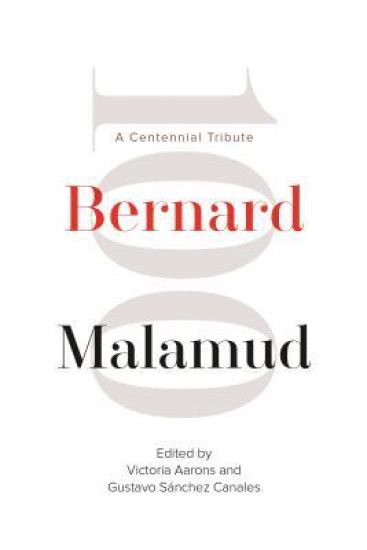
Bernard Malamud

Bernard Malamud

Wayne State University Press
2016
nidottu
Master storyteller and literary stylist Bernard Malamud is considered one of the three most influential postwar American Jewish writers, having established a voice and a presence for other authors in the literary canon. Along with Philip Roth and Saul Bellow, Malamud brought to life a decidedly American Jewish protagonist and a newly emergent voice that came to define American letters and has continued to influence writers for over half a century. This collection is a tribute to Malamud in honor of the hundredth anniversary of his birth. Literary critic Harold Bloom suggests that “Malamud is perhaps the purest storyteller since Leskov,” the nineteenth-century Russian novelist and satirist. Novelist Cynthia Ozick, in a tribute to Malamud, described him as “the very writer who had brought into being a new American idiom of his own idiosyncratic invention.”Unlike other collections devoted to Malamud, this collection is international in scope, compiling diverse essays from the United States, France, Germany, Greece, and Spain, and demonstrating the wide range of scholarship and approaches to Bernard Malamud’s fiction. The essays show the breadth and depth of this masterful craftsman and explore through his short fiction and his novels such topics as the Malamudian protagonist’s relation to the urban/natural space, Malamud’s approach to death, race and ethnicity, the Malamudian hero as modern schlemiel, and the role of fantasy in Malamud’s fiction.Bernard Malamud is a comprehensive collection that celebrates a voice that helped to shape the last fifty years of literary works. Readers of American literary criticism and Jewish studies alike will appreciate this collection.
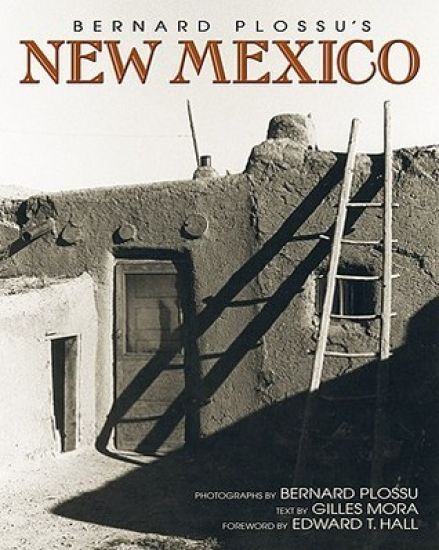
Bernard Plossu's New Mexico

Bernard Plossu's New Mexico

Edward T. Hall

University of New Mexico Press
2006
nidottu
Bernard Plossu, born in Vietnam in 1945, is one of today's best-known French photographers. His photos reflect locales he has visited all over the world: Senegal, Turkey, Poland, Mexico, Guatemala, and the American West. The photographs here were taken by Plossu in the late 1970s and are images of New Mexico - where the sun, the dust, the rain, the mud, the wind, the snow, the altitude (7000 feet), and the smells forge a uniqueness.
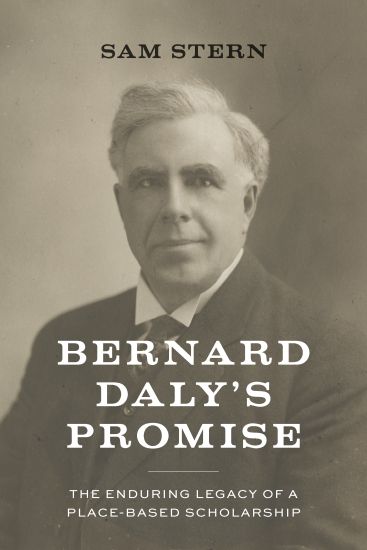
Bernard Daly's Promise

Bernard Daly's Promise

Sam Stern; Ed Ray

Oregon State University
2022
nidottu
Published in cooperation with the Dr. Daly Project Association Bernard Daly escaped the Irish Famine and with his family emigrated to America, where he became the town doctor in Lakeview, Oregon, and then a state legislator, Oregon Agricultural College regent, county judge, rancher, and banker. When he died in 1920, his estate, valued at about a million dollars, established a college scholarship for the youth of Lake County. Daly’s scholarship fund would ensure that most of the youth of tiny, remote Lake County could attend college. Drawing on more than a hundred personal interviews, an extensive web-based survey, and archival materials, this book tells the story of Daly’s life, the scholarship fund, and its impact on the recipients, who went on to remarkable careers and lives. At a time when almost no one went to college, Daly created a “college for all” possibility in a remote corner of America. The impact of the Daly Fund, one of America’s oldest continuously operating place-based scholarship, offers unique insights into the benefits of higher education and how it might best be supported – questions that we are struggling with today.
Saint Bernard's Three Course Banquet

Saint Bernard's Three Course Banquet

Bernard Bonowitz

Liturgical Press
2013
pokkari
Saint Bernard’s famous work, The Steps of Humility and Pride (in Latin, De gradibus humilitatis et superbiae), is a short book consisting of a mere fifty-seven paragraphs. In it, the Abbot of Clairvaux unpacks the doctrine of the very crucial chapter 7 of Saint Benedict’s sixth-century Rule for Monks, which explores the dynamic “steps” or “degrees” of both humility and pride. This chapter by Benedict could well be considered the spiritual basis of all Benedictine existence. In Saint Bernard’s Three-Course Banquet, Dom Bernard Bonowitz makes the teaching of both Bernard and Benedict accessible to modern readers in a set of conferences originally conceived for and delivered to a group of Cistercian “juniors,” that is, monks and nuns who had completed their novitiate but had not yet made their solemn vows. With Dom Bernard as a guide, many more readers can be sure of drinking at the purest sources of the monastic tradition, which at that depth becomes one with the Gospel itself. A convert from Judaism with a degree in Classics from Columbia University, Bernard Bonowitz was a Jesuit for nine years before entering St. Joseph’s Abbey in Spencer, Massachusetts. Immediately upon professing vows, his abbot named him master of novices, a position he held for ten years and that gave him ample opportunity to share considerable gifts of mind and heart while initiating newcomers into monastic life, at the levels of both classroom teaching and spiritual direction. In 1996 he was elected superior of the monastery of Novo Mundo in Brazil, which he soon shepherded into a true monastic springtime. In 2008, he became abbot of Novo Mundo, now a community attracting an impressive number of young men anxious to follow the way of Cistercian discipleship.