Kirjojen hintavertailu. Mukana 11 627 624 kirjaa ja 12 kauppaa.

Kirjahaku

Etsi kirjoja tekijän nimen, kirjan nimen tai ISBN:n perusteella.

1000 tulosta hakusanalla Bill G Ray

Geometry, Geodesics, and the Universe
The story of the development of geometry is told as it emerged from the concepts of the ancient Greeks, familiar from high school, to the four-dimensional space-time that is central to our modern vision of the universe. The reader is first reacquainted with the geometric system compiled by Euclid with its postulates thought to be self-evident truths. A particular focus is on Euclid's fifth postulate, the Parallel Postulate and the many efforts to improve Euclid's system over hundreds of years by proving it from the first four postulates. Two thousand years after Euclid, in the process that would reveal the Parallel Postulate as an independent postulate, a new geometry was discovered that changed the understanding of geometry and mathematics, while paving the way for Einstein's General Relativity. The mathematics to describe the non-Euclidean geometries and the geometric universe of General Relativity is initiated in the language of mathematics available to a general audience. The story is told as a mathematical narrative, bringing the reader along step by step with all the background needed in analytic geometry, the calculus, vectors, and Newton's laws to allow the reader to move forward to the revolutionary extension of geometry by Riemann that would supply Einstein with the language needed to overthrow Newton's universe. Using the mathematics acquired for Riemannian geometry, the principles behind Einstein's General Relativity are described and their realization in the Field Equations is presented. From the Field Equations, it is shown how they govern the curved paths of light and that of planets along the geodesics formed from the geometry of space-time, and how they provide a picture of the universe's birth, expansion, and future. Thus, Euclid's geometry while no longer thought to spring from perceived absolute truths as the ancients believed, ultimately provided the seed for a new understanding of geometry that in its infinite variety became central to the description of the universe, marking mathematics as a one of the great modes of human expression.
Geometry, Geodesics, and the Universe
The story of the development of geometry is told as it emerged from the concepts of the ancient Greeks, familiar from high school, to the four-dimensional space-time that is central to our modern vision of the universe. The reader is first reacquainted with the geometric system compiled by Euclid with its postulates thought to be self-evident truths. A particular focus is on Euclid's fifth postulate, the Parallel Postulate and the many efforts to improve Euclid's system over hundreds of years by proving it from the first four postulates. Two thousand years after Euclid, in the process that would reveal the Parallel Postulate as an independent postulate, a new geometry was discovered that changed the understanding of geometry and mathematics, while paving the way for Einstein's General Relativity. The mathematics to describe the non-Euclidean geometries and the geometric universe of General Relativity is initiated in the language of mathematics available to a general audience. The story is told as a mathematical narrative, bringing the reader along step by step with all the background needed in analytic geometry, the calculus, vectors, and Newton's laws to allow the reader to move forward to the revolutionary extension of geometry by Riemann that would supply Einstein with the language needed to overthrow Newton's universe. Using the mathematics acquired for Riemannian geometry, the principles behind Einstein's General Relativity are described and their realization in the Field Equations is presented. From the Field Equations, it is shown how they govern the curved paths of light and that of planets along the geodesics formed from the geometry of space-time, and how they provide a picture of the universe's birth, expansion, and future. Thus, Euclid's geometry while no longer thought to spring from perceived absolute truths as the ancients believed, ultimately provided the seed for a new understanding of geometry that in its infinite variety became central to the description of the universe, marking mathematics as a one of the great modes of human expression.
The Coming of Bill by P. G. Wodehouse, Fiction, Literary
The world knows little of its greatest women, and it is possible that Mrs. Porter's name is not familiar to you. If this is the case, I am pained, but not surprised. If you are ignorant of Lora Delane Porter's books that is your affair. Perhaps you are more to be pitied than censured. Nature probably gave you the wrong shape of forehead. Mrs. Porter's mind worked backward and forward. She had one eye on the past, the other on the future. If she was strong on heredity, she was stronger on the future of the race. . . .
The G.I. Bill

The G.I. Bill

Frydl Kathleen J.

Cambridge University Press
2009
sidottu
Scholars have argued about U.S. state development - in particular its laggard social policy and weak institutional capacity - for generations. Neo-institutionalism has informed and enriched these debates, but, as yet, no scholar has reckoned with a very successful and sweeping social policy designed by the federal government: the Servicemen's Readjustment Act of 1944, more popularly known as the GI Bill. Kathleen J. Frydl addresses the GI Bill in this study based on systematic and comprehensive use of the records of the Veterans Administration. Frydl's research situates the Bill squarely in debates about institutional development, social policy and citizenship, and political legitimacy. It demonstrates the multiple ways in which the GI Bill advanced federal power and social policy, and, at the very same time, limited its extent and its effects.
The G.I. Bill

The G.I. Bill

Kathleen J. Frydl

Cambridge University Press
2011
pokkari
Scholars have argued about U.S. state development - in particular its laggard social policy and weak institutional capacity - for generations. Neo-institutionalism has informed and enriched these debates, but, as yet, no scholar has reckoned with a very successful and sweeping social policy designed by the federal government: the Servicemen's Readjustment Act of 1944, more popularly known as the GI Bill. Kathleen J. Frydl addresses the GI Bill in this study based on systematic and comprehensive use of the records of the Veterans Administration. Frydl's research situates the Bill squarely in debates about institutional development, social policy and citizenship, and political legitimacy. It demonstrates the multiple ways in which the GI Bill advanced federal power and social policy, and, at the very same time, limited its extent and its effects.
An Assessment of Recent Proposals to Improve the Montgomery G.I. Bill
Historically among the most cost-effective inducements for recruiting military personnel, the Montgomery GI Bill has helped thousands to serve and pursue a college education following their term. Congress recently has proposed several changes that would bolster the bill's provisions and hopefully boost recruitment during an era when youth are increasingly choosing college alone.
Bill Viola

Bill Viola

John G. Hanhardt

Thames Hudson Ltd
2015
sidottu
Bill Viola began producing video works in the early 1970s, and since then has captivated audiences with his poignant and beautifully wrought interpretations of human experience. He is today considered among the most celebrated proponents of the medium of video art. This is the first monograph to chart Viola’s career in full, covering his education in New York, his earliest major films of mirages in the Sahara desert and of hospital medical imagery, his retrospective at the Whitney Museum of American Art in New York 1997 and his recent installations in Venice, New York, Tokyo, London and Berlin. Hanhardt outlines the key visual, literary and spiritual influences on Viola’s work and his changing approach to the medium of film in response to technological advancement. Woven into the discussion are illustrations of Viola’s most significant works, including Information (1973), The Passing, (1991), The Greeting (1995), Going Forth by Day (2002) and Martyrs, the 2014 film commissioned for St Paul’s Cathedral in London, as well as reproductions of Viola’s sketches and notebooks that bring his working process to life. Supplemented by a select chronology, bibliography and list of public collections, Bill Viola offers a rare and fascinating account of one of contemporary art’s most powerful creative minds.
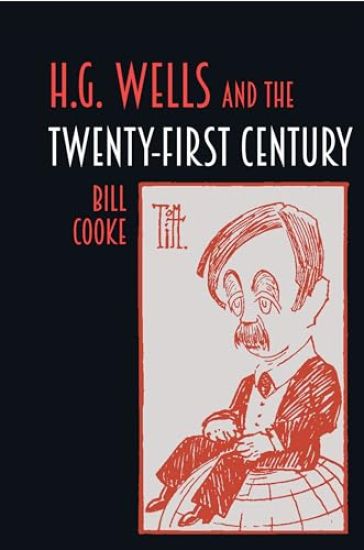
H.G. Wells and the Twenty-First Century

H.G. Wells and the Twenty-First Century

Bill Cooke

LIVERPOOL UNIVERSITY PRESS
2023
sidottu
H.G. Wells has been branded as a novelist who betrayed his vocation. But Wells saw himself as what we would today call a public intellectual. How credible is this claim? And what happens when we look at him in this way? So typecast has Wells’s reputation become that neither of these questions has been previously asked, but when we look at Wells as a thinker we find a whole new quality to his later works, which have invariably been dismissed by literary scholars as of low quality or even not worth reading. In particular, Wells’s prescience as a prophet of our current environmental problems stands out - for example, he foresaw anthropogenic climate change as early as 1931. Popular conceptions of Wells as racist, imperialist and eugenicist are also challenged. What emerges is a new perspective on a significant public intellectual and- pioneering prophet of the twenty-first century.
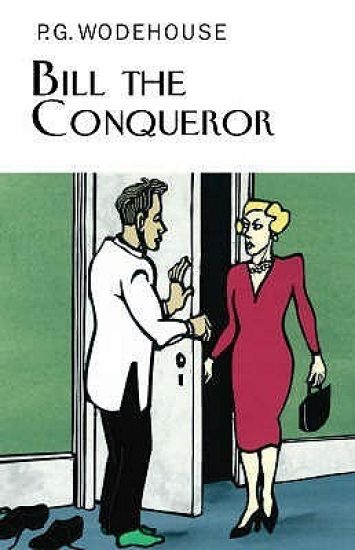
Bill the Conqueror

Bill the Conqueror

P.G. Wodehouse

Everyman's Library
2008
sidottu
Sir George was disappointed in his son, he was not a chip off the old block and lacked the aggressive drive required of a business tycoon. So why not marry him off to Felicia she has plenty of spark and could manage any man, all was going well until the arrival from New York of Bill West.Felicia - a sprightly girl calculated to put the stuffing into any man - is about to be married off to the dreary Roderick Pyke when Bill arrives from New York and she suddenly recognizes in him the man for whom she should forsake all others.
H.G. Wells and the Twenty-First Century

H.G. Wells and the Twenty-First Century

Bill Cooke

LIVERPOOL UNIVERSITY PRESS
2026
nidottu
H.G. Wells has been branded as a novelist who betrayed his vocation. But Wells saw himself as what we would today call a public intellectual. How credible is this claim? And what happens when we look at him in this way? So typecast has Wells’s reputation become that neither of these questions has been previously asked, but when we look at Wells as a thinker we find a whole new quality to his later works, which have invariably been dismissed by literary scholars as of low quality or even not worth reading. In particular, Wells’s prescience as a prophet of our current environmental problems stands out - for example, he foresaw anthropogenic climate change as early as 1931. Popular conceptions of Wells as racist, imperialist and eugenicist are also challenged. What emerges is a new perspective on a significant public intellectual and- pioneering prophet of the twenty-first century.
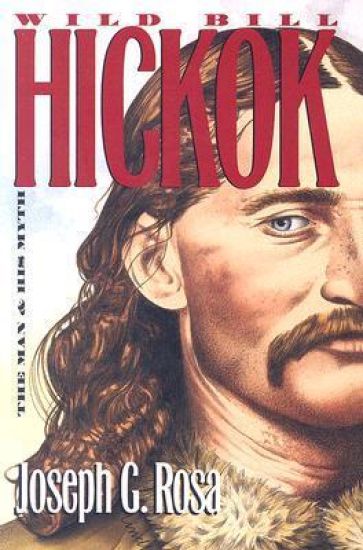
Wild Bill Hickok

Wild Bill Hickok

Joseph G. Rosa

University Press of Kansas
1996
nidottu
Eulogised and ostracised, James Butler Hickok was alternately labelled courageous, affable, and self-confident; cowardly, cold-blooded, and drunken; a fine specimen of manhood; an overdressed dandy with perfumed hair; an unequaled marksman; and a poor shot. Born in Illinois in 1837, he was shot dead in Deadwood only 39 years later. By then both famous and infamous, he was widely known as ""Wild Bill"". Excavating the reality behind the myth, this text delves into the exploits and ego that defined Hickok, and shows how the man was overtaken by his own legend. Rosa exposes a controversial and charismatic man - army and Indian scout, wagon master, courier, frontiersman, gunfighter, lawman, prospector, addicted gambler, and actor - who was elevated from regional fame to national notoriety by inadvertently being in the right place at the right time. Aggrandized in an 1867 ""Harper's New Monthly Magazine"" article, Hickok reluctantly embraced his exaggerated role in a far-fetched story that has inspired writers, folklorists and movie moguls. Dime novelists sensationalised him. Biographers praised and criticised. Gary Cooper portrayed him sensitively, Douglas Kennedy villainously, and Charles Bronson laconically. Howard Keel played him romantically (albeit historically incorrectly) against Doris Day's Calamity Jane. Culminating four decades of research on Wild West legends, this work aims to provide an accurate account of the larger-than-life character whose reported accomplishments - both real and imaginary - in Kansas, Missouri, and the surrounding territory frequently brought him unwanted publicity. Setting the record straight, Rosa exposes some of the deliberate lies that vested Hickok with a ""man-killer"" reputation he didn't deserve. The book shows that the number of men he killed is probably a lot closer to ten than to the more than 100 he is often credited with. Establishing the role an overzealous press and fortune-seeking dime novelists played in immortalising Wild Bill, Rosa reveals how myths were initiated and perpetuated to glorify the 19th-century frontier. He also illuminates why imaginative accounts of unorthodox heroes continue to skew our understanding of this era of American history.
Wild Bill Hickok, Gunfighter

Wild Bill Hickok, Gunfighter

Joseph G. Rosa

University of Oklahoma Press
2003
nidottu
"James Butler Hickok, generally called 'Wild Bill, ' epitomized the archetypal gunfighter, that half-man, half-myth that became the heir to the mystique of the duelist when that method of resolving differences waned. . . . Easy access to a gun and whiskey coupled with gambling was the cause of most gunfights--few of which bore any resemblance to the gentlemanly duel of earlier times. . . . Hickok's gunfights were unusual in that most of them were 'fair' fights, not just killings resulting from rage, jealousy over a woman, or drunkenness. And, the majority of his encounters were in his role as lawman or as an individual upholding the law."--from Wild Bill Hickok, GunfighterWild Bill Hickok (1837-1876) was a Civil War spy and scout, Indian fighter, gambler, and peace officer. He was also one of the greatest gunfighters in the West. His peers referred to his reflexes as "phenomenal" and to his skill with a pistol as "miraculous." In Wild Bill Hickok, Gunfighter, Joseph G. Rosa, the world's foremost authority on Hickok, provides an informative examination of Hickok's many gunfights.Rosa describes the types of guns used by Hickok and illustrates his use of the plains' style of "quick draw," as well as examining other elements of the Hickok legend. He even reconsiders the infamous "dead man's hand" allegedly held by Hickok when he was shot to death at age thirty-nine while playing poker. Numerous photographs and drawings accompany Rosa's down-to-earth text.
Bill Bright and Campus Crusade for Christ

Bill Bright and Campus Crusade for Christ

Turner John G.

The University of North Carolina Press
2008
nidottu
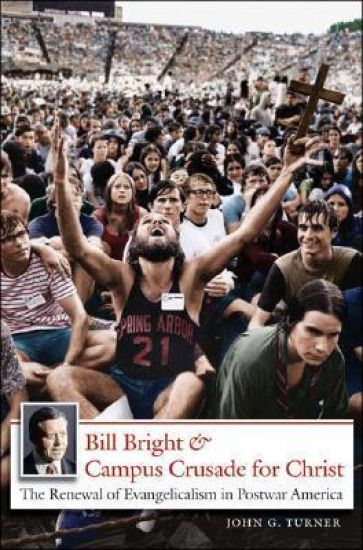
Marketing Jesus to modern America.Founded as a local college ministry in 1951, Campus Crusade for Christ has become one of the world's largest evangelical organizations, today boasting an annual budget of more than $500 million. Nondenominational organizations like Campus Crusade account for much of modern evangelicalism's dynamism and adaptation to mainstream American culture. Despite the importance of these ""parachurch"" organizations, says John Turner, historians have largely ignored them.Turner offers an accessible and colorful history of Campus Crusade and its founder, Bill Bright, whose marketing and fund-raising acumen transformed the organization into an international evangelical empire. Drawing on archival materials and more than one hundred interviews, Turner challenges the dominant narrative of the secularization of higher education, demonstrating how Campus Crusade helped reestablish evangelical Christianity as a visible subculture on American campuses. Beyond the campus, Bright expanded evangelicalism's influence in the worlds of business and politics. As Turner demonstrates, the story of Campus Crusade reflects the halting movement of evangelicalism into mainstream American society: its awkward marriage with conservative politics, its hesitancy over gender roles and sexuality, and its growing affluence.
Bill And Al

Bill And Al

G. E. Scott

AuthorHouse
2005
sidottu
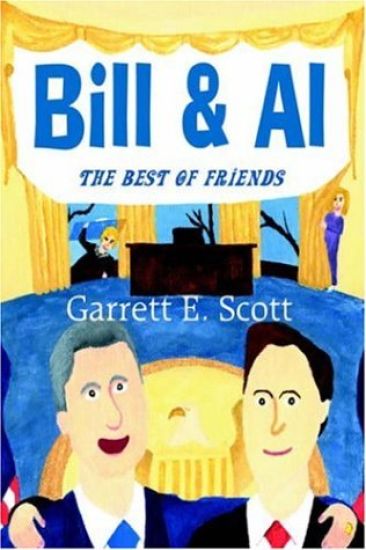
Bill and Al are the best of friends. They also happen to be President and Vice3 President of the United States. Not only do they have to keep India and Pakistan from fighting with each other, but they also have to cook, clean the White House, and go shopping for groceries. It's not easy being the leaders of the free world. The two have to make Hillary and Tipper happy and keep the Republicans at bay, all the while work on Al Gore's bid for the presidency in 2000. And if they aren't careful, the might run into other political parties along the way. It's a crazy adventure, but what do you expect from the White House?
They Called Him Wild Bill

They Called Him Wild Bill

Joseph G. Rosa

University of Oklahoma Press
1979
nidottu
His contemporaries called him Wild Bill, and newspapermen and others made him a legend in his own time. Among western characters only General George Armstrong Custer and Buffalo Bill Cody are as readily recognized by the general public. In writing this biography, Joseph G. Rosa has expressed the hope that "Hickok emerges as a man and not a legend." For this comprehensive revision of his earlier biography of Wild Bill the author was allowed to work from newly available materials in the possession of the Hickok family. He also discovered new material pertaining to Wild Bill's Civil War exploits and his service as a marshal and found the pardon file of his murderer, John McCall. Additional, rare photographs of Wild Bill are published here for the first time. The results of Rosa's additional research make this second edition the best biography of Wild Bill likely to be written for years to come.
The West of Wild Bill Hickok

The West of Wild Bill Hickok

Joseph G. Rosa

University of Oklahoma Press
1994
nidottu
Of all the Old West figures whose images eventually found their way into our popular culture, none was better known than Wild Bill Hickok. This book, a companion volume to Joseph Rosa's exhaustive biography, They Called Him Wild Bill, reproduces in one volume nearly all the known portraits of Wild Bill, together with photographs of his family, his friends, his foes, and the places that knew him.