Kirjojen hintavertailu. Mukana 11 717 486 kirjaa ja 12 kauppaa.

Kirjahaku

Etsi kirjoja tekijän nimen, kirjan nimen tai ISBN:n perusteella.

1000 tulosta hakusanalla Blake Nevius

Blake's Visionary Forms Dramatic

Blake's Visionary Forms Dramatic

David V. Erdman; John E. Grant

Princeton University Press
2017
pokkari
The twenty contributors to this volume offer a new perspective on the relationship between Blake's poetry and his visionary forms. Their illustrated discussions explore and debate the nature of Blake's mixed art and the energetic interaction of text and design. Originally published in 1971. The Princeton Legacy Library uses the latest print-on-demand technology to again make available previously out-of-print books from the distinguished backlist of Princeton University Press. These editions preserve the original texts of these important books while presenting them in durable paperback and hardcover editions. The goal of the Princeton Legacy Library is to vastly increase access to the rich scholarly heritage found in the thousands of books published by Princeton University Press since its founding in 1905.
Blake and the Assimilation of Chaos

Blake and the Assimilation of Chaos

Christine Gallant

Princeton University Press
2015
pokkari
In all of his works Blake struggled with the question of how chaos can be assimilated into imaginative order. Blake's own answer changed in the course of his poetic career. Christine Gallant contends that during the ten year period of composition of Blake's first comprehensive epic, The Four Zoas, Blake's myth expanded from a closed, static system to an open, dynamic process. She further argues that it is only through attention to the changing pattern of Jungian archetypes in the poem that one can discern this profound change. Using the depth psychology of Jung, Professor Gallant presents a comprehensive interpretation of Blake's poetry from his early "Lambeth" prophecies to his mature works, The Four Zoas, Milton, and Jerusalem. She offers a Jungian critical approach that respects the work's autonomy, but still suggests how literature is an ongoing imaginative experience in which archetypal symbols affect their literary contexts. What interests the author is the function that the very process of mythmaking had for Blake. Professor Gallant finds that the metaphysical opposition between God and Satan in Blake's earlier work gradually evolves into an interplay of these powers in the later works. The quality of Chaos changes for Blake from something unknown and feared, contrary to Order, to something intimately known and embraced. Originally published in 1979. The Princeton Legacy Library uses the latest print-on-demand technology to again make available previously out-of-print books from the distinguished backlist of Princeton University Press. These editions preserve the original texts of these important books while presenting them in durable paperback and hardcover editions. The goal of the Princeton Legacy Library is to vastly increase access to the rich scholarly heritage found in the thousands of books published by Princeton University Press since its founding in 1905.
Blake and the Assimilation of Chaos

Blake and the Assimilation of Chaos

Christine Gallant

Princeton University Press
2016
sidottu
In all of his works Blake struggled with the question of how chaos can be assimilated into imaginative order. Blake's own answer changed in the course of his poetic career. Christine Gallant contends that during the ten year period of composition of Blake's first comprehensive epic, The Four Zoas, Blake's myth expanded from a closed, static system to an open, dynamic process. She further argues that it is only through attention to the changing pattern of Jungian archetypes in the poem that one can discern this profound change. Using the depth psychology of Jung, Professor Gallant presents a comprehensive interpretation of Blake's poetry from his early "Lambeth" prophecies to his mature works, The Four Zoas, Milton, and Jerusalem. She offers a Jungian critical approach that respects the work's autonomy, but still suggests how literature is an ongoing imaginative experience in which archetypal symbols affect their literary contexts. What interests the author is the function that the very process of mythmaking had for Blake. Professor Gallant finds that the metaphysical opposition between God and Satan in Blake's earlier work gradually evolves into an interplay of these powers in the later works. The quality of Chaos changes for Blake from something unknown and feared, contrary to Order, to something intimately known and embraced. Originally published in 1979. The Princeton Legacy Library uses the latest print-on-demand technology to again make available previously out-of-print books from the distinguished backlist of Princeton University Press. These editions preserve the original texts of these important books while presenting them in durable paperback and hardcover editions. The goal of the Princeton Legacy Library is to vastly increase access to the rich scholarly heritage found in the thousands of books published by Princeton University Press since its founding in 1905.
Blake's Visionary Forms Dramatic

Blake's Visionary Forms Dramatic

David V. Erdman; John E. Grant

Princeton University Press
2017
sidottu
The twenty contributors to this volume offer a new perspective on the relationship between Blake's poetry and his visionary forms. Their illustrated discussions explore and debate the nature of Blake's mixed art and the energetic interaction of text and design. Originally published in 1971. The Princeton Legacy Library uses the latest print-on-demand technology to again make available previously out-of-print books from the distinguished backlist of Princeton University Press. These editions preserve the original texts of these important books while presenting them in durable paperback and hardcover editions. The goal of the Princeton Legacy Library is to vastly increase access to the rich scholarly heritage found in the thousands of books published by Princeton University Press since its founding in 1905.
Blake's Composite Art

Blake's Composite Art

W.J.T. Mitchell

PRINCETON UNIVERSITY PRESS
2019
sidottu
Can poem and picture collaborate successfully in a composite art of text and design? Or does one art inevitably dominate the other? W.J.T. Mitchell maintains that Blake's illuminated poems are an exception to Suzanne Langer's claim that "there are no happy marriages in art—only successful rape." Drawing on over one hundred reproductions of Blake's pictures, this book shows that neither the graphic nor the poetic aspect of his composite art consistently predominates: their relationship is more like an energetic rivalry, a dialogue between vigorously independent modes of expression. W.J.T. Mitchell is Professor of English and Art and Design at the University of Chicago and editor of Critical Inquiry.Originally published in 1978.The Princeton Legacy Library uses the latest print-on-demand technology to again make available previously out-of-print books from the distinguished backlist of Princeton University Press. These editions preserve the original texts of these important books while presenting them in durable paperback and hardcover editions. The goal of the Princeton Legacy Library is to vastly increase access to the rich scholarly heritage found in the thousands of books published by Princeton University Press since its founding in 1905.

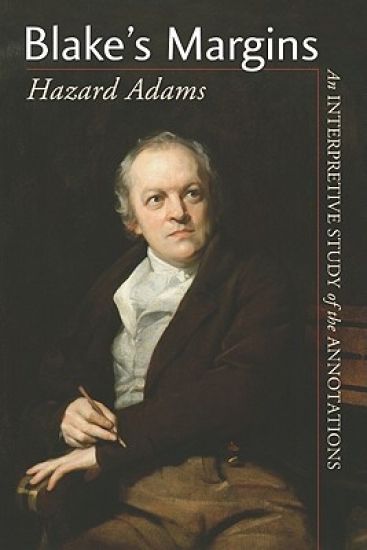
Blake's Margins

Blake's Margins

Hazard Adams

McFarland Co Inc
2009
pokkari
Known for his prophetic and imaginative works of poetry, painting, and printmaking, William Blake was also a prolific reader and annotator of other writers' works. This is the first work of criticism to consider Blake's annotations in their entirety, and it covers such topics as art, poetry, theology, madness and philosophy, as well as the authors Lavater, Swedenborg, Bacon, Spurzheim, Berkeley, and Wordsworth, among others.
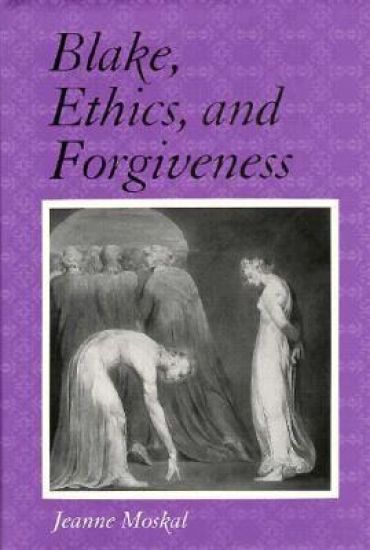
Blake, Ethics and Forgiveness

Blake, Ethics and Forgiveness

Jeanne Moskal

The University of Alabama Press
1994
sidottu
For the last two decades, scholars who specialise in the poetry and art of William Blake have stressed the formal and historical dimensions of his aesthetic theories and practices. Such an emphasis neglects the ethical commitments that inform his work. Primary among these ethical commitments is Blake's passionate advocacy of forgiveness between human beings as a means to solve the problems of human evil, an advocacy that seems to contradict Blake's assertions that ethical laws create the illusion of human evil and employ the concept of ""forgiveness"" solely to reinforce the terms of the original oppression. ""Blake, Ethics and Forgiveness"" focuses on an important and pervasive issue found in the work of the English Romantic visionary poet, engraver and mystic William Blake. It treats the moral and literary problem of representing, as distinct from the divine forgiveness of human beings.
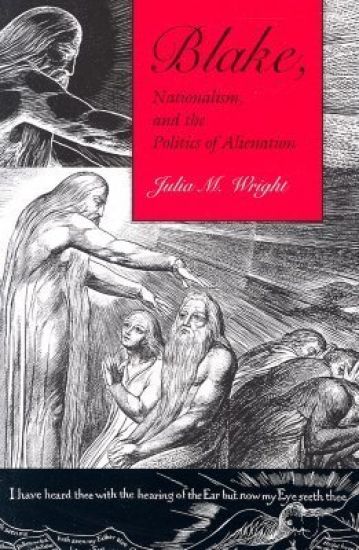
Blake, Nationalism, and the Politics of Alienation

Blake, Nationalism, and the Politics of Alienation

Julia M. Wright

Ohio University Press
2004
sidottu
William Blake's reputation as a staunch individualist is based in large measure on his repeated attacks on institutions and belief systems that constrain the individual's imagination. Blake, however, rarely represents isolation positively, suggesting that the individual's absolute freedom from communal pressures is not the ideal. Instead, as Julia Wright argues in her award-winning study Blake, Nationalism, and the Politics of Alienation, Blake's concern lies with the kind of community that is being established. Moreover, writing at the moment of the emergence of modern nationalism, Blake reveals a concern with the national community in particular. Beginning with a discussion of the priority of national narrative in late-eighteenth-century art theory and antiquarianism, Blake, Nationalism, and the Politics of Alienation traces its relevance in Blake's printed works, from The Poetical Sketches and the Lambeth Prophecies to The Laocoön. Professor Wright then turns to Europe, America, and Visions of the Daughters of Albion, focusing on Blake's portrayals of particular characters' alienation from the groups and ideologies represented in the texts. The book closes by arguing that Blake's major printed works, Milton and Jerusalem, are explicit and extensive engagements with the question of nation—and empire. Although nationalism existed in various forms during the Romantic period, Blake's contemporaries generally assumed that nations should progress continuously, producing a clear narrative line from an auspicious origin to the perfect fulfillment of that promise. Wright argues that these mutually determining constructs of national character and national narrative inform Blake's handling of the problem of the individual-within-a-community.
Blake. Wordsworth. Religion.

Blake. Wordsworth. Religion.

Jonathan Roberts

Continuum Publishing Corporation
2011
sidottu
This title features new scholarship informed by both historicist and metaphysical approaches, offering original readings of the poetry of Blake and Wordsworth and their reception. The history of responses to the works of William Wordsworth and William Blake can be divided into those who have tried to enact their poetry, and those who have tried to categorize it. The 'enactors' have themselves often been artists (Felicia Hemans, the pre-Raphaelites, William Hale White, Aldous Huxley, Allen Ginsberg); the 'categorizers' - those who have attempted to systematize, theologize, and more recently historicize the poetry - have tended to be academics. The two types of response provide a polarity of the sort that Blake termed 'producers and devourers'. The reception of the two poets is riven by this conflict which provokes the strongest feeling. But which side is right? In addressing this question, Jonathan Roberts takes a leaf from Blake's own book and interrelates the two sides dialectically. Rather than denigrating metaphysical responses in the face of historicist responses, or vice versa, this book argues that not only are both valid, but the conflict between them is staged in the poetry of both Blake and Wordsworth, who press their readers into exploring that relationship. This series aims to showcase new work at the forefront of religion and literature through short studies written by leading and rising scholars in the field. Books will pursue a variety of theoretical approaches as they engage with writing from different religious and literary traditions. Collectively, the series will offer a timely critical intervention to the interdisciplinary crossover between religion and literature, speaking to wider contemporary interests and mapping out new directions for the field in the early twenty-first century.
Blake. Wordsworth. Religion.

Blake. Wordsworth. Religion.

Jonathan Roberts

Continuum Publishing Corporation
2011
nidottu
This title features new scholarship informed by both historicist and metaphysical approaches, offering original readings of the poetry of Blake and Wordsworth and their reception. The history of responses to the works of William Wordsworth and William Blake can be divided into those who have tried to enact their poetry, and those who have tried to categorize it. The 'enactors' have themselves often been artists (Felicia Hemans, the pre-Raphaelites, William Hale White, Aldous Huxley, Allen Ginsberg); the 'categorizers' - those who have attempted to systematize, theologize, and more recently historicize the poetry - have tended to be academics. The two types of response provide a polarity of the sort that Blake termed 'producers and devourers'. The reception of the two poets is riven by this conflict which provokes the strongest feeling. But which side is right? In addressing this question, Jonathan Roberts takes a leaf from Blake's own book and interrelates the two sides dialectically.
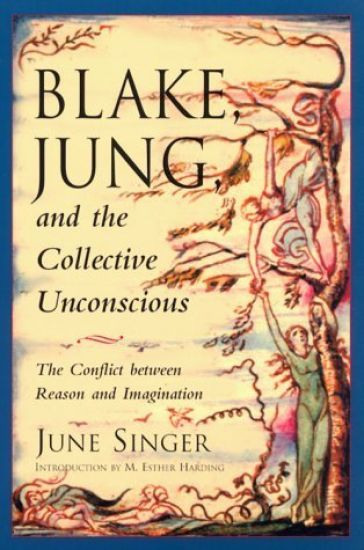
Blake, Jung and the Collective Unconscious

Blake, Jung and the Collective Unconscious

June K. Singer

Hays (Nicolas) Ltd ,U.S.
2004
nidottu
More than ever, the time is ripe for June Singer's penetrating commentary on William Blake's work, The Marriage of Heaven and Hell. For even the most devout literary scholars and art historians, much of Blake's mystical visions and writings are perplexing. With his pen and brush, he gave birth to mythological figures and fantastic metaphors. Singer shows us that Blake was actually tapping into the collective unconscious and giving form and voice to primordial psychological energies, or archetypes, that he experienced in his inner and outer world. Blake's writing and art was his personal dialogue between God and his own inner self -- a reconciliation of duality -- in which we can find clues to contemporary issues. In the 18th century, Blake was a pioneer in finding, nurturing, and celebrating his personal connection with the divine, a search that still appeals to people who are coming to terms with the contemporary struggle between science and spirituality -- the conflict between reason and imagination. With clarity and wisdom, Singer examines the images and words in each plate of Blake's work, applying in her analysis the concepts that C. G. Jung advanced in his psychological theories. There is no more perfect lens with which to look at Blake's work than that of Jung's concepts of the archetypes, the process of individuation, and the mysterium coniunctionis, in which consciousness and the unconscious are united.
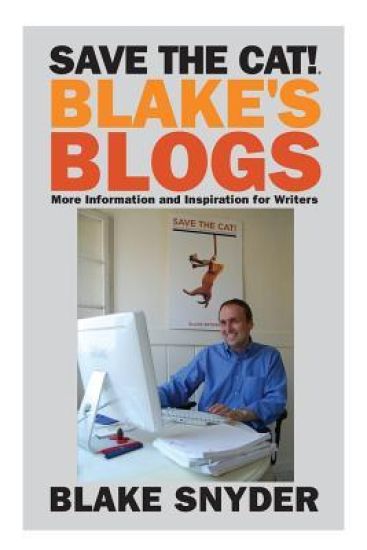
Save the Cat! Blake's Blogs

Save the Cat! Blake's Blogs

Blake Snyder

Save the Cat! Press
2016
pokkari
From 2005 until his death in 2009, Blake Snyder wrote his 3 best-selling Save the Cat (R) books along with 209 blogs on the Save the Cat (R) website. The 112 blog posts in this book have been carefully curated and edited from Blake's originals. We have selected posts that we believe are timeless, resonating as powerfully today as on the day Blake wrote them. In addition, we've created 10 chapters in which we've bundled posts according to categories, to simplify your search for the information, encouragement and enthusiasm that were Blake's hallmarks: - Ideas and Concepts- Themes- Titles and Loglines- Genres- Heroes- Structure- Dialogue- The Pitch- Going Pro- Inspiration. Enjoy these meaningful and helpful lessons in screenwriting... and life.Also included are photos that have never been published.
Blake, the Mystic Genius

Blake, the Mystic Genius

Adrian 1887-1963 Van Sinderen

Hassell Street Press
2021
sidottu
This work has been selected by scholars as being culturally important and is part of the knowledge base of civilization as we know it.This work is in the public domain in the United States of America, and possibly other nations. Within the United States, you may freely copy and distribute this work, as no entity (individual or corporate) has a copyright on the body of the work.Scholars believe, and we concur, that this work is important enough to be preserved, reproduced, and made generally available to the public. To ensure a quality reading experience, this work has been proofread and republished using a format that seamlessly blends the original graphical elements with text in an easy-to-read typeface.We appreciate your support of the preservation process, and thank you for being an important part of keeping this knowledge alive and relevant.
Blake, the Mystic Genius

Blake, the Mystic Genius

Adrian 1887-1963 Van Sinderen

Hassell Street Press
2021
nidottu
This work has been selected by scholars as being culturally important and is part of the knowledge base of civilization as we know it.This work is in the public domain in the United States of America, and possibly other nations. Within the United States, you may freely copy and distribute this work, as no entity (individual or corporate) has a copyright on the body of the work.Scholars believe, and we concur, that this work is important enough to be preserved, reproduced, and made generally available to the public. To ensure a quality reading experience, this work has been proofread and republished using a format that seamlessly blends the original graphical elements with text in an easy-to-read typeface.We appreciate your support of the preservation process, and thank you for being an important part of keeping this knowledge alive and relevant.
Blake and England

Blake and England

Kathleen 1908- Raine

Hassell Street Press
2021
sidottu
This work has been selected by scholars as being culturally important and is part of the knowledge base of civilization as we know it.This work is in the public domain in the United States of America, and possibly other nations. Within the United States, you may freely copy and distribute this work, as no entity (individual or corporate) has a copyright on the body of the work.Scholars believe, and we concur, that this work is important enough to be preserved, reproduced, and made generally available to the public. To ensure a quality reading experience, this work has been proofread and republished using a format that seamlessly blends the original graphical elements with text in an easy-to-read typeface.We appreciate your support of the preservation process, and thank you for being an important part of keeping this knowledge alive and relevant.