Clearly explains the different forms of energy and how they are transferred among people, machines, and the natural world, and includes activities that encourage budding scientists to make their own energy and see how it works. Simultaneous.
This study brings together decades of research on the modern natural environment of Washington's Olympic Peninsula, reviews past research on paleoenvironmental change since the Late Pleistocene, and finally presents paleoecological records of changing forest composition and fire over the last 14,000 years. The focus of this study is on the authors’ studies of five pollen records from the Olympic Peninsula. Maps and other data graphics are used extensively. Paleoecology can effectively address some of these challenges we face in understanding the biotic response to climate change and other agents of change in ecosystems. First, species responses to climate change are mediated by changing disturbance regimes. Second, biotic hotspots today suggest a long-term maintenance of diversity in an area, and researchers approach the maintenance of diversity from a wide range and angles (CITE). Mountain regions may maintain biodiversity through significant climate change in ‘refugia’: locations where components of diversity retreat to and expand from during periods of unfavorable climate (Keppel et al., 2012). Paleoecological studies can describe the context for which biodiversity persisted through time climate refugia. Third, the paleoecological approach is especially suited for long-lived organisms. For example, a tree species that may typically reach reproductive sizes only after 50 years and remain fertile for 300 years, will experience only 30 to 200 generations since colonizing a location after Holocene warming about 11,000 years ago. Thus, by summarizing community change through multiple generations and natural disturbance events, paleoecological studies can examine the resilience of ecosystems to disturbances in the past, showing how many ecosystems recover quickly while others may not (Willis et al., 2010).
This study brings together decades of research on the modern natural environment of Washington's Olympic Peninsula, reviews past research on paleoenvironmental change since the Late Pleistocene, and finally presents paleoecological records of changing forest composition and fire over the last 14,000 years. The focus of this study is on the authors’ studies of five pollen records from the Olympic Peninsula. Maps and other data graphics are used extensively. Paleoecology can effectively address some of these challenges we face in understanding the biotic response to climate change and other agents of change in ecosystems. First, species responses to climate change are mediated by changing disturbance regimes. Second, biotic hotspots today suggest a long-term maintenance of diversity in an area, and researchers approach the maintenance of diversity from a wide range and angles (CITE). Mountain regions may maintain biodiversity through significant climate change in ‘refugia’: locations where components of diversity retreat to and expand from during periods of unfavorable climate (Keppel et al., 2012). Paleoecological studies can describe the context for which biodiversity persisted through time climate refugia. Third, the paleoecological approach is especially suited for long-lived organisms. For example, a tree species that may typically reach reproductive sizes only after 50 years and remain fertile for 300 years, will experience only 30 to 200 generations since colonizing a location after Holocene warming about 11,000 years ago. Thus, by summarizing community change through multiple generations and natural disturbance events, paleoecological studies can examine the resilience of ecosystems to disturbances in the past, showing how many ecosystems recover quickly while others may not (Willis et al., 2010).
Love and Lace Coloring BookExplore your own creativity while embracing LOVE and ROMANCE with the beautiful imagery of love and lace.Features stylish designs from minimal to high detail in a variety of vintage to modern imagery of hearts, love and lacey art.Love and Lace Coloring Book includes one-side only designs just waiting to be filled with your expression and inspiration Enjoy coloring the beautiful illustrations of LOVE and LACE Makes a great gift for everyone who loves artistic heart designs Size: 8.5 x 11Cover: Paperback, soft matte
Susan Howell Brubaker has revised the classic ""Workbook for Aphasia"" to update the language and situations to better serve twenty-first-century patients. Since its first edition in 1978, this highly recognizable ""blue book"" has been used by speech-language pathologists as a treatment tool both in sessions and as a home-program supplement, with target populations ranging from adults to early adolescents. The exercises encompass basic- to higher-level tasks addressing reading, graphics, word retrieval, formulation, and a variety of other language skills. The new edition responds to the comments and suggestions of longtime users with several changes to the content and format of the book. The most visible change is the ring binder that will allow for easy copying of treatment materials for individual patients. Inside the workbook, many questions have been revised and others have been added. The Answer Key to Selected Exercises now contains more exercises and is also part of the text, in its own easy-to-find section of the binder. In addition, the book's new, larger font and improved spacing better enables patients with visual difficulties to read the text. This revised and updated third edition will enhance the ability of speech-language pathologists to address the language-impaired population within their practices.
In the course of a day teachers must be prepared to resolve countless contradictions and make many decisions, necessitating excellent `people skills'. The authors use case studies to help teachers develop these skills and to stimulate teachers to make informed decisions that can have a lasting effect on their professional and personal effectiveness. This book gives teachers the information they need to better understand how schools work and how they can improve the way they function as teachers. The authors describe key variables and operational guidelines for decision making and how teachers can function as creative leaders.
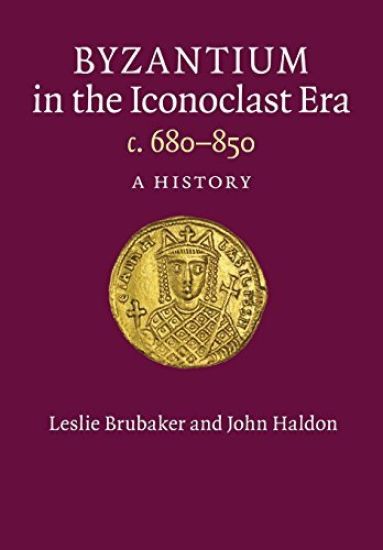
Iconoclasm, the debate about the legitimacy of religious art that began in Byzantium around 720 and continued for nearly one hundred and twenty years, has long held a firm grip on the historical imagination. This is the first book in English for over fifty years to survey this most elusive and fascinating period in medieval history. It is also the first book in any language to combine the expertise of two authors who are specialists in the written, archaeological and visual evidence from this period, a combination of particular importance to the iconoclasm debate. The authors have worked together to provide a comprehensive overview of the visual, written and other materials that together help clarify the complex issues of iconoclasm in Byzantium. In doing so they challenge many traditional assumptions about iconoclasm and set the period firmly in its broader political, cultural and social-economic context.
Iconoclasm, the debate about the legitimacy of religious art that began in Byzantium around 730 and continued for nearly 120 years, has long held a firm grip on the historical imagination. Byzantium in the Iconoclast Era is the first book in English to survey the original sources crucial for a modern understanding of this most elusive and fascinating period in medieval history. It is also the first book in any language to cover both the written and the visual evidence from this period, a combination of particular importance to the iconoclasm debate. The authors, an art historian and a historian who both specialise in the period, have worked together to provide a comprehensive overview of the visual and the written materials that together help clarify the complex issues of iconoclasm in Byzantium.
Iconoclasm, the debate about the legitimacy of religious art that began in Byzantium around 720 and continued for nearly one hundred and twenty years, has long held a firm grip on the historical imagination. This is the first book in English for over fifty years to survey this most elusive and fascinating period in medieval history. It is also the first book in any language to combine the expertise of two authors who are specialists in the written, archaeological and visual evidence from this period, a combination of particular importance to the iconoclasm debate. The authors have worked together to provide a comprehensive overview of the visual, written and other materials that together help clarify the complex issues of iconoclasm in Byzantium. In doing so they challenge many traditional assumptions about iconoclasm and set the period firmly in its broader political, cultural and social-economic context.
The 'fresh start' that is afforded individual debtors through the discharge doctrines of American bankruptcy law has, to date, defied justification by a single normative principle or theoretical paradigm. The justificatory accounts that have been advanced either fail to explain core doctrines that have long defined the right of discharge or invite theoretical challenges that suggest that their descriptive virtues are swamped by their normative or conceptual shortcomings. This book presents a taxonomy of traditional justifications of bankruptcy and subjects them to critical evaluation. It then seeks to offer a new justification of bankruptcy's 'fresh start' doctrines-one that takes its inspiration from a quite different moral tradition than those that have informed past efforts to justify and explain our enduring societal willingness to release people from onerous financial obligations. The book argues that personal debt relief is fully vindicated not by a utilitarian theory, nor by a distributive justice theory, nor by a retributive theory, nor by any other rights- or duties-based theory that is preoccupied with moral claims that particular creditors or debtors might proffer. Rather, the long-standing institution of discharge in bankruptcy is best explained by an aretaic, or virtue-based, theory that concerns itself with the obligations that the rest of us have to be charitable towards those who are unable to repay their debts. The fresh start that bankruptcy gives to those who have been shackled by overwhelming debt is justified not by its effects on creditors, debtors, or future market actors, but by its satisfaction of the demands of individual charity to which all citizens are subject. Bankruptcy's discharge of the debts of those who have become financially desperate is best thought to be an institution that aggregates others' demands of good character so as to permit citizens for whom debt-forgiveness is a personal virtue to live in a society that fulfils that virtue.