Kirjahaku
Etsi kirjoja tekijän nimen, kirjan nimen tai ISBN:n perusteella.
1000 tulosta hakusanalla Brian Boyd
Painting and Wallpapering Secrets from Brian Santos, the Wall Wizard
Brian Santos
John Wiley Sons Ltd
2010
nidottu
The best of The Wall WizardPainting is an inexpensive yet impactful way to redecorate a home. But in a down economy, most homeowners can't afford to hire a pro to do the dirty work. This book represents the best of The Wall Wizard's previous books, Painting Secrets, Faux Finish Secrets, and Wallcovering Secrets. Readers will get helpful, economically mindful tips, advice, and guidance on how to use paint, faux finishes, and wallcoverings that accomplish high-quality, professional-looking results.Focuses on painting with smaller sections on faux finishes and wallcoverings (including both how to apply and remove them)Sidebars and tips address technical questionsCovers green alternatives to toxic, hazardous, and environmentally harmful productsWith his personal, upbeat, first-person approach, bestselling author Brian Santos shows readers clearly and succinctly how to roll up their sleeves and accent any room of the house.
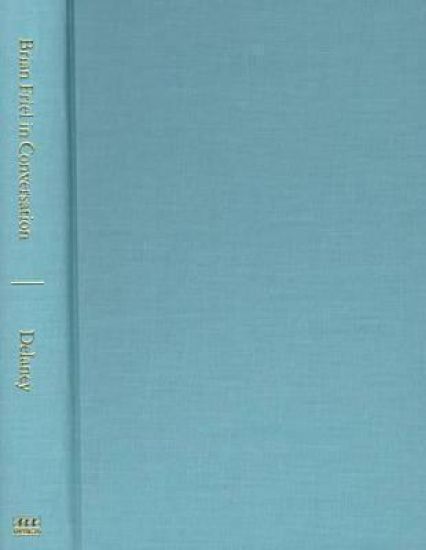
Brian Friel in Conversation
The University of Michigan Press
2000
sidottu
The reluctance of contemporary Irish playwright Brian Friel to speak with the press is legendary. Fortunately, his willingness on occasion to grant interviews has fortuitously coincided with the productions of his pivotal works, including the highly celebrated Dancing at Lughnasa, recently released as a motion picture starring Meryl Streep. In this comprehensive volume, theater critic and scholar Paul Delaney gathers an amazingly broad and consistently engaging range of Friel's conversations with interviewers on both sides of the Atlantic.Friel talks with disarming openness about his own life. He is also surprisingly candid in decrying a "dehydration of humanity" in Pinter and an "abnegation of life" in Beckett, in pondering the dangers of Irish writers who are "having to use a language that isn't our own," in revealing that his plays grow out of a willingness to "delve into a particular corner of yourself that's dark and uneasy," and in talking about the way that Dancing at Lughnasa manifests his sense of "a need for the pagan in life."Friel has preferred to talk primarily with Irish interviewers throughout much of his career, and many of his most important interviews were printed in rather obscure publications. Brian Friel in Conversation makes available interviews that were formally virtually inaccessible, as well as more recent interviews in places such as the New York Times, Vanity Fair, and Vogue. The book concludes with an extensive bibliography and discography of Friel interviews to aid further reading and research.Paul Delaney is Professor of English, Westmont College. He is the author of Tom Stoppard: The Moral Vision of the Major Plays and editor of Tom Stoppard in Conversation, a collection of interviews.
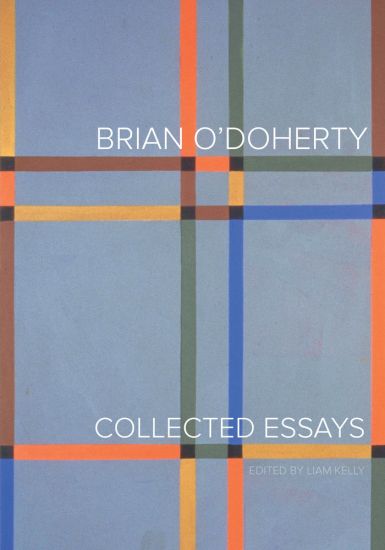
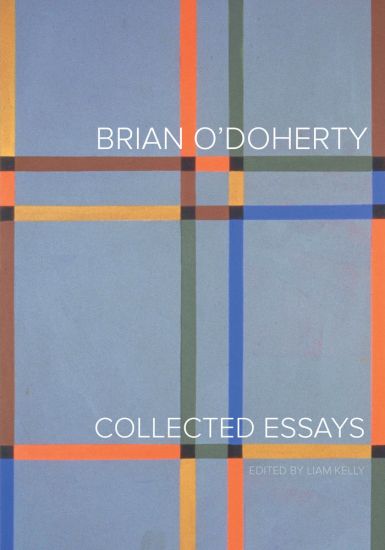
This long-awaited volume brings together much of Brian O’Doherty’s most influential writing, including essays on major figures such as Edward Hopper, Mark Rothko, and Andy Warhol, and a substantial follow-up to his iconic Inside the White Cube. New pieces specifically authored for this collection include a meditation on O’Doherty’s various alternate personae—most notably Patrick Ireland—and a reflection on his seminal “Highway to Las Vegas” from 1972, penned after a return visit in 2012. The beautifully written texts, many of which have been unavailable in print, are insightfully introduced by art historian Anne-Marie Bonnet and complemented by forty-five color illustrations of artwork discussed in the essays as well as documentary photographs of O’Doherty and other major art-world figures. Adventurous, original, and essentially O’Doherty, this collection reveals his provocative charm and enduring influence as a public intellectual.
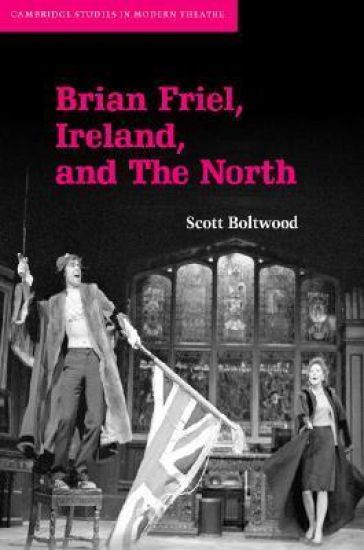
After nearly five decades as one of Ireland's most celebrated playwrights, Brian Friel has been the subject of ten books and dozens of articles. This study expands Friel criticism into a sizeable body of material and into a fresher interpretative direction. Along with considering Friel's more recent plays, the book analyzes his interviews and essays to chart the author's ideological evolution throughout a career of more than forty years. Moreover, a chapter is devoted to his often ignored articles for The Irish Press (1962–1963), a series that reveals unsuspected insights into Friel's disposition towards the Irish Republic. Refining our understanding of Friel's relationship to Republicanism is central to the argument; rather than assuming that the author embraces nationalist ideology, the book relocates the conceptual concerns of his work away from Dublin and to 'The North', this bridge between Ireland and the British province of Northern Ireland.
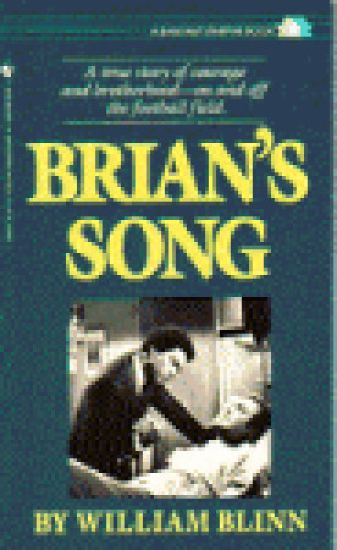
The screenplay for the heartfelt, five-time Emmy Award-winning movie Brian's Song about two Chicago Bears players who developed an unlikely, lifelong friendship before an untimely tragedy ripped them apart Two men. One named Gale Sayers, the other Brian Piccolo. They came from different parts of the country. They competed fiercely for the same job. One liked to talk; the other was shy. One was white; the other black. They made history as the first interracial roommates in the history of the NFL. This is the story of how they came to know each other, fight each other, and help each other. . . .
This second collection of Brian Friel's plays includes some of his most acclaimed work for the stage. The plays included are Dancing at Lughnasa, Fathers and Sons, Making History, Wonderful Tennessee and Molly Sweeney. The collection is introduced by Christopher Murray.
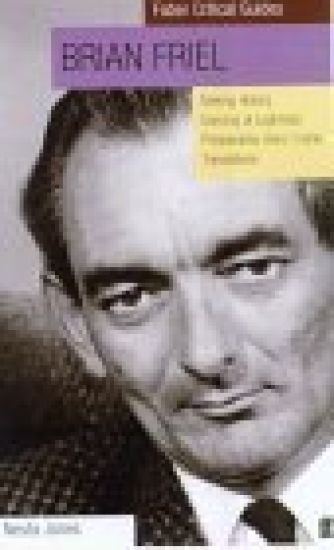
Is your enjoyment of Brian Friel's work hampered by a lack of Irish historical knowledge? Are you studying his plays and looking for help with interpretation? Do you teach Friel and need reliable guide to the plays? A Faber Critical Guide to Brian Friel's major work gives all this and more. It gives an introduction to the distinctive features of the playwright's work; it explains the significance of the playwright in the context of modern theatre; it provides a detailed analysis of each of the classic plays in terms of language, structure and character; and it includes features of performance and a select bibliography. Compiled by experts in their field, for use in the classroom, college or at home, Faber Critical Guides are the essential companions to the work of leading dramatists.
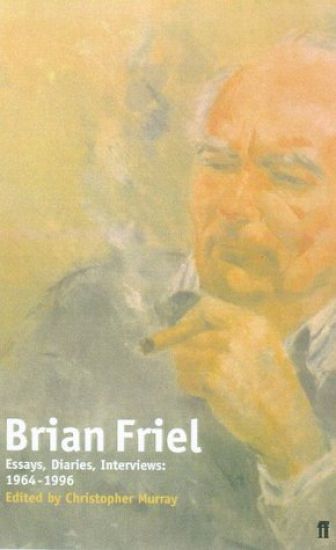
Since the success of "Philadelphia Here I Come!" in 1964, Brian Friel has written over 20 plays to critical acclaim, confirming him as one of the major dramatists of the 20th century. This collection of writing from 1964 to 1999 delves into his work and life before and after his landmark play.
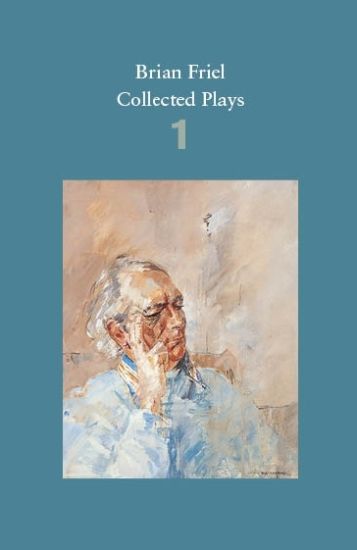
This marks the first of five volumes collecting together the complete work of Brian Friel. The Enemy Within (1962) Philadelphia, Here I Come! (1964)The Loves of Cass McGuire (1966) Lovers (Winners and Losers) (1967) Crystal and Fox (1968) The Gentle Island (1971)
This third collection of Brian Friel's work contains:Three Sisters (Chekhov) (1981)The Communication Cord (1982) Fathers and Sons (Turgenev) (1987) Making History (1988) Dancing at Lughnasa (1990)
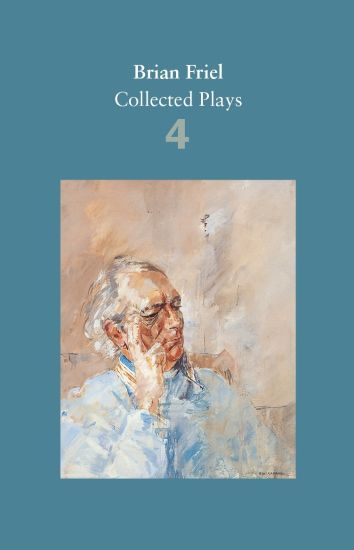
This fourth collection of Brian Friel's work contains:The London Vertigo (after Macklin) (1992) (January)A Month in the Country (after Turgenev) (1992) (August) Wonderful Tennessee (1993) Molly Sweeney (1994) Give Me Your Answer, Do! (1997)
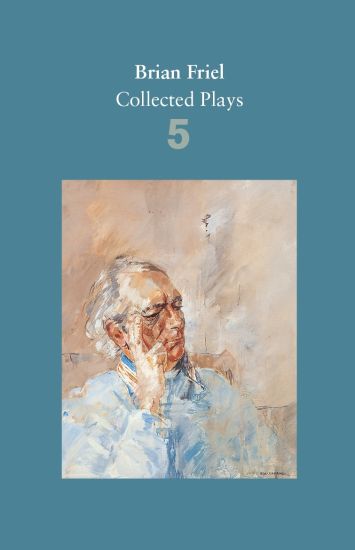
This fifth collection of Brian Friel's work contains: Uncle Vanya (after Chekhov) (1998) The Yalta Game (after Chekhov) (2001) The Bear (after Chekhov) (2002) Afterplay (after 2002) Performances (2003) The Home Place (2005) Hedda Gabler (after Ibsen) (2005)
This second collection of Brian Friel's work contains:The Freedom of the City (1973) Volunteers (1975) Living Quarters (1977) Aristocrats (1979) (March) Faith Healer (1979) (April) Translations (1980)
Brian the Wildflower is a children's book written and illustrated by Katie Ruiz. The book helps children gain a full circle understanding of nature and her cycles. Brian is a wildflower who wants to leave the garden. When he goes on an unexpected adventure nature takes a turn as the cycle of life moves through us all.