The Berkey and Gay furniture Company of Grand Rapids, Michigan, became one of the leading nineteenth century furniture manufacturers in America. Furniture in the Gothic Revival and Eastlake styles by Berkey and Gay became well known for their high quality, and two Neo Grec chamber suites by Berkey and Gay won recognition of high merit at the 1876 Philadelphia Centennial Exposition. Over 300 photographs of Berkey and Gay furniture from company catalogs are presented with value ranges for today's market in this useful reference book for furniture historians, dealers, and collectors.
Drawing on a wide range of historical, sociological, and anthropological theory and data, Moore describes and analyses the institutions, customs, and beliefs of Afro-Creole, Indian Bhojpuri, Portuguese Latin, Chinese Hua-Qiao, and Victorian elite subcultures that make up Guyanese society. He looks at the way British colonizers used their power to transform and submerge the cultures of other ethnic groups and establish their own cultural model as dominant, and he examines the efforts of the diverse subordinate groups to resist such cultural imperialism and retain aspects of their own traditional cultures. Moore argues that it is the intricate interplay of these conflicting and competing forces that determined the extent of sociocultural integration or pluralism that the society as a whole achieved. Cultural Power, Resistance, and Pluralism makes a significant contribution to Caribbean historiography and the study of multiracial societies.
This project grew out of a recognition that I could fmd no aggregate measure of the amount of regulation beyond crude proxies such as the number of pages in the Federal Register. As I began to address this specific issue. I became much more aware of two things -- the enormity of regulation in the u.s. economy and the relative absence of economic research into the macroeconomic consequences of those regulations. While I would have readily granted the idea that many economist'> knew more about regulation than I did, I would have thought my knowledge of regulation to be at least up to the average economist's. My graduate training in the early to mid 1980s included special attention to the field of "public choice" and related topics, all of which occasionally explored regulatory topics. Moreover. I had at least a passing knowledge of the debates concerning deregulation in the late 1970s and early 1980s. Because of this, my own ignorance of regulation's actual expanse and its aggregate consequences startled me and heightened my interest in expanding empirical research into regulation as a macroeconomic influence. The more I thought about graduate macroeconomics classes and texts, the more that I realized the exclusion of regulation as a macroeconomic topic in spite of its massive scale and far-reaching tentacles.
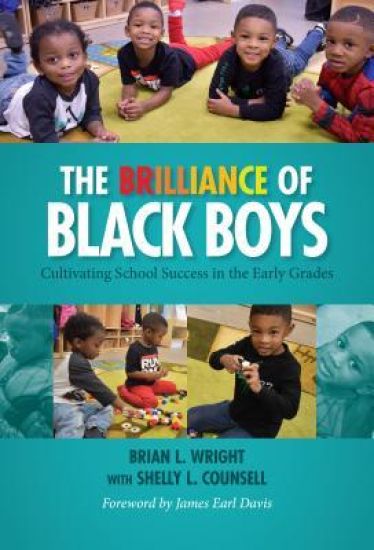
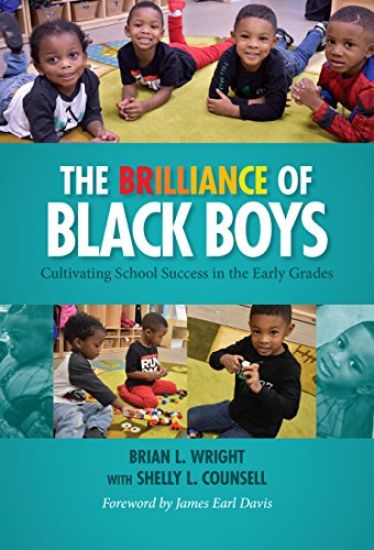
This much-needed book will help schools, and by extension society, better understand and identify the promise, potential, and possibilities of Black boys. Drawing from their wealth of experience in early childhood education, the authors present an assets- and strength-based view of educating young African American males. This positive approach enables practitioners and school leaders to recognize, understand, and cultivate the diversity of social skills of African American boys in the early grades (pre-K–3rd grade). Each chapter begins with a vignette to illustrate what is lost when African American boys are prevented from participating freely in boyhood, having to instead attend to adult and peer interactions and attitudes that view them as “bad boys” and “troublemakers.” This accessible book provides teachers with classroom strategies to help young African American boys achieve their highest potential, along with other resources for supporting their social-emotional development, such as a reading list of authentic multicultural children’s books with Black boys as protagonist.
2018 NAME Philip C. Chinn Book Award Winner!This much-needed book will help schools and, by extension, society to better understand and identify the promise, potential, and possibilities of Black boys. Drawing from their wealth of experience in early childhood education, the authors present an asset- and strengths-based view of educating Black boys. This positive approach enables practitioners and school leaders to recognize, understand, and cultivate the diversity of social skills of Black boys in the early grades (pre-K–3rd grade). Each chapter begins with a vignette to illustrate what is lost when Black boys are prevented from participating freely in boyhood, having to instead attend to adult and peer interactions and attitudes that view them as "bad boys" and "troublemakers." This accessible book provides teachers with classroom strategies to help young Black boys achieve their highest potential, along with other resources for supporting their social-emotional development, such as a reading list of authentic multicultural children's books with Black boys as protagonists.Book Features:Challenges deficit views of Black boys in order to transform the way schools and society think, talk, and write about them.Provides culturally responsive strategies for engaging Black boys and fostering healthy self-identity and agency.Discusses the importance of critical self-reflection to examine attitudes and practices that inform how teachers engage with children and families.Examines how school officials, beginning in early childhood, can stop the adultification and criminalization of Black boys.
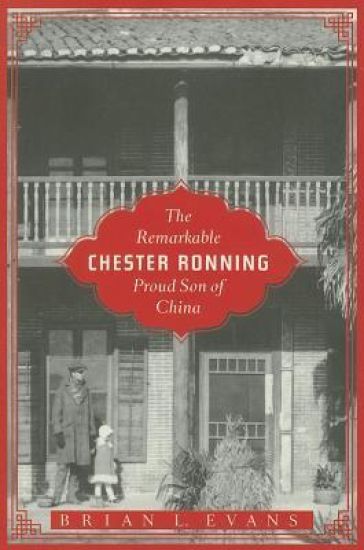
Scholar and diplomat Brian L. Evans gives us the first English-language biography of Chester A. Ronning (1894-1984): diplomat, politician, educator, and one of Canada's major public figures. This fascinating story depicts Ronning, the man who received many honours, and deepens readers' knowledge of Canada's post-World War II diplomacy and Canada-China relations. Ronning was an extraordinary Canadian who combined Chinese sensibility with Norwegian calm practicality and American drive. His life journey was entwined with the history of China over many decades. Based on written materials, historical documents, and many hours of interviews with Ronning, his friends, and fellow politicians, The Remarkable Chester Ronning offers both a thorough and entertaining biography and a lens through which to view international politics.
This book explores the state of higher education at century's end and the challenges awaiting it in the next millennium. It assesses changes in the student population, the role of faculty, spending patterns, government support, the role of intercollegiate athletics, the nature of presidential leadership, and the impact of technological change. This volume is a call to educators, parents, and taxpayers alike to enter into a dialogue about the future directions of higher education that they are willing to support.Because in the last few decades higher education has attempted to extend both its reach and scope despite the finite nature of resources at its disposal, the new millennium will mark a time when colleges and universities must clearly delimit and prioritize their goals. This volume is a call to educators, parents, and taxpayers alike to enter into a dialogue about the future directions of higher education that they are willing to support.The role of higher education in a high-tech, interdependent world economy has never been more important than it is today. Yet, never before has its future been so cloudy. Changes in the nature of the student population, tuition increases that consistently outpace the cost of living, increasing conflict between faculty and administration personnel, attacks on tenure, the professionalization of collegiate sports, and political attacks and threats to state funding are all transforming an institution in ways that are, as yet, uncertain at best. This volume reviews the source and impact of change on today's colleges and universities. Leading scholars contribute chapters on specific aspects of collegiate life and the way internal and external forces are changing the scope and function of higher education.
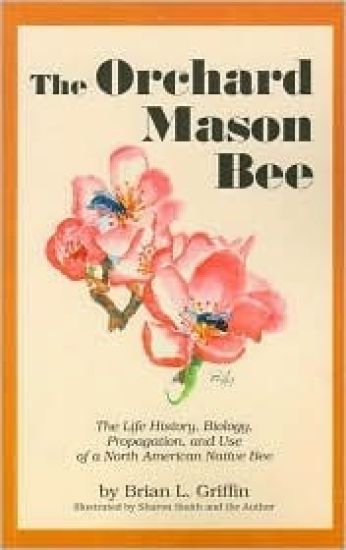
(Osmia lignaria propinqua Cresson)Raise Pollinating Bees in Your Own Backyard. Here is All the Information You Will Need to Capture and Raise These Docile Bees at Home.GROW apples, pears, and other crops successfully with these highly efficient pollinators.LEARN the fascinating life history of this mild-mannered bee. Watch as its life cycle unfolds in your own bee colony. EDUCATIONAL. A wonderful activity to introduce children to the marvels of the natural world.NON-AGGRESSIVE. Beneficial bees that everyone can propagate at home.
Hi, this is Dr. Nowell. There are probably quite a few different motives for writing a book like Anger Elimination. So, I want you to know what my primary motive is for having written about how to personally eliminate anger. It is that I want you to know how to significantly increase your life happiness and success by reducing and eliminating your personal anger reactions. I have been angry about many different things in my life. And at a certain point, I realized that I wanted to stop doing anger and so stop getting the natural negative consequences that are always a part of doing anger. That was the start of my learning process about how to reduce and eliminate my own and others anger reactions to our core emotional issues. The titles of the chapters in Anger Elimination (see the Table of Contents below) specify what I am sharing with you to help you gain significantly greater happiness and success. I urge you to get a copy of this book now, read it very carefully, and then do the things that I suggest that will reduce and eliminate your personal angers. You will be amazed about what you gain You may even want to send a copy of this book to someone that you know (perhaps anonymously lol) or to someone that you care about, who has anger issues. If that strikes you as important, this is a good time to do it. Anger Elimination--Table of Contents Preface--Program, Personality, & Emotional Intelligence Chapter 1--What "Gets Up Your Nose" (Core Emotional Issues) Chapter 2--Anger Habits Chapter 3--Brian's Anger Issues Chapter 4--Takers, Balancers, & Givers Chapter 5--Justice or "Balancing The Scales" Chapter 6--The Great & Dreadful Anger Path Chapter 7--Reducing Anger By Replacing Anger Habits Chapter 8--Reducing Anger: David's Story Chapter 9--My Promise to My Wife Chapter 10--Social Intuition & True Intuition/Insight Chapter 11--Andy's Anger At Work Chapter 12--Thoughts & Beliefs "Create" Emotions Chapter 13--The Four Sources of Thoughts Chapter 14--Anger Cities Chapter 15--Gender & Other Anger Differences Chapter 16--Ellen's Anger At Graduate School Chapter 17--Hot Type A Equals Premature Death Chapter 18--Roger's Anger Over The Years Chapter 19--Why Anger Is Not Necessary Chapter 20--My Most Important Insight About Anger Appendix A--12 More Anger Stories
Alexander Brogan, New York Philharmonic violinist and Julliard instructor, could not have imagined that his fianc e Charlotte would be murdered at Lincoln Center, nor could he have fathomed abandoning his elite Manhattan lifestyle and retreating to a small town in upstate, New York. Determined to fade away into a quiet, isolated existence as a high school music teacher, he encounters a wily ten-year-old violin prodigy named Kelly, whom he vainly tries to ignore. But through the arm-twisting antics of her straight-shooting, Louisiana-born grandmother, he agrees to teach the child. Ultimately, the experience forces him not only to rediscover his passion for the violin and music, but also to realize that love may very well linger in a heart that only Kelly's beautiful Aunt Grace can open
Welcome to the Third Edition of Waking God: The Journey Begins. The Waking God Trilogy is not about the doom and gloom that organized religions would have you believe. It is not about an Armageddon style 'end times' that pits good against evil in some final battle where religious dogma is triumphant. Yes, there is a final battle of sorts, but as Mantrella says, "It is not about saving humanity, it never has been." While the Trilogy comes down hard on organized religion and its 'worn out dogma, ' it is not atheistic. Instead, it totally rejects the idea of some schizophrenic super-being that loves to punish and reward its servants, and recognizes a Universal consciousness of which we are all a part. It acknowledges that within each of us there is a 'god seed' that is waiting to experience an awakening brought on, as in any major evolution, by not only environmental, but also social, economic, and political stress that will help to create a spontaneous evolution in humanity. Or, if allowed to remain dormant, this same seed will be our undoing. The prophecies all speak of a choice. Nostradamus, the Hopi, the Mayans, the I Ching, the Riddles of DaVinci and the Tarot speak to a time of choosing. Hidden codices, books of revelation, and ancient sacred texts also speak of this time of choosing. That time is upon us. The elements are all there. From bursts of energy from the center of our galaxy to the scientific discoveries about the true nature of our reality, the puzzle nears its completion. "...make the Da Vinci Code look like a church hymn.... It should make you think. Calling it provocative is an understatement. ...groundbreaking and revolutionary ideas .... Epic in scope ...."
The Waking God Trilogy is not about the doom and gloom that organized religions would have you believe. It is not about an Armageddon style 'end times' that pits good against evil in some final battle where religious dogma is triumphant. Yes, there is a final battle of sorts, but as Mantrella says, "It is not about saving humanity, it never has been." While the Trilogy comes down hard on organized religion and its 'worn out dogma, ' it is not atheistic. Instead, it totally rejects the idea of some schizophrenic super-being that loves to punish and reward its servants, and recognizes a Universal consciousness of which we are all a part. It acknowledges that within each of us there is a 'god seed' that is waiting to experience an awakening brought on, as in any major evolution, by not only environmental, but also social, economic, and political stress that will help to create a spontaneous evolution in humanity. Or, if allowed to remain dormant, this same seed will be our undoing. The prophecies all speak of a choice. Nostradamus, the Hopi, the Mayans, the I Ching, the Riddles of DaVinci, and the Tarot speak to a time of choosing. Hidden codices, books of revelation, and ancient sacred texts also speak of this time of choosing. That time is upon us. The elements are all there. From bursts of energy from the center of our galaxy to the scientific discoveries about the true nature of our reality, the puzzle nears its completion. Andrew, the young comparative religions professor, knows what he needs to do. He needs to give the still sleeping Adam flesh, by mating with a young and mysterious Middle Eastern woman known as Mara. The time is right at last, so what can possibly stop Andrew and Mara from coming together in fulfillment of prophecy? Well, for one thing, there's Michael. And then there are those who follow Michael, the great archangel who's made it his mission to keep humanity in its current ignorant and deluded state. Ranged on the looming battle's other side are Mantrella, Bringer of Light, and those who follow him. Meanwhile, Earth itself convulses as its inhabitants endure the plagues of Revelation. Will those who can stop Michael act in time? And even if they do, will they prevail? Focusing on 'worn out religious dogma' as one of the leading causes of human strife, the Trilogy turns the mythical world of good vs. evil on its head. Mantrella, a.k.a. Lucifer, is the champion of humanity, while the Archangel Michael fights to suppress human evolution by preventing the physical birth of the biblical Adam. Human destiny is placed squarely on the shoulders of where it belongs: choice; our thoughts create our reality. The Battle of Armageddon has already begun, but not the one religion portrays as the End Times. Can Michael stop the physical birth of Adam? Do the forces of good and evil battle it out for humanity's soul? Is Lucifer really the 'great deceiver' or is he humanity's guardian? Who can truly save humanity, if indeed it needs saving? All that is hidden is revealed between the lines and beyond the words. Will the 'dreamer' awaken? You must decide In these times of economic, political, social and religious upheaval, the TRILOGY is required reading, now more than ever "...make the Da Vinci Code look like a church hymn.... It should make you think. Calling it provocative is an understatement. ...groundbreaking and revolutionary ideas .... Epic in scope ...."
SEMIFINALIST, 2013 KINDLE BOOK REVIEWS SCI-FI/FANTASY BOOK OF THE YEAR The fish have disappeared from the sea. The animals have vanished from the land. All humanity, and even the gods, tremble under the specter of a pending cataclysm. The demigod, Fu Xi, races home from the edge of the world bringing news of a looming god war, but finds his land under attack by monsters he once called his children. He discovers a terrible curse has been cast, one intended to destroy the gods and all life. To his shock, Fu Xi learns that mankind's last hope rests solely on him, a simple fisherman, and a banished slave girl.Beset on all sides by ancient foes, both immortal and mundane, Fu Xi knows he must act quickly and races west to rescue the saviors. Unaware of the real doom that awaits, Aizarg the fisherman and his party begin a perilous journey across a dangerous steppe. They seek the last of the Narim, the legendary Black Sea Gods, who hold the key to their salvation. Leading them is the rescued slave girl Sarah, the only one among them who knows the path to the land of the god-men.Over seven days, the defining struggle of gods and humans begins under the onslaught of a powerful force whose true objective and origin remain a mystery. Fu Xi knows the secret to victory resides in the fisherman and the slave girl, whose lives he must protect, even if it means the rest of the world must perish ***BLACK SEA GODS transforms recently re-discovered Black Sea legends, possibly the root of all Eurasian mythology, with ancient Chinese mythology to create an unprecedented epic fantasy series. Find out more about this series at www.theillusionexotic.com
THE LONG AWAITED SEQUEL TO BLACK SEA GODS The Curse of the Nameless God ravages the world, laying waste to man and beast. Desperate to flee the worsening cataclysm, Aizarg and his people escape to sea aboard a flotilla of rafts and fishing boats. Short on supplies and facing starvation, the Lo must not only survive epic storms and tsunamis, but ravenous demons lurking in the deep. Aizarg's wife, Atamoda, knows that more than wind, waves and demons seek her people's demise. A cancer festers aboard the flotilla, one Aizarg does not see. Under the cloak of darkness, whispers and conspiracies spread from raft to raft as hunger burns in their bellies. A treacherous plot poisons the hearts and minds of the gentle Lo. Atamoda and Aizarg struggle to keep their people together, even as an unseen enemy seeks to divide the Lo, and drive a wedge between Atamoda and her husband.Far to the east, the demigod Fu Xi races to reach the Roof of the World before the cataclysm claims him and his beloved horse, Heise. Along the way he discovers that a terrible power relentlessly stalks him - the dreaded god war has begun. Fu Xi's immortality will be severely tested as he fights to not only to survive, but to fulfill his quest to find the mysterious white haired man and save his people. At the end of the world, demigod and mortal fight for survival, pawns to higher powers battling for world domination. In order to save all they love, they must find one another before it's too late.***THE CHRONICLES OF FU XI series transforms recently re-discovered Black Sea legends, possibly the root of all Eurasian mythology, with ancient Chinese mythology to create an unprecedented epic fantasy saga. Find out more about this series at www.theillusionexotic.com.