Drawing on international research this text blends established theory and current practice to provide a comprehensive coverage of this wide and constantly developing area.
Sylvia Walby; Jude Towers; Susan Balderston; Consuelo Corradi; Brian Francis; Markku Heiskanen; Karin Helweg-Larsen; Lut Mergaert; Phillipa Olive; Emma Palmer; Heidi Stöckl; Sofia Strid
Available Open Access under CC-BY-NC licence. The extent of violence against women is currently hidden. How should violence be measured? How should research and new ways of thinking about violence improve its measurement? Could improved measurement change policy? The book is a guide to how the measurement of violence can be best achieved. It shows how to make femicide, rape, domestic violence, and FGM visible in official statistics. It offers practical guidance on definitions, indicators and coordination mechanisms. It reflects on theoretical debates on ‘what is gender’, ‘what is violence’, and ‘the concept of coercive control’. and introduces the concept of ‘gender saturated context’. Analysing the socially constructed nature of statistics and the links between knowledge and power, it sets new standards and guidelines to influence the measurement of violence in the coming decades.
Susan Tetler; John Benedicto Krejsler; Lejf Moos; Steen Nepper Larsen; Lotte Hedegaard-Sørensen; Andy Højholdt; Lene Tanggaard Pedersen; Mette Vedsgaard Christensen; Brian Degn Mårtensson; Alexander von Oettingen; Henrik Juul; Anders Bæk Brønsted; Sten Tommy Larsen; Helle Hinge; Elsebeth Jensen; Mette Molbæk; Jette Worm Hansen; Roland Hachmann; Tobias Heiberg; Connie Stendal Rasmussen; Sofia Esmann; Ole Michael Spaten
En grundbog til læreruddannelsens pædagogiske fagområder inden for kompetencefaget lærerens grundfaglighed. Bogen leverer rygsøjlen af læreruddannelsens pædagogiske refleksionsgrundlag, som de studerende skal tilegne sig og have med sig i deres videre studieforløb, der skal gøre dem til kompetente undervisere og opdragere. Bogen består af 10 artikler til læreruddannelsens pædagogiske moduler og derudover af 11 tværgående redskabsartikler, der gør den studerende i stand til at analysere og perspektivere pædagogiske udfordringer i klasserummet, lærerværelset og skolepolitikken. Til hver af bogens kapitler er knyttet en video, lavet af lærerstuderende til lærerstuderende, som perspektiverer kapitlerne.
Arne Poulsen; Line Lerche Mørck; Niels Kryger; Thomas Nordahl; Andy Højholdt; Brian Degn Mårtensson; Torben Pedersen; Jørgen Christiansen; Karen Bønløkke Braad; Christian Quvang; Anne Morin; Karen-Lis Kristensen; Andreas Rasch-Christensen; Bjørg Kjær; Tine Basse Fisker; Signe Holm-Larsen; Sofia Esmann; Laura Emtoft; Peder Haug; Anne Linder; Ditte Dalum Christoffersen; Jesper Gregersen; Niels Egelund
Specialpædagogik i læreruddannelsen handler om arbejdet med elever, der har det svært i skolen. Bogens udgangspunkt er den specialpædagogiske fagtradition, hvor især socialpædagogikken og specialundervisningsbegrebet har haft betydning. Bogen afspejler derudover en bevægelse i retning af et mere inkluderende fagsyn, hvor man hellere taler om elever i en situation, der er vanskelig eller kompliceret, frem for om elever med vanskeligheder. Denne bevægelse hænger sammen med den generelle politiske og pædagogiske udvikling, ikke mindst ændringerne i folkeskolen og i læreruddannelsen, hvor man sigter mod, at hovedparten af eleverne skal undervises i samme skole. Derfor må arbejdet med elever i komplicerede læringssituationer kobles tæt til den almene praksis og teoridannelse. Alle bogens kapitler er skrevet af forfattere med faglig indsigt i specialpædagogiske problemstillinger. Nogle forfattere har aktivt været med til at formulere den aktuelle policy på området, andre har forsket i det i mange år, andre igen har en særlig ekspertise eller faglig interesse i deres emne. Bogen er primært skrevet til læreruddannelsens modul Specialpædagogik, men henvender sig også til andre studerende og praktikere inden for det social- og specialpædagogiske område. Jørgen Christiansen er pæd.psych og uddannelsesleder ved UC Sjælland. Brian Degn Mårtensson er cand.pæd. i pædagogisk filosofi og lektor ved UC Sjælland. Torben Pedersen er viceskoleleder og arbejder med implementering af bevægelse og udeskole i undervisningen.
As the dynamo of South Africa’s economy, Johannesburg commands a central position in the nation’s imagination, and scholars throughout the world monitor the city as an exemplar of urbanity in the global South.This richly illustrated study offers detailed empirical analyses of changes in the city’s physical space, as well as a host of chapters on the character of specific neighbourhoods and the social identities being forged within them. Informing all of these is a consideration of underlying economic, social and political processes shaping the wider Gauteng region.A mix of respected academics, practising urban planners and experienced policymakers offer compelling overviews of the rapid and complex spatial developments that have taken place in Johannesburg since the end of apartheid, along with tantalising glimpses into life on the streets and behind the high walls of this diverse city.The book has three sections. Section A provides an overview of macro spatial trends and the policies that have infl uenced them. Section B explores the shaping of the city at district and suburban level, revealing the peculiarity of processes in different areas. This analysis elucidates thelarger trends, while identifying shifts that are not easily detected at the macro level. Section C is an assembly of chapters and short vignettes that focus on the interweaving of place and identity at a micro level.With empirical data supported by new data sets including the 2011 Census, the city’s Development Planning and Urban Management Department’s information system, and Gauteng City-Region Observatory’s substantial archive, the book is an essential reference for planning practitioners, urban geographers, sociologists, and social anthropologists, among others.
Hållbarhet brukar beskrivas i tre dimensioner: den ekonomiska, den sociala och den ekologiska. Men i ett lokalt sammanhang hänger allt ihop, och för att förstå och arbeta för hållbarhet måste man tänka i andra dimensioner. I den här antologin lyfter forskare från Sveriges lantbruksuniversitet fram en mångfald av helt andra sätt att tänka för att nå hållbarhet. Med utgångspunkt i konkreta platser och exempel diskuteras bland annat identiteter, kollektivt agerande, institutioner, maktrelationer och samhörighet till en plats som grundbultar i arbetet för ett mer hållbart samhälle.
Thomas Steinfeld; Peter Luthersson; Theodore Dalrymple; Axel Odelberg; Karin Stensdotter; Roger Kimball; Johan Lundberg; Roger Scruton; James Macmillan; Camilla Lundberg; Pär Sandin; Gunnar Larsson; Hans Henrik Brummer; Therese Bohman; Henry Larsson; Ann-Sofi Ljung-Svensson; Martin Lagerholm; David Andersson; Einar Askestad; Rob Riemen; John Armstrong; Per Bauhn; Torbjörn Elensky; Alain de Botton; Peter Elmlund; Lars Anders Johansson; David Mason; Anna Brodow Inzaina; Christopher Rådlund; Denis Dutton; Brian Boyd; Marcus Nordlund
Under omprövning rymmer ett stort antal bidrag som förenas av att de utifrån ett kritiskt perspektiv diskuterar vår tids mest karakteristiska estetiska hållningar och konstnärliga tendenser. Antologin försöker se framåt, förbi de modernistiska och postmodernistiska strategier som kännetecknat 1900-talets utveckling inom konstarter som litteratur, musik, bildkonst och arkitektur. Detta innebär också en omvärdering av kulturhistorien, där en rad förbisedda författarskap och konstnärskap lyfts fram. Och där kulturhistorien utvärderas med avseende på vad som kan te sig fruktbart och ofruktbart för framtiden.
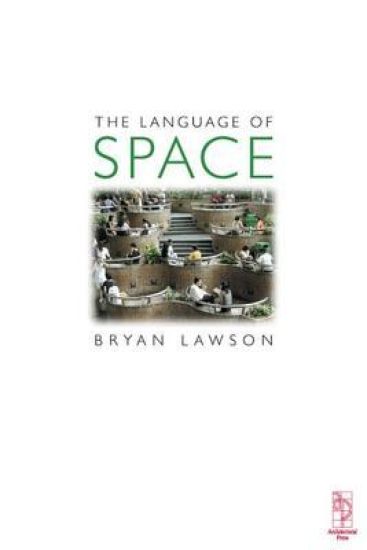
This unique guide provides a systematic overview of the idea of architectural space. Bryan Lawson provides an ideal introduction to the topic, breaking down the complex and abstract terms used by many design theoreticians when writing about architectural space. Instead, our everyday knowledge is reintroduced to the language of design. Design values of 'space' are challenged and informed to stimulate a new theoretical and practical approach to design. This book views architectural and urban spaces as psychological, social and partly cultural phenomena. They accommodate, separate, structure, facilitate, heighten and even celebrate human spatial behaviour.
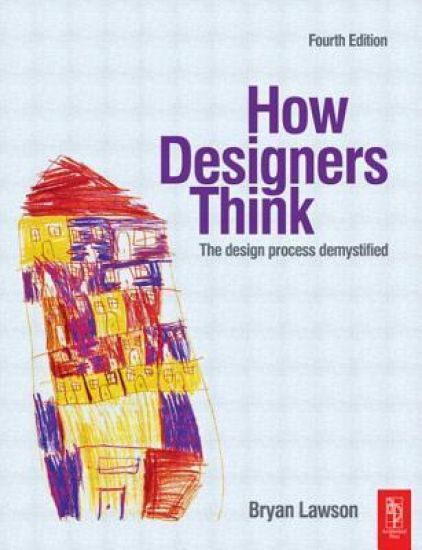
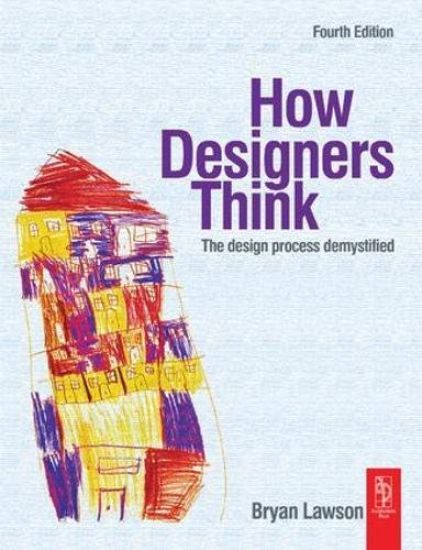
How Designers Think is based on Bryan Lawson's many observations of designers at work, interviews with designers and their clients and collaborators. This extended work is the culmination of forty years' research and shows the belief that we all can, and do, design, and that we can learn to design better. The creative mind continues to have the power to surprise and this book aims to nurture and extend this creativity. Neither the earlier editions, nor this book, are intended as authoritative prescriptions of how designers should think but provide helpful advice on how to develop an understanding of design. In this fourth edition, Bryan Lawson continues to try and understand how designers think, to explore how they might be better educated and to develop techniques to assist them in their task. Some chapters have been revised and three completely new chapters added. The book is now intended to be read in conjunction with What Designers Know which is a companion volume. Some of the ideas previously discussed in the third edition of How Designers Think are now explored more thoroughly in What Designers Know. For the first time this fourth edition works towards a model of designing and the skills that collectively constitute the design process.
Each chapter deals with a different technique from which we can best represent and make explicit the forms of knowledge used by designers. The book explores whether design knowledge is special, and attempts to get to the root of where design knowledge comes from. Crucially, it focuses on how designers use drawings in communicating their ideas and how they ‘converse’ with them as their designs develop. It also shows how experienced designers use knowledge differently to novices suggesting that design ‘expertise’ can be developed. Overall, this book builds a layout of the kinds of skill, knowledge and understanding that make up what we call designing.
Design Expertise explores what it takes to become an expert designer.It examines the perception of expertise in design and asks what knowledge, skills, attributes and experiences are necessary in order to design well. Bryan Lawson and Kees Dorst develop a new model of design expertise and show how design expertise can be developed.This book is designed for all students, teachers, practitioners and researchers in architecture and design. To enable all readers to explore the book in a flexible way, the authors’ words are always found on the left hand page. On the right are diagrams, illustrations and the voices of designers, teachers and students and occasionally others too.'Design Expertise' provides a provocative new reading on the nature of design and creative thought.
This unique guide provides a systematic overview of the idea of architectural space. Bryan Lawson provides an ideal introduction to the topic, breaking down the complex and abstract terms used by many design theoreticians when writing about architectural space. Instead, our everyday knowledge is reintroduced to the language of design. Design values of 'space' are challenged and informed to stimulate a new theoretical and practical approach to design. This book views architectural and urban spaces as psychological, social and partly cultural phenomena. They accommodate, separate, structure, facilitate, heighten and even celebrate human spatial behaviour.
Each chapter deals with a different technique from which we can best represent and make explicit the forms of knowledge used by designers. The book explores whether design knowledge is special, and attempts to get to the root of where design knowledge comes from. Crucially, it focuses on how designers use drawings in communicating their ideas and how they ‘converse’ with them as their designs develop. It also shows how experienced designers use knowledge differently to novices suggesting that design ‘expertise’ can be developed. Overall, this book builds a layout of the kinds of skill, knowledge and understanding that make up what we call designing.
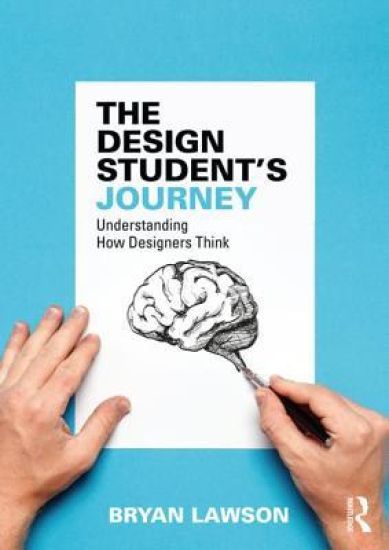
Being a professional designer is one of the most intellectually rewarding careers. Learning to become a designer can be tremendous fun but it can also be frustrating and at times painful. What you have to do to become a designer is not often clearly laid out and can seem mysterious. Over the past 50 years or so we have discovered a great deal about how designers think. This book relies upon that knowledge but presents it in a way specifically intended to help the student and perhaps the teacher. Bryan Lawson’s classic book How Designers Think has been in print since 1980 and has gone through four editions to keep it up to date. This book can be seen as a companion volume for the design student.
Being a professional designer is one of the most intellectually rewarding careers. Learning to become a designer can be tremendous fun but it can also be frustrating and at times painful. What you have to do to become a designer is not often clearly laid out and can seem mysterious. Over the past 50 years or so we have discovered a great deal about how designers think. This book relies upon that knowledge but presents it in a way specifically intended to help the student and perhaps the teacher. Bryan Lawson’s classic book How Designers Think has been in print since 1980 and has gone through four editions to keep it up to date. This book can be seen as a companion volume for the design student.
How Designers Think is based on Bryan Lawson's many observations of designers at work, interviews with designers and their clients and collaborators. This extended work is the culmination of forty years' research and shows the belief that we all can, and do, design, and that we can learn to design better. The creative mind continues to have the power to surprise and this book aims to nurture and extend this creativity. Neither the earlier editions, nor this book, are intended as authoritative prescriptions of how designers should think but provide helpful advice on how to develop an understanding of design.In this fourth edition, Bryan Lawson continues to try and understand how designers think, to explore how they might be better educated and to develop techniques to assist them in their task. Some chapters have been revised and three completely new chapters added. The book is now intended to be read in conjunction with What Designers Know which is a companion volume. Some of the ideas previously discussed in the third edition of How Designers Think are now explored more thoroughly in What Designers Know. For the first time this fourth edition works towards a model of designing and the skills that collectively constitute the design process.
WITHOUT TRACE is the second of Bryan Lawson's Drake and Hepple mysteries.Lord Richard MacCracken, a minister for the arts in the British Government, disappears during the interval of a performance at Covent Garden. He seems to have vanished without trace between the two acts of an opera. The nightmare gets darker when the postman delivers a copy of the Royal Opera House programme. It contains death threats and a set of the victim's bloody fingerprints. DCI Drake and his assistant DS Grace Hepple are called in to recover Lord MacCracken safely and discover who is holding him. The kidnappers have covered their tracks with a web of deception that leads Drake around the world. The sinister and dramatic crimes he uncovers could have come straight from the operatic stage.A DEGREE OF DEATH is the first book in this series. It was published in 2017.
Design Expertise explores what it takes to become an expert designer.It examines the perception of expertise in design and asks what knowledge, skills, attributes and experiences are necessary in order to design well. Bryan Lawson and Kees Dorst develop a new model of design expertise and show how design expertise can be developed.This book is designed for all students, teachers, practitioners and researchers in architecture and design. To enable all readers to explore the book in a flexible way, the authors’ words are always found on the left hand page. On the right are diagrams, illustrations and the voices of designers, teachers and students and occasionally others too.'Design Expertise' provides a provocative new reading on the nature of design and creative thought.
Analyzing the critical juncture of family-centered policy and practice, this book places the universal institution of the family in a global context. By including a conceptual framework as well as practice components, the authors offer an original multimodal approach toward understanding family-centered policy practice from an international perspective. It provides grassroots strategies for activists and practical guides for both students and practitioners and includes cutting-edge interpretations of the impact of globalization on families, social workers, and other helping professionals and advocates.
Analyzing the critical juncture of family-centered policy and practice, this book places the universal institution of the family in a global context. By including a conceptual framework as well as practice components, the authors offer an original multimodal approach toward understanding family-centered policy practice from an international perspective. It provides grassroots strategies for activists and practical guides for both students and practitioners and includes cutting-edge interpretations of the impact of globalization on families, social workers, and other helping professionals and advocates.