Kirjojen hintavertailu. Mukana 11 699 587 kirjaa ja 12 kauppaa.

Kirjahaku

Etsi kirjoja tekijän nimen, kirjan nimen tai ISBN:n perusteella.

1000 tulosta hakusanalla Brian M. Dillon

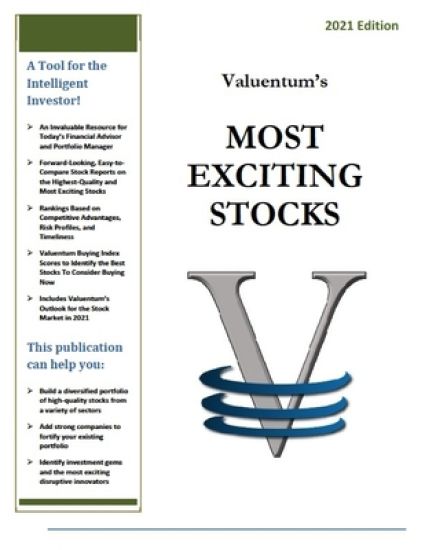
Valuentum's Most Exciting Stocks: 2021 Edition

Valuentum's Most Exciting Stocks: 2021 Edition

Brian M. Nelson

Valuentum Securities, Inc.
2021
nidottu
Welcome to the 2021 edition of Valuentum's "Most Exciting Stocks " Investing is difficult but it doesn't have to be. It seems like most of what the financial media does these days is just make a lot of noise, seemingly to only confuse investors. Savers simply have a firehose of information at their fingertips from last quarter's GDP to the forward earnings multiple on S&P 500 stocks and beyond, but it's hard to know what's material and what's not. Financial advisors don't have it any easier. They have lots of resources and thousands of stocks--large and small, domestic and foreign--to choose from to build custom client portfolios to meet best interest standards, but oftentimes, there's little systematic way to compare stocks across one robust methodological framework. Where to begin? In the "Most Exciting Stocks," we include analysis on some of the strongest and most exciting stocks on the market through the lens of our systematic stock-selection framework. We hope doing so will help investors cut through a lot of the noise out there to make more informed research decisions that will lead to better investment outcomes. Which Stocks Are Highlighted? Stocks that make the cut for this publication are generally best-in-class within their respective sectors when it comes to their economic return and financial risk characteristics, or they may fit the profile of an up-and-comer that's locked into long-term secular growth trends tied to disruptive innovation. In this book, we include many companies that are simply taking their industries by storm. Here are just a few examples. Carvana (CVNA) is changing how consumers buy used cars, Roku (ROKU) is leading the streaming charge against linear TV, Teradyne's (TER) industrial robotics technology may change how workplaces operate, Beyond Meat (BYND) is striving to alter the substance of the meat products industry, Virgin Galactic (SPCE) wants to make spaceflight accessible for private individuals, while Uber (UBER) is changing how we think about getting from point A to point B through ridesharing. Penn National (PENN) is aggressively expanding into sports betting with its investment in Barstool Sports, CRISPR Therapeutics' (CRSP) revolutionary gene-editing technology may offer a path to curative solutions for the worst diseases, Wayfair (W) is disrupting how we buy home goods, ETSY (ETSY) is carving out a niche online marketplace in craft items, while Zoom Video (ZM) has come of age during the outbreak of COVID-19. Others have been around for a while. Monster Beverage (MNST) continues to innovate within the energy drink market, while Boston Beer (SAM) has found new life with its Truly brand. All of the aforementioned companies are analyzed in this publication and many more. There are more than 100 exciting companies in this book. Whether you're looking to build a diversified portfolio of the highest-quality stocks on the market, or simply seeking to augment your existing portfolio with a few solid (or exciting) ideas, the 2021 edition of the "Most Exciting Stocks" publication is an essential resource for any investor.

Value Trap: Theory of Universal Valuation
WOODSTOCK, Ill., March 24, 2021 /PRNewswire/ -- The second edition of the business book Value Trap: Theory of Universal Valuation has been awarded the bronze medal in the category of Personal Finance/Retirement Planning/Investing at the 2021 Axiom Business Book Awards, presented by Jenkins Group. Less than 20% of this year's entries won an award, and medals went to a mix of the established Big 5 publishers, prestigious university presses, and independent publishers. Previous Axiom Business Book Award medalists include Nobel laureate Robert Shiller, former U.S. Secretary of State Condoleezza Rice, and world-renowned historian and Pulitzer Prize winner Doris Kearns Goodwin. "It's an honor to be in the company of such esteemed publishers and exemplary authors," said Valuentum's President Brian Nelson, CFA. "Thank you to everyone at Jenkins Group for having such a fine awards program, and my deepest congratulations to all of this year's winners." Nelson's book Value Trap continues to advance finance and investing, encouraging forward-looking analysis in quantitative data applications while warning about price-agnostic trading and its impact on the health of the stock market and the savings of everyday investors. BookLife by Publishers Weekly noted of Value Trap that "readers steeped in the stock market will appreciate this persuasive economic treatise, which sounds the alarm on spurious quantitative analysis." BlueInk Review said the book "stands on its considerable merits as a well written and cogent articulation of a distinct perspective on equity analysis." Review: "Data 'makes us feel like we are in control, but the conclusions can be misleading if the data isn't used in the right way, ' Nelson warns in his persuasive debut, which attempts to shift the market's belief in quantitative models of stock analysis back toward a more traditional enterprise valuation approach. Nelson, the president of equity and dividend growth research at Valuentum Securities, demonstrates how quantitative evaluative techniques that base pricing and investment strategies on trends in large sets of past data can lead investors to mistake correlation for causation. This can lead to conclusions that, as he puts it, are 'no more predictive than believing the divorce rate in Maine will fall if we just slow our margarine consumption' simply because those two statistics have risen and fallen together. Nelson makes the case that 'spurious' or statistically insignificant correlations mined from ambiguous past data aren't just a danger for individual investors or investment managers, but in an era of unprecedented volatility, these strategies will continue to increase the market's erratic tendencies (especially in the uncertain age of Covid-19). Nelson proposes instead that greater returns-and greater market stability-would come from resuming strategies based on enterprise valuation, with an emphasis on forward-looking causal data and companies' available cash assets. This second edition is updated with a hefty prologue that invites readers to evaluate Nelson's track record. He surveys the relative stability of his Valuentum stocks-stocks that meet the criteria of his 15-point checklist-over the course of 2020, demonstrating them to have been at least "pandemic-resistant" when not "pandemic-proof." Readers eager for a simple investing system may find Nelson's thorough case-making frustrating, but this work was conceived as a cry for economic stability, not an entry-level guide, and more experienced investors will find it thought-provoking and worth their time. Takeaway: Readers steeped in the stock market will appreciate this persuasive economic treatise, which sounds the alarm on spurious quantitative analysis. Great for fans of Aswath Damodaran's 'The Little Book of Valuation: How to Value a Company, Pick a Stock and Profit'; Richard Barker's 'Determining Value: Valuation Models and Financial Statements.'" -- BookLife Review by Publish
Value Trap: Theory of Universal Valuation

Value Trap: Theory of Universal Valuation

Brian M. Nelson

Valuentum Securities, Inc.
2018
nidottu
The second edition of this book is now available at the following link: https: //www.amazon.com/Value-Trap-Theory-Universal-Valuation/dp/0998038482. Award-winning book that earned acclaim from the Next Generation Indie Book Awards Blue Ink Review Notable Book and Readers' Favorite 5 Stars Wall Street doesn't know it has a problem. Index and quantitative investors have been free-riding on the backs of active managers for years, but growth in price-agnostic trading may finally have reached the tipping point. Brian Nelson, former Director of Methodology at Morningstar and President of Investment Research at Valuentum, explains how enterprise valuation forms the Theory of Universal Valuation and why a focus on it may not only help you avoid value traps, but also save you from the next financial crisis. This is a 356 page book, including Preface, Notes, Bibliography and Index. The text is a response to many worrisome trends and processes in the investment management business today. The book strives to answer the question: what is the appropriate empirical evidence in evidence-based finance? Surely, not just any empirical evidence will do. The book is not meant to be controversial, but a discussion of the great contradiction of "explaining" stock return behavior between factor-based investing (which is based mostly on ambiguous, realized data within in-sample sets) and the efficient markets hypothesis (which is based on expectations of future data, realized or not) may make it so. The text is heavy in behavioral thinking and puts forth enterprise valuation as a behavioral framework in which to view stock prices and their movements. This book also shows how enterprise valuation is much more than a simple stock valuation tool, but rather that enterprise valuation is truly universal valuation, resting at the intersection of behavioral economics, quantitative theory, equity valuation, and therefore finance, itself. A reading of "The Data Dilemma and Valuentum Investing" in the Preface is necessary to understand the various types of data Nelson refers to frequently in this text: ambiguous, causal and impractical. Also emphasized in this book is the difference between in-sample, out-of-sample and walk-forward studies, the latter the author believes to be the most robust and authentic of processes. In the first section of this book (chapters 1 through 3), Nelson welcomes you on a journey through the early lessons of his career and introduces some of the major shortcomings of traditional quant factor-based analysis, while building up the importance of a common theme in this text: the information contained in share prices. In the second section of this book (chapters 4 through 6), the causal nature of enterprise valuation to stock prices is explained, culminating in the Theory of Universal Valuation, which offers enterprise valuation as the central theme to quantitative value studies, efficient markets hypothesis testing and beyond. If at any time, it gets too theoretical, Nelson encourages the casual reader to skip ahead. In the final section of the book (chapters 7 through 10), Nelson talks about practical application of the principles explained in this text: how enterprise valuation can be used to identify bubbles and mispricings, how it's valuable to dividend-growth and income frameworks, how it's connected to economic moat and economic castle theory, and how it can be applied practically in an equity portfolio setting, as in Valuentum investing. This book is not a how-to manual on how to perform enterprise valuation, or a get-rich-quick investment program, but rather a text that Nelson feels lays the foundation for a genuine conversation about stock investing, a conversation about price versus estimated intrinsic value. The book is chock-full of footnotes, too, offering greater depth in areas that may require it. Mr. Nelson has over 15 years' experience in enterprise valuation and holds the Chartered Financial Analyst designation
World Prehistory: The Basics

World Prehistory: The Basics

Brian M. Fagan; Nadia Durrani

Taylor Francis Ltd
2021
nidottu
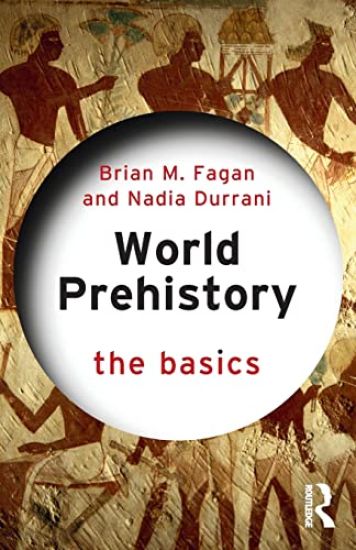
World Prehistory: The Basics tells the compelling story of human prehistory, from our African origins to the spectacular pre-industrial civilizations and cities of the more recent past.Written in a non-technical style by two archaeologists and experienced writers about the past, the story begins with human origins in Africa some 6 million years ago and the spread of our remote ancestors across the Old World. Then we return to Africa and describe the emergence of Homo sapiens (modern humans) over 300,000 years ago, then, much later, their permanent settlement of Europe, Eurasia, Asia, and the Americas. From hunters and foragers, we turn to the origins of farming and animal domestication in different parts of the world after about 11,000 years ago and show how these new economies changed human existence dramatically. Five chapters tell the stories of the great pre-industrial civilizations that emerged after 5000 years before present in the Old World and the Americas, their strengths, volatility, and weaknesses. These chapters describe powerful rulers and their ideologies, also the lives of non-elites. The narratives chronicle the rise and fall of civilizations, and the devastating effects of long droughts on many of them. The closing chapter poses a question: Why is world prehistory important in the modern world? What does it tell us about ourselves?Providing a simple, but entertaining and stimulating, account of the prehistoric past from human origins to today from a global perspective, World Prehistory: The Basics is the ideal guide to the story of our early human past and its relevance to the modern world.
World Prehistory: The Basics

World Prehistory: The Basics

Brian M. Fagan; Nadia Durrani

Taylor Francis Ltd
2021
sidottu
World Prehistory: The Basics tells the compelling story of human prehistory, from our African origins to the spectacular pre-industrial civilizations and cities of the more recent past.Written in a non-technical style by two archaeologists and experienced writers about the past, the story begins with human origins in Africa some 6 million years ago and the spread of our remote ancestors across the Old World. Then we return to Africa and describe the emergence of Homo sapiens (modern humans) over 300,000 years ago, then, much later, their permanent settlement of Europe, Eurasia, Asia, and the Americas. From hunters and foragers, we turn to the origins of farming and animal domestication in different parts of the world after about 11,000 years ago and show how these new economies changed human existence dramatically. Five chapters tell the stories of the great pre-industrial civilizations that emerged after 5000 years before present in the Old World and the Americas, their strengths, volatility, and weaknesses. These chapters describe powerful rulers and their ideologies, also the lives of non-elites. The narratives chronicle the rise and fall of civilizations, and the devastating effects of long droughts on many of them. The closing chapter poses a question: Why is world prehistory important in the modern world? What does it tell us about ourselves?Providing a simple, but entertaining and stimulating, account of the prehistoric past from human origins to today from a global perspective, World Prehistory: The Basics is the ideal guide to the story of our early human past and its relevance to the modern world.
Archaeology: The Basics

Archaeology: The Basics

Brian M. Fagan; Nadia Durrani

TAYLOR FRANCIS LTD
2022
nidottu
Archaeology: The Basics, rewritten for this fourth edition, is a short, engaging book that takes the reader on a journey through the fascinating world of archaeology and archaeologists.Written in a non-technical style by two experienced archaeologists and writers about the past, the book begins by introducing archaeology as a unique way of studying the entire span of the human past from our origins some six million years ago to today. The authors stress that archaeology is a global study of human biological and cultural diversity. After a brief look at early archaeological discoveries, they introduce today’s multidisciplinary archaeology. Then they go on to describe the archaeological record, the archives of the past and the importance of contexts of time and space. How do we ?nd archaeological sites and how do we explore them? Two chapters laced with examples examine these questions. Later chapters describe ancient technologies and how we study them, and the all-important subject of changing ancient environments and climate change. Zooarchaeology, ?otation methods, and other ways of reconstructing ancient diet and subsistence lead us into the study of changing settlement patterns across the landscape. Next, they visit the people of the past, either as individuals or groups, calling on bioarchaeology to assist them. Two chapters discuss ancient culture change and the remarkable diversity of ancient societies, and they are followed by an exploration of the spiritual realm, the exploration of the intangible. The ?nal chapter looks at the importance of archaeology in today’s world. Rich in numerous examples and contemporary thinking about archaeology, this book tries to answer an important question: What does archaeology tell us about ourselves?Archaeology: The Basics is essential reading for all those beginning to study archaeology and anyone who has ever questioned the past.
Archaeology: The Basics

Archaeology: The Basics

Brian M. Fagan; Nadia Durrani

TAYLOR FRANCIS LTD
2022
sidottu
Archaeology: The Basics, rewritten for this fourth edition, is a short, engaging book that takes the reader on a journey through the fascinating world of archaeology and archaeologists.Written in a non-technical style by two experienced archaeologists and writers about the past, the book begins by introducing archaeology as a unique way of studying the entire span of the human past from our origins some six million years ago to today. The authors stress that archaeology is a global study of human biological and cultural diversity. After a brief look at early archaeological discoveries, they introduce today’s multidisciplinary archaeology. Then they go on to describe the archaeological record, the archives of the past and the importance of contexts of time and space. How do we ?nd archaeological sites and how do we explore them? Two chapters laced with examples examine these questions. Later chapters describe ancient technologies and how we study them, and the all-important subject of changing ancient environments and climate change. Zooarchaeology, ?otation methods, and other ways of reconstructing ancient diet and subsistence lead us into the study of changing settlement patterns across the landscape. Next, they visit the people of the past, either as individuals or groups, calling on bioarchaeology to assist them. Two chapters discuss ancient culture change and the remarkable diversity of ancient societies, and they are followed by an exploration of the spiritual realm, the exploration of the intangible. The ?nal chapter looks at the importance of archaeology in today’s world. Rich in numerous examples and contemporary thinking about archaeology, this book tries to answer an important question: What does archaeology tell us about ourselves?Archaeology: The Basics is essential reading for all those beginning to study archaeology and anyone who has ever questioned the past.
World Prehistory

World Prehistory

Brian M. Fagan; Nadia Durrani

TAYLOR FRANCIS LTD
2023
sidottu
This is an introduction to human prehistory written for complete beginners with a global perspective. It is written in a jargon-free style that covers 6 million years of the remote past from human origins to the first pre-industrial civilizations, balancing theoretical discussion with descriptions and analysis of major sites and cultural developments.World Prehistory provides a unique and balanced narrative of what happened in the prehistoric past and why. The book is well worth acquiring, as it provides essential historical background to a wide variety of subjects, from written history and environmental studies to climate change. Chronological tables, numerous illustrations, guides to further reading, and stand-alone boxes on some archaeological methods, key sites, and some people of the past amplify much of the basic narrative. This global prehistory is aimed at people with no background in archaeology, undergraduates at all levels, and participants in graduate seminars on a wide range of subjects. Numerous people with a general interest in archaeology and multidisciplinary history have acquired and enjoyed this book.
World Prehistory

World Prehistory

Brian M. Fagan; Nadia Durrani

TAYLOR FRANCIS LTD
2023
nidottu
This is an introduction to human prehistory written for complete beginners with a global perspective. It is written in a jargon-free style that covers 6 million years of the remote past from human origins to the first pre-industrial civilizations, balancing theoretical discussion with descriptions and analysis of major sites and cultural developments.World Prehistory provides a unique and balanced narrative of what happened in the prehistoric past and why. The book is well worth acquiring, as it provides essential historical background to a wide variety of subjects, from written history and environmental studies to climate change. Chronological tables, numerous illustrations, guides to further reading, and stand-alone boxes on some archaeological methods, key sites, and some people of the past amplify much of the basic narrative. This global prehistory is aimed at people with no background in archaeology, undergraduates at all levels, and participants in graduate seminars on a wide range of subjects. Numerous people with a general interest in archaeology and multidisciplinary history have acquired and enjoyed this book.