
Kirjahaku
Etsi kirjoja tekijän nimen, kirjan nimen tai ISBN:n perusteella.
1000 tulosta hakusanalla Brian Ross
Fear is normal; it is in our DNA. The story of your brain on fear does not end there. Brain on Fear describes the natural alarm system humans activate in response to fear and how to rewire your brain once your fear something. While laughing at some of the silly examples, children as young as 6 can walk away with a basic understanding of how facing your fears can change your brain.

The science of human development informs our thinking about children and their development. The Brain Development Revolution asks how and why has brain development become the major lens for understanding child development, and its consequences. It describes the 1997 I Am Your Child campaign that engaged public attention through a sophisticated media communications effort, a White House conference, and other events. It explores the campaign's impact, including voter initiatives to fund early childhood programs and a national campaign for prekindergarten education, but also several missed opportunities. The study examines why brain development compels our attention, why we are – but shouldn't be – neurodeterminists, and the challenges of communicating developmental brain science. This book examines the framing of the brain development story, the selectivity of the messaging, and overpromising the results of early programs. Lastly, it discusses proposals for how science communication can be improved to better serve children and the public.
The science of human development informs our thinking about children and their development. The Brain Development Revolution asks how and why has brain development become the major lens for understanding child development, and its consequences. It describes the 1997 I Am Your Child campaign that engaged public attention through a sophisticated media communications effort, a White House conference, and other events. It explores the campaign's impact, including voter initiatives to fund early childhood programs and a national campaign for prekindergarten education, but also several missed opportunities. The study examines why brain development compels our attention, why we are – but shouldn't be – neurodeterminists, and the challenges of communicating developmental brain science. This book examines the framing of the brain development story, the selectivity of the messaging, and overpromising the results of early programs. Lastly, it discusses proposals for how science communication can be improved to better serve children and the public.
Addressing Brain Injury in Under-Resourced Settings
Ross Balchin; Rudi Coetzer; Christian Salas; Janice Webster
Psychology Press Ltd
2017
sidottu
Many of the world’s population have no access to appropriate diagnostic, neurorehabilitative or support services following brain injury. Addressing Brain Injury in Under-Resourced Settings: A Practical Guide to Community-Centred Approaches tackles this unacceptable gap in service provision by empowering the reader to provide basic care, education and support for patients with brain injuries and their families.Written for an audience which does not necessarily have any prior knowledge of the brain, neurorehabilitation or brain injuries/pathologies, this practical guide first examines the global context of brain injury, considering the cross-cultural realities across communities worldwide. The book goes on to explore the reality of brain injury and how to work with its consequences, offering practical knowledge and advice in a user-friendly, richly illustrated format. It provides easily digestible information about the brain, including its normal functioning and the ways in which it can be damaged through injury and disease. The book also covers the basic skills needed to identify neurological difficulties and provides guidance on basic rehabilitation input and support. The final section of the book covers how to provide services, including working with organisations and communities, volunteering, initiating and developing community-based projects and programmes, and caring for patients and their families from emergency to recovery to rehabilitation.This book is an invaluable resource for community health workers, voluntary sector workers and all professional healthcare providers who work with brain-injured patients around the world. It will also be important reading for policy developers, fundraising organisations and those who work with global humanitarian initiatives.
Addressing Brain Injury in Under-Resourced Settings
Ross Balchin; Rudi Coetzer; Christian Salas; Janice Webster
Psychology Press Ltd
2017
nidottu
Many of the world’s population have no access to appropriate diagnostic, neurorehabilitative or support services following brain injury. Addressing Brain Injury in Under-Resourced Settings: A Practical Guide to Community-Centred Approaches tackles this unacceptable gap in service provision by empowering the reader to provide basic care, education and support for patients with brain injuries and their families.Written for an audience which does not necessarily have any prior knowledge of the brain, neurorehabilitation or brain injuries/pathologies, this practical guide first examines the global context of brain injury, considering the cross-cultural realities across communities worldwide. The book goes on to explore the reality of brain injury and how to work with its consequences, offering practical knowledge and advice in a user-friendly, richly illustrated format. It provides easily digestible information about the brain, including its normal functioning and the ways in which it can be damaged through injury and disease. The book also covers the basic skills needed to identify neurological difficulties and provides guidance on basic rehabilitation input and support. The final section of the book covers how to provide services, including working with organisations and communities, volunteering, initiating and developing community-based projects and programmes, and caring for patients and their families from emergency to recovery to rehabilitation.This book is an invaluable resource for community health workers, voluntary sector workers and all professional healthcare providers who work with brain-injured patients around the world. It will also be important reading for policy developers, fundraising organisations and those who work with global humanitarian initiatives.
This book has been considered by academicians and scholars of great significance and value to literature. This forms a part of the knowledge base for future generations. So that the book is never forgotten we have represented this book in a print format as the same form as it was originally first published. Hence any marks or annotations seen are left intentionally to preserve its true nature.
How To Increase Memory And Brain Power: Proven Strategies On How To Increase Brain Capacity, Speed and Power
Adam Ross
Createspace Independent Publishing Platform
2015
nidottu
NEW YORK TIMES BESTSELLER - A life-altering, science-backed exploration of the healing power of art, which has now been proven to help lower stress, supercharge learning and creativity, extend your lifespan, and combat loneliness. "This book blew my mind "--Angela Duckworth, #1 New York Times bestselling author of GritA BLOOMBERG BEST BOOK OF THE YEAR - Finalist for the Inc. Non-Obvious Book Award and the Porchlight Business Book Award What is art? Many of us think of the arts as entertainment--a luxury of some kind. In Your Brain on Art, authors Susan Magsamen and Ivy Ross show how activities from painting and dancing to expressive writing, architecture, and more are essential to our lives. We're on the verge of a cultural shift in which the arts can deliver potent, accessible, and proven solutions for the well-being of everyone. Magsamen and Ross offer compelling research that shows how engaging in an art project for as little as forty-five minutes reduces the stress hormone cortisol, no matter your skill level, and just one art experience per month can extend your life by ten years. They expand our understanding of how playing music builds cognitive skills and enhances learning; the vibrations of a tuning fork create sound waves to counteract stress; virtual reality can provide cutting-edge therapeutic benefit; and interactive exhibits dissolve the boundaries between art and viewers, engaging all of our senses and strengthening memory. Doctors have even been prescribing museum visits to address loneliness, dementia, and many other physical and mental health concerns.Your Brain on Art is a portal into this new understanding about how the arts and aesthetics can help us transform traditional medicine, build healthier communities, and mend an aching planet. Featuring conversations with artists such as David Byrne, Ren e Fleming, and evolutionary biologist E. O. Wilson, Your Brain on Art is an authoritative guide to neuroaesthetics. The book weaves a tapestry of breakthrough research, insights from multidisciplinary pioneers, and compelling stories from people who are using the arts to enhance their lives.
Your Brain on Art: How the Arts Transform Us
Susan Magsamen; Ivy Ross
Random House Trade
2024
nidottu
NEW YORK TIMES BESTSELLER - A life-altering, science-backed exploration of the healing power of art, which has now been proven to help lower stress, supercharge learning and creativity, extend your lifespan, and combat loneliness. "This book blew my mind "--Angela Duckworth, #1 New York Times bestselling author of GritA BLOOMBERG BEST BOOK OF THE YEAR - Finalist for the Inc. Non-Obvious Book Award and the Porchlight Business Book Award What is art? Many of us think of the arts as entertainment--a luxury of some kind. In Your Brain on Art, authors Susan Magsamen and Ivy Ross show how activities from painting and dancing to expressive writing, architecture, and more are essential to our lives. We're on the verge of a cultural shift in which the arts can deliver potent, accessible, and proven solutions for the well-being of everyone. Magsamen and Ross offer compelling research that shows how engaging in an art project for as little as forty-five minutes reduces the stress hormone cortisol, no matter your skill level, and just one art experience per month can extend your life by ten years. They expand our understanding of how playing music builds cognitive skills and enhances learning; the vibrations of a tuning fork create sound waves to counteract stress; virtual reality can provide cutting-edge therapeutic benefit; and interactive exhibits dissolve the boundaries between art and viewers, engaging all of our senses and strengthening memory. Doctors have even been prescribing museum visits to address loneliness, dementia, and many other physical and mental health concerns.Your Brain on Art is a portal into this new understanding about how the arts and aesthetics can help us transform traditional medicine, build healthier communities, and mend an aching planet. Featuring conversations with artists such as David Byrne, Ren e Fleming, and evolutionary biologist E. O. Wilson, Your Brain on Art is an authoritative guide to neuroaesthetics. The book weaves a tapestry of breakthrough research, insights from multidisciplinary pioneers, and compelling stories from people who are using the arts to enhance their lives.
A growing body of neuroscience research has established the principle of neuroplasticity; a powerfully hopeful message that we can use our minds to change our brains in the direction of greater health and well-being. The key to shaping this change rests in how we direct and focus and our attention. In an easy-to-use workbook format this publication offers a strengths based, preventative, positive approach, grounded in neuroscience research, for creating a stronger sense of overall well-being. It contains more than 65 unique writing prompts and a facilitator’s guide with complete facilitation plans for 1-hour, 90 minutes and 2-hour groups.
The science of neuroplasticity demonstrates that our brains can and do change. We each not only have the power but use the power to create new neural pathways — for better or for worse. This science has demonstrated that we can create pathways that lead to resilience, vitality, greater peace of mind, and improved well-being. Self-directed neuroplasticity is a method of accelerating neurological change through expressive writing. It’s what happens when you harness the power of your pen or keyboard in service of intention, attention, and action for your greater good. This workbook of expressive writing for brain change can lead to increased well-being. As you learn and apply the principles of neuroplasticity to your own life, staged and sequenced through masterful application of writing techniques designed to promote positive brain change, improved satisfaction will not be far behind.
THE NEW YORK TIMES BESTSELLERA WATERSTONES BEST BOOK OF 2023BARNES & NOBLE'S BEST SCIENCE & NATURE BOOKS OF 2023The arts can deliver potent, accessible and proven solutions for the wellbeing of everyone. In this book, Magsamen and Ross offer compelling research that shows how engaging in an art project for as little as forty-five minutes reduces the stress hormone cortisol and just one art experience per month can extend your life by ten years. This can be anything from painting and dancing to expressive writing, architecture and more - no matter your skill level. Your Brain on Art is an authoritative guide to how neuroaesthetics can help us transform traditional healing, build healthier communities and mend an aching planet.

The Crusading Commoner: A Close Up of William Jennings Bryan and His Times
Charles McDaniel Rosser
Literary Licensing, LLC
2013
nidottu
"If You Dont Do Drugs, Dont Do This" How to Access 100% of Your Brain
Rasheed Ross
Lulu.com
2019
nidottu
How to access 100% of your brain by Rasheed Ross. if you dont do drugs, dont do this. 2019 book
This book provides a hands-on resource for the development of essential skills and competencies in clinical neuropsychology. On a very practical level it addresses a question frequently asked by students, trainees, interns, and newly qualified psychologists: what do I need to know in order to perform the everyday tasks involved in clinical neuropsychology? The authors distil, from a vast knowledge base, the practical skills and knowledge needed to lay the foundations for working with brain-injured patients, especially within the developed and developing world where time and resources are limited.The book is divided into three main sections: Basic Foundations, Clinical Practice, and Professional Issues. Together these sections cover 18 fundamental topics, each representing a key part of the life of a practitioner. Each chapter contains practical tips, points for reflective practice, and suggested further reading, with a particular emphasis on issues pertaining to working in under-resourced clinical environments. The book draws upon landmark academic papers and textbooks, and also the authors’ experiences of working in state hospitals in both South Africa and the National Health Service in the United Kingdom.Working with Brain Injury will be essential reading for clinical psychology trainees and their supervisors, for newly qualified psychologists in clinical settings, and for students and practitioners in other clinical professions seeking an introduction to clinical neuropsychology.
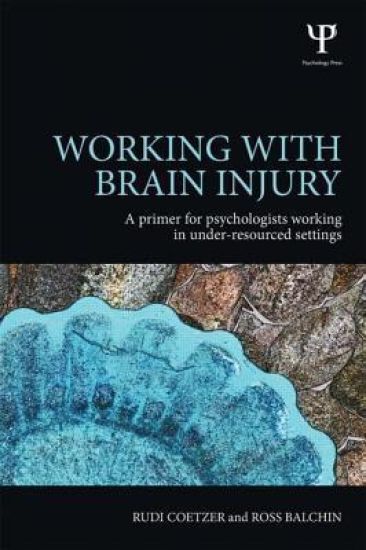
This book provides a hands-on resource for the development of essential skills and competencies in clinical neuropsychology. On a very practical level it addresses a question frequently asked by students, trainees, interns, and newly qualified psychologists: what do I need to know in order to perform the everyday tasks involved in clinical neuropsychology? The authors distil, from a vast knowledge base, the practical skills and knowledge needed to lay the foundations for working with brain-injured patients, especially within the developed and developing world where time and resources are limited.The book is divided into three main sections: Basic Foundations, Clinical Practice, and Professional Issues. Together these sections cover 18 fundamental topics, each representing a key part of the life of a practitioner. Each chapter contains practical tips, points for reflective practice, and suggested further reading, with a particular emphasis on issues pertaining to working in under-resourced clinical environments. The book draws upon landmark academic papers and textbooks, and also the authors’ experiences of working in state hospitals in both South Africa and the National Health Service in the United Kingdom.Working with Brain Injury will be essential reading for clinical psychology trainees and their supervisors, for newly qualified psychologists in clinical settings, and for students and practitioners in other clinical professions seeking an introduction to clinical neuropsychology.
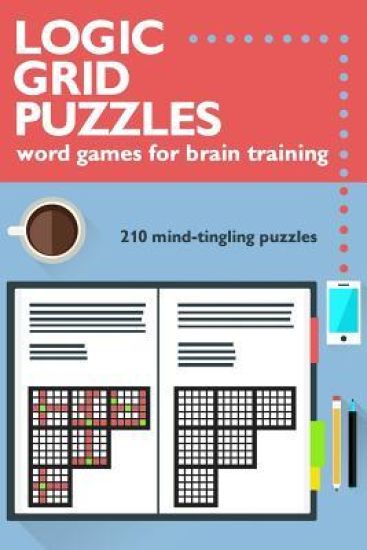
Logic Grid Puzzles: Word Games for Brain Training
Meredith McNamara; Ross McNamara
Literarily
2016
nidottu
Long before Sudoku hit the scene, there were Logic Grid Puzzles. Developed by Lewis Carroll, these logic puzzles rely on deducing a complex solution from only a few pieces of information. (Who knew the author of Alice In Wonderland was also a brilliant mathematician and logician? ) Now, you're probably thinking, "Whoa, that all sounds really nerdy " And you're right. But it's also really addicting. With only a few clues, you'll be able to fill in the entire 6 grid puzzle after you put your brain to work.The puzzles in this book were originally created for the 'Logic Grid Puzzles: Word Games for Brain Training' app and have been downloaded and solved hundreds of thousands of times. But the puzzles are now available for everyone who loves solving them the old fashioned way: with pencil and paper.So grab a cup of coffee, a pencil, and a comfy chair. 210 logic grid puzzles await