
Kirjahaku
Etsi kirjoja tekijän nimen, kirjan nimen tai ISBN:n perusteella.
1000 tulosta hakusanalla Bruno Luciano C Alves de Oliveira

Find out what Bruno's other gift is in this Little Golden Book starring the family Madrigal from Disney Encanto Bruno Madrigal loves acting But he's nervous to star in his own stories. Can Mirabel and her family help Bruno feel confident enough to follow his dreams? Kids ages 2 to 5 will love this Little Golden Book starring the family Madrigal from Disney Encanto Disney's Encanto tells the tale of an extraordinary family, the Madrigals, who live hidden in the mountains of Colombia, in a magical house, in a vibrant town, in a wondrous, charmed place called an Encanto. The magic of the Encanto has blessed every child in the family with a unique gift, ranging from superstrength to the power to heal--every child except one, Mirabel. But when she discovers that the magic surrounding the Encanto is in danger, Mirabel decides that she, the only ordinary Madrigal, might just be her exceptional family's last hope.
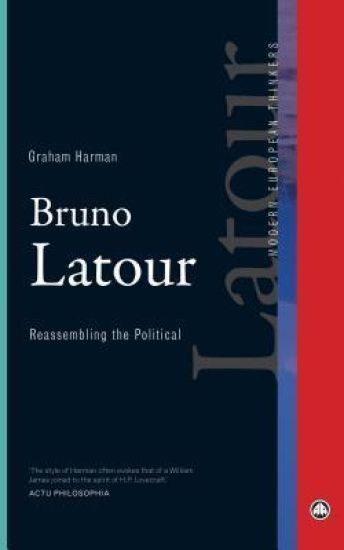
Bruno Latour, the French sociologist, anthropologist and long-established superstar in the social sciences is revisited in this pioneering account of his ever-evolving political philosophy. Breaking from the traditional focus on his metaphysics, most recently seen in Harman's book Prince of Networks, the author instead begins with the Hobbesian and even Machiavellian underpinnings of Latour's early period encountering his shift towards Carl Schmitt then finishing with his final development into the Lippmann / Dewey debate. Harman brings these twists and turns into sharp focus in terms of Latour's personal political thinking. Along with Latour's most important articles on political themes, the book chooses three works as exemplary of the distinct periods in Latour's thinking: The Pasteurization of France, Politics of Nature, and the recently published An Inquiry Into Modes of Existence, as his conception of politics evolves from a global power struggle between individuals, to the fabrication of fragile parliamentary networks, to just one mode of existence among many others.

Bruno Latour, the French sociologist, anthropologist and long-established superstar in the social sciences is revisited in this pioneering account of his ever-evolving political philosophy. Breaking from the traditional focus on his metaphysics, most recently seen in Harman's book Prince of Networks, the author instead begins with the Hobbesian and even Machiavellian underpinnings of Latour's early period encountering his shift towards Carl Schmitt then finishing with his final development into the Lippmann / Dewey debate. Harman brings these twists and turns into sharp focus in terms of Latour's personal political thinking. Along with Latour's most important articles on political themes, the book chooses three works as exemplary of the distinct periods in Latour's thinking: The Pasteurization of France, Politics of Nature, and the recently published An Inquiry Into Modes of Existence, as his conception of politics evolves from a global power struggle between individuals, to the fabrication of fragile parliamentary networks, to just one mode of existence among many others.
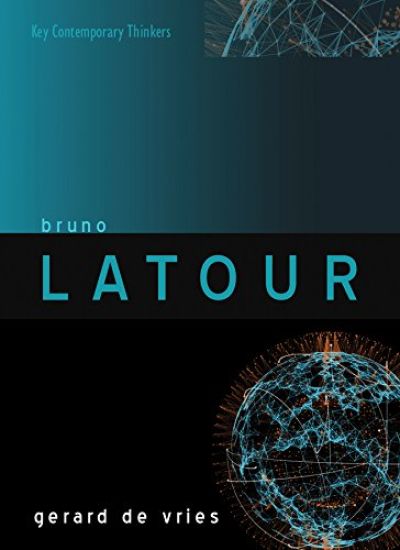
Bruno Latour is among the most important figures in contemporary philosophy and social science. His ethnographic studies have revolutionized our understanding of areas as diverse as science, law, politics and religion. To facilitate a more realistic understanding of the world, Latour has introduced a radically fresh philosophical terminology and a new approach to social science, ‘Actor-Network Theory’. In seminal works such as Laboratory Life, We Have Never Been Modern and An Inquiry into Modes of Existence, Latour has outlined an alternative to the foundational categories of ‘modern’ western thought Ð particularly its distinction between society and nature Ð that has major consequences for our understanding of the ecological crisis and of the role of science in democratic societies. Latour’s ‘empirical philosophy’ has evolved considerably over the past four decades. In this lucid and compelling book, Gerard de Vries provides one of the first overviews of Latour’s work. He guides readers through Latour’s main publications, from his early ethnographies to his more recent philosophical works, showing with considerable skill how Latour’s ideas have developed. This book will be of great value to students and scholars attempting to come to terms with the immense challenge posed by Latour’s thought. It will be of interest to those studying philosophy, anthropology, sociology, science and technology studies, and almost all other branches of the social sciences and humanities.

Bruno Latour is among the most important figures in contemporary philosophy and social science. His ethnographic studies have revolutionized our understanding of areas as diverse as science, law, politics and religion. To facilitate a more realistic understanding of the world, Latour has introduced a radically fresh philosophical terminology and a new approach to social science, ‘Actor-Network Theory’. In seminal works such as Laboratory Life, We Have Never Been Modern and An Inquiry into Modes of Existence, Latour has outlined an alternative to the foundational categories of ‘modern’ western thought Ð particularly its distinction between society and nature Ð that has major consequences for our understanding of the ecological crisis and of the role of science in democratic societies. Latour’s ‘empirical philosophy’ has evolved considerably over the past four decades. In this lucid and compelling book, Gerard de Vries provides one of the first overviews of Latour’s work. He guides readers through Latour’s main publications, from his early ethnographies to his more recent philosophical works, showing with considerable skill how Latour’s ideas have developed. This book will be of great value to students and scholars attempting to come to terms with the immense challenge posed by Latour’s thought. It will be of interest to those studying philosophy, anthropology, sociology, science and technology studies, and almost all other branches of the social sciences and humanities.

Meet Bruno Tonioli - Strictly Come Dancing judge, wildcat choreographer and stardust magnet. With his irrepressible personality and Italian exuberance, Bruno has become a TV sensation, settling the fate of Britain's ballroom hopefuls during the nation's favourite Saturday night show.Bruno's journey is mind-blowing. He fled from home at eighteen to join the dance company La Grande Eugene and travelled around Europe; he later coached the actress Goldie Hawn as a dance instructor, and orchestrated lavish productions for TV, film and pop videos, where he worked alongside The Rolling Stones, Freddie Mercury, Duran Duran and Tina Turner.Along the way Bruno has Tangoed with high fashion, performed the Cha Cha Cha with untameable pop vixens Bananarama and danced an emotional Waltz with bereavement and breakdown before settling in the perfect location - a seat on the judging panel of Strictly Come Dancing, where he wowed the nation at home and in Hollywood with his passion for dance and an excitable turn of phrase.My Story tears away the glittery wrapping of this most exuberant and loveable of TV stars. Strap yourselves in for a wild and sexy ride with more frills than Versailles.

Growing up in a family of musicians, Bruno Mars started his music career performing at a young age in his hometown of Honolulu, Hawaii. After high school he moved to California and began producing music for other artists before embarking on his own solo career. This amazing book describes Bruno Mars' early life and how his debut album sent him to the top of the charts worldwide. With a wide range of musical influences, it's no surprise that this multi-talented singer won Best Male Pop Vocal Performance at the Grammys only a year later.
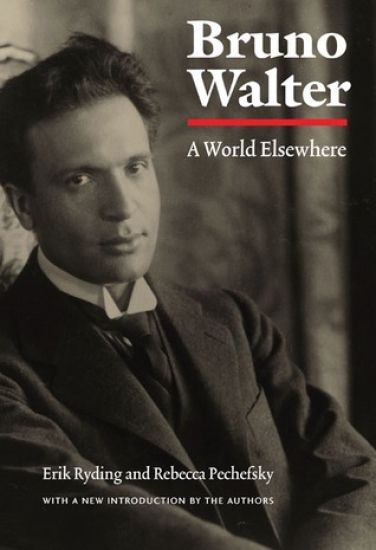
Bruno Walter (1876–1962), one of the twentieth century's greatest conductors, lived a fascinating life in difficult times. This engrossing book is the first full-length biography of Walter in English. Born in Berlin, Walter began his long and eventful career in provincial theaters; his successes there led to positions at the premier opera houses of Berlin and Vienna. Then for a decade he served as Bavarian music director, conducting opera in three theaters and giving symphonic concerts. Erik Ryding and Rebecca Pechefsky tell of Walter's close friendship with Gustav Mahler, his relations with Thomas Mann and his family, and his romantic involvement with the soprano Delia Reinhardt. Ousted from Germany by the Nazi Party in 1933, he returned to Vienna, where he was artistic director of the State Opera until the Nazis again forced him out. He eventually emigrated to the United States, where he led the New York Philharmonic and other orchestras, developed a deep interest in the writings of Rudolf Steiner, and made touchstone recordings with the Columbia Symphony Orchestra.

Bruno Schulz New Documents and Interpretations
Peter Lang Publishing Inc
1999
sidottu
Bruno Schulz (1892-1942) has long been recognized, internationally and by leading American writers and critics, as a major twentieth-century author of fiction. This volume includes Schulz's newly discovered letters and two short theoretical essays hitherto not translated into English. The volume also contains an interview by Jerzy Ficowski, the foremost scholar on Schulz, indefatigable in searching for documents linked to Schulz. The second half of the volume includes original interpretative essays, and the editor, Czeslaw Prokopczyk, presents his approach to Schulz's fiction in terms of myth.

Bruno Latour stirs things up. Latour began as a lover of science and technology, co-founder of actor-network theory, and philosopher of a modernity that had "never been modern." In the meantime he is regarded not just as one of the most intelligent—and also popular—exponents of science studies but also as a major innovator of the social sciences, an exemplary wanderer who walks the line between the sciences and the humanities. This book provides the first comprehensive overview of the Latourian oeuvre, from his early anthropological studies in Abidjan (Ivory Coast), to influential books like Laboratory Life and Science in Action, and his most recent reflections on an empirical metaphysics of "modes of existence." In the course of this enquiry it becomes clear that the basic problem to which Latour's work responds is that of social tradition, the transmission of experience and knowledge. What this empirical philosopher constantly grapples with is the complex relationship of knowledge, time, and culture.

Bruno Latour stirs things up. Latour began as a lover of science and technology, co-founder of actor-network theory, and philosopher of a modernity that had "never been modern." In the meantime he is regarded not just as one of the most intelligent—and also popular—exponents of science studies but also as a major innovator of the social sciences, an exemplary wanderer who walks the line between the sciences and the humanities. This book provides the first comprehensive overview of the Latourian oeuvre, from his early anthropological studies in Abidjan (Ivory Coast), to influential books like Laboratory Life and Science in Action, and his most recent reflections on an empirical metaphysics of "modes of existence." In the course of this enquiry it becomes clear that the basic problem to which Latour's work responds is that of social tradition, the transmission of experience and knowledge. What this empirical philosopher constantly grapples with is the complex relationship of knowledge, time, and culture.
Bruno, or On the Natural and Divine Principle of Things
F. W. J. Schelling
State University of New York Press
1984
pokkari
Makes Schelling's dialogue Bruno readily accessible to the English-language reader, with valuable commentary on the work itself, which details Schelling's account of his differences from Fichte.F. W. J. Schelling has remained unknown to most contemporary scholars, yet his thought is of great import to early 19th century philosophy and the study of German Idealism. For the first time, Michael G. Vater makes Schelling's dialogue Bruno readily accessible to the English-language reader while providing valuable commentary on the work itself, which details Schelling's account of his differences from Fichte.In an extensive introduction, Vater discusses the background and significance of Schelling's identity-philosophy and its impact on the development of Hegel's thought from 1802 to the publication of Hegel's Phenomenology. Comprehensive notes point out Schelling's use of classic sources, his dependence on Spinoza, and the similarities in Schelling's and Hegel's points of view during their collaboration on the Critical Journal.Through the value of its own arguments and its influence on Hegel, Schelling's Bruno provides key material for the evolution on 19th century philosophy. In Schelling's system, Hegel found the construction of a harmonious whole in which his own basic conflicts and those of his generation found their solution. Hegel's Difference and Schelling's Bruno announce a new programme and outline its foundations: Philosophy must become metaphysical again and unify a world torn by the conflicting and one-sided ideologies of materialism and spiritualism.

Bruno Jasienski
Wilfrid Laurier Univ Pr
1982
sidottu


Praise for the Author's Work: "Tsipi Keller has taken us into a writer's very being. It is hard work and all-consuming... This is a provocative story that stays with the reader." -Jewish Book Council on The Prophet of Tenth Street"Poet and novelist Keller handles this poignant tale with the deftness of a writer who has struggled alongside her characters." -Publishers Weekly on The Prophet of Tenth Street"This marvelously engaging and pleasurable novel is like a cross between watching a sly Eric Rohmer film about the spiritual crisis of vacation and reading a Jean Rhys interior monologue of a woman in extremis... A wickedly readable, psychologically astute and drolly knowing fiction." -Phillip Lopate, Author of The Glorious American Essay, on Jackpot"Keller expertly charts Maggie's transformation in this accomplished and oddly gripping novel." -Publishers Weekly on Jackpot

Bruno; or, Lessons of Fidelity, Patience, and Self-denial Taught by a Dog
Jacob Abbott
Anson Street Press
2025
pokkari
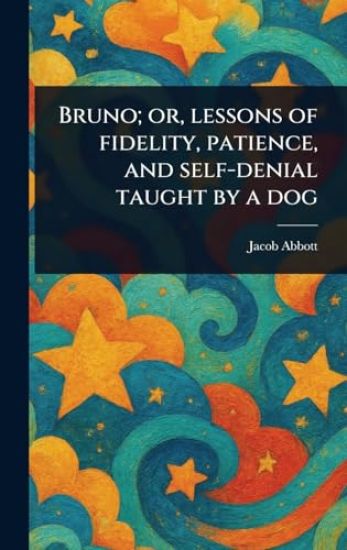
Bruno; or, Lessons of Fidelity, Patience, and Self-denial Taught by a Dog
Jacob Abbott
Anson Street Press
2025
sidottu