

Kirjahaku
Etsi kirjoja tekijän nimen, kirjan nimen tai ISBN:n perusteella.
1000 tulosta hakusanalla Bryce L. Meyer

Relevant and thought-provoking, describes a new and imaginative approach to the needs of de-institutionalised people returning to care in the community. It shows that there is a challenging but dynamic contribution to be made by all community mental health workers in restoring dignity to the lives of those who have tragically been robbed of such a basic human need.

Multivariate Analysis for the Biobehavioral and Social Sciences
Bruce L. Brown; Suzanne B. Hendrix; Dawson W. Hedges; Timothy B. Smith
John Wiley Sons Inc
2012
sidottu
An insightful guide to understanding and visualizing multivariate statistics using SAS®, STATA®, and SPSS® Multivariate Analysis for the Biobehavioral and Social Sciences: A Graphical Approach outlines the essential multivariate methods for understanding data in the social and biobehavioral sciences. Using real-world data and the latest software applications, the book addresses the topic in a comprehensible and hands-on manner, making complex mathematical concepts accessible to readers. The authors promote the importance of clear, well-designed graphics in the scientific process, with visual representations accompanying the presented classical multivariate statistical methods . The book begins with a preparatory review of univariate statistical methods recast in matrix notation, followed by an accessible introduction to matrix algebra. Subsequent chapters explore fundamental multivariate methods and related key concepts, including: Factor analysis and related methods Multivariate graphics Canonical correlation Hotelling's T-squared Multivariate analysis of variance (MANOVA) Multiple regression and the general linear model (GLM) Each topic is introduced with a research-publication case study that demonstrates its real-world value. Next, the question "how do you do that?" is addressed with a complete, yet simplified, demonstration of the mathematics and concepts of the method. Finally, the authors show how the analysis of the data is performed using Stata®, SAS®, and SPSS®. The discussed approaches are also applicable to a wide variety of modern extensions of multivariate methods as well as modern univariate regression methods. Chapters conclude with conceptual questions about the meaning of each method; computational questions that test the reader's ability to carry out the procedures on simple datasets; and data analysis questions for the use of the discussed software packages. Multivariate Analysis for the Biobehavioral and Social Sciences is an excellent book for behavioral, health, and social science courses on multivariate statistics at the graduate level. The book also serves as a valuable reference for professionals and researchers in the social, behavioral, and health sciences who would like to learn more about multivariate analysis and its relevant applications.

Transformational Grammar as a Theory of Language Acquisition
Bruce L. Derwing
Cambridge University Press
1973
pokkari
The revolution in linguistic thought associated with the name of Professor Noam Chomsky centres on the theory of transformational generation, especially in grammar. This book subjects the main theory and some of its applications to a searching critique. It finds the theory in some places circular, in general descriptively inadequate, but above all aprioristic and dangerously unempirical. Professor Derwing writes as a linguist particularly interested in the psychology of language acquisition, and conscious that the TGG model starts from assumptions about the mind and linguistic universals which dictate the form and the consequences of the argument. They strike Professor Derwing as arbitrary and merely formal, and as contradicting basic scientific mental habits. In brief, Professor Derwing disputes that TGG exemplifies proper empirical scientific inquiry; that something like a TGG is part of the output of normal language acquisition; or that TGG provides a valid heuristic for psychological investigation. He argues therefore for a more experimental approach if we are actually to discover how language is acquired.


Nextpert: 8 Concepts to Stand Out as the Best of the Next Generation of Career Success
Bruce L. Lund
Bruce Lund
2012
nidottu

American Agriculture in the Twentieth Century
Bruce L. Gardner
Harvard University Press
2006
nidottu
American agriculture in the twentieth century has given the world one of its great success stories, a paradigm of productivity and plenty. Yet the story has its dark side, from the plight of the Okies in the 1930s to the farm crisis of the 1980s to today's concerns about low crop prices and the impact of biotechnology. Looking at U.S. farming over the past century, Bruce Gardner searches out explanations for both the remarkable progress and the persistent social problems that have marked the history of American agriculture.Gardner documents both the economic difficulties that have confronted farmers and the technological and economic transformations that have lifted them from relative poverty to economic parity with the nonfarm population. He provides a detailed analysis of the causes of these trends, with emphasis on the role of government action. He reviews how commodity support programs, driven by interest-group politics, have spent hundreds of billions of dollars to little purpose. Nonetheless, Gardner concludes that by reconciling competing economic interests while fostering productivity growth and economic integration of the farm and nonfarm economies, the overall twentieth-century role of government in American agriculture is fairly viewed as a triumph of democracy.


Explore the rich fossil record of the Paleozoic Era, from the Cambrian (545 million years ago) through the Permian (almost 300 million years ago) with 650 high quality color photos and detailed, highly readable text. Following his successful work on the earliest fossils, the author now starts at that time in earth's history when life blossomed into a variety of body plans (phyla), and explores the successive periods of the Paleozoic Era. These include the Cambrian; the early, mid-, and late Ordovician; the Silurian and Devonian with their numerous marine fossils and some of the earth's first land plants and early fish; the diverse land plants and peculiar marine life of the Carboniferous (Mississippian and Pennsylvanian periods); and the fossils of the Permian, including many fossils of life forms that would go extinct in the worlds greatest extinction event. This is a great book for fossil hunters of all ilks and anyone interested in the early remnants of life. Those who collect or trade fossils will find a useful guide to the values of the fossils.

Over 500 photos and engaging text reveal the fossils of the Cretaceous Period, the last period of the Mesozoic Era, the "Age of Reptiles," dating from 120 to 67 million years ago. Included are typical Mesozoic fossils, such as the ammonites, belemnites, and other collectible fossil mollusks characteristic of the Cretaceous, a variety of plants, well-preserved arthropods such as crabs and insects, turtles, crocodiles, and dinosaurs. Fossils recovered range from the Early Cretaceous to the Upper Cretaceous III, ending at the KT boundary representing the events that swept dinosaurs off the face of the planet. Each fossil displayed is carefully identified, along with the region from which it was recovered. The book aids fossil collectors and all who are intrigued about the fascinating artifacts of this early age.

560 color photos and engaging text take readers on a journey back to a world first of tropical climates and then plunging into an Ice Age. It covers the Miocene, Pliocene, Pleistocene, and Holocene Epochs, and includes a dazzling array of fossils, including plants, mollusks, sharks, insects, mammoths, and mastodons. This is the age when familiar plants and animals arise and where humans first appear on the Earth. Human intelligence grows and early tools are also included in this sweeping review of "recent" geological history. The tools include hand axes, Paleolithic scrapers, and an easily recognizable Clovis spear point. Explore the dawning of the world we know. Current value ranges for the fossils displayed here are included. This is the perfect gift for anyone who has wondered where we all came from and evidence of how things used to be.

Over 650 vivid color photos reveal the geo-collectible fossils and minerals associated with the first two billion years of earth’s history. This engaging text explores the geology of shield areas and their associated rocks and minerals. Also examined are pegmatites and their associated minerals, including attractive minerals and crystals like emerald and aquamarine. Early minerals and rocks associated with the formation of the earth’s atmosphere are also revealed–the geologic strata known as BIF (Banded Iron Formation). Some of the earth’s oldest fossils are included, displayed in outcrops harboring the earliest evidence of life. A variety of unusual minerals associated with early limestone-like rocks (now usually found as marble) are revealed, including highly prized rocks used for decorative carvings as well as gemstones. Greenstone belts, among the earliest rocks on the planet, are also examined and their interesting association with much of the earth’s gold deposits is explored. This book is a must for anyone passionate about geology and paleontology.
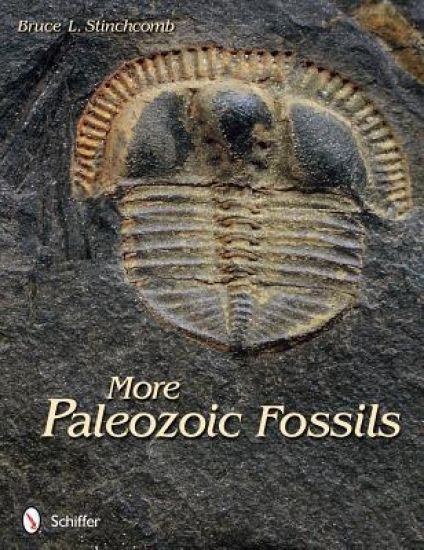
In this second book on Paleozoic fossils, over 840 all new specimens from this period are provided, organized by biologic (taxonomic) position. It is a real eye candy feast for fossil enthusiasts. Come and explore the fossil evidence for a world that was ancient and long gone when the dinosaurs ruled the earth. Discover the sponges, archaeocyathids (reef builders), cnidaria, worms, brachiopods, bryozoans, mollusks, arthropods, echinoderms, and chordates that populated the oceans and inhabited the land from 535 to 235 million years ago. Much of the fossil record for this era reveals marine organisms in many forms, but this is also the period when clear evidence for plants and animals appears in hard rock. While the earth presents many natural barriers to the collecting of Paleozoic fossils, the author has overcome those barriers to present readers with a formidable collection.

Over 670 color photos reveal the Paleozoic plants that covered the earth from 500 to 260 million years ago, well before the dinosaurs roamed the world. These plants provide some of the earliest records to the greening of planet earth. They also make fascinating, very attractive fossils, which can be considered as "nature's artwork." The fossil record provides a window into the first "forests" of the Devonian Period, followed by the peculiar plants of the Lower Carboniferous. These plants, in turn, were followed by those of the Upper Carboniferous, abundant vegetation that is responsible for almost half of the planet's coal seams. Coal swamp vegetation is followed by the more sparse Permian floras, which preceded what was the earth's most profound extinction event. Marine plants also make their appearance in the world during this period, as do various puzzling fossil tracks and burrows previously thought to be marine plant fossils. This book is for all who are curious about the ancient earth.

The Ozarks highland region of the Midwest, located in southern Missouri and northern Arkansas, contains beautiful mineral specimens for those with sharp eyes and a keen interest to discover minerals. Over 500 images represent the collectible minerals of the western Ozarks tristate district and Missouri’s Viburnum Trend. Barite and fluorite as well as a variety of colorful copper, cobalt, nickel, and iron minerals grace the pages of this book, as do various forms of calcite and quartz, the latter of which can be a rock hound's delight. The fascinating and approachable text discusses these "Mississippi Valley Type" (MVT) minerals, their deposition, how they fit into the broader scope of North American mineralogy, and the locations of MVT minerals around the world. A focus of the book are those minerals that historically occur along the Ozarks' extensive waterways. This unique book is a must for anyone fascinated with the earth's natural beauty.
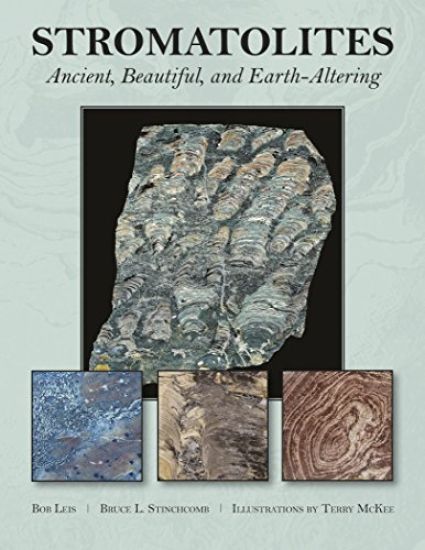
A colorful look at 3.5 billion years of stromatolites, peculiar structures produced by primitive life forms that lived over vast spans of geologic time. At once diverse, attractive, and sometimes puzzling, fossilized stromatolites are found worldwide in sedimentary rocks—often presenting striking patterns—where they grew in ancient bodies of water that covered parts of the earth billions of years before the dinosaurs. This reference presents a basic, nontechnical account, along with 636 beautiful images of these most ancient of Earthly collectibles. Stromatolites, and the cyanobacteria that produced most of them, were responsible not only for the fossils themselves, but also, more importantly, for the introduction of free oxygen into the planet’s atmosphere. Covering a diverse variety of stromatolites and the geologic objects that can resemble them, this book is a delight for stromatophiles as well as those curious about the early Earth.

Ship Channel Design And Operation
Bruce L. (EDT) McCartney; Laurie L. (EDT) Ebner; Lyndell Z. (EDT) Hales
Amer Society of Civil Engineers
2005
pokkari
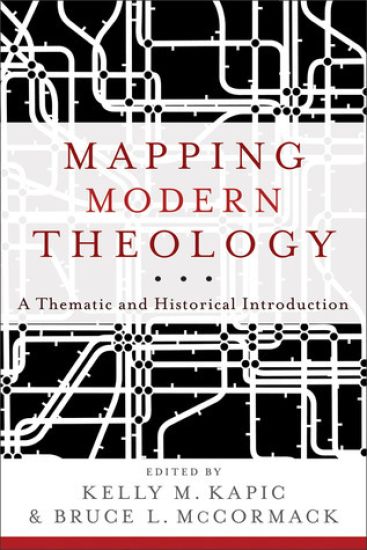
Mapping Modern Theology – A Thematic and Historical Introduction
Bruce L. Mccormack; Kelly M. Kapic
Baker Academic, Div of Baker Publishing Group
2012
nidottu
This textbook offers a fresh approach to modern theology by approaching the field thematically, covering classic topics in Christian theology over the last two hundred years. The editors, leading authorities on the history of nineteenth- and twentieth-century theology, have assembled a respected team of international scholars to offer substantive treatment of important doctrines and key debates in modern theology. Contributors include Kevin Vanhoozer, John Webster, Veli-Matti Kärkkäinen, and Michael Horton. The volume enables readers to trace how key doctrinal questions were discussed, where the main debates lie, and how ideas developed. Topics covered include the Trinity, divine attributes, creation, the atonement, ethics, practical theology, and ecclesiology.

Orthodox and Modern – Studies in the Theology of Karl Barth
Bruce L. McCormack
Baker Academic, Div of Baker Publishing Group
2008
nidottu
In this enlightening study, Bruce McCormack reconsiders the importance of Karl Barth's theology. McCormack begins with Barth's relation to nineteenth-century theologians and then turns to critique the works of contemporary authors within postmodern circles who have attempted to reinterpret Barth to fit their categories. The later sections of McCormack's study probe more deeply into Barth's theology and consider European perspectives. As the title affirms, McCormack suggests that Barth was, in fact, both orthodox and modern in his theology.McCormack has established a reputation as a thoughtful scholar, and his study of Barth will certainly find a broad audience in academic circles. But serious readers and clergy will also find it a helpful guide to Barth's theology and his continuing importance.

In this engaging work, Bruce L. Venarde uncovers a largely unknown story of women's religious lives and puts female monasticism back in the mainstream of medieval ecclesiastical history. To chart the expansion of nunneries in France and England during the central Middle Ages, he presents statistics and narratives to describe growth in broad historical contexts, with special attention to social and economic change. Venarde explains that in the years 1000–1300 the number of nunneries within Europe grew tenfold. In the eleventh and twelfth centuries, religious institutions for women developed in a variety of ways, mostly outside the self-conscious reform movements that have been the traditional focus of monastic history. Not reforming monks but wandering preachers, bishops, and the women and men of local petty aristocracies made possible the foundation of new nunneries. In times of increased agrarian wealth, decentralization of power, and a shortage of potential spouses, many women decided to become nuns and proved especially adept at combining spiritual search with practical acumen. This era of expansion came to an end in the thirteenth century when forces of regulation and new economic realities reduced radically the number of new nunneries. Venarde argues that the factors encouraging and inhibiting monastic foundations for men and women were much more similar than scholars have previously assumed.