Chihuahua Kev was rescued from unknown circumstances and adopted into what he hopes will be his 'forever home'. Since moving in he has come to realise that much could depend on his behaviour and therefore has set out to analyse his own conduct to help learn how to avoid offending. Sharing a home with another dog has in itself produced problems that have had to be neutralised for the sake of apparent harmonious living. His ultimate aim is to be top dog in the pack, being his current family, but he knows this must be achieved without the others being aware of what is happening. Kevin wants to share his life and experiences and has, with help, assembled this, his autobiography. In the hope it will serve to enlighten and entertain its readers and, maybe, their canine companions.
In the issue of the Hand Clinics on "Congenital Hand Differences? the Guest Editor, Dr. Kevin C. Chung, invited world-renowned experts on congenital hand problems to share their insights regarding the treatments and outcomes of a variety of common and uncommon conditions. This volume will present a concise, yet practical guide in understanding and managing the diversity of presentations in these diseases. The illustrations are meticulously presented and the key points are highlighted by the "masters? of the field. This Hand Clinics volume will be an invaluable resource for those interested in advancing their knowledge regarding this intriguing field in hand surgery.
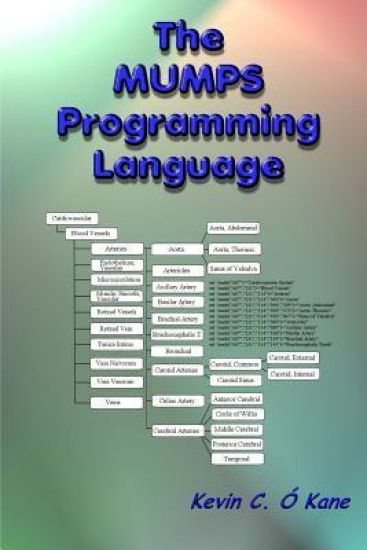
An introduction to the Mumps Programming Language including programming examples.Mumps (Massachusetts General Hospital Utility Multi-programming System) is a general purpose programming language environment that provides ACID (Atomic, Consistent, Isolated, and Durable) database access by means of program level subscripted arrays and variables. The Mumps database allows schema-less, key-value access to disk resident data organized as trees that may also be viewed as sparse multi-dimensional arrays.Beginning in 1966, Mumps (also referred to as M), was developed at the Massachusetts General Hospital (MGH) on a PDP-7, the same architecture on which Unix was being implemented at approximately the same time. Because of its simplicity, low cost and ease of use, Mumps quickly became popular and established itself as the basis for many medical applications. COSTAR (COmputer-STored Ambulatory Record), for example, was a medical record, fiscal management and reporting system, developed in the mid-1970s for use in ambulatory care settings and it was widely used worldwide.Today, Mumps programs are employed extensively in financial and clinical applications. If you've been to a doctor, been seen at a hospital, or used an ATM machine, your data has probably been processed by a Mumps program.Mumps programs are the basis of the U.S. Veterans Administration's computerized medical record system VistA (Veterans Health Information Systems and Technology Architecture), the largest of its kind in the world. VistA is a collection of 80 different software subsystems that support the largest medical records system in the United States. It supports the medical records of over 8 million veterans, is used by 180,000 medical staff at 163 hospitals, more than 800 clinics, and 135 nursing homes.Mumps is used by many health care organizations including Allscripts, Epic, Coventry Healthcare, EMIS, Partners HealthCare (including Massachusetts General Hospital), MEDITECH, GE Healthcare (formerly IDX Systems and Centricity), Sunquest Information Systems, DASA, Quest Diagnostics, and Dynacare, among others. Some of the largest and most well known hospitals use Mumps based electronic health records systems. These include Kaiser Permanente, Cleveland Clinic, Johns Hopkins Medicine Hospitals, UCLA Health, Texas Health Resources, Massachusetts General Hospital, Mount Sinai Health System in New York City and the Duke University Health System. Among financial institutions, it is used by Ameritrade, the Bank of England, and Barclays Bank, as well as others.The main features: (1) Mumps supports a hierarchical and multi-dimensional database model. When viewed as a tree, database nodes can be addressed as path descriptions in a manner which is easy for a novice programmer to master in a relatively short time. Alternatively, the database can be viewed as sparse, n-dimensional matrices of effectively unlimited size; (2) Mumps includes an extensive library of built-in string manipulation operators and functions; (3) Mumps runs on inexpensive, commodity servers and is easily scaled as demand grows; (4) Mumps can handle Big Data quantities of information that are beyond the capabilities of many RDBMS systems with very high levels of performance and throughput; (5) Mumps is easily managed without the need for database administrators; (6) Mumps databases are ACID (Atomicity, Consistency, Isolation, Durability) Compliant.
From Benjamin Franklin’s campaign to combat pollution at the Philadelphia’s docks in the 1750s to the movement against climate change today, American environmentalists have sought to protect the natural world and promote a healthy human society. In This Green and Growing Land, historian Kevin Armitage shows how the story of American environmentalism—part philosophy, part social movement--is in no small way a story of America itself, of the way citizens have self-organized, have thought of their communities and their government, and have used their power to protect and enrich the land. Armitage skillfully analyzes the economic and social forces begetting environmental change and emphasizes the responses of a variety of ordinary Americans—as well as a few well-known leaders—to these complex issues. This concise and engaging survey of more than 250 years of activism tells the story of a magnificent American achievement—and the ongoing problems that environmentalism faces.
The publication of Bronchoalveolar Mast Cells and Asthma marks the emergence of The Bloomsbury Series in Clinical Science, an important and novel series that will highlight, review and record major areas of research, development and practice in the field of clinical science. A number of other monographs are now in an advanced state of preparation and their release will establish not only their individual significance but that of the series as a whole. My thanks are due to the Editorial Board who have provided the ideas and selected the authors and whose continuing enthu siasm is so vital to the success of the series. Michael Jackson of Springer-Verlag merits special thanks for initially realising the potential of such a series and then guiding us all through to the time of its launch. Marianne Williams has supported us all and has provided the important link between Editorial Board and pub lisher. The author of this first publication, Kevin Flint, was tragically killed during its preparation, and we hope that the book will serve as a tribute to the memory of Kevin for all who were lucky enough to know him. Barry Hudspith has been of enormous help in finalising the work and in shaping the form of the book.
A Historical Analysis of the Etiology of RA as a Disease, Advances in the Medical Treatment of RA,Controversy in the Treatment of the RA Hand: Perspective from Rheumatology, Controversy in the Treatment of the RA Hand: Perspective from Hand Surgery, Current Concepts in the Surgical Management of Rheumatoid and Osteoarthritic Hands and Wrists, Controversy in the Treatment of the RA Elbow, Current Concepts in the Treatment of the RA DRUJ,Current Concepts in the Treatment of the RA Wrist, The RA Thumb, The RA MCP Joint, RA Finger Reconstruction, Tendon Reconstruction for the RA Hand, Outcomes Research in RA Hand Surgery
The distal radius is one of the most common fracture sites reported. There are a wide variety of therapeutic options available to treat this injury, but little data to determine which strategies provide the best long term functional outcomes. This volume utilizes the technical expertise from experts based around the world to provide a deep understanding of the current trends and evidence concerning this prevalent injury.
Outcomes . . .familiar in medicine fields, but only in recent decades becoming more of an issue for surgeons . . .the highly subspecialized nature of the surgical profession and breadth of procedures along with variance in patient population creates a challenge in achieving useful, informative outcomes. Here, in this issue of Clinics in Plastic Surgery, the focus is on evidence-based practice and outcomes in plastic surgery, spanning the major areas of cosmetic and reconstructive surgery. Outcomes as guidance for the surgeon's decision regarding approaches and techniques for procedures is the approach. Some of the topics covered are: Measuring Outcomes in Aesthetic Surgery; Measuring Outcomes in Craniofacial and Pediatric Surgery; Measuring Outcomes in Hand Surgery; How to Link Outcomes Data to Quality Initiatives in Plastic Surgery; along with How to Use the Outcomes Questionnaire, Pearls and Pitfalls; among others. Guest Editors Kevin Chung and Andrea Pusic lead this review. Dr. Chung is involved with structuring evidence-based practice and research in hand surgery to derive the best evidence to guide treatment for upper extremity conditions and he developed the Michigan Hand Outcomes Questionnaire. Dr Pusic developed the BREAST-Q, which measures satisfaction and quality-of-life outcomes among breast reconstruction patients. Out of the BREAST-Q has come the FACE-Q, which provides a clinically useful patient-reported outcome measure of satisfaction and quality of life following elective surgical and non-surgical facial rejuvenation.
A revised and expanded (2013) introduction to the IBM mainframe assembly language and architecture including addressing models, basic and extended instruction formats, operand addressing, the Program Status Word, subroutine linkage, looping, input output, character & bit manipulation, and the decimal (BCD) programming. The book includes more than 40 pages of comprehensive programming examples. Designed to be used in conjunction with the Window's based open source, z390 mainframe emulator. Assumes no prior knowledge of assembly language programming.About the author: the author is professor emeritus of computer science at the University of Northern Iowa in Cedar Falls, Iowa where he taught IBM assembly language for over twenty years.
Are you feeling angry, upset, fearful or sad about your weight... how about jealous or envious? Good Fantastic Maybe you've reached the all-important "tipping point " Losing weight, just like gaining weight, is an emotional experience. Weight Loss for Wimps is the solution you're looking for to learn HOW to channel your negative emotions and let your positive emotions run wild. This is the process of "getting your mindset mojo " You Might Be a Weight Loss Wimp If... * Your favorite restaurant is an all-you-can-eat buffet * You start thinking about your New Year's resolution in June * The longest you ever stay on a diet is 4 days, tops * You count ketchup as a "vegetable" * You don't want to go to the wedding or class reunion because of your weight Finally, a book that includes (among many other things) a step-by-step action plan to combat the most powerful diet busters (Bad Boys) known to man: * How to deal effectively with Hunger (real and fake) * How to knock-out any and all Excuses * How to control and conquer Emotional Eating * How to minimize Stress in your daily life (easier than you think ) And, you will also be introduced to an exercise protocol that takes as little as 15 minutes that can even be done at home or at work. Learn and implement the unique, proprietary techniques developed by the author on his 88 lb weight loss journey; and you will blow-torch your excess weight off quickly and permanently. Transform yourself in to a happy, healthy, sexy and thin lover of food and life Bound to be a classic in the weight loss industry and it compliments the programs offered by Weight Watchers(R) and the South Beach Diet(R) programs, among other healthy eating options. Follow the author's Lifestyle Breakout(TM) Strategy and you will be "strutting your stuff" in no time Are you a fitness trainer or coach? Teach this information to your clients, and you'll become a Rockstar or SuperHero...your choice
As an employee, you suspect that your best ideas are valuable and could greatly benefit your organization. Management also recognizes that a company's ability to compete is contingent on how well it leverages its employees' ideas. So, why are individuals at all levels of organizations typically poor advocates for ideas? Intrapreneurship provides an engaging guide for both managers and employees on how to direct the flow of ideas and foster a culture of entrepreneurship within their company's existing structure. Based on Kevin C. Desouza's research and experience consulting with thirty global organizations, Intrapreneurship outlines ways to mobilize all types of ideas – including blockbusters with the potential to create radically new external products and services, and more incremental innovations for improving internal processes. With practical frameworks and real life examples for both employees and managers, Intrapreneurship will help you to identify the value in your own ideas and those of others to ultimately benefit your organization.