Reproduction de l'original. La maison d' dition Megali se sp cialise dans la reproduction d'oeuvres historiques en gros caract res afin de faciliter la lecture aux personnes dont la vue est r duite.
The 18th century was a wealth of knowledge, exploration and rapidly growing technology and expanding record-keeping made possible by advances in the printing press. In its determination to preserve the century of revolution, Gale initiated a revolution of its own: digitization of epic proportions to preserve these invaluable works in the largest archive of its kind. Now for the first time these high-quality digital copies of original 18th century manuscripts are available in print, making them highly accessible to libraries, undergraduate students, and independent scholars.Western literary study flows out of eighteenth-century works by Alexander Pope, Daniel Defoe, Henry Fielding, Frances Burney, Denis Diderot, Johann Gottfried Herder, Johann Wolfgang von Goethe, and others. Experience the birth of the modern novel, or compare the development of language using dictionaries and grammar discourses. ++++The below data was compiled from various identification fields in the bibliographic record of this title. This data is provided as an additional tool in helping to insure edition identification: ++++British LibraryT043433With a half-title.London: printed by C. Whittingham, for H. D. Symonds, 1799. viii,6,200p., plate: engr.music; 8
On Saturday morning, February 2, 2002, 7-year-old Danielle van Dam was reported missing by her mother, Brenda, who had been out partying with friends at a local bar until almost 2:00 a.m. Danielle's father, Damon, had been left behind at home to babysit their three young children, and their dog, a sleek gray Weimaraner. He said that he had put the kids to bed, cracked their doors, and fell asleep in the master bedroom, along with the dog, and with the door closed. Shortly before 2 a.m., he opened the bedroom door, and let the dog out to greet his wife, knowing she would be home soon. Some people, like KFMB talk show host Rick Roberts, began to question the parents' behavior, after it was reported in the media that they were "swingers", and they did not check on their children, even after they said they found two outside doors open that night. Danielle's body was discovered at Dehesa on February 27. The police had almost immediately suspected neighbor David Westerfield, as he went away that weekend, leaving his garden hose lying untidily across his neat front yard. Was he responsible for Danielle van Dam's death, or was he the victim of a "rush to judgement"? What does the evidence say? -No evidence was found that he was ever in her home, nor that he had been at the body recovery site. -Why were no fibers from her pajamas or bedding found in his house or vehicles? -Had she ever played in his motor home while it was parked in their street? -Did his pornography collection include child porn? -Did he fail his lie detector test? -What is the truth about the plea deal story? -Was the body rapidly mummified by a warm dry wind that hadn't yet begun to blow? -What happened to the photographs the searchers took of the body? -Did the orange fiber in her hair come from something in her own home? -Whose hair was found under her body? It was neither Danielle's nor Westerfield's. -On February 15, Brenda received an anonymous phone call that Danielle was abused but alive. Who made that call? The insect evidence indicates she died soon afterwards. -A year later, James Selby, a convicted serial rapist, confessed in writing to killing Danielle. Was he just a "quack"? One of his victims was a 9-year-old girl, whom he abducted sleeping from her bed. This book examines these questions and many more. This was a high-profile case, with an enormous amount of public attention; the trial was broadcast live on radio and TV, so a book on it is long overdue, and this is an authoritative book. There are books with titles like "MS-DOS Bible" and "Windows 7 Bible". This book is the Westerfield-van Dam case "bible". It is a comprehensive reference source about the case, and a "must read" for everybody interested in it, and especially all those who were personally involved: the jurors, the police, the crime laboratory, the DA's office, the defense lawyers, the neighbors and other witnesses. This case has similarities to the OJ Simpson case, not only in the intensity of public and media attention, but also in the fact that George "Woody" Clarke was a prosecutor on both cases, and Jo-Ellan Dimitrius was a jury consultant on both, but for the defense in the OJ trial, and for the prosecution in the Westerfield trial. Did clever juror selection contribute to a miscarriage of justice in either case? David Westerfield's automatic appeal is due soon, making this book timely.
First published in 1997, this collection includes papers on Crusader-era architecture in Palestine with a focus on ‘Atlit, the castle of ‘Ajlun and on the Citadel of Jerusalem, both the papers and sites of which have previously been difficult to access. The volume is presented partly to repair the very real deficit in the literature on Crusader architecture and partly as a fitting memorial to the author, who died in 1992. ‘Atlit in particular held a special significance for C.N. Johns, being the site of his first major project as a field archaeologist. His Guide to ‘Atlit, a masterly summary of his findings, remains the most complete and comprehensive account of the castle and its suburb.The studies collected here pay tribute to their author’s enduring contribution to the medieval archaeology of the Near East. The first part of the book deals with the ‘Pilgrim’s Castle’, the great Templar fortress and town at ’Atlit. The significance of Johns’ excavations at this site has been relatively neglected, because it remains in a military area, inaccessible to visitors, and because almost the entire stock of his major publication was lost in 1947. This ‘Guide to ’Atlit’, a synthesis of historical, archaeological and architectural research on the monument, is reprinted here together with all the interim reports relating to the medieval period. Also included are Johns’ studies on the Citadel of Jerusalem, the ‘Tower of David’, and on the Islamic castle of ‘Ajlun. Together, they represent a fundamental contribution to the study of the period of the Crusades and to the military architecture of the Middle Ages. The notes by Denys Pringle bring the accounts up to date in the light of recent research.
First published in 1997, this collection includes papers on Crusader-era architecture in Palestine with a focus on ‘Atlit, the castle of ‘Ajlun and on the Citadel of Jerusalem, both the papers and sites of which have previously been difficult to access. The volume is presented partly to repair the very real deficit in the literature on Crusader architecture and partly as a fitting memorial to the author, who died in 1992. ‘Atlit in particular held a special significance for C.N. Johns, being the site of his first major project as a field archaeologist. His Guide to ‘Atlit, a masterly summary of his findings, remains the most complete and comprehensive account of the castle and its suburb.The studies collected here pay tribute to their author’s enduring contribution to the medieval archaeology of the Near East. The first part of the book deals with the ‘Pilgrim’s Castle’, the great Templar fortress and town at ’Atlit. The significance of Johns’ excavations at this site has been relatively neglected, because it remains in a military area, inaccessible to visitors, and because almost the entire stock of his major publication was lost in 1947. This ‘Guide to ’Atlit’, a synthesis of historical, archaeological and architectural research on the monument, is reprinted here together with all the interim reports relating to the medieval period. Also included are Johns’ studies on the Citadel of Jerusalem, the ‘Tower of David’, and on the Islamic castle of ‘Ajlun. Together, they represent a fundamental contribution to the study of the period of the Crusades and to the military architecture of the Middle Ages. The notes by Denys Pringle bring the accounts up to date in the light of recent research.
The Story of the Cambrian: A Biography of a Railway, is a classical book and has been considered important throughout the human history. So that this book is never forgotten we at Alpha Editions have made efforts in its preservation by republishing this again in a modern format book for present and future generations. This whole book has been reformatted, retyped and designed. These books are not made of scanned copies of their original work and hence the text is clear and readable.
Several years before he converted to Christianity, C. S. Lewis published a narrative poem, Dymer, under the pseudonym Clive Hamilton. Later, of course, Lewis became well known for his beloved imaginative stories, such as The Chronicles of Narnia and Till We Have Faces, as well as his ability to defend and articulate the faith in works such as Mere Christianity. But what about his literary work before his conversion? In this Hansen Lectureship volume, Jerry Root contends that Lewis's early poem Dymer can not only shed light on the development of Lewis's literary skills but also offer a glimpse of what was to come in his intellectual and spiritual growth—a "splendour in the dark," to borrow one of Lewis's own lines from the poem. Under Root's careful analysis, Dymer becomes a way to understand both Lewis's change of mind as well as the way in which each of us is led on a journey of faith. This volume also includes the complete text of Dymer with annotations from David C. Downing, co-director of the Marion E. Wade Center. Based on the annual lecture series hosted at Wheaton College's Marion E. Wade Center, volumes in the Hansen Lectureship Series reflect on the imaginative work and lasting influence of seven British authors: Owen Barfield, G. K. Chesterton, C. S. Lewis, George MacDonald, Dorothy L. Sayers, J. R. R. Tolkien, and Charles Williams.
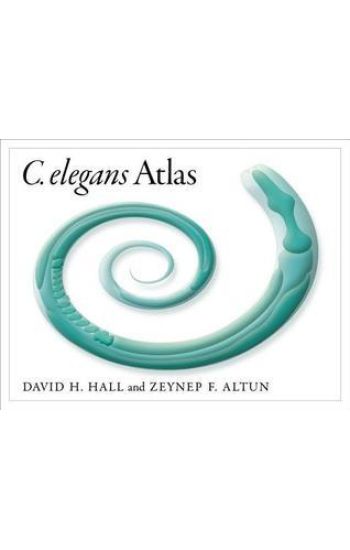
Derived from the acclaimed online WormAtlas, C. elegans Atlas is a large-format, full-color atlas of the hermaphroditic form of the model organism C. elegans, known affectionately as the worm by workers in the field. Prepared by the editors of the WormAtlas Consortium, David H. Hall and Zeynep F. Altun, this book combines explanatory text with copious, labeled, color illustrations and electron micrographs of the major body systems of C. elegans. Also included are electron microscopy cross sections of the worm. This laboratory reference is essential for the working worm biologist, at the bench and at the microscope, and provides a superb companion to the C. elegans II monograph. It is also a valuable tool for investigators in the fields of developmental biology, neurobiology, reproductive biology, gene expression, and molecular biology.
Between 1896 and 1906, Charles Rennie Mackintosh (1868 - 1928) produced a series of buildings and interiors in and around Glasgow of such startling invention that he immediately established himself as one of the truly great figures in early twentieth-century architecture and design.
In this book, Nathan C. Johnson offers the first full-scale study of David traditions in the Gospel of Matthew's story of Jesus's death. He offers a solution to the tension between Matthew's assertion that Jesus is the Davidic messiah and his humiliating death. To convince readers of his claim that Jesus was the Davidic messiah, Matthew would have to bridge the gap between messianic status and disgraceful execution. Johnson's proposed solution to this conundrum is widely overlooked yet refreshingly simple. He shows how Matthew makes his case for Jesus as the Davidic messiah in the passion narrative by alluding to texts in which David, too, suffered. Matthew thereby participates in a common intertextual, Jewish approach to messianism. Indeed, by alluding to suffering David texts, Matthew attempts to turn the tables of the problem of a crucified messiah by portraying Jesus as the Davidic messiah not despite, but because of his suffering.
Get practical insights on the psychology of white-collar criminals—and how to outsmart them Understand how the psychologies of fraudsters and their victims interact as well as what makes auditors/investigators/regulators let down their guard. Learn about the psychology of fraud victims, including boards of directors and senior management, and what makes them want to believe fraudsters, and therefore making them particularly vulnerable to deception. Just as IT experts gave us computer forensics, we now have a uniquely qualified team immersed in psychology, sociology, psychiatry as well as accounting and auditing, introducing the emerging field of behavioral forensics to address the phenomenon of fraud. Ever wonder what makes a white-collar criminal tick? Why does she or he do what they do? For the first time ever, see the mind of the fraudster laid bare, including their sometimes twisted rationalizations; think like a crook to catch a crook! The A.B.C.'s of Behavioral Forensics takes you there, with expert advice from a diverse but highly specialized authoring team of professionals (three out of the four are Certified Fraud Examiners): a former accounting firm partner who has a PhD in psychology, a former FBI special agent who has been with investigative practices of two of the Big Four firms, an industrial psychiatrist who has worked closely with the C-level suite of large and small companies, and an accounting professor who has interviewed numerous convicted felons. Along with a fascinating exploration of what makes people fall for the common and not-so-common swindles, the book provides a sweeping characterization of the ecology of fraud using The A.B.C.'s of Behavioral Forensics paradigm: the bad Apple (rogue executive), the bad Bushel (groups that collude and behave like gangs), and the bad Crop (representing organization-wide or even societally-sanctioned cultures that are toxic and corrosive). The book will make you take a longer look when hiring new employees and offers a deeper more complex understanding of what happens in organizations and in their people. The A.B.C. model will also help those inside and outside organizations inoculate against fraud and make you reflect on instilling the core values of your organization among your people and create a culture of excellence and integrity that acts as a prophylactic against fraud. Ultimately, you will discover that, used wisely, behavioral methods trump solely economic incentives. With business fraud on the rise globally, The A.B.C.'s of Behavioral Forensics is the must-have book for investigators, auditors, the C-suite and risk management professionals, the boards of directors, regulators, and HR professionals. Examines the psychology of fraud in a practical way, relating it to aspects of fraud prevention, deterrence, detection, and remediationHelps you understand that trust violation—the essence of fraud—is a betrayal of behavioral assumptions about "trusted" peopleExplains how good people go bad and how otherwise honest people cross the lineUnderscores the importance of creating a culture of excellence and integrity that inoculates an organization from fraud risk (i.e., honest behavior pays, while dishonesty is frowned upon)Provides key takeaways on what to look for when hiring new employees and in your current employees, as well as creating and maintaining a culture of control consciousnessIncludes narrative accounts of interviews with convicted white-collar criminals, as well as interpretive insights and analysis of their rationalizationsFurnishes ideas about how to enhance professional skepticism, how to resist fraudsters, how to see through their schemes, how to infuse internal controls with the people/behavioral element, and make them more effective in addressing behavioral/integrity risksProvides a solid foundation for training programs across the fraud risk management life cycle all the way from the discovery of fraud to its investigation as well as remediation (so the same fraud doesn't happen again)Enables auditors/investigators to engage in self-reflection and avoid cognitive and emotional biases and traps that lead to professional judgment errors (e.g., overconfidence, confirmation, self-deception, groupthink, halo effect, availability, speed-accuracy trade-off, etc.) Ever since the accounting scandals surrounding Enron and WorldCom surfaced, leading to the passage of the Sarbanes Oxley Act of 2002, as well as the continuing fall out from the Wall Street financial crisis precipitating the Dodd-Frank Act of 2010, fraud has been a leading concern for executives globally. If you thought you knew everything there was to know about financial fraud, think again. Get the real scoop with The A.B.C.'s of Behavioral Forensics.