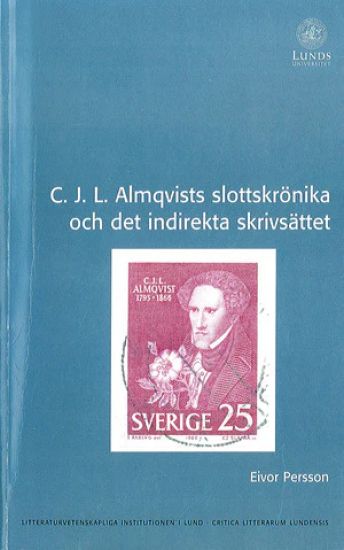
Carl Jonas Love Almqvists slottskrönika och det indirekta skrivsättet är ämnet för denna studie. Slottskrönikan omfattar romanerna Jaktslottet (1833), Hinden (1833) och Baron Julius K*. Ur Fröken Eleonoras reseminnen (1835), som alla ingår i Almqvists stora samlingsverk Törnrosens bok. I ramberättelsen Jaktslottet presenteras vi för medlemmarna i Jaktslottskretsen, slottsherren Hugo Löwenstjerna, huvudberättaren Richard Furumo och de andra figurerna, som brukar samlas på Jaktslottet på kvällarna och berätta historier för varandra. Almqvist lämnar mycket outsagt i texten, ett indirekt skrivsätt, vilket resulterar i gåtor och andra problem för läsaren. Det är dessa tolkningsproblem som står i centrum för denna undersökning. I första kapitlet analyseras bördsmotivet, i andra kapitlet spökmotivet, i tredje och fjärde kapitlet självreflexionen och i femte kapitlet slottskrönikans intertextuella bakgrund.
Observera att förlaget som ger ut denna produkt baserar innehållet i sina produkter på fria källor som Wikipedia. Boken är med stor sannolikhet endast ett utdrag ur dessa informationskällor, alltså inte en vanlig bok i den bemärkelsen.
L'amour n'a jamais manqu de po tes pour le c l brer. Dans ce recueil, vous trouverez mes propres po mes. c'est une flamme amoureuse qui danse au rythme de mes mots. Po mes doux, romantiques, passionn s, d chirants... Po mes d'amour, m lodie du coeur qui donnent la fi vre et m'emportent. Hymnes, rhapsodies ou complaintes. C'est parfois l' closion d'un amour, D'autres fois son pilogue, ou bien m me son absence.
Winner of theAFP/Skystone Partners Prize for Research on Fundraising and Philanthropy, Association of Fundraising Professionals, 2021Terry McAdam Book Award, given by the Alliance for Nonprofit Management2023 Peter Dobkin Hall History of Philanthropy Prize from the Association for Research on Nonprofit and Voluntary Action (ARNOVA). Founder of a beauty empire, Madam C. J. Walker was celebrated as America's first self-made female millionaire in the early 1900s. Known as a leading African American entrepreneur, Walker was also devoted to an activist philanthropy aimed at empowering African Americans and challenging the injustices inflicted by Jim Crow. Tyrone McKinley Freeman's biography highlights how giving shaped Walker's life before and after she became wealthy. Poor and widowed when she arrived in St. Louis in her twenties, Walker found mentorship among black churchgoers and working black women. Her adoption of faith, racial uplift, education, and self-help soon informed her dedication to assisting black women's entrepreneurship, financial independence, and activism. Walker embedded her philanthropy in how she grew her business, forged alliances with groups like the National Association of Colored Women, funded schools and social service agencies led by African American women, and enlisted her company's sales agents in local charity and advocacy work. Illuminating and dramatic, Madam C. J. Walker’s Gospel of Giving broadens our understanding of black women’s charitable giving and establishes Walker as a foremother of African American philanthropy.
Winner of theAFP/Skystone Partners Prize for Research on Fundraising and Philanthropy, Association of Fundraising Professionals, 2021Terry McAdam Book Award, given by the Alliance for Nonprofit Management2023 Peter Dobkin Hall History of Philanthropy Prize from the Association for Research on Nonprofit and Voluntary Action (ARNOVA). Founder of a beauty empire, Madam C. J. Walker was celebrated as America's first self-made female millionaire in the early 1900s. Known as a leading African American entrepreneur, Walker was also devoted to an activist philanthropy aimed at empowering African Americans and challenging the injustices inflicted by Jim Crow. Tyrone McKinley Freeman's biography highlights how giving shaped Walker's life before and after she became wealthy. Poor and widowed when she arrived in St. Louis in her twenties, Walker found mentorship among black churchgoers and working black women. Her adoption of faith, racial uplift, education, and self-help soon informed her dedication to assisting black women's entrepreneurship, financial independence, and activism. Walker embedded her philanthropy in how she grew her business, forged alliances with groups like the National Association of Colored Women, funded schools and social service agencies led by African American women, and enlisted her company's sales agents in local charity and advocacy work. Illuminating and dramatic, Madam C. J. Walker’s Gospel of Giving broadens our understanding of black women’s charitable giving and establishes Walker as a foremother of African American philanthropy.
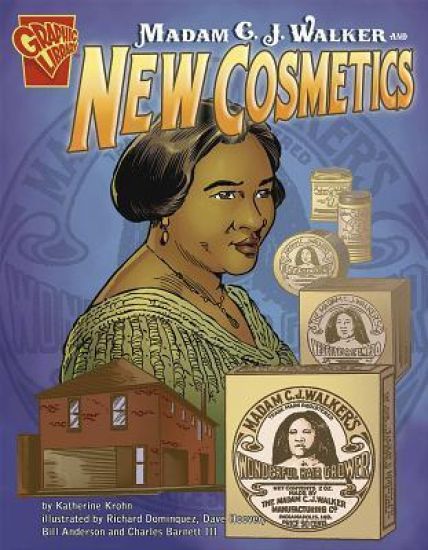
Tells the story of Madam C. J. Walker, an African American businesswoman who invented a line of hair products and cosmetics that led her to become the first self-made female millionaire of any race. Written in graphic-novel format.