Kirjojen hintavertailu. Mukana 12 390 323 kirjaa ja 12 kauppaa.

Kirjahaku

Etsi kirjoja tekijän nimen, kirjan nimen tai ISBN:n perusteella.

1000 tulosta hakusanalla C.A. Gray

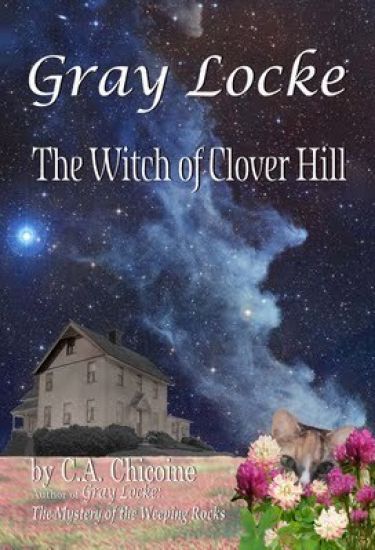
Gray Locke: The Witch of Clover Hill

Gray Locke: The Witch of Clover Hill

C. A. Chicoine

Satellite 2 Music
2010
nidottu
" . . . when we dance . . . amidst the twirling turmoil, sometimes we trip and fall." In The Witch of Clover Hill, there's a great deal brewing in the witch's cauldron. Gray Locke's ten-year-old imagination shines through as he goes about trying to demystify luck, ghosts, and witches. The story begins at his home in Marlborough, Massachusetts. There, he shows his friends, Doug and Kevin, a four-leaf clover that he found. That sparks a competition between Gray and Doug over who can gain the most luck, using such charms as a stray eye-lash, rabbit's foot, lucky penny, and lucky mibs. Then the story takes a turn when the boys meet the new kid, Mandy. Can they all be friends? When Mandy introduces her best friend, P.J., to the group, that question is put to the test. Then P.J. and the gang stumbled upon an old Ouija board game, and she convinces the others that they need the assistance of a witch to help make contact with someone from Gray's past. While the witch's cauldron is brewing with lucky charms and Ouija boards, Gray's aunt brings him a gift. And that gift opened up an entire new universe for Gray. Using his spaceship of the imagination-Mox-he becomes an intergalactic ranger and soars off to compete in a championship Super Shooter tournament. But he soon discovers that he got a little more than he bargained for. In order for him to win the tournament, he has to face witches, monkey-boys, rats, a worm, and a host of other entities. Using his imagination and intuition, Gray finds creative solutions to the challenges that lie ahead of him, both in the universe of his imagination and in the real world. "So, we pick ourselves back up and continue to dance."
A Republican's Lament

A Republican's Lament

Bill Crawford; Lloyd Gray; C.D. Smith

UNIVERSITY PRESS OF MISSISSIPPI
2024
sidottu
Bill Crawford thought his modern-day Republican Party would lift Mississippi off the bottom, a notion born of Gil Carmichael’s vision for good government conservatism. A Republican’s Lament tells of Crawford’s dedicated efforts to implement Carmichael’s vision, his keen observations of Mississippi’s struggles, and his critical commentaries over the past half century.For more than fifty years, few people have had a better view or a wider variety of roles in the ups and downs of Mississippi and its communities than Crawford. The Canton native has been a daily newspaper reporter, a crusading small-town weekly editor, a Republican Party leader, a reform-minded Republican state representative, an influential Institutions of Higher Learning Board trustee, a successful banker, a community college administrator, a state economic development official, a community development leader and nonprofit founder, a mentor of developing community leaders, and a syndicated political columnist. From Gil Carmichael's vision for good government and Haley Barbour’s pragmatic conservatism to starve the beast and truth management politics, poverty and the Cycle of Prosperity, Faulkner’s curse and other behavioral shadows, the Ayers case, and more, Crawford weaves a unique and eventful story about his home state’s enduring dilemmas and a clarion call for its better possibilities.
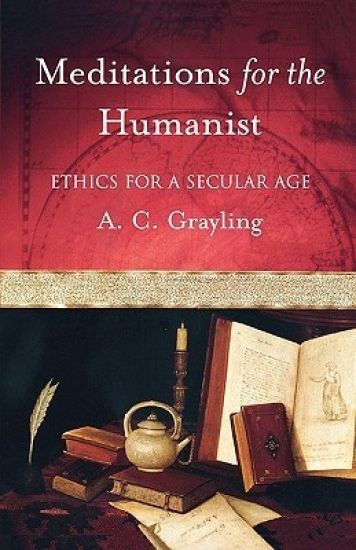
Meditations for the Humanist: Ethics for a Secular Age

Meditations for the Humanist: Ethics for a Secular Age

A. C. Grayling

Oxford University Press
2003
nidottu
"Magnanimity is in short supply," writes A. C. Grayling is this wonderfully incisive book, "but it is the main ingredient in everything that makes the world a better place" And indeed Meditations for the Humanist: Ethics for a Secular Age is itself a generous, insightful, wide-ranging, magnanimous inquiry into the philosophical and ethical questions that bear most strongly on the human condition. Containing nearly fifty linked commentaries on topics ranging from love, lying, perseverance, revenge, racism, religion, history, loyalty, health, and leisure, Meditations for the Humanist does not offer definitive statements but rather prompts to reflection. These brief essays serve as springboards to the kind of thoughtful examination without which, as Socrates famously claimed, life is not worth living. As Graying notes in his introduction, "It is not necessary to arrive at polished theories on all these subjects, but it is necessary to give them at least a modicum of thought if one's life is to have some degree of shape and direction." The book is divided into three sections-Virtues and Attributes, Foes and Fallacies, and Amenities and Goods-and within these sections essays are grouped into related clusters. But each piece can be read alone and each is characterized by brevity, wit, and a liveliness of mind that recalls the best of Montaigne and Samuel Johnson. Grayling's own perspective on these subjects is broadened and deepened by liberal quotations from Sophocles and Shakespeare to Byron, Twain, Proust, Simone de Beauvoir, Martin Luther King, Jr., and many others. For those wishing to explore ethical issues outside the framework of organized religious belief, Meditations for the Humanist offers an inviting map to the country of philosophical reflection.
How to Be a Success in the Restaurant Business

How to Be a Success in the Restaurant Business

Madeline Gray; Vass De Lo Padua; Robert C. Urban

Literary Licensing, LLC
2012
sidottu
""How To Be A Success In The Restaurant Business"" is a comprehensive guide written by Madeline Gray, aimed at individuals who want to excel in the restaurant industry. This book is packed with practical advice, tips, and strategies that can help aspiring restaurateurs, managers, chefs, and other professionals to achieve their goals and thrive in their careers.The book covers a wide range of topics, including how to start a restaurant, how to manage finances, how to create a menu, how to hire and train staff, how to market a restaurant, and how to provide excellent customer service. The author draws from her extensive experience in the industry to provide real-world examples and case studies that illustrate the key concepts and principles.In addition to providing valuable insights into the restaurant business, the book also emphasizes the importance of personal development and self-improvement. The author encourages readers to cultivate a positive attitude, develop strong leadership skills, and maintain a healthy work-life balance.Overall, ""How To Be A Success In The Restaurant Business"" is a must-read for anyone who wants to succeed in this challenging and rewarding industry. Whether you're just starting out or looking to take your career to the next level, this book provides the guidance and inspiration you need to achieve your goals and reach your full potential.This scarce antiquarian book is a facsimile reprint of the old original and may contain some imperfections such as library marks and notations. Because we believe this work is culturally important, we have made it available as part of our commitment for protecting, preserving, and promoting the world's literature in affordable, high quality, modern editions, that are true to their original work.
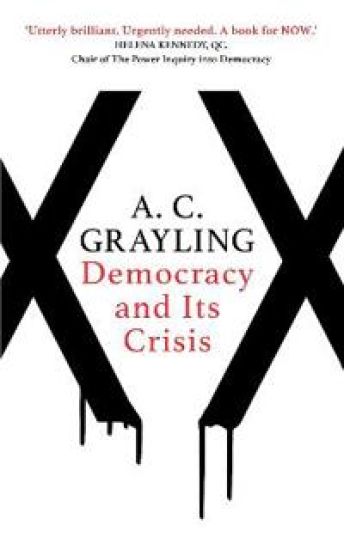
Democracy and Its Crisis

Democracy and Its Crisis

Grayling A. C.

Oneworld Publications
2017
sidottu
The EU referendum in the UK and Trump’s victory in the USA sent shockwaves through our democratic systems. In Democracy and Its Crisis A. C. Grayling investigates why the institutions of representative democracy seem unable to hold up against forces they were designed to manage, and why it matters. First he considers those moments in history when the challenges we face today were first encountered and what solutions were found. Then he lays bare the specific threats facing democracy today. The paperback edition includes new material on the reforms that are needed to make our system truly democratic.
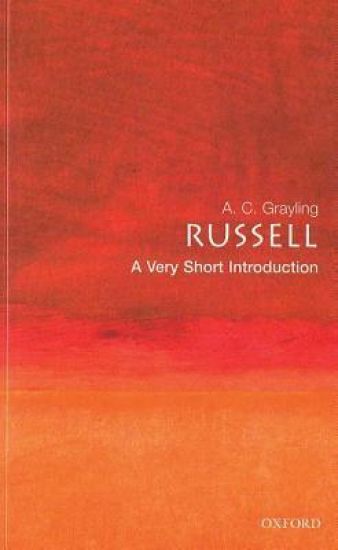
Russell

Russell

A. C. Grayling

Oxford University Press
2002
nidottu
Bertrand Russell (1872-1970) is one of the most famous and important philosophers of the twentieth century. In this account of his life and work A.C. Grayling introduces both his technical contributions to logic and philosophy, and his wide-ranging views on education, politics, war, and sexual morality. Russell is credited with being one of the prime movers of Analytic Philosophy, and with having played a part in the revolution in social attitudes witnessed throughout the twentieth-century world. This introduction gives a clear survey of Russell's achievements across their whole range. ABOUT THE SERIES: The Very Short Introductions series from Oxford University Press contains hundreds of titles in almost every subject area. These pocket-sized books are the perfect way to get ahead in a new subject quickly. Our expert authors combine facts, analysis, perspective, new ideas, and enthusiasm to make interesting and challenging topics highly readable.
Wittgenstein

Wittgenstein

A. C. Grayling

Oxford University Press
2001
nidottu
Ludwig Wittgenstein (1889-1951) was an extraordinarily original philospher, whose influence on twentieth-century thinking goes well beyond philosophy itself. In this book, which aims to make Wittgenstein's thought accessible to the general non-specialist reader, A. C. Grayling explains the nature and impact of Wittgenstein's views. He describes both his early and later philosophy, the differences and connections between them, and gives a fresh assessment of Wittgenstein's continuing influence on contemporary thought. ABOUT THE SERIES: The Very Short Introductions series from Oxford University Press contains hundreds of titles in almost every subject area. These pocket-sized books are the perfect way to get ahead in a new subject quickly. Our expert authors combine facts, analysis, perspective, new ideas, and enthusiasm to make interesting and challenging topics highly readable.
Life, Sex, and Ideas: The Good Life Without God

Life, Sex, and Ideas: The Good Life Without God

A. C. Grayling

Oxford University Press
2003
sidottu
"A distinctive voice somewhere between Mark Twain and Michel Montaigne" is how Psychology Today described A.C. Grayling. In Life, Sex, and Ideas: The Good Life Without God, readers have the pleasure of hearing this distinctive voice address some of the most serious topics in philosophy--and in our daily lives--including reflections on guns, anger, conflict, war; monsters, madness, decay; liberty, justice, utopia; suicide, loss, and remembrance. A civilized society, says Grayling, is one which never ceases having a discussion with itself about what human life should best be. In this book, Grayling adds to this discussion a series of short informal essays about ethics, ideas, and culture. A recurring theme is religion, of which he writes "there is no greater social evil." He argues, for instance, that liberal education is better than religion for inculcating moral values. "Education in literature, history, and appreciation of the arts," he says, "opens the possibility for us to live more reflectively and knowledgeably, especially about the nature and variety of human experience. That in turn increases our capacity for understanding others better, so that we can treat them with respect and sympathy, however different their outlook on life." Thought provoking rather than definitive, these essays don't tell readers what to think, but only note what has been thought about how it is best to live. A person who does not think about life, the author reminds us, is like a stranger mapless in a foreign land. These brief and suggestive essays offer us the outlines of a map, with avenues of thought that are a pleasure to wander down.
Life, Sex and Ideas: The Good Life Without God

Life, Sex and Ideas: The Good Life Without God

A. C. Grayling

Oxford University Press
2004
nidottu
"A distinctive voice somewhere between Mark Twain and Michel Montaigne" is how Psychology Today described A.C. Grayling. In Life, Sex, and Ideas: The Good Life Without God, readers have the pleasure of hearing this distinctive voice address some of the most serious topics in philosophy--and in our daily lives--including reflections on guns, anger, conflict, war; monsters, madness, decay; liberty, justice, utopia; suicide, loss, and remembrance. A civilized society, says Grayling, is one which never ceases having a discussion with itself about what human life should best be. In this book, Grayling adds to this discussion a series of short informal essays about ethics, ideas, and culture. A recurring theme is religion, of which he writes "there is no greater social evil." He argues, for instance, that liberal education is better than religion for inculcating moral values. "Education in literature, history, and appreciation of the arts," he says, "opens the possibility for us to live more reflectively and knowledgeably, especially about the nature and variety of human experience. That in turn increases our capacity for understanding others better, so that we can treat them with respect and sympathy, however different their outlook on life." Thought provoking rather than definitive, these essays don't tell readers what to think, but only note what has been thought about how it is best to live. A person who does not think about life, the author reminds us, is like a stranger mapless in a foreign land. These brief and suggestive essays offer us the outlines of a map, with avenues of thought that are a pleasure to wander down.
The History of Philosophy

The History of Philosophy

A. C. Grayling

Penguin Books Ltd
2020
pokkari
AUTHORITATIVE AND ACCESSIBLE, THIS LANDMARK WORK IS THE FIRST SINGLE-VOLUME HISTORY OF PHILOSOPHY SHARED FOR DECADES'A cerebrally enjoyable survey, written with great clarity and touches of wit' Sunday Times The story of philosophy is an epic tale: an exploration of the ideas, views and teachings of some of the most creative minds known to humanity. But there has been no comprehensive history of this great intellectual journey since 1945. Intelligible for students and eye-opening for philosophy readers, A. C. Grayling covers with characteristic clarity and elegance subjects like epistemology, metaphysics, ethics, logic, and the philosophy of mind, as well as the history of debates in these areas, through the ideas of celebrated philosophers as well as less well-known influential thinkers. The History of Philosophy takes the reader on a journey from the age of the Buddha, Confucius and Socrates. Through Christianity's dominance of the European mind to the Renaissance and Enlightenment. On to Mill, Nietzsche, Sartre, then the philosophical traditions of India, China and the Persian-Arabic world.And finally, into philosophy today.
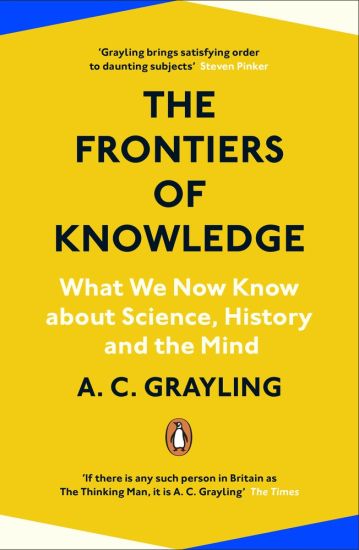
The Frontiers of Knowledge

The Frontiers of Knowledge

A. C. Grayling

PENGUIN BOOKS LTD
2022
pokkari
'Grayling brings satisfying order to daunting subjects' Steven Pinker_________________________In very recent times humanity has learnt a vast amount about the universe, the past, and itself. But through our remarkable successes in acquiring knowledge we have learned how much we have yet to learn: the science we have, for example, addresses just 5 per cent of the universe; pre-history is still being revealed, with thousands of historical sites yet to be explored; and the new neurosciences of mind and brain are just beginning. What do we know, and how do we know it? What do we now know that we don't know? And what have we learnt about the obstacles to knowing more? In a time of deepening battles over what knowledge and truth mean, these questions matter more than ever. Bestselling polymath and philosopher A. C. Grayling seeks to answer them in three crucial areas at the frontiers of knowledge: science, history and psychology. A remarkable history of science, life on earth, and the human mind itself, this is a compelling and fascinating tour de force, written with verve, clarity and remarkable breadth of knowledge._________________________'Remarkable, readable and authoritative. How he has mastered so much, so thoroughly, is nothing short of amazing' Lawrence M. Krauss, author of A Universe from Nothing'This book hums with the excitement of the great human project of discovery' Adam Zeman, author of Aphantasia
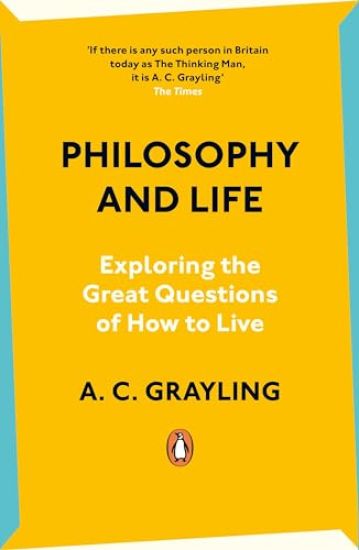
Philosophy and Life

Philosophy and Life

A. C. Grayling

PENGUIN BOOKS LTD
2024
pokkari
'Grayling brings satisfying order to daunting subjects' Steven Pinker'An enthusiastic thinker who embraces humour, common sense and lucidity' Independent_______________From the eminent philosopher, an authoritative exploration of the great questions of how to live'There is a question everyone has to ask and answer - in fact, has to keep on asking and keep on answering. It is, 'How should I live my life?' meaning, 'What values shall I live by? 'What sort of person should I be? What shall I aim for?' The great majority of people do not ask this question, they merely answer it unthinkingly, by adopting conventional views of life and what matters in it...'From Stoics to existentialists, in philosophy and literature, discussion of the philosophy of life -- of love and death, of courage, fortitude and wisdom -- challenges us all to think about what kinds of life are truly worth living. In this summation of a lifetime thinking and writing about this great question, A. C. Grayling explores with clarity and depth the ideas that each of us must use in answering it for ourselves.Drawing on the lives, experiences and works of a fantastically eclectic range of thinkers -- taking in not only philosophers such as Confucius, Seneca and Nietzsche, but also authors from Shakespeare to Ursula LeGuin, and modern thinkers such as Martha Nussbaum and Bernard Williams - Philosophy and Life brings together wisdom from across eras and continents in a tour de force on the philosophy of being human in a complicated world.
Friendship

Friendship

A. C. Grayling

Yale University Press
2014
pokkari
An entertaining and provocative investigation of friendship in all its variety, from ancient times to the present day A central bond, a cherished value, a unique relationship, a profound human need, a type of love. What is the nature of friendship, and what is its significance in our lives? How has friendship changed since the ancient Greeks began to analyze it, and how has modern technology altered its very definition? In this fascinating exploration of friendship through the ages, one of the most thought-provoking philosophers of our time tracks historical ideas of friendship, gathers a diversity of friendship stories from the annals of myth and literature, and provides unexpected insights into our friends, ourselves, and the role of friendships in an ethical life. A. C. Grayling roves the rich traditions of friendship in literature, culture, art, and philosophy, bringing into his discussion familiar pairs as well as unfamiliar—Achilles and Patroclus, David and Jonathan, Coleridge and Wordsworth, Huck Finn and Jim. Grayling lays out major philosophical interpretations of friendship, then offers his own take, drawing on personal experiences and an acute awareness of vast cultural shifts that have occurred. With penetrating insight he addresses internet-based friendship, contemporary mixed gender friendships, how friendships may supersede family relationships, one’s duty within friendship, the idea of friendship to humanity, and many other topics of universal interest.
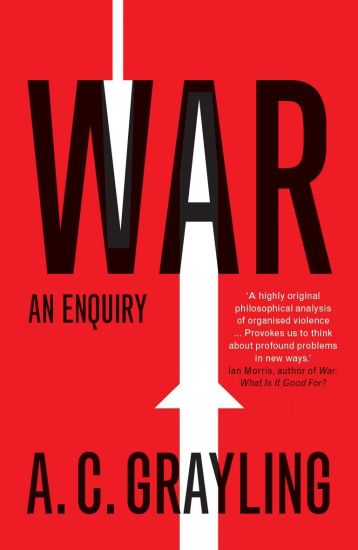
War

War

A. C. Grayling

Yale University Press
2018
pokkari
A renowned philosopher challenges long-held views on just wars, ethical conduct during war, why wars occur, how they alter people and societies, and more For residents of the twenty-first century, a vision of a future without warfare is almost inconceivable. Though wars are terrible and destructive, they also seem unavoidable. In this original and deeply considered book, A. C. Grayling examines, tests, and challenges the concept of war. He proposes that a deeper, more accurate understanding of war may enable us to reduce its frequency, mitigate its horrors, and lessen the burden of its consequences. Grayling explores the long, tragic history of war and how warfare has changed in response to technological advances. He probes much-debated theories concerning the causes of war and considers positive changes that may result from war. How might these results be achieved without violence? In a profoundly wise conclusion, the author envisions “just war theory” in new moral terms, taking into account the lessons of World War II and the Holocaust and laying down ethical principles for going to war and for conduct during war.