A Testimonial to Charles J. Paine and Edward Burgess - Vol. 1 is an unchanged, high-quality reprint of the original edition of 1887. Hansebooks is editor of the literature on different topic areas such as research and science, travel and expeditions, cooking and nutrition, medicine, and other genres. As a publisher we focus on the preservation of historical literature. Many works of historical writers and scientists are available today as antiques only. Hansebooks newly publishes these books and contributes to the preservation of literature which has become rare and historical knowledge for the future.
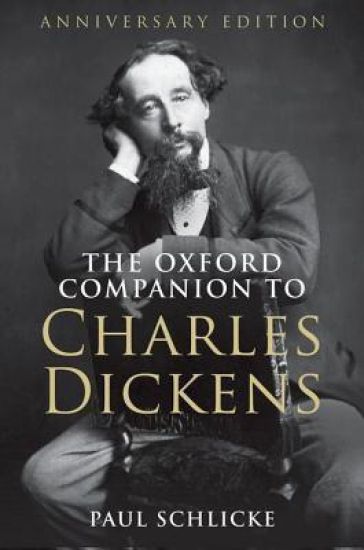
Reissued to celebrate the bicentenary of Charles Dickens's birth, The Oxford Companion to Charles Dickens (formerly The Oxford Reader's Companion to Dickens) draws together an unparalleled diversity of information on one of Britain's greatest writers: covering his life, his works, his reputation, and his cultural context. Featuring more than 500 A-Z articles, it throws new and often unexpected light on the most familiar of Dickens's works, and explores the experiences, events, and literature on which he drew. There is also a chronology of Dickens' life, a list of characters in his works, a list of entries by theme, a family tree, three maps, an invaluable bibliography, and a general index. Compiled by a distinguished editorial team, and written in a lucid, easy style that would have pleased him, The Oxford Companion to Charles Dickens offers a more authoritative and accessible range of information than any other reference work on Dickens. Aspects covered include: The private man and the public figure - his family, friends, colleagues, and convictions The age in which he lived and worked - the people, events, and institutions that informed his writing The places that were significant to him - his homes, his London, and the countries he visited The ideas and social theories of the time - the attitudes he satirized and the ideologies he advocated The works on which his reputation rests - their history, structure, inspiration, and significance
The Cambridge Companion to Charles Dickens contains fourteen specially-commissioned chapters by leading international scholars, who together provide diverse but complementary approaches to the full span of Dickens’s work, with particular focus on his major fiction. The essays cover the whole range of Dickens’s writing, from Sketches by Boz through The Mystery of Edwin Drood. Separate chapters address important thematic topics: childhood, the city, and domestic ideology. Others consider formal features of the novels, including their serial publication and Dickens’s distinctive use of language. Three final chapters examine Dickens in relation to work in other media: illustration, theatre, and film. Each essay provides guidance to further reading. The volume as a whole offers a valuable introduction to Dickens for students and general readers, as well as fresh insights, informed by recent critical theory, that will be of interest to scholars and teachers of the novels.
The Cambridge Companion to Charles Dickens contains fourteen specially-commissioned chapters by leading international scholars, who together provide diverse but complementary approaches to the full span of Dickens’s work, with particular focus on his major fiction. The essays cover the whole range of Dickens’s writing, from Sketches by Boz through The Mystery of Edwin Drood. Separate chapters address important thematic topics: childhood, the city, and domestic ideology. Others consider formal features of the novels, including their serial publication and Dickens’s distinctive use of language. Three final chapters examine Dickens in relation to work in other media: illustration, theatre, and film. Each essay provides guidance to further reading. The volume as a whole offers a valuable introduction to Dickens for students and general readers, as well as fresh insights, informed by recent critical theory, that will be of interest to scholars and teachers of the novels.
Charles Dickens became immensely popular early on in his career as a novelist, and his appeal continues to grow with new editions prompted by recent television and film adaptations, as well as large numbers of students studying the Victorian novel. This lively and accessible introduction to Dickens focuses on the extraordinary diversity of his writing. Jon Mee discusses Dickens's novels, journalism and public performances, the historical contexts and his influence on other writers. In the process, five major themes emerge: Dickens the entertainer; Dickens and language; Dickens and London; Dickens, gender, and domesticity; and the question of adaptation, including Dickens's adaptations of his own work. These interrelated concerns allow readers to start making their own new connections between his famous and less widely read works and to appreciate fully the sheer imaginative richness of his writing, which particularly evokes the dizzying expansion of nineteenth-century London.
Charles Dickens became immensely popular early on in his career as a novelist, and his appeal continues to grow with new editions prompted by recent television and film adaptations, as well as large numbers of students studying the Victorian novel. This lively and accessible introduction to Dickens focuses on the extraordinary diversity of his writing. Jon Mee discusses Dickens's novels, journalism and public performances, the historical contexts and his influence on other writers. In the process, five major themes emerge: Dickens the entertainer; Dickens and language; Dickens and London; Dickens, gender, and domesticity; and the question of adaptation, including Dickens's adaptations of his own work. These interrelated concerns allow readers to start making their own new connections between his famous and less widely read works and to appreciate fully the sheer imaginative richness of his writing, which particularly evokes the dizzying expansion of nineteenth-century London.
The Edinburgh Companion to Charles Dickens and the Arts explores Dickens's rich and complex relationships with a myriad of art forms and the far-reaching resonance of his works across the arts overall. This volume reassesses Dickens's prescient philosophy of art, both through a historical and a present-day lens and in the context of debates about the cultural value of the arts. Across thirty-three original essays, it outlines the ways in which Dickens broke down oppositions between high and low art, money and the aesthetic, the extraordinary and the ordinary, and art for its own sake and the social good. In doing so, it considers how Dickens prefigured the arts of the future, including rap music, television, fanfiction and global cinema.
When you hear that someone you deeply admire only has several weeks left to live, it creates a special opportunity to offer inspiring words -- and heartfelt thanks.
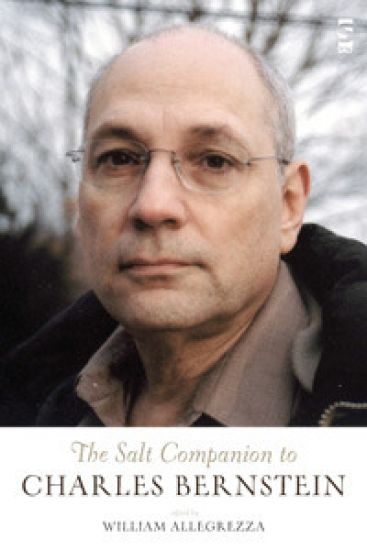
The Salt Companion to Charles Bernstein presents scholarship on one of the U.S.’s best living innovative poets. Scholars explore major themes in his work, and poets present pieces inspired by his poetry. The book is intended for both scholars looking for informed critical insight into Bernstein’s work as well as for students to examine his work. The scholarship covers many of his major pieces and genres, like sound, stage, and poetry. The authors write about his main themes and influences and give insight into some of the major poetry ideas currently being debated in the U.S., such as the nature and future of experimental poetry, the influences on contemporary poetry, the politics of poetry, and wide variety of techniques currently being used. This book is valuable to individuals interested in poetry and libraries trying to stay abreast of the most important recent literary criticism/currents.
Great Expectations is one of the best-selling Victorian novels of our time. No Dickens work, with the exception of A Christmas Carol, has been adapted more for both film and television. It has been as popular with critics as it has with the public. In 1937, George Bernard Shaw called the novel Dickens's "most compactly perfect book". John Lucas describes it as "the most perfect and the most beautiful of all Dickens's novels", Angus Wilson as "the most completely unified work of art that Dickens ever produced". Great Expectations has been so successful partly because it's an exciting story. Dickens always had a keen eye on the market and subscribed to Wilkie Collins's advice: "make 'em laugh, make 'em cry, above all make 'em wait." From the violent opening scene on the marshes to the climax of Magwitch's attempted escape on the Thames, the story is full of suspense, mystery and drama. But while these elements of Great Expectations have ensured its popularity, it is also a novel which, as this guide will seek to show, raises profound questions not just about the nature of Victorian society but about the way human relationships work and the extent to which people are shaped by their childhoods and the circumstances in which they grow up.
Hard Times is Dickens's shortest novel. Some early critics argued that it lacked the genius of the characterisation and humour that mark his greatest works. One of the 20th century's leading critics, F.R. Leavis, believes, on the contrary, that Hard Times is Dickens's sole contribution to the great tradition of the English novel, displaying a moral seriousness lacking elsewhere in his more entertaining work: "It has a kind of perfection as a work of art that we don't associate with Dickens - a perfection that is one with the sustained and complete seriousness for which among his productions it is unique." Nowadays, if not Dickens's most readable book, it is certainly one of his most read. So was Leavis right? In this guide, one of Britain's leading experts on Dickens, Uttara Natarajan, looks at the success of Hard Times, at why it was so much admired by the likes of John Ruskin and George Bernard Shaw, and at what Dickens was trying to do in this compelling and often shocking novel. A testament of his success, as Natarajan says, is the way in which the name of its principal character - Gradgrind - has long been absorbed into the English vocabulary, and continues regularly to be invoked as shorthand for a rigid adherence to fact.
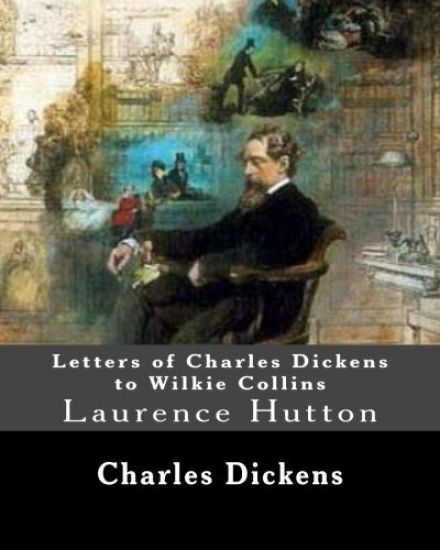
Charles John Huffam Dickens ( 7 February 1812 - 9 June 1870) was an English writer and social critic. He created some of the world's best-known fictional characters and is regarded by many as the greatest novelist of the Victorian era. His works enjoyed unprecedented popularity during his lifetime, and by the 20th century critics and scholars had recognised him as a literary genius. His novels and short stories enjoy lasting popularity. Born in Portsmouth, Dickens left school to work in a factory when his father was incarcerated in a debtors' prison. Despite his lack of formal education, he edited a weekly journal for 20 years, wrote 15 novels, five novellas, hundreds of short stories and non-fiction articles, lectured and performed extensively, was an indefatigable letter writer, and campaigned vigorously for children's rights, education, and other social reforms. Dickens's literary success began with the 1836 serial publication of The Pickwick Papers. Within a few years he had become an international literary celebrity, famous for his humour, satire, and keen observation of character and society. His novels, most published in monthly or weekly installments, pioneered the serial publication of narrative fiction, which became the dominant Victorian mode for novel publication. The instalment format allowed Dickens to evaluate his audience's reaction, and he often modified his plot and character development based on such feedback. For example, when his wife's chiropodist expressed distress at the way Miss Mowcher in David Copperfield seemed to reflect her disabilities, Dickens improved the character with positive features. His plots were carefully constructed, and he often wove elements from topical events into his narratives. Masses of the illiterate poor chipped in ha'pennies to have each new monthly episode read to them, opening up and inspiring a new class of readers.Dickens was regarded as the literary colossus of his age. His 1843 novella, A Christmas Carol, remains popular and continues to inspire adaptations in every artistic genre. Oliver Twist and Great Expectations are also frequently adapted, and, like many of his novels, evoke images of early Victorian London. His 1859 novel, A Tale of Two Cities, set in London and Paris, is his best-known work of historical fiction. Dickens has been praised by fellow writers-from Leo Tolstoy to George Orwell and G. K. Chesterton-for his realism, comedy, prose style, unique characterisations, and social criticism. On the other hand, Oscar Wilde, Henry James, and Virginia Woolf complained of a lack of psychological depth, loose writing, and a vein of saccharine sentimentalism. The term Dickensian is used to describe something that is reminiscent of Dickens and his writings, such as poor social conditions or comically repulsive characters..... William Wilkie Collins (8 January 1824 - 23 September 1889) was an English novelist, playwright, and short story writer. His best-known works are The Woman in White (1859), No Name (1862), Armadale (1866) and The Moonstone (1868). The last is considered the first modern English detective novel. Born into the family of painter William Collins in London, he lived with his family in Italy and France as a child and learned French and Italian. He worked as a clerk for a tea merchant. After his first novel, Antonina, was published in 1850, he met Charles Dickens, who became a close friend, mentor and collaborator. Some of Collins's works were first published in Dickens' journals All the Year Round and Household Words and the two collaborated on drama and fiction.... Laurence Hutton (1843 - June 10, 1904) was an American essayist and critic...
This work has been selected by scholars as being culturally important and is part of the knowledge base of civilization as we know it.This work is in the public domain in the United States of America, and possibly other nations. Within the United States, you may freely copy and distribute this work, as no entity (individual or corporate) has a copyright on the body of the work.Scholars believe, and we concur, that this work is important enough to be preserved, reproduced, and made generally available to the public. To ensure a quality reading experience, this work has been proofread and republished using a format that seamlessly blends the original graphical elements with text in an easy-to-read typeface.We appreciate your support of the preservation process, and thank you for being an important part of keeping this knowledge alive and relevant.