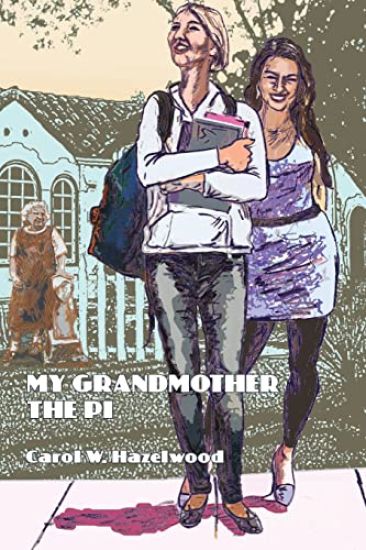
Teenager Mandy Winthrop lives with her grandmother, Fran, who runs a private detective agency. In the summer, Mandy works at the agency. When Fran's client, Casualty Insurance, requests an investigation into a kidnapping from a preschool, Mandy's persistent curiosity gets her and her friends into deadly trouble. The arrival of a mysterious stranger, the disappearance of a neighbor, and the Casualty Insurance case intertwine. In her quest for clues, Mandy uncovers a secret about her parents that changes her life. When her grandmother and others involved with the case disappear, Mandy and her friends must act before it's too late.
“H. P. Lovecraft has yet to be surpassed as the 20th century's greatest practitioner of the classic horror tale.”--Stephen King The most important tales of the godfather of the modern horror genre--a master who influenced the works of a generation of writers including Stephen King and Anne Rice--are gathered in one volume by National Book Award-winning author Joyce Carol Oates. Combining the 19th-century gothic sensibility of Edgar Allan Poe with a daring internal vision, Lovecraft's tales foretold a psychically troubled world to come. Set in a meticulously wrought, historically grounded New England landscape, his harrowing stories explore the collapse of sanity beneath the weight of chaotic events. Lovecraft's universe is a frightening shadow world were reality and nightmare intertwine, and redemption can come only from below. For aficionados and a new generation of 21st-century readers, Tales of H. P. Lovecraft is a classic not to be missed.
This book describes the author's experience with her family in Danau Sentarum National Park, in the center of Borneo. She and her husband were working with communities there to manage an area of flooded forests. The book introduces the people and the area, and describes the joys and frustrations of working with NGOs, consulting firms, government and local communities.
This articulatory phonetics course is designed especially for students whose aim is to learn an unwritten language. It teaches how to pronounce and transcribe virtually all the known sounds of the world's languages. The authors incorporate data from current research on a number of sounds, including two recently documented sounds (the labial flap and the interdental approximant). The McKinneys also provide fresh information on fortis-lenis consonants based on research of the Nigerian language, Jju. The majority of the book teaches the articulatory details of specific speech sounds, but chapters also include acoustic phonetics, palatography, the fascinating area of dialectal differences, and practical considerations for conducting phonetic field work. Anecdotes from the authors' and others' field experiences enliven the book. Another strength is phonetic exercises given in each chapter and the Appendices that cite data from many of the lesser-known languages of the world. An extensive Glossary and list of references help to not only review the basic concepts, but also provide resources for the interested student to dig deeper. Norris McKinney (Ph.D., University of Michigan) and Carol McKinney (Ph.D., Southern Methodist University) conducted fieldwork for over ten years while living among the Bajju people of northern Nigeria. Both have taught articulatory phonetics, and Norris also taught acoustic phonetics. He began writing this book as an update on data taught in SIL phonetics courses. Norris passed away before this book could be published, and Carol has brought this work to completion on his behalf.
Called as pope, St. John Paul II emerged onto St. Peter's balcony proclaiming, ""Do not be afraid "" What theology and mystery inspired this surprising proclamation? John Paul II's quest for holiness was grounded in the mystical insight that we participate in God. We seek the Beatific Vision, the Face of God, through which we are transformed in theosis or divinization. This infusion of grace perfects and unites us. In this book readers will find engaging theology intermixed with spiritual direction and lectio divina meditations. Utilizing Aquinas' method of scriptural interpretation, we are offered ways of seeking spiritual fulfillment to behold the Beatific Vision. Fr. Tom Kuffel shares personal experiences from his time studying and working in Rome, Nebraska, and Alaska. Reflecting on his own priesthood, his fascinating narratives encourage our own spiritual growth. Readers find fresh ways of engaging Scripture through St. John Paul II's New Pentecost, encouraging new interpretations of Vatican II.
Called as pope, St. John Paul II emerged onto St. Peter's balcony proclaiming, ""Do not be afraid "" What theology and mystery inspired this surprising proclamation? John Paul II's quest for holiness was grounded in the mystical insight that we participate in God. We seek the Beatific Vision, the Face of God, through which we are transformed in theosis or divinization. This infusion of grace perfects and unites us. In this book readers will find engaging theology intermixed with spiritual direction and lectio divina meditations. Utilizing Aquinas' method of scriptural interpretation, we are offered ways of seeking spiritual fulfillment to behold the Beatific Vision. Fr. Tom Kuffel shares personal experiences from his time studying and working in Rome, Nebraska, and Alaska. Reflecting on his own priesthood, his fascinating narratives encourage our own spiritual growth. Readers find fresh ways of engaging Scripture through St. John Paul II's New Pentecost, encouraging new interpretations of Vatican II.
How do we extend the 'conservation ethic' to include the cultural links between local populations and their physical environments? Can considerations of human capital be incorporated into the definition and measurement of sustainability in managed forests? Can forests be managed in a manner that fulfills traditional goals for ecological integrity while also addressing the well-being of its human residents? In this groundbreaking work, an international team of investigators apply a diverse range of social science methods to focus on the interests of the stakeholders living in the most intimate proximity to managed forests. Using examples from North America, Asia, Africa, and Latin America, they explore the overlapping systems that characterize the management of tropical forests. People Managing Forests builds on criteria and indicators first tested by the editors and their colleagues in the mid-1990s. The researchers address topics such as intergenerational access to resources, gender relations and forest utilization, and equity in both forest-rich and forest-poor contexts. A copublication of Resources for the Future (RFF) and the Center for International Forestry Research (CIFOR).
How do we extend the 'conservation ethic' to include the cultural links between local populations and their physical environments? Can considerations of human capital be incorporated into the definition and measurement of sustainability in managed forests? Can forests be managed in a manner that fulfills traditional goals for ecological integrity while also addressing the well-being of its human residents? In this groundbreaking work, an international team of investigators apply a diverse range of social science methods to focus on the interests of the stakeholders living in the most intimate proximity to managed forests. Using examples from North America, Asia, Africa, and Latin America, they explore the overlapping systems that characterize the management of tropical forests. People Managing Forests builds on criteria and indicators first tested by the editors and their colleagues in the mid-1990s. The researchers address topics such as intergenerational access to resources, gender relations and forest utilization, and equity in both forest-rich and forest-poor contexts. A copublication of Resources for the Future (RFF) and the Center for International Forestry Research (CIFOR).
Contemporary Issues in Interpersonal Communication introduces the foundational ideas and concepts of interpersonal communication and applies them to issues and events relevant to today's college student population. The text does not simply reiterate the standard set of interpersonal communication's core ideas and theories, nor does it exclude them. Rather, authors Orbe and Bruess offer an integrated approach--both traditional and contemporary--introducing the concepts, models, and theories of the field in a way that will engage and challenge today's most culturally sensitive, technologically savvy, and forward-thinking interpersonal communication students. The authors feature a highly diverse mix of cultural groups, fresh examples, and cutting-edge research. Written in clear, student-friendly language, the text tcnks specific communication practices regarding issues of culture, power, and technology in all contexts of interpersonal communication. The knowledge and awareness of how culture, power, and technology influence all aspects of our interpersonal interactions is essential for students seeking competence and effectiveness as interpersonal communicators. This text is organized in three sections: Introduction to Interpersonal Communication, Interpersonal Messages, and Communication Contexts. It offers multiple pedagogical features designed to engage students in fun, meaningful, and relevant ways, eliminating the need for supplemental materials. Each chapter provides Contemporary Issues (case studies describing real-life news stories), Myths About Interpersonal Communication, Practical Research Opportunities, Self-Reflection Exercises, Applied Concept Features, and Skill Builders. In addition, each chapter also features Chapter Activities designed for in-class, out-of-class, community-based, and web-based learning as well as Suggested Contemporary Readings intended to promote opportunities for learning beyond what is covered in the text. Chapter Summaries and Key Terms are also provided. A comprehensive Instructor's Manual/Testing Program is available electronically, which includes an in-depth explanation of how to bring service learning into the interpersonal communication classroom, including specific service-learning project assignments. There is also a dedicated Website. In addition, an Interactive Student Study Guide is available through the Website.
Photochemistry is the study of the interaction of light with matter. This fascinating subject is explained in a clear yet comprehensive manner. Aimed at an undergraduate audience, the text describes the `new' chemistry that follows the absorption of light, and explains how light has this extraordinary influence on chemical behaviour. Examples of established principles are presented examining the way in which life and the other natural processes depend on photochemistry, and also how photochemistry can be used in a variety of applications.
For all its costs, flaws, and inequities, American health care is fundamentally rooted in a belief that treatment should be based on solid scientific research. To this end, between 2003 and 2010, three different federal laws were enacted, the most recent being the Affordable Care Act of 2010, that mandated new federal investments in a type of clinical research called comparative effectiveness research (CER) -- research into what works best in medical care. Comparative Effectiveness Research: Evidence, Medicine, and Policy provides the first complete account of how -- and why -- the federal government decided to make CER an important feature of health reform. Despite earlier legislative uptake of policy proposals on CER, support for federal mandates took dramatic twists and turns, with eventual compromises forged amid failing bipartisan alliances, special interests, and mobilized public opinion. Based on exhaustive research and first-hand interviews, the authors examine where CER fits in the production of scientific evidence about the benefits and harms of treatments for human diseases and conditions. Their work offers sobering confirmation that contemporary American medical care falls, not surprisingly, well short of the evidence-based ideal. Comparative Effectiveness Research demonstrates that dealing constructively with the vast uncertainties inherent to medical care requires policies to make the generation of high-quality evidence an inseparable part of routine health care.
This manual provides basic background information necessary to perform investigative and remedial activities at hazardous waste sites within a safe and efficient framework. It is the basic text for the standard 40-hour HAZWOPER course. While the topics and structure focus toward OSHA training courses, it could serve as the basic text for a similar course in Canada and for any related safety and hazardous materials courses. The organization and thoroughness of the information along with the many illustrations make it a stand-alone reference as well as a text. It provides the best available current information from various federal agencies including the EPA, OSHA, NIOSH, U.S. Army Corps of Engineers, Coast Guard, and the Department of Transportation.
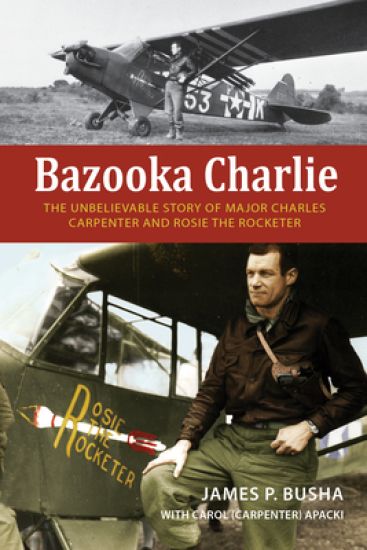
A revealing biography of Lt. Col. Charles "Bazooka Charlie" Carpenter, a U.S. Army pilot who served in WWII and is most known for destroying several enemy armored vehicles in his bazooka-equipped L-4 Grasshopper light observation aircraft. Major Charles Carpenter made headlines during the Second World War when he affixed six bazookas to his tiny Piper L-4 observation plane and began attacking German tanks. “Bazooka Charlie” and his plane “Rosie the Rocketer” were profiled in a variety of military and civilian publications, including the iconic Stars & Stripes. The major was a high school educator in the civilian world, teaching history and coaching football. In 1945, the dashing pilot was forced out of the cockpit and into a hospital bed by Hodgkin’s lymphoma, which was discovered in his neck. In addition to the enemy and terminal cancer, Carpenter also battled cynicism and guilt, particularly in regard to the state of his marriage, which was on the brink of failure by the time he returned home from Europe. Charles Carpenter died in 1966, having resumed his career, salvaged his marriage, and long outlived the timeline afforded him by his doctors in the initial prognosis. This revealing biography of the famous pilot was made possible through the collaboration of noted aviation author and magazine editor Jim Busha, and Carpenter’s daughter, Carol Apacki. Along with memories of her father in his postwar years, Carol provided a treasure trove of wartime correspondence between Charles and his wife, Elda Carpenter.
A revealing biography of Lt. Col. Charles "Bazooka Charlie" Carpenter, a U.S. Army pilot who served in WWII and is most known for destroying several enemy armored vehicles in his bazooka-equipped L-4 Grasshopper light observation aircraft. Major Charles Carpenter made headlines during the Second World War when he affixed six bazookas to his tiny Piper L-4 observation plane and began attacking German tanks. “Bazooka Charlie” and his plane “Rosie the Rocketer” were profiled in a variety of military and civilian publications, including the iconic Stars & Stripes. The major was a high school educator in the civilian world, teaching history and coaching football. In 1945, the dashing pilot was forced out of the cockpit and into a hospital bed by Hodgkin’s lymphoma, which was discovered in his neck. In addition to the enemy and terminal cancer, Carpenter also battled cynicism and guilt, particularly in regard to the state of his marriage, which was on the brink of failure by the time he returned home from Europe. Charles Carpenter died in 1966, having resumed his career, salvaged his marriage, and long outlived the timeline afforded him by his doctors in the initial prognosis. This revealing biography of the famous pilot was made possible through the collaboration of noted aviation author and magazine editor Jim Busha, and Carpenter’s daughter, Carol Apacki. Along with memories of her father in his postwar years, Carol provided a treasure trove of wartime correspondence between Charles and his wife, Elda Carpenter.
Each new print copy includes Navigate 2 Advantage Access that unlocks a comprehensive and interactive eBook, student practice activities and assessments, a full suite of instructor resources, and learning analytics reporting tools. Updated and revised with the latest data in the field, Principles and Practice of Sport Management, Sixth Edition provides students with the foundation they need to prepare for a variety of sport management careers. Intended for use in introductory sport management courses at the undergraduate level, the focus of the Sixth Edition is to provide an overview of the sport industry and cover basic fundamental knowledge and skill sets of the sport manager, as well as to provide information on sport industry segments for potential employment and career opportunities.
Supervision plays a central role in the clinical training of mental health professionals. In Clinical Supervision: A Competency-Based Approach (APA, 2 4), Falender and Shafranske created a comprehensive resource for the supervision of mental health practitioners. In this companion casebook, the editors have enlisted an elite group of contributors to help make the leap from theory and research to the real-life, hands-on implementation of the elements of successful supervision. With expert commentary and detailed excerpts from actual supervisory sessions, the authors describe supervision as process-the process of becoming competent, the process of psychotherapy, and the process of developing as a supervisor. The book examines the supervision relationship in detail and includes supervision tools to help supervisors implement best practices within a competency-based framework. Whether used alone or in conjunction with the earlier volume, the Casebook for Clinical Supervision will be the standard resource for supervisory competence for years to come.
This book shows students how to establish effective working supervisory relationships and understand and make use of formative and summative evaluations. Clinical training is challenging for supervisees, many of whom are unsure how to navigate the supervisory process and effectively build clinical skills and professional competence. While research and book-length texts on effective supervision have proliferated, these are typically directed towards supervisors and clinical educators. Since it was first published in 2004, Falender and Shafranske's Clinical Supervision: A Competency-Based Approach has become the standard, go-to resource on supervisory and clinical competence. Now the authors have created an empirically-supported yet practical book for student and interns. Written in an interactive style with "real life" case examples and reflection activities, this book is empirically-supported yet highly practical, this is an essential text that normalizes the anxieties and conflicts that typically arise during supervision.