Kirjojen hintavertailu. Mukana 12 390 323 kirjaa ja 12 kauppaa.

Kirjahaku

Etsi kirjoja tekijän nimen, kirjan nimen tai ISBN:n perusteella.

156 tulosta hakusanalla Cees Hamelink

The Foxes Come at Night

The Foxes Come at Night

Cees Nooteboom

MacLehose Press
2013
nidottu
Set in the cities and islands of the Mediterranean, and linked thematically, the eight stories in The Foxes Come at Night read more like a novel, a meditation on memory, life and death. Their protagonists collect and reconstruct fragments of lives lived intensely, and now lost, crystallized in memory or in the detail of a photograph. And yet the tone of these stories is far from pessimistic: it seems that death is nothing to be afraid of.
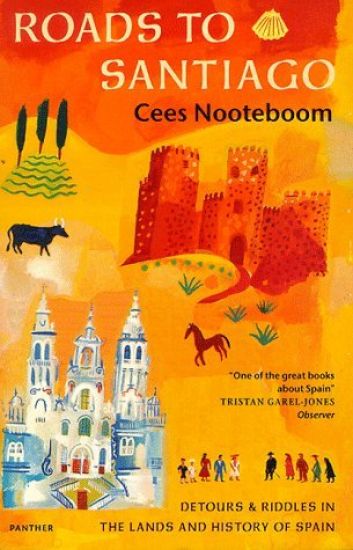
Roads To Santiago

Roads To Santiago

Cees Nooteboom

Vintage Publishing
1998
pokkari
A many-tangented pilgrimage through ten centuries of Spain's history, its politics, its art, literature and architecture, its climate and its people, in which Nooteboom unlocks doors to an undiscovered Spain and reveals his obsession for a country he has come to know intimately over the course of forty years.
Roads to the South

Roads to the South

Cees Nooteboom

Welbeck Publishing Group
2023
sidottu
The essays in this hymn to Australia begin with the author's visit to Broome in the northwest. Weaving the occasion of his arrival in this remote town with his exploration of its history, Nooteboom splices the details of time to create this book.
Tolerance : Experiments with Freedom in the Netherlands

Tolerance : Experiments with Freedom in the Netherlands

Cees Maris

Springer Nature Switzerland AG
2018
nidottu
This book presents a collection of philosophical essays on freedom and tolerance in the Netherlands. It explores liberal freedom and its limits in areas such as freedom of speech, public reason, sexual morality, euthanasia, drugs policy, and minority rights. The book takes Dutch practices as exemplary test cases for the principled discussions on these subjects from the perspective of political liberalism. Indeed, the Netherlands may be viewed as a social laboratory in human tolerance. During the Cultural Revolution of the 1960s, Holland took the lead in a global emancipation process towards a society based on equal freedom. It was the first country to legalize euthanasia, soft drugs and gay marriage. In the final sections, the book examines the question of whether the political murders on the politician Pim Fortuyn and the film director Theo van Gogh, the reactions to Ayaan Hirsi Ali’s film Submission, as well as the success of the populist politician Geert Wilders are signs ofthe end of Dutch tolerance. Although it recognizes that the political climate has taken a conservative turn, the book shows that the Netherlands still shows remarkable tolerance.
Tolerance : Experiments with Freedom in the Netherlands

Tolerance : Experiments with Freedom in the Netherlands

Cees Maris

Springer International Publishing AG
2018
sidottu
This book presents a collection of philosophical essays on freedom and tolerance in the Netherlands. It explores liberal freedom and its limits in areas such as freedom of speech, public reason, sexual morality, euthanasia, drugs policy, and minority rights. The book takes Dutch practices as exemplary test cases for the principled discussions on these subjects from the perspective of political liberalism. Indeed, the Netherlands may be viewed as a social laboratory in human tolerance. During the Cultural Revolution of the 1960s, Holland took the lead in a global emancipation process towards a society based on equal freedom. It was the first country to legalize euthanasia, soft drugs and gay marriage. In the final sections, the book examines the question of whether the political murders on the politician Pim Fortuyn and the film director Theo van Gogh, the reactions to Ayaan Hirsi Ali’s film Submission, as well as the success of the populist politician Geert Wilders are signs ofthe end of Dutch tolerance. Although it recognizes that the political climate has taken a conservative turn, the book shows that the Netherlands still shows remarkable tolerance.
Die Dame mit dem Einhorn

Die Dame mit dem Einhorn

Cees Nooteboom

SUHRKAMP VERLAG
2000
pokkari
In seinem Reisebuch 'Die Dame mit dem Einhorn' unternimmt der Schriftsteller und Augenmesch Cees Nooteboom eine 'Europareise'. Er nimmt den Leser mit in sein Amsterdam und in die europäischen Metropolen wie Paris, Berlin, Wien, Brüssel oder Mailand und Florenz. er bereist Landschaften in vielen europäischen Ländern, darunter die Betragne, franken und die Lombardei. was er dabei hört und sieht, gerät ihm zu bekannt eleganter Prosa, zu eigenwilliger Philosophie. Seine Eindrücke verbindet er mit seinem fast enzyklopädischen zu nennenden wissen und läßt Dichter zu Wort kommen, die mit ihm neue Bilder und Gefühle auch für einen altbekannten Ort oder Kunstgegenstand entstehen lassen.
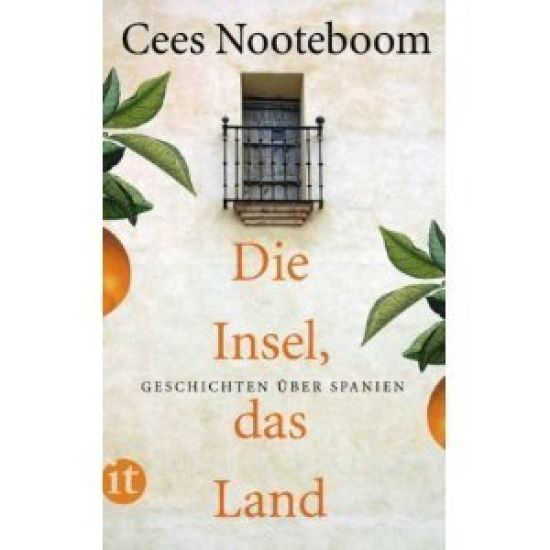
Die Insel, das Land

Die Insel, das Land

Cees Nooteboom

SUHRKAMP VERLAG
2002
sidottu
?Ich bin wieder angekommen in meinem Sommerdomizil. Die herrenlose Katze hat sich zum Fressen eingefunden, die Palmen sind um einen unsichtbaren Zentimeter gewachsen, da sind die Bücher wieder, die ich vergessen habe, und ich nehme Platz gegenüber der weiß verputzten Natursteinmauer, die mich schon seit fast zwanzig Jahren mit ihrer Leere erregt.? Jedes Jahr im Juli landet Cees Nooteboom auf seiner Insel Menorca und bringt von dort und anderen Teilen Spaniens Geschichten mit, denen wir in seinen Romanen, seinen Feuilletons, Reportagen und Gedichten wiederbegegnen. In Die Insel, das Land erzählt der große Autor von Don Miguel, dem 87 Jahre alten Postboten, von einem Mädchen namens ?Schnee? und einem anderen, das ?Liebe? heißt, von Blumen, der Sonne und dem Meer, erinnert sich an die unvergeßliche Stimme einer spanischen Nachrichtensprecherin, thematisiert aber auch Gefahren, die dem Lande drohen: von Fanatikern und unfähigen Politikern, vom Tourismus, der die Küsten zerstört, und von sozialen Veränderungen, die das Gleichgewicht der Gesellschaft Spaniens gefährden. Nooteboom schildert uns ein Land, in dem ?die Zeit aus Sand? ist und dessen Menschen er mit Zuneigung betrachtet, wissend, daß er nur ein Passant ist, einer aber, der von sich sagen kann: ?Ich liebe Spanien.?
Paradies verloren

Paradies verloren

Cees Nooteboom

SUHRKAMP VERLAG
2006
pokkari
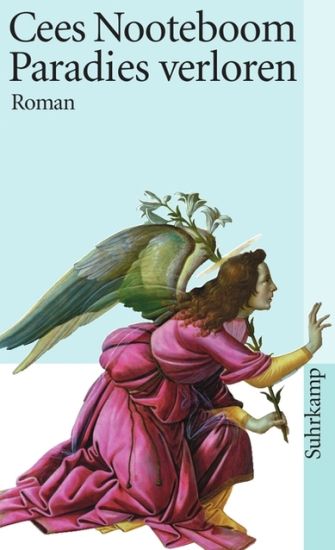
Wer hat bloß die Engel aus der Welt verbannt, obwohl ich sie noch immer um mich spüre?" Ein überraschender Gedanke für eine junge Frau, die am eigenen Leibe erfahren mußte, daß unsere Welt "mehr mit der Hölle zu tun hat als mit dem Paradies". Alma ist eines Abends auf einer ziellosen Fahrt durch Sao Paulo in die Favela Parais?polis geraten und vergewaltigt worden. Um den Schatten zu bannen, reist sie mit ihrer Freundin Almut in das Land ihrer gemeinsamen Kindheitsträume, Australien, und begegnet in der Leere der Wüste einer Stille, die sie versöhnt. Doch die Traumzeit ist längst vergangen, die mythische Welt der Aborigines versunken: "Mein Australien war eine Fiktion." Alma nimmt Abschied von den Reservaten des Garten Eden und macht die Welt zu ihrer Wüste - nicht ohne darin ihre Spuren zu hinterlassen. Ob von Füßen oder Flügeln: dem alternden Literaturkritiker, dessen Weg sie kreuzt, ist sie eine Offenbarung des Himmels. In seinem neuen Roman erbringt Cees Nooteboom den poetischen Beweis dafür, daß Phantasie Flügel verleiht und daß die Verstoßung aus dem Paradies das Beste war, das Gott für die Literatur hatte tun können. Denn Geschichten sind wie Engel, sie verkehren zwischen dem Irdischen und dem Imaginären, mit einer entscheidenden Einschränkung: die Passage verläuft nicht ohne Störungen, das ist ihr Ursprung. Der Irrfahrt Almas erwächst eine der schönsten Geschichten seit Miltons Dichtung über Adam und Eva.