This report details the history and current status of the border dispute between China and India in the North East Frontier Agency. Drawing on a wide range of sources, the CIA provides a detailed analysis of the political and military factors driving the dispute and the potential risks and opportunities for the region. This book is an essential resource for anyone interested in international relations and the geopolitics of South Asia.This work has been selected by scholars as being culturally important, and is part of the knowledge base of civilization as we know it.This work is in the "public domain in the United States of America, and possibly other nations. Within the United States, you may freely copy and distribute this work, as no entity (individual or corporate) has a copyright on the body of the work.Scholars believe, and we concur, that this work is important enough to be preserved, reproduced, and made generally available to the public. We appreciate your support of the preservation process, and thank you for being an important part of keeping this knowledge alive and relevant.
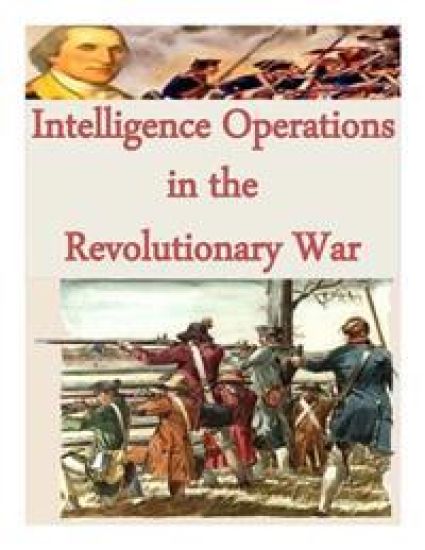
While the Committee of Secret Correspondence was meeting secretly in Philadelphia with agents of France, Arthur Lee was meeting in London with Pierre-Augustin Caron de Beaumarchais, the successful author of The Barber of Seville (and later The Marriage of Figaro)-who was a French agent. Lee's inflated reports of patriot strength, which either he fabricated for Beaumarchais' benefit or were provided by Lee's regular correspondent, Sam Adams, won the Frenchman to the American cause. Beaumarchais repeatedly urged the French Court to give immediate assistance to the Americans, and on February 29, 1776 addressed a memorial to Louis XVI quoting Lee's offer of a secret long-term treaty of commerce in exchange for secret aid to the war of independence. Beaumarchais explained that France could grant such aid without compromising itself, but urged that "success of the plan depends wholly upon rapidity as well as secrecy: Your Majesty knows better than any one that secrecy is the soul of business, and that in politics a project once disclosed is a project doomed to failure."With the memorial, Beaumarchais submitted a plan proposing that he set up a commercial trading firm as a cover for the secret French aid; he requested and was granted one million livres to establish a firm to be known as Roderigue Hortalez et Cie for that purpose. Beaumarchais' memorial was followed by one of March 12, 1776, by the French Minister of Foreign Affairs, the Comte de Vergennes. Royal assent was granted, and by the time Silas Deane arrived in Paris, French aid was on its way to the patriots. Deane expanded the Franco-American relationship, working with Beaumarchais and other French merchants to procure ships, commission privateers, recruit French officers, and purchase French military supplies declared "surplus" for that purpose.On September 26, 1776, the Continental Congress elected three commissioners to the Court of France, Benjamin Franklin, Thomas Jefferson and Silas Deane, resolving that "secrecy shall be observed until further Order of Congress; and that until permission be obtained from Congress to disclose the particulars of this business, no member be permitted to say anything more upon this subject, than that Congress have taken such steps as they judged necessary for the purpose of obtaining foreign alliance." Because of his wife's illness, Jefferson could not serve, and Arthur Lee was appointed in his stead.With Franklin's arrival in France on November 29, 1776-the first anniversary of the founding of the Committee of Secret Correspondence-the vital French mission became an intelligence and propaganda center for Europe, an unofficial diplomatic representation, a coordinating facility for aid from America's secret allies, and a recruiting station for such French officers as Lafayette and Kalb. In October 1777 the Continental Army won a crucial victory over the British at Saratoga, and on February 6, 1778, the French-American treaty of alliance was signed. On March 30, 1778, Franklin, Lee, and Deane were received at the French Court as representatives of the United States of America, and on July 7 of that year Comte d'Estaing's French fleet cast anchor in the Delaware River. France was in the war; the mission to Paris had succeeded.Spain, at the urging of French Foreign Minister Vergennes, matched France's one million livres for the operation of Hortalez et Cie. But that was not the beginning of secret Spanish aid to the Patriots. During the summer of 1776 Luis de Unzaga y Amezaga, the governor of New Spain at New Orleans, had privately delivered some ten thousand pounds of gunpowder, out of the King's stores, to Captain George Gibson and Lieutenant Linn of the Virginia Council of Defense. The gunpowder, moved up the Mississippi under the protection of the Spanish flag, made it possible to thwart British plans to capture Fort Pitt.
Though much has been written about the Civil War itself, little has been written about the spy war that went on within.The chronicling of Civil War intelligence activities challenges historians because of the lack of records, the lack of access to records, and the questionable truth of other records. Judah P. Benjamin, the Confederacy's Secretary of State, burned all the intelligence records he could find as federal troops entered Richmond. Union intelligence records were kept sealed in the National Archives until 1953. A few individuals involved in intelligence gathering burned their personal papers while others chose to publish their memoirs, though greatly embellishing their exploits. Even today, the identities of many spies remain secret. Henry Thomas Harrison, for example, was a Confederate spy whose intelligence set in motion the events that produced the battle of Gettysburg. But neither his first name nor details of his long career as a spy were known until 1986, when historian James O. Hall published an article about him. Though the idea of centralized intelligence gathering was decades away, the age-old resistance to the idea was present even then. Neither side saw the need to create such intelligence organizations, but each side approached the idea of effectively acquiring intelligence in their own way. The Confederacy's Signal Corps, devoted primarily to communications and intercepts, included a covert agency, the Secret Service Bureau. This unit ran espionage and counter-espionage operations in the North. Late in the war, the bureau set up a secret headquarters in Canada and sent out operatives on covert missions in Northern states. The Union's Bureau of Military Information, unlike the Confederacy's Secret Service Bureau, operated for specific gener-als rather than for the Union Army itself. But here was born the idea of what would eventually become a centralized military intelligence division. Each side still used age-old intelligence techniques, such as code-breaking, deception, and covert surveil-lance. However, into this modern war came two innovations that would endure as tools of espionage: wire-tapping and overhead reconnaissance. What follows is a look at some of the highlights of how the North and the South gathered and used their information, the important missions, and the personalities. From this special view, the focus is not on the battlefield, but on a battle of wits.
A half-century has passed since Sherman Kent lamented the lack of an "intelligence literature" and decided to do something about it a bold step, even for as nimble a bureaucracy as the CIA was alleged to be. Today, looking back upon the more than 1,200 article-length contributions that com-prise five decades of Studies in Intelligence, we see that Kent indeed established something enduring. Somewhere along the way, Studies went from being Kent's revolutionary idea to becoming an institution. And yet, Studies continues to be revolutionary in its insistence on remaining an unofficial publication for the best thinking on intelligence from the entire profession thinking that is often provocative, always cogent, and inevitably adds to the corpus of intelligence literature.This reflection on the past 50 years of Studies in Intelligence is based on my experience as a long-time reader, a sometime contributor, and a current member of its editorial board. In addition, I spent much of the summer of 2005 going through all the issues of Studies since it appeared in 1955" a fascinating journey in itself. In keeping with a tradition unbroken since the first issue, the thoughts expressed here are my own, reflect no official views what-soever, and are intended as much to provoke discussion as to
This work has been selected by scholars as being culturally important and is part of the knowledge base of civilization as we know it.This work is in the public domain in the United States of America, and possibly other nations. Within the United States, you may freely copy and distribute this work, as no entity (individual or corporate) has a copyright on the body of the work.Scholars believe, and we concur, that this work is important enough to be preserved, reproduced, and made generally available to the public. To ensure a quality reading experience, this work has been proofread and republished using a format that seamlessly blends the original graphical elements with text in an easy-to-read typeface.We appreciate your support of the preservation process, and thank you for being an important part of keeping this knowledge alive and relevant.
This work has been selected by scholars as being culturally important and is part of the knowledge base of civilization as we know it.This work is in the public domain in the United States of America, and possibly other nations. Within the United States, you may freely copy and distribute this work, as no entity (individual or corporate) has a copyright on the body of the work.Scholars believe, and we concur, that this work is important enough to be preserved, reproduced, and made generally available to the public. To ensure a quality reading experience, this work has been proofread and republished using a format that seamlessly blends the original graphical elements with text in an easy-to-read typeface.We appreciate your support of the preservation process, and thank you for being an important part of keeping this knowledge alive and relevant.
This work has been selected by scholars as being culturally important and is part of the knowledge base of civilization as we know it.This work is in the public domain in the United States of America, and possibly other nations. Within the United States, you may freely copy and distribute this work, as no entity (individual or corporate) has a copyright on the body of the work.Scholars believe, and we concur, that this work is important enough to be preserved, reproduced, and made generally available to the public. To ensure a quality reading experience, this work has been proofread and republished using a format that seamlessly blends the original graphical elements with text in an easy-to-read typeface.We appreciate your support of the preservation process, and thank you for being an important part of keeping this knowledge alive and relevant.
This work has been selected by scholars as being culturally important and is part of the knowledge base of civilization as we know it.This work is in the public domain in the United States of America, and possibly other nations. Within the United States, you may freely copy and distribute this work, as no entity (individual or corporate) has a copyright on the body of the work.Scholars believe, and we concur, that this work is important enough to be preserved, reproduced, and made generally available to the public. To ensure a quality reading experience, this work has been proofread and republished using a format that seamlessly blends the original graphical elements with text in an easy-to-read typeface.We appreciate your support of the preservation process, and thank you for being an important part of keeping this knowledge alive and relevant.
This work has been selected by scholars as being culturally important and is part of the knowledge base of civilization as we know it.This work is in the public domain in the United States of America, and possibly other nations. Within the United States, you may freely copy and distribute this work, as no entity (individual or corporate) has a copyright on the body of the work.Scholars believe, and we concur, that this work is important enough to be preserved, reproduced, and made generally available to the public. To ensure a quality reading experience, this work has been proofread and republished using a format that seamlessly blends the original graphical elements with text in an easy-to-read typeface.We appreciate your support of the preservation process, and thank you for being an important part of keeping this knowledge alive and relevant.