Kirjojen hintavertailu. Mukana 11 244 527 kirjaa ja 12 kauppaa.

Kirjahaku

Etsi kirjoja tekijän nimen, kirjan nimen tai ISBN:n perusteella.

1000 tulosta hakusanalla Cetro

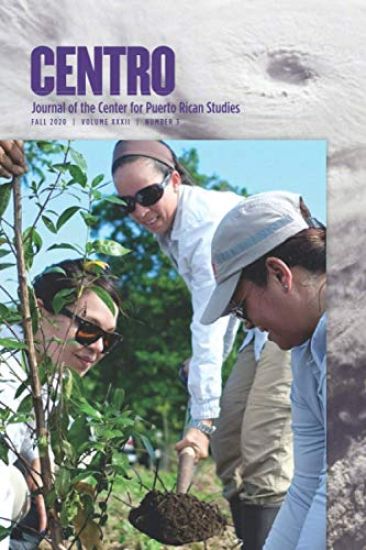
CENTRO Journal: Fall 2020 Vol. 32 No. 3
The collection of studies included in this special volume of the CENTRO Journal show evidence of how post disaster recovery is progressing in Puerto Rico, and the challenges and opportunities for local participation in reconstruction programs. To date, the available evidence leads to a portrait of an uneven recovery. A recovery characterized by the bifurcation of efforts from the civic sector and central and federal governments. The studies included in this special volume of the CENTRO Journal analyze challenges and opportunities for local participation in reconstruction programs and their potential to contribute to post disaster recovery in Puerto Rico.
Centroeuropa

Centroeuropa

Vicente Luis Mora

Bellevue Literary Press
2026
nidottu
Revelations--and frozen corpses--multiply in a small, European village"Male, Prussian, hussar soldier, frozen. That was the first body I found while digging in the frozen earth to bury my wife."At the dawn of the nineteenth century, European feudalism is starting to crumble. Newly widowed, Redo Hauptshammer arrives in a small town far from home to claim a plot of arable land and the simple life of a farmer. But when Redo begins to dig up the field, the perfectly preserved, frozen corpse of a soldier emerges. The next day, Redo uncovers two more soldiers, dressed in uniforms of an earlier age. And then there are more.As bodies from past and future wars proliferate exponentially, Redo enlists the aid of eccentric villagers, but risks exposing a precious personal secret and the great love at the heart of it. What will be excavated and what will remain buried?Subtle, subversive, and full of surprises, this ingeniously structured novel heralds a talented writer whose experimentations in style are as dazzling as his humane, spirited story of oppression, erasure, and endurance.
Cedro: The Dog Who Served His Backyard with Distinction

Cedro: The Dog Who Served His Backyard with Distinction

Megan Baldrige

Createspace Independent Publishing Platform
2017
nidottu
Cedro by Megan Baldrige In 2006, a casual jaunt with my son Jack to the dog shelter turned into a tumultuous ten-year friendship with an irascible, disobedient Black Lab-Chow named Cedro-after a mountain peak near our house in Cedar Crest, New Mexico. In the next few years, my family dispersed, due to divorce and four children's moves on to college. Cedro and I continued as a family of two who walked together every day, but experienced the world in distinctly different ways. Cedro lived in the moment, and prejudged others strongly by a codified system of judgement: raccoons, poodles and cats were unworthy of respect. Ducks were fair game and Labradoodles were not poodles. Despite many discussions with him about his rush to judge, he never budged an inch. Despite our mutual affection, we challenged each other daily. We each benefitted from our great friendship and we each came to understand the other's point of view, without ever agreeing. As is true of most dogs with big hearts, Cedro's life was too short. These poems are my attempt to describe, celebrate and understand my great friend.
Centros Y Periferias En España Y Austria: Aspectos Literarios Y Culturales
Este volumen propone una aproximacion plural a los conceptos de centro y periferia en aspectos literarios e historico-culturales en el marco general de las relaciones hispano-austriacas. El analisis, siguiendo los parametros citados, resulta novedoso, ya que el objeto de estudio se aborda desde diferentes campos de investigacion, permitiendo, por tanto, propuestas interdisciplinares. Predominan los estudios concretos de tipo contrastivo y tematico, propios de la literatura comparada, pero se tratan tambien otros aspectos mas generales, tanto literarios como historico-culturales.
Ceroplastics – Wax Anatomy

Ceroplastics – Wax Anatomy

Roberta Ballestriero

De Gruyter
2025
sidottu
This book will follow the history of wax modelling (or ceroplastics) with its changing fate through the centuries and artistic taste. Re-discovered in the 13th – 14th centuries in Florence with the cult of votive offerings, the art of wax modelling has an ancient origin. It reached its artistic peak during the Renaissance when it was considered the material par excellence for the representation of portraits, sketches and funeral masks. With the advent of Neoclassicism, ceroplastics, now deemed artistically unpleasant, survived in a scientific environment, where it flourished in the study of normal and pathological anatomy, obstetrics, zoology and botany. Changes in taste transformed the status of wax reproductions through history. As a rich and complex medium, wax lends itself in a very natural way to reproductions of the human body. Hyperrealism is most evident in moulages, a technique widely used as early as the Renaissance that consisted of making cast of the object to be reproduced in wax. The uncanny response to the notion of the double, condemned by art historians, became a positive and eagerly sought-after feature in the case of later scientific collections where the reproduction had to look exactly like the original.
Centromeres and Kinetochores

Centromeres and Kinetochores

Springer International Publishing AG
2017
sidottu
This book presents the latest advances concerning the regulation of chromosome segregation during cell division by means of centromeres and kinetochores. The authors cover both state-of-the-art techniques and a range of species and model systems, shedding new light on the molecular mechanisms controlling the transmission of genetic material between cell divisions and from parent to offspring. The chapters cover five major areas related to the current study of centromeres and kinetochores: 1) their genetic and epigenetic features, 2) key breakthroughs at the molecular, proteomic, imaging and biochemical level, 3) the constitutive centromere proteins, 4) the role of centromere proteins in the physical process of chromosome segregation and its careful orchestration through elaborate regulation, and 5) intersections with reproductive biology, human health and disease, as well as chromosome evolution. The book offers an informative and provocative guide for newcomers as wellas those already acquainted with the field.
Centromeres and Kinetochores

Centromeres and Kinetochores

Springer International Publishing AG
2018
nidottu
This book presents the latest advances concerning the regulation of chromosome segregation during cell division by means of centromeres and kinetochores. The authors cover both state-of-the-art techniques and a range of species and model systems, shedding new light on the molecular mechanisms controlling the transmission of genetic material between cell divisions and from parent to offspring. The chapters cover five major areas related to the current study of centromeres and kinetochores: 1) their genetic and epigenetic features, 2) key breakthroughs at the molecular, proteomic, imaging and biochemical level, 3) the constitutive centromere proteins, 4) the role of centromere proteins in the physical process of chromosome segregation and its careful orchestration through elaborate regulation, and 5) intersections with reproductive biology, human health and disease, as well as chromosome evolution. The book offers an informative and provocative guide for newcomers as wellas those already acquainted with the field.
Centrosomes in Development and Disease
Discovered over a century ago, the centrosome is the major microtubule organizing center of the animal cell. It is a tiny organelle of surprising structural complexity. Over the last few years our understanding of the structure and composition of centrosomes has greatly advanced, and the demonstration of frequent centrosome anomalies in most common human tumors has sparked additional interest in the role of this organelle in a broader scientific community. The centrosome controls the number and distribution of microtubules - a major element of the cell cytoskeleton - and hence influences many important cellular functions and properties. These include cell shape, polarity, and motility, as well as the intracellular transport and positioning of various organelles. Of particular interest, centrosome function is critical for chromosome segregation and cell division. This book is meant to summarize our current knowledge of the structure, function and evolution of microtubule organizing centers, primarily centrosomes. Emphasis is on the role of these organelles in development and disease (particularly cancer).
Centros Y Periferias En España Y Austria: Perspectivas Lingueísticas Y Traductológicas
Este volumen propone un acercamiento a los conceptos de centro y periferia en la Linguistica y la Traduccion en el marco de las relaciones hispano-austriacas. El analisis de la interconexion hispano-austriaca siguiendo los parametros citados resulta ciertamente novedoso, ya que el objeto de estudio se aborda desde diferentes campos de investigacion, permitiendo, por tanto, una propuesta global e interdisciplinar. Junto con planteamientos teorico-practicos en el campo de la traduccion, diversas disciplinas linguisticas se ven representadas en esta monografia, entre otras, la dialectologia, la fraseologia, la linguistica textual y la normalizacion linguistica.
Centromere

Centromere

Springer-Verlag Berlin and Heidelberg GmbH Co. K
2009
sidottu
The centromere is a chromosomal region that enables the accurate segregation of chromosomes during mitosis and meiosis. It holds sister chromatids together, and through its centromere DNA–protein complex known as the kinetochore binds spindle microtubules to bring about accurate chromosome movements. Despite this conserved function, centromeres exhibit dramatic difference in structure, size, and complexity. Extensive studies on centromeric DNA revealed its rapid evolution resulting often in significant difference even among closely related species. Such a plasticity of centromeric DNA could be explained by epigenetic c- trol of centromere function, which does not depend absolutely on primary DNA sequence. According to epigenetic centromere concept, which is thoroughly d- cussed by Tanya Panchenko and Ben Black in Chap. 1 of this book, centromere activation or inactivation might be caused by modifications of chromatin. Such acquired chromatin epigenetic modifications are then inherited from one cell di- sion to the next. Concerning centromere-specific chromatin modification, it is now evident that all centromeres contain a centromere specific histone H3 variant, CenH3, which replaces histone H3 in centromeric nucleosomes and provides a structural basis that epigenetically defines centromere and differentiates it from the surrounding chromatin. Recent insights into the CenH3 presented in this chapter add important mechanistic understanding of how centromere identity is initially established and subsequently maintained in every cell cycle.