Kirjojen hintavertailu. Mukana 11 342 296 kirjaa ja 12 kauppaa.

Kirjahaku

Etsi kirjoja tekijän nimen, kirjan nimen tai ISBN:n perusteella.

1000 tulosta hakusanalla Charles Hibbert Tupper

Charles I and the People of England

Charles I and the People of England

David Cressy

Oxford University Press
2018
nidottu
The story of the reign of Charles I -- told through the lives of his people. Prize-winning historian David Cressy mines the widest range of archival and printed sources, including ballads, sermons, speeches, letters, diaries, petitions, proclamations, and the proceedings of secular and ecclesiastical courts, to explore the aspirations and expectations not only of the king and his followers, but also the unruly energies of many of his subjects, showing how royal authority was constituted, in peace and in war -- and how it began to fall apart. A blend of micro-historical analysis and constitutional theory, parish politics and ecclesiology, military, cultural, and social history, Charles I and the People of England is the first major attempt to connect the political, constitutional, and religious history of this crucial period in English history with the experience and aspirations of the rest of the population. From the king and his ministers to the everyday dealings and opinions of parishioners, petitioners, and taxpayers, David Cressy re-creates the broadest possible panorama of early Stuart England, as it slipped from complacency to revolution.
Charles Dickens

Charles Dickens

Jenny Hartley

Oxford University Press
2019
nidottu
Charles Dickens is credited with creating some of the world's best-known fictional characters, and is widely regarded as the greatest novelist of the Victorian age. Even before reading the works of Dickens many people have met him already in some form or another. His characters have such vitality that they have leapt from his pages to enjoy flourishing lives of their own: The Artful Dodger, Miss Havisham, Scrooge, Fagin, Mr Micawber, and many many more. His portrait has been in our pockets, on our ten-pound notes; he is a national icon, indeed himself a generator of what Englishness signifies. In this Very Short Introduction Jenny Hartley explores the key themes running through Dickens's corpus of works, and considers how they reflect his attitudes towards the harsh realities of nineteenth century society and its institutions, such as the workhouses and prisons. Running alonside this is Dickens's relish of the carnivalesque; if there is a prison in almost every novel, there is also a theatre. She considers Dickens's multiple lives and careers: as magazine editor for two thirds of his working life, as travel writer and journalist, and his work on behalf of social causes including ragged schools and fallen women. She also shows how his public readings enthralled the readers he wanted to reach but also helped to kill him. Finally, Hartley considers what we mean when we use the term 'Dickensian' today, and how Dickens's enduring legacy marks him out as as a novelist different in kind from others. ABOUT THE SERIES: The Very Short Introductions series from Oxford University Press contains hundreds of titles in almost every subject area. These pocket-sized books are the perfect way to get ahead in a new subject quickly. Our expert authors combine facts, analysis, perspective, new ideas, and enthusiasm to make interesting and challenging topics highly readable. · This book was previously published in hardback as Charles Dickens: An Introduction
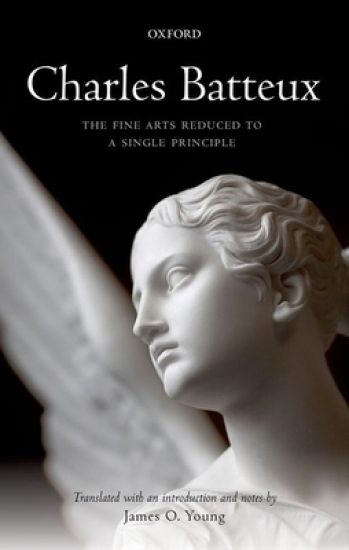
Charles Batteux: The Fine Arts Reduced to a Single Principle
The Fine Arts Reduced to a Single Principle (1746) by Charles Batteux was arguably the most influential work on aesthetics published in the eighteenth century. It influenced every major aesthetician in the second half of the century: Diderot, Herder, Hume, Kant, Lessing, Mendelssohn, and others either adopted his views or reacted against them. It is the work generally credited with establishing the modern system of the arts: poetry, painting, music, sculpture and dance. Batteux's book is also an invaluable aid to the interpretation of the arts of eighteenth century. And yet there has never been a complete or reliable translation of The Fine Arts into English. Now James O. Young, a leading contemporary philosopher of art, has provided an eminently readable and accurate translation. It is fully annotated and comes with a comprehensive introduction that identifies the figures who influenced Batteux and the writers who were, in turn, influenced by him. The introduction also discusses the ways in which The Fine Arts has continuing philosophical interest. In particular, Young demonstrates that Batteux's work is an important contribution to aesthetic cognitivism (the view that works of art contribute importantly to knowledge) and that Batteux made a significant contribution to understanding the expressiveness of music. This book will be of interest to everyone interested in the arts of the eighteenth century, French studies, the history of European ideas, and philosophy of art.
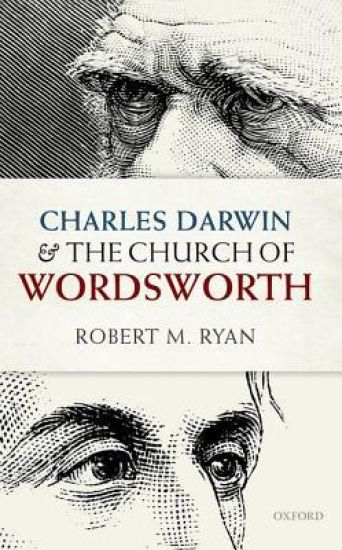
Charles Darwin and the Church of Wordsworth

Charles Darwin and the Church of Wordsworth

Robert M. Ryan

Oxford University Press
2016
sidottu
Charles Darwin and the Church of William Wordsworth is a study of the cultural connections between two of the nineteenth century's most influential figures, Charles Darwin and William Wordsworth. When Darwin presented On the Origin of Species, his reading public's affective response to the natural world had already been profoundly influenced by William Wordsworth. Wordsworth presented nature as benign, harmonious, a source of moral inspiration and spiritual blessing, and a medium through which one might enter into communion with the Divine. Long after his death, he continued to be revered throughout the English-speaking world, not only as a great poet, but as a theologian with a broader following than any prelate and an appeal that transcended or ignored sectarian differences. For believers and sceptics alike, Wordsworth's poetry offered a readily accessible and intellectually respectable counterweight to Darwin's vision of a material universe evolving by fixed laws in which Divinity played no discernible role and where concepts like beauty and harmony were material conditions to be explained in scientific terms. Wordsworth's theology of nature became for many readers a more effective counterforce to Darwin's ideas than Biblical orthodoxy, but it also provided an enriching context for the reception of evolutionary theory, aiding theists in their effort to reach an accommodation with the new science. As the nineteenth century's two most prominent theoreticians of nature's life, Wordsworth and Darwin competed for attention among those seeking to understand humanity's relationship with the natural world, and their disciples engaged in a productive, mutually transformative dialogue in which the poet's cultural authority influenced the way Darwin was received, and Darwinian science adjusted interpretation and evaluation of the poetry. Charles Darwin and the Church of William Wordsworth explores the broad cultural relationship between Wordsworth, Darwin, and their disciples, contextualising them within wider discussions about the relationship between religion and science in the nineteenth century.
Charles Williams

Charles Williams

Grevel Lindop

Oxford University Press
2017
nidottu
This is the first full biography of Charles Williams (1886-1945), an extraordinary and controversial figure who was a central member of the Inklings—the group of Oxford writers that included C.S. Lewis and J.R.R. Tolkien. Charles Williams—novelist, poet, theologian, magician and guru—was the strangest, most multi-talented, and most controversial member of the group. He was a pioneering fantasy writer, who still has a cult following. C.S. Lewis thought his poems on King Arthur and the Holy Grail were among the best poetry of the twentieth century for 'the soaring and gorgeous novelty of their technique, and their profound wisdom'. But Williams was full of contradictions. An influential theologian, Williams was also deeply involved in the occult, experimenting extensively with magic, practising erotically-tinged rituals, and acquiring a following of devoted disciples. Membership of the Inklings, whom he joined at the outbreak of the Second World War, was only the final phase in a remarkable career. From a poor background in working-class London, Charles Williams rose to become an influential publisher, a successful dramatist, and an innovative literary critic. His friends and admirers included T.S. Eliot, W.H. Auden, Dylan Thomas, and the young Philip Larkin. A charismatic personality, he held left-wing political views, and believed that the Christian churches had dangerously undervalued sexuality. To redress the balance, he developed a 'Romantic Theology', aiming at an approach to God through sexual love. He became the most admired lecturer in wartime Oxford, influencing a generation of young writers before dying suddenly at the height of his powers. This biography draws on a wealth of documents, letters and private papers, many never before opened to researchers, and on more than twenty interviews with people who knew Williams. It vividly recreates the bizarre and dramatic life of this strange, uneasy genius, of whom Eliot wrote, 'For him there was no frontier between the material and the spiritual world.'
Charles Dickens and His Publishers

Charles Dickens and His Publishers

Robert L. Patten

Oxford University Press
2018
sidottu
In considering the whole range of Dickens' relations with his English and overseas publishers, Professor Patten relates the story of the novelist's social encounters, violent breaches, and uneasy alliances with John Macrone, Richard Bentley, Edward and Frederic Chapman, William Hall, Bernhard Tauchnitz, William Bradbury, F. M. Evans, and his American publishers in a compelling record of personal and professional associations. Private drama is subordinated to a narrative of a very special kind of venture', serial publication. Drawing extensively on the accounts rendered to Dickens by Bradbury and Evans, and Chapman and Hall every six months from 1846, Robert Patten traces the fluctuating fortunes of each of the books, from Sketches by Boz to Edwin Drood. e shows how Dickens took advantage of developments in the law, popular literacy, and the new techniques of publishing through the periodical issue of his writings, and through four widely-circulated reprint series that vastly extended the market for his work. He identifies the sources and size of Dicken's income, comparing it to that of his contemporaries; and the costs and sales, the printing history, and the profits and losses on all books where Dickens shared copyright are set out in detail in four appendices. The study skilfully establishes that the conditions of publishing had much to do with the shape and success of Dicken's career. This edition includes two new chapters. The first narrates how this bibliobiography' came to be conceived, at a time in the 1960s when Dickens was lauded as a genius' but still thought to have written such lengthy books because he was paid by the line. In the substantial second addition, Patten details the distribution of Dickens's estate to his many heirs, traces the devolution of the patronym as it extended to the family, and then to fans ('Dickensians'), surveys the spread of publishers' to include presses and texts in translation all over the world, studies the transfer of Dickens's writing to radio and visual media, and concludes with an analysis of the audited figures for the sales in nine countries of over 2000 different editions of Dickens during the global celebrations for the bicentenary of his birth.
Charles Dibdin and Late Georgian Culture
Charles Dibdin (1745-1814) was one of the most popular and influential creative forces in late Georgian Britain, producing a diversity of works that defy simple categorisation. He was an actor, lyricist, composer, singer-songwriter, comedian, theatre-manager, journalist, artist, music tutor, speculator, and author of novels, historical works, polemical pamphlets, and guides to musical education. This collection of essays illuminates the social and cultural conditions that made such a varied career possible, offering fresh insights into previously unexplored aspects of late Georgian culture, society, and politics. Tracing the transitions in the cultural economy from an eighteenth-century system of miscellany to a nineteenth-century regime of specialisation, Charles Dibdin and Late Georgian Culture illustrates the variety of Dibdin's cultural output as characteristic of late eighteenth-century entertainment, while also addressing the challenge mounted by a growing preoccupation with specialisation in the early nineteenth century. The chapters, written by some of the leading experts in their individual disciplines, examine Dibdin's extraordinarily wide-ranging career, spanning cultural spaces from the theatres at Drury Lane and Covent Garden, through Ranelagh Gardens, Sadler's Wells, and the Royal Circus, to singing on board ships and in elegant Regency parlours; from broadside ballads and graphic satires, to newspaper journalism, mezzotint etchings, painting, and decorative pottery. Together they demonstrate connections between forms of cultural production that have often been treated as distinct, and provide a model for a more integrated approach to the fabric of late Georgian cultural production.
Charles Olson and American Modernism

Charles Olson and American Modernism

Mark Byers

Oxford University Press
2018
sidottu
This volume situates the work of American poet Charles Olson (1910-1970) at the centre of the early post-war American avant-garde. It shows Olson to have been one of the major advocates and theorists of American modernism in the late 1940s and early 1950s; a poet who responded fully and variously to the political, ethical, and aesthetic urgencies driving innovation across contemporary American art. Reading Olson's work alongside that of contemporaries associated with the New York Schools of painting and music (as well as the exiled Frankfurt School), the book draws on Olson's published and unpublished writings to establish an original account of early post-war American modernism. The development of Olson's work is seen to illustrate two primary drivers of formal innovation in the period: the evolution of a new model of political action pivoting around the radical individual and, relatedly, a powerful new critique of instrumental reason and the Enlightenment tradition. Drawing on extensive archival research and featuring readings of a wide range of artists including, prominently, Barnett Newman, Mark Rothko, David Smith, Wolfgang Paalen, and John Cage, Charles Olson and American Modernism offers a new reading of a major American poet and an original account of the emergence of post-war American modernism.
Charles I's Killers in America

Charles I's Killers in America

Matthew Jenkinson

Oxford University Press
2019
sidottu
When the British monarchy was restored in 1660, King Charles II was faced with the conundrum of what to with those who had been involved in the execution of his father eleven years earlier. Facing a grisly fate at the gallows, some of the men who had signed Charles I's death warrant fled to America. Charles I's Killers in America traces the gripping story of two of these men-Edward Whalley and William Goffe-and their lives in America, from their welcome in New England until their deaths there. With fascinating insights into the governance of the American colonies in the seventeenth century, and how a network of colonists protected the regicides, Matthew Jenkinson overturns the enduring theory that Charles II unrelentingly sought revenge for the murder of his father. Charles I's Killers in America also illuminates the regicides' afterlives, with conclusions that have far-reaching implications for our understanding of Anglo-American political and cultural relations. Novels, histories, poems, plays, paintings, and illustrations featuring the fugitives were created against the backdrop of America's revolutionary strides towards independence and its forging of a distinctive national identity. The history of the 'king-killers' was distorted and embellished as they were presented as folk heroes and early champions of liberty, protected by proto-revolutionaries fighting against English tyranny. Jenkinson rewrites this once-ubiquitous and misleading historical orthodoxy, to reveal a far more subtle and compelling picture of the regicides on the run.
Charles Dickens and the Properties of Fiction

Charles Dickens and the Properties of Fiction

Ushashi Dasgupta

Oxford University Press
2020
sidottu
When Dickens was nineteen years old, he wrote a poem for Maria Beadnell, the young woman he wished to marry. The poem imagined Maria as a welcoming landlady offering lodgings to let. Almost forty years later, Dickens died, leaving his final novel unfinished - in its last scene, another landlady sets breakfast down for her enigmatic lodger. These kinds of characters are everywhere in Dickens's writing. Charles Dickens and the Properties of Fiction: The Lodger World explores the significance of tenancy in his fiction. In nineteenth century Britain the vast majority of people rented, rather than owned, their homes. Instead of keeping to themselves, they shared space - renting, lodging, taking lodgers in, or simply living side-by-side in a crowded modern city. Charles Dickens explored both the chaos and the unexpected harmony to be found in rented spaces, the loneliness and sociability, the interactions between cohabitants, the complex gender dynamics at play, and the relationship between space and money. Charles Dickens and the Properties of Fiction demonstrates that a cosy, secluded home life was beyond the reach of most Victorian Londoners, and considers Dickens's nuanced conception of domesticity. Tenancy maintained an enduring hold upon his imagination, giving him new stories to tell and offering him a set of models to think about authorship. He celebrated the fact that unassuming houses brim with narrative potential: comedies, romances, and detective plots take place behind their doors. Charles Dickens and the Properties of Fiction: The Lodger World wedges these doors open.
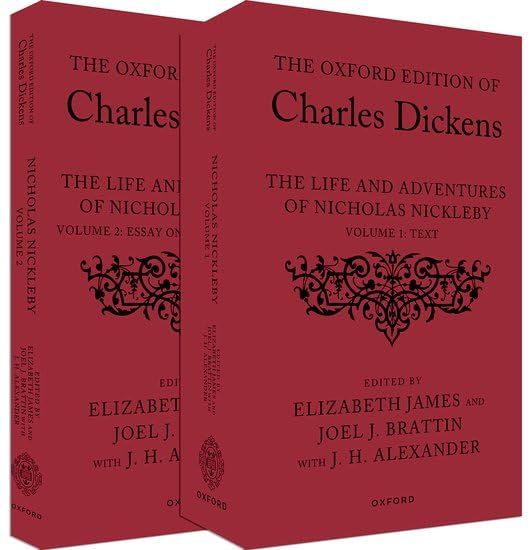
The Oxford Edition of Charles Dickens: The Life and Adventures of Nicholas Nickleby
The Life and Adventures of Nicholas Nickleby, the second volume of the new Oxford Edition of Charles Dickens, is Dickens's third novel, originally published in monthly parts between March 1838 and September 1839. Brilliantly comic, the novel quickly developed a strong strand of social criticism, exploring themes such as love and family, selfishness, work, and charity. It showcases a host of characters, from the earnest and passionate young hero Nicholas, the pathetic Smike, and the brutal schoolmaster Wackford Squeers, to sparkling minor players like John Browdie, Mrs. Squeers, Mr. Mantalini, Mr. Crummles, and the infuriatingly inept Mrs. Nickleby. Solidifying the reputation for comedy and pathos Dickens had established with The Pickwick Papers and Oliver Twist, this novel reached—and delighted—the widest audience Dickens had yet known. The manuscript of Nicholas Nickleby survives only in fragments, with the British Library, the Charles Dickens Museum, and The Rosenbach library holding substantial portions, and the Victoria and Albert Museum, the Free Library of Philadelphia, and the Morgan Library also holding pages. This edition is presented in two volumes: the text in Volume I and Essay on the Text and Notes in Volume 2. The editors have closely examined all the surviving manuscript, recovering scores of deletions and recording all variants of wording in the textual apparatus. The text is based on that of the original serial instalments; all emendations from that text are fully documented. All lifetime British editions (the Cheap, the Library, the Illustrated Library, the People's and the Charles Dickens) have been carefully collated, and all verbal variants are recorded.
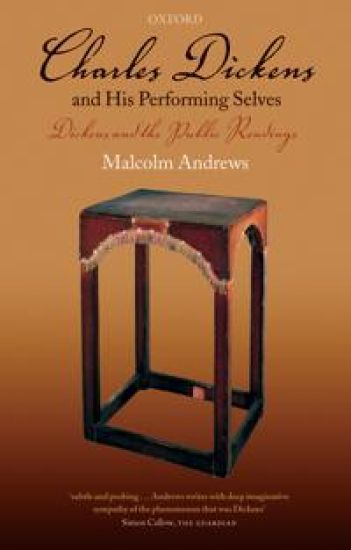
Charles Dickens and His Performing Selves

Charles Dickens and His Performing Selves

Andrews

Oxford University Press
2007
nidottu
Charles Dickens had three professional careers: novelist, journalist and public Reader. That third career has seldom been given the serious attention it deserved. For the last 12 years of his life he toured Britain and America giving 2-hour readings from his work to audiences of over two thousand. These readings were highly dramatic performances in which Dickens's great gift for mimicry enabled him to represent the looks and voices of his characters, to the point where audiences forgot they were watching Charles Dickens. His novels came alive on the platform: at the end of a reading, it seemed to many that a whole society had broken up rather than that a solitary recitalist had concluded. This book tries to recreate, in greater detail than hitherto, the sense of how those readings were performed and how they were received, how Dickens devised his stage set and tailored his books to make them into performance scripts, how he conducted his reading tours all around the country and developed a quite extraordinary rapport with his listeners. No single study of this late career of Dickens has drawn to such an extent on contemporary witnesses to the readings as well as tried to assess in some depth the significance of what Dickens called 'this new expression of the meaning of my books'. 'I shall tear myself to pieces', he said as he waited eagerly to go on stage for his performance, and that is ironically what he did, in ways he perhaps had not quite intended: he fractured into dozens of different characters up there on the platform, and as he thus tore himself to pieces his health collapsed irretrievably under the pressures he put upon himself to achieve these masterly illusions.
The British Academy/The Pilgrim Edition of the Letters of Charles Dickens: Volume 12: 1868-1870
This final volume presents 1,151 letters, many previously unpublished or published only in part, for the years 1868 to Dickens's death from a stroke on 9 June 1870; also included is an Addenda of 235 letters belonging to earlier volumes, discovered since the publication of the first such collection in Volume 7, and a Cumulative Index of Correspondents for the entire edition. The volume begins with the final four months of Dickens's American tour of 75 readings, which had been conspicuously successful throughout, despite the appalling weather and his sufferings from "American" catarrh. The tour culminated on 18 April 1868 when the American Press held a dinner in his honour in New York. In July he rented Windsor Lodge, Peckham for Ellen Ternan, where she remained until after his death; he was to give two more English reading tours before his collapse at Preston on 22 April 1869. In early January 1869 he was elected President of the Birmingham and Midland Institute; and a dinner in his honour was given in St George's Hall, Liverpool. Between January and March 1870 he gave a series of Farewell readings in London, and on 31 March Edwin Drood, No. 1 was published, illustrated by Luke Fildes; it continued monthly until 31 August. Of the friends who died during this period, much the closest were the painter Daniel Maclise, to whom Dickens paid especial tribute at the Royal Academy Banquet of 30 April 1870; Mark Lemon, who died only 18 days before Dickens himself, and with whom he had a brief reconciliation after their bitter quarrel in 1858; and Chauncy Hare Townshend, who left him £2,000 to publish, as his Literary Executor, Religious Opinions of the Late Chauncy Hare Townshend, which appeared in November 1870.
The Oxford Edition of Charles Dickens: Sketches by Boz

The Oxford Edition of Charles Dickens: Sketches by Boz

Charles Dickens

Oxford University Press
2020
sidottu
Sketches by Boz, the first volume of the new Oxford Dickens, was also the title of Dickens's first book. It is a collection of sixty pieces, mostly humorous although there is nothing funny about 'A Visit to Newgate', which first appeared as contributions to magazines and newspapers in the mid 1830s. They are distinguished by his sharp and often satirical observation of social situations and London characters; but, with one exception, they are works of fiction. Fourteen can be described as short stories, but most are sketches presented to us as reportage. They show why Dickens was recognised as a brilliant new talent from the outset of his career. In the absence of any manuscripts, the text of each piece (with one exception) is based upon the first published version. They offer Dickens as he appeared to his very first readers in the mid 1830s, and as he has not been seen since. Dickens edited later editions, cutting contemporary references, oaths and sexual innuendo. The consequence of reading Dickens as he was is startling, for these pieces both offer a direct reflection of the social scene in London of the period, and have a raciness which Dickens excised from later printings. This work rediscovers the young Dickens.
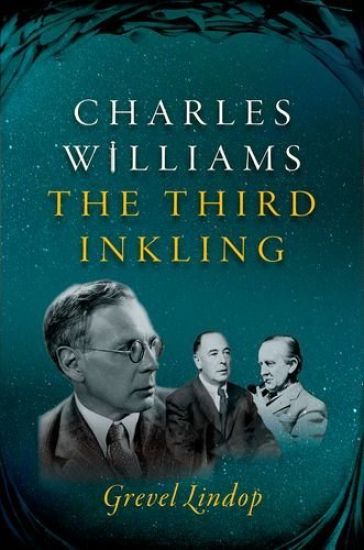
Charles Williams

Charles Williams

Grevel Lindop

Oxford University Press
2015
sidottu
This is the first full biography of Charles Williams (1886-1945), an extraordinary and controversial figure who was a central member of the Inklings--the group of Oxford writers that included C.S. Lewis and J.R.R. Tolkien. Charles Williams--novelist, poet, theologian, magician and guru--was the strangest, most multi-talented, and most controversial member of the group. He was a pioneering fantasy writer, who still has a cult following. C.S. Lewis thought his poems on King Arthur and the Holy Grail were among the best poetry of the twentieth century for 'the soaring and gorgeous novelty of their technique, and their profound wisdom'. But Williams was full of contradictions. An influential theologian, Williams was also deeply involved in the occult, experimenting extensively with magic, practising erotically-tinged rituals, and acquiring a following of devoted disciples. Membership of the Inklings, whom he joined at the outbreak of the Second World War, was only the final phase in a remarkable career. From a poor background in working-class London, Charles Williams rose to become an influential publisher, a successful dramatist, and an innovative literary critic. His friends and admirers included T.S. Eliot, W.H. Auden, Dylan Thomas, and the young Philip Larkin. A charismatic personality, he held left-wing political views, and believed that the Christian churches had dangerously undervalued sexuality. To redress the balance, he developed a 'Romantic Theology', aiming at an approach to God through sexual love. He became the most admired lecturer in wartime Oxford, influencing a generation of young writers before dying suddenly at the height of his powers. This biography draws on a wealth of documents, letters and private papers, many never before opened to researchers, and on more than twenty interviews with people who knew Williams. It vividly recreates the bizarre and dramatic life of this strange, uneasy genius, of whom Eliot wrote, 'For him there was no frontier between the material and the spiritual world.'
Charles Wesley and the Struggle for Methodist Identity
An important new study of the life and ministry of the Anglican minister and Evangelical leader Charles Wesley (1707-88) which examines the often-neglected contribution made by John Wesley's younger brother to the early history of the Methodist movement. Charles Wesley's importance as the author of classic hymns like `Love Divine' and `O for a Thousand Tongues to Sing' is well known, but his wider contribution to Methodism, the Church of England and the Evangelical Revival has been overlooked. Gareth Lloyd presents a new appraisal of Charles Wesley based on his own papers and those of his friends and enemies. The picture of the Revival that results from a fresh examination of one of Methodism's most significant leaders offers a new perspective on the formative years of a denomination that today has an estimated 80 million members worldwide.
Charles Dickens's Networks

Charles Dickens's Networks

Jonathan H. Grossman

Oxford University Press
2012
sidottu
The same week in February 1836 that Charles Dickens was hired to write his first novel, The Pickwick Papers, the first railway line in London opened. Charles Dickens's Networks explores the rise of the global, high-speed passenger transport network in the nineteenth century and the indelible impact it made on Dickens's work. The advent first of stage coaches, then of railways and transoceanic steam ships made unprecedented round-trip journeys across once seemingly far distances seem ordinary and systematic. Time itself was changed. The Victorians overran the separate, local times kept in each town, establishing instead the synchronized, 'standard' time, which now ticks on our clocks. Jonathan Grossman examines the history of public transport's systematic networking of people and how this revolutionized perceptions of time, space, and community, and how the art form of the novel played a special role in synthesizing and understanding it all. Focusing on a trio of road novels by Charles Dickens, he looks first at a key historical moment in the networked community's coming together, then at a subsequent recognition of its tragic limits, and, finally, at the construction of a revised view that expressed the precarious, limited omniscient perspective by which passengers came to imagine their journeying in the network.
Charles Dickens's Networks

Charles Dickens's Networks

Jonathan H. Grossman

Oxford University Press
2013
nidottu
The same week in February 1836 that Charles Dickens was hired to write his first novel, The Pickwick Papers, the first railway line in London opened. Charles Dickens's Networks explores the rise of the global, high-speed passenger transport network in the nineteenth century and the indelible impact it made on Dickens's work. The advent first of stage coaches, then of railways and transoceanic steam ships made unprecedented round-trip journeys across once seemingly far distances seem ordinary and systematic. Time itself was changed. The Victorians overran the separate, local times kept in each town, establishing instead the synchronized, 'standard' time, which now ticks on our clocks. Jonathan Grossman examines the history of public transport's systematic networking of people and how this revolutionized perceptions of time, space, and community, and how the art form of the novel played a special role in synthesizing and understanding it all. Focusing on a trio of road novels by Charles Dickens, he looks first at a key historical moment in the networked community's coming together, then at a subsequent recognition of its tragic limits, and, finally, at the construction of a revised view that expressed the precarious, limited omniscient perspective by which passengers came to imagine their journeying in the network.
Charles Hodge

Charles Hodge

Paul C. Gutjahr

Oxford University Press Inc
2011
sidottu
Charles Hodge (1797-1878) was one of nineteenth-century America's leading theologians, owing in part to a lengthy teaching career, voluminous writings, and a faculty post at one of the nation's most influential schools, Princeton Theological Seminary. Surprisingly, the only biography of this towering figure was written by his son, just two years after his death. Paul Gutjahr's book, therefore, is the first modern critical biography of a man some have called the ¨Pope of Presbyterianism.¨ Hodge's legacy is especially important to American Presbyterians. His brand of theological conservatism became vital in the 1920s, as Princeton Seminary saw itself, and its denomination, split. The conservative wing held unswervingly to the Old School tradition championed by Hodge, and ultimately founded the breakaway Orthodox Presbyterian Church. The views that Hodge developed, refined, and propagated helped shape many of the central traditions of twentieth- and twenty-first-century American evangelicalism. Hodge helped establish a profound reliance on the Bible among evangelicals, and he became one of the nation's most vocal proponents of biblical inerrancy. Gutjahr's study reveals the exceptional depth, breadth, and longevity of Hodge's theological influence and illuminates the varied and complex nature of conservative American Protestantism.
Charles Munch

Charles Munch

Holoman D. Kern

Oxford University Press Inc
2012
sidottu
A mesmerizing figure in concert, Charles Munch was celebrated for his electrifying public performances. He was a pioneer in many arenas of classical music—establishing Berlioz in the canon, perfecting the orchestral work of Debussy and Ravel, and leading the world to Roussel, Honegger, and Dutilleux. A pivotal figure, his accomplishments put him on a par with Arturo Toscanini and Leonard Bernstein. In Charles Munch, D. Kern Holoman provides the first full biography of this giant of twentieth-century music, tracing his dramatic survival in occupied Paris, his triumphant arrival at the Boston Symphony Orchestra, and his later years, when he was a leading cultural figure in the United States, a man known and admired by Presidents Truman, Eisenhower, and Kennedy. He turned to conducting only in middle age, after two decades as a violinist and concertmaster, a background which gave him special insight into the relationship between conductor and orchestra. At the podium, his bond with his musicians unleashed something in them and in himself. "A certain magic took wing that amounts to the very essence of music in concert," the author writes, as if "public performance loosed the facets of character and artistry and poetry otherwise muffled by his timidity and simple disinclination to say much." In concert, Munch was arresting, even seductive, sweeping his baton in an enormous arch from above his head down to his knee. Yet as Holoman shows, he remained a lonely, even sad figure, a widower with no children, a man who fled admirers and avoided reporters. With groundbreaking research and sensitive, lyrical writing, Holoman penetrates the enigma to capture this elusive musical titan.