Kirjojen hintavertailu. Mukana 11 717 486 kirjaa ja 12 kauppaa.

Kirjahaku

Etsi kirjoja tekijän nimen, kirjan nimen tai ISBN:n perusteella.

1000 tulosta hakusanalla Chasity Conley

Purrfect Santa: Howls Romance

Purrfect Santa: Howls Romance

Jessie Lane; Chasity Bowlin

Createspace Independent Publishing Platform
2018
nidottu
A woman afraid to love ... Nikki knows what it is to lose those you love. With her focus on her orphaned sister, she hasn't given herself the chance to process her own grief over the loss of their parents. Life is chaos and the last complication she needs is a mate. A lion alone for too long ... Joe Miller knows chaos. Being orphaned as a child, he's never had a family to call his own. Crashing with a friend for the holidays, he's hoodwinked into playing Santa Claus at a local mall. The last thing on his mind is finding a mate. A love worth the risk ... With her baby sister on her hip, sadness in her eyes, and a longing in her heart, Nikki waits in line with her sister to see Santa. From the moment he scents her, Joe is in deep. It's going to take everything he has to convince Nikki the love outweighs the risk to her heart. Luckily for Joe, he has fate and Nikki's adorable baby sister on his side. After all, who can say no to the Purrfect Santa at Christmas?
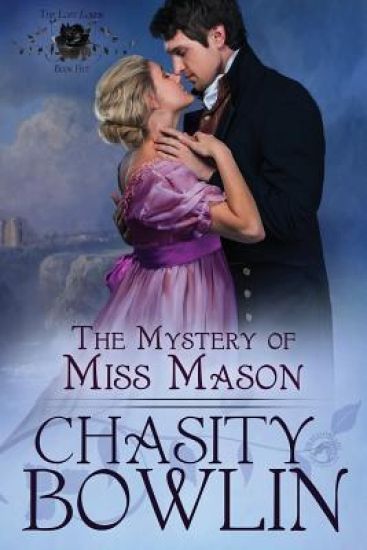
The Mystery of Miss Mason

The Mystery of Miss Mason

Dragonblade Publishing; Chasity Bowlin

Independently Published
2018
nidottu
A stunning Regency Historical Romance, where mystery and passion await...Abducted, held captive by unknown men for unknown reasons, Mary Mason had to use all of her resourcefulness to escape what would surely have been a terrible fate. But in the course of her escape, she encounters new dangers in the form of a mysterious man. Is he friend or foe? Can he be trusted or will she prove to be just a pawn in whatever game he is playing? Alexander Carnahan, Lord Wolverton, is a pariah in society, a known murderer. But as he carries the unconscious Mary Mason back to his crumbling estate to care for her, he recognizes that she is far more than just the key to the mystery he's devoted himself to, the mystery of who murdered his late wife. She stirs something inside him he thought long dead... hope. As Mary recovers from her ordeal in his home, the truth slowly emerges. Their pasts are intermingled, the intrigues and mysteries of their lives are connected and hide unspeakable horrors committed by common enemies. As they work together to reunite Mary with her brother and to prove Alex's innocence, their feelings for one another only grow more complex and more undeniable. However, the course of true love never does run smooth, and there are more obstacles and dangers ahead of them than behind...
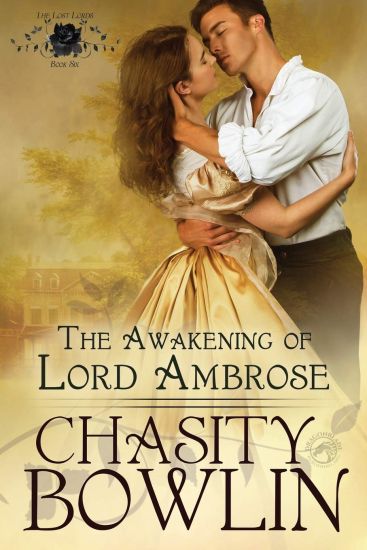
The Awakening of Lord Ambrose

The Awakening of Lord Ambrose

Dragonblade Publishing; Chasity Bowlin

Independently Published
2019
nidottu
Cornelius Garrett, Lord Ambrose, has withdrawn from society in the wake of scandal in order to focus on finding the numerous illegitimate children that his father sired. Desperate to locate his many siblings and build some semblance of a family for himself, Cornelius is ill-prepared for the many complications that his most recently discovered sibling, Lila, brings with her-namely her older sister, Primrose Collier. Primrose is the most stunningly beautiful woman he's ever encountered. She's also fiercely proud and protective with a well-founded distrust for the opposite sex. It takes all of his considerable powers of persuasion to convince her to bring her young siblings and move to his estate, Avondale. However, no good deed goes unpunished. Cornelius' unscrupulous neighbor, Lord Samford, also has a prior acquaintance with the Collier family. Threatened by their presence and the ugly secrets of his past that they might expose, Samford sets out to eliminate what he views as a complication. Samford's machinations result in Prim being injured and spending a night, unchaperoned, with Cornelius. In order to preserve Prim's reputation and also to afford her and her siblings more protection, Cornelius proposes marriage. But it isn't all duty and obligation. For the first time in his life, Cornelius must find balance between what honor demands and what he desires. Determined to stop Samford at any cost, they set out on a journey fraught with danger and with discovery. Primrose has awakened something inside him he did not know existed-something fierce, passionate and impetuous. Could it be love? The Lost Lord Series order: The Lost Lord of Castle BlackThe Vanishing of Lord ValeThe Missing Marquess of AlthornThe Resurrection of Lady RamsleighThe Mystery of Miss MasonThe Awakening of Lord Ambrose
Charity Detox

Charity Detox

Robert D. Lupton

HarperCollins
2016
nidottu
The veteran urban activist and author of the revolutionary Toxic Charity returns with a headline-making book that offers proven, results-oriented ideas for transforming our system of giving.In Toxic Charity, Robert D. Lupton revealed the truth about modern charity programs meant to help the poor and disenfranchised. While charity makes donors feel better, he argued, it often hurts those it seeks to help. At the forefront of this burgeoning yet ineffective compassion industry are American churches, which spend billions on dependency-producing programs, including food pantries. But what would charity look like if we, instead, measured it by its ability to alleviate poverty and needs?That is the question at the heart of Charity Detox. Drawing on his many decades of experience, Lupton outlines how to structure programs that actually improve the quality of life of the poor and disenfranchised. He introduces many strategies that are revolutionizing what we do with our charity dollars, and offers numerous examples of organizations that have successfully adopted these groundbreaking new models. Only by redirecting our strategies and becoming committed to results, he argues, can charity enterprises truly become as transformative as our ideals.
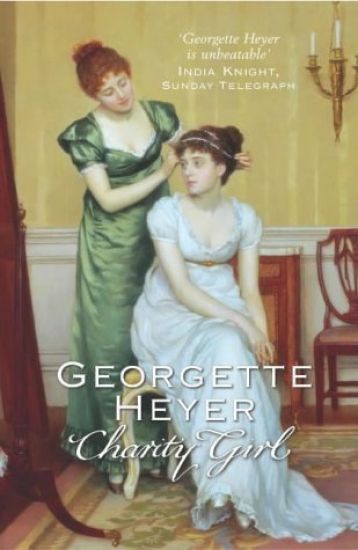
Charity Girl

Charity Girl

Georgette Heyer

Cornerstone
2004
pokkari
When Fate and a chivalrous impulse combine to saddle Viscount Desford with a friendless homeless waif named Cherry Steane, to whom else should he turn in such a scrape but his old childhood playmate, Henrietta Silverdale? For all they refused to oblige their parents by marrying, they have always been the best of friends. But as Desford pursues Cherry's lickpenny grandfather and reprobate father around unfashionable watering places and the seedier fringes of society, Hetta is forced to wonder whether he might not, at last, have fallen in love. Without the timely intervention of his scapegrace brother Simon, and Hetta's worthy suitor Gary Nethercott, Desford is in danger of making a rare mess of his affairs. Charity Girl is a wonderful romantic novel by the queen of the Regency romance , and one of the most popular historical novelists of all time.
Charity

Charity

Lesley Pearse

Cornerstone
2011
pokkari
A heartbreaking historical novel from the No.1 bestselling author of StolenCharity Stratton's bleak childhood is changed for ever when both her parents are killed in a fire.
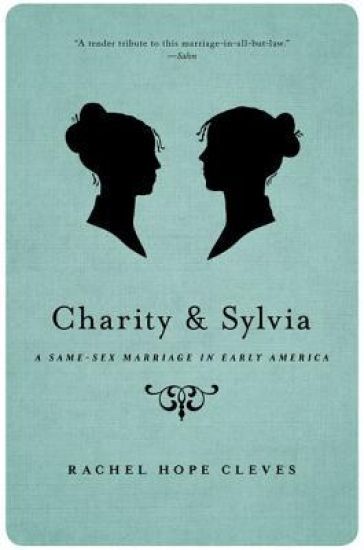
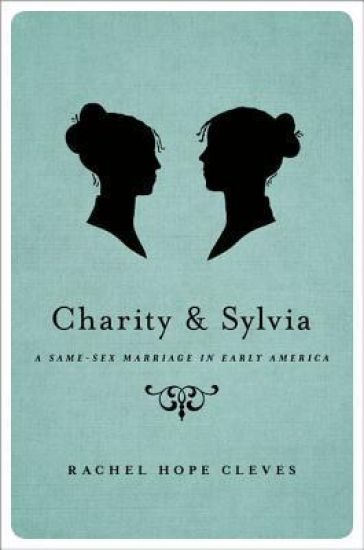
Charity and Sylvia

Charity and Sylvia

Rachel Hope Cleves

Oxford University Press Inc
2016
nidottu
Charity and Sylvia is the intimate history of two ordinary women who lived in an extraordinary same-sex marriage during the early nineteenth century. Based on diaries, letters, and poetry, among other original documents, the research traces the women's lives in sharp detail. Charity Bryant was born in 1777 to a consumptive mother who died a month later. Raised in Massachusetts, Charity developed into a brilliant and strong-willed woman with a passion for her own sex. After being banished from her family home by her father at age twenty, she traveled throughout Massachusetts, working as a teacher, making intimate female friends, and becoming the subject of gossip wherever she lived. At age twenty-nine, still defiantly single, Charity visited friends in Weybridge, Vermont. There she met Sylvia Drake, a pious and studious young woman whose family had moved to the frontier village after losing their Massachusetts farm during the Revolution. The two soon became so inseparable that Charity decided to rent rooms in Weybridge. Sylvia came to join her on July 3, 1807, commencing a forty-four year union that lasted until Charity's death. Over the years, the women came to be recognized as a married couple, or something like it. Charity took the role of husband, and Sylvia of wife, within the marriage. Revered by their community, Charity and Sylvia operated a tailor shop employing many local women, served as guiding lights within their church, and participated in raising more than one hundred nieces and nephews. Most extraordinary, all the while the sexual potential of their union remained an open secret, cloaked in silence to preserve their reputations. The story of Charity and Sylvia overturns today's conventional wisdom that same-sex marriage is a modern innovation, and reveals that early America was both more diverse and more accommodating than modern society imagines.
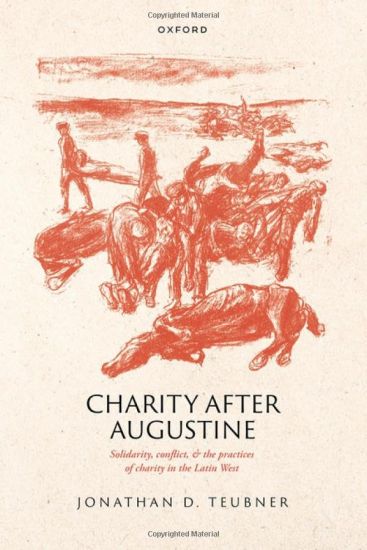
Charity after Augustine

Charity after Augustine

Jonathan Teubner

Oxford University Press
2025
sidottu
Charity after Augustine explores why the Augustinian tradition's attempts to build solidarity in the societies of the Latin West have ended in disaster just as often as they have brought about justice. Focusing on the concrete practices of love and charity — almsgiving, works of mercy, good works — Teubner demonstrates how religious leaders attempted simultaneously to bind and hold communities together while also, in fits and starts, to expand and include others in their communities. The first part probes how Augustine's thought is put into practice, informing a tradition of political action inspired by concepts of love and enacted through practices of charity. In a second, more expansive part, Charity after Augustine turns to the ways in which the Benedictine tradition, as recieved by Gregory the Great and Bernard of Clairvaux, transforms this vision and puts it into practice in contexts radically different from those of Augustine's age. At the heart of this book is an attempt to find a non-idealized vision of love that can inform thick relations within a community that are not diluted but are rather strengthened by the incorporation of outsiders.
Charity and Sylvia

Charity and Sylvia

Rachel Hope Cleves

Oxford University Press Inc
2014
sidottu
Charity and Sylvia is the intimate history of two ordinary women who lived in an extraordinary same-sex marriage during the early nineteenth century. Based on diaries, letters, and poetry, among other original documents, the research traces the women's lives in sharp detail. Charity Bryant was born in 1777 to a consumptive mother who died a month later. Raised in Massachusetts, Charity developed into a brilliant and strong-willed woman with a passion for her own sex. After being banished from her family home by her father at age twenty, she traveled throughout Massachusetts, working as a teacher, making intimate female friends, and becoming the subject of gossip wherever she lived. At age twenty-nine, still defiantly single, Charity visited friends in Weybridge, Vermont. There she met Sylvia Drake, a pious and studious young woman whose family had moved to the frontier village after losing their Massachusetts farm during the Revolution. The two soon became so inseparable that Charity decided to rent rooms in Weybridge. Sylvia came to join her on July 3, 1807, commencing a forty-four year union that lasted until Charity's death. Over the years, the women came to be recognized as a married couple, or something like it. Charity took the role of husband, and Sylvia of wife, within the marriage. Revered by their community, Charity and Sylvia operated a tailor shop employing many local women, served as guiding lights within their church, and participated in raising more than one hundred nieces and nephews. Most extraordinary, all the while the sexual potential of their union remained an open secret, cloaked in silence to preserve their reputations. The story of Charity and Sylvia overturns today's conventional wisdom that same-sex marriage is a modern innovation, and reveals that early America was both more diverse and more accommodating than modern society imagines.
Charity

Charity

Gary A. Anderson

Yale University Press
2015
pokkari
A leading biblical scholar places charity back at the heart of the Judeo-Christian tradition, arguing for its biblical roots It has long been acknowledged that Jews and Christians distinguished themselves through charity to the poor. Though ancient Greeks and Romans were also generous, they funded theaters and baths rather than poorhouses and orphanages. How might we explain this difference? In this significant reappraisal of charity in the biblical tradition, Gary Anderson argues that the poor constituted the privileged place where Jews and Christians met God. Though concerns for social justice were not unknown to early Jews and Christians, the poor achieved the importance they did primarily because they were thought to be “living altars,” a place to make a sacrifice, a loan to God that he, as the ultimate guarantor, could be trusted to repay in turn. Contrary to the assertions of Reformation and modern critiques, belief in a heavenly treasury was not just about self-interest. Sifting through biblical and postbiblical texts, Anderson shows how charity affirms the goodness of the created order; the world was created through charity and therefore rewards it.
Charity, Challenge, and Change

Charity, Challenge, and Change

Cathy Prelinger

Praeger Publishers Inc
1987
sidottu
This book examines the religious context from which emerged the German women's movement in the mid-nineteenth century. During this period, Protestant and Catholic women alike began to participate in philanthropic activities such as nursing, childcare, and education. Alliances were formed between women of different faiths who desired to move beyond the feminization of charity to a participation in social change. While women continued to perform charitable work, they also became involved in the development of a new philosophy of early childhood which led to the kindergarten movement, and championed the introduction of higher education for women. Using extensive archival research, Catherine M. Prelinger has cast new light on the roots of the contemporary women's movement in Germany through her analysis of the religious basis of its struggle.
Charity, Philanthropy and Reform
The essays in this volume explore continuities and changes in the role of philanthropic organizations in Europe and North America in the period around the French Revolution. They aim to make connections between research on the early modern and late modern periods, and to analyze policies towards poverty in different countries within Europe and across the Atlantic. Cunningham and Innes highlight the new role for voluntary organizations emerging in the late eighteenth century and draws out the implications of this for received accounts of the development of welfare states.
Chastity and Transgression in Women's Writing, 1792-1897
Working at the intersections of feminist literary criticism, new historicism, and narratology, Chastity and Transgression in Women's Writing revises current understandings of nineteenth-century representations of prostitution, female sexuality and the 'rights of woman' debate. Eberle's project explores the connections and disjunctures between women writing during the Romantic period and those working throughout the Victorian era. She considers a wide range of authors including Mary Wollstonecraft, Amelia Opie, Mary Hays, Elizabeth Gaskell, and Sarah Grand.
Charity and Philanthropy in Nineteenth-Century Britain
The nineteenth century in Britain was a markedly philanthropic and charitable age. Building on trends that began in the 1700s, philanthropic activity and charitable practices became widespread, often institutionally organized and directed, and targeted an astonishingly diverse array of fields: education and child welfare, the arts, family planning, animal welfare, medical reform, and the eradication of social ills. The sources in this five-volume edition provide a foundational basis for studying the many reasons for and the varied practices of giving in the period. The primary sources are accompanied by editorial commentary, and will be of great interest to students of history.
Charity and Philanthropy in Nineteenth-Century Britain
The volume explores the role religion had in charity and philanthropy in the long nineteenth-century. Although charity is, arguably, rooted in the Old Testament and the New Testament and philanthropy, as a concept, emerges in the seventeenth century, it was only in the nineteenth century that these concepts assumed their modern form. The materials in this volume provide essential context for understanding the role of religion in nineteenth-century charity and philanthropy. Topics be covered include the Church of England, Protestant dissenting religions, the Christian Social Union, the Catholic Church in Ireland, Judaism and the Salvation Army.
Charity and Philanthropy in Nineteenth-Century Britain
At the beginning of the nineteenth century, many individuals were motivated by their religious creeds to give. As religious faith began to wane in the period, others were inspired by humanitarian commitments or moral (but not necessarily scriptural) zeal. The contents of this volume introduce readers to the many individuals who distinguished themselves through charity and philanthropy, including Angela Burdett-Coutts, Florence Nightingale, Grace Kimmins, the Earl of Shaftesbury, and the American George Peabody, and the causes they took up.
Charity and Philanthropy in Nineteenth-Century Britain
Through contributions of money and time, many individuals made a variety of philanthropic enterprises possible. Just as often, however, benevolent efforts emerged from and were carried out through networks of individuals and public cooperative groups. The materials in this volume introduce readers to various forms and practices of collaborative philanthropy and royal patronage, such as the Governesses’ Benevolent Institution, the Evangelical Party of the Church of England’s Society for the Relief of Distressed Widows, and the British Red Cross.
Charity and Philanthropy in Nineteenth-Century Britain
From the abolition of the slave trade to the building of the People’s Palace for East London, social causes are inextricably intertwined with the charitable giving and philanthropic impulses on which they rely for tangible support. This volume focuses on individuals who, unlike those documented in volume two, did not have significant financial resources but were nevertheless leading figures in the philanthropic landscape, such as Walter Besant or Edmund Hay Currie. It also focuses on efforts that were not strictly about providing services or support but in advocating for social change as well.
Charity and Philanthropy in Nineteenth-Century Britain
From newsletters and magazines to bazaars and dinners to festivals and concerts, charities and philanthropic enterprises competed among one another to obtain financial support for their causes, justify their expenditures and, to borrow a phrase from a recent historical study, "monetize compassion." Richly illustrated, this volume documents the business of charity and philanthropy.