Kirjojen hintavertailu. Mukana 12 459 402 kirjaa ja 12 kauppaa.

Kirjahaku

Etsi kirjoja tekijän nimen, kirjan nimen tai ISBN:n perusteella.

1000 tulosta hakusanalla Christian Monggaard

Christian Basics

Christian Basics

Duncan Heaster

Lulu.com
2020
nidottu
Christian Basics is a devotional commentary on every chapter of the New Testament, bringing out various aspects of what it is, to be a Christian. It complements Duncan Heaster's earlier book, Bible Basics, but develops the practical meaning of understanding true Bible teachings. Christian Basics is part of the popular "Bible Companion" app which is currently one of the world's most popular free Bible apps.
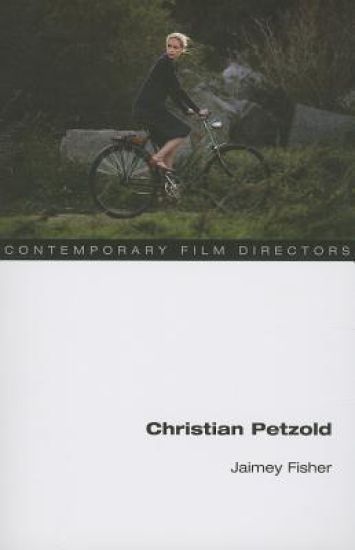
Christian Petzold

Christian Petzold

Fisher Jaimey

University of Illinois Press
2013
sidottu
In eleven feature films across two decades, Christian Petzold has established himself as the most critically celebrated director in contemporary Germany. The best-known and most influential member of the Berlin School, Petzold's career reflects the trajectory of German film from 1970s New German Cinema to more popular fare in the 1990s and back again to critically engaged and politically committed filmmaking.In the first book-length study on Petzold in English, Jaimey Fisher frames Petzold's cinema at the intersection of international art cinema and sophisticated genre cinema. This approach places his work in the context of global cinema and invites comparisons to the work of directors like Pedro Almodovar and Rainer Werner Fassbinder, who repeatedly deploy and reconfigure genre cinema to their own ends. These generic aspects constitute a cosmopolitan gesture in Petzold's work as he interprets and elaborates on cult genre films and popular genres, including horror, film noir, and melodrama. Fisher explores these popular genres while injecting them with themes like terrorism, globalization, and immigration, central issues for European art cinema. The volume also includes an extended original interview with the director about his work.
Christian America and the Kingdom of God

Christian America and the Kingdom of God

Richard T. Hughes; Christina Littlefield; Randall Balmer

UNIVERSITY OF ILLINOIS PRESS
2025
sidottu
The myth of a Christian America fuels a powerful political force sure of its moral superiority and intent on implementing a Christian nationalist agenda. Richard T. Hughes and Christina Littlefield draw on discussions of civil religion and forms of nationalism to explore the complex legal and cultural arguments for a Christian America. The authors also provide an in-depth examination of the Bible’s words on the “chosen nation” and “kingdom of God” that Christian nationalists quote to support the idea of the US as a Christian nation. A timely new edition of the acclaimed work, Christian America and the Kingdom of God spotlights how the centuries-long pursuit of a Christian America has bred an aggressive white Christian nationalism that twists faith, unleashes unchristian behavior, and threatens the nation.
Christian Sisterhood, Race Relations, and the YWCA, 1906-46

Christian Sisterhood, Race Relations, and the YWCA, 1906-46

Nancy Robertson

University of Illinois Press
2010
nidottu
As the major national biracial women's organization, the Young Women's Christian Association (YWCA) provided a unique venue for women to respond to American race relations during the first half of the twentieth century. In Christian Sisterhood, Race Relations, and the YWCA, 1906-46, Nancy Marie Robertson shows how women of both races employed different understandings of "Christian sisterhood" in their responses. Although the YWCA was segregated at the local level, African American women were able to effectively challenge white women over YWCA racial policies and practices. Robertson argues that from 1906 through 1946, many white women in the association went from seeing segregation as compatible with Christianity and democracy to regarding it as a contradiction of those values. These struggles laid the groundwork for the subsequent civil rights movement. Her analysis relies not only on a large body of records documenting YWCA women at the national and local levels, but also on autobiographical accounts and personal papers from women associated with the YWCA, including Dorothy Height, Lugenia Burns Hope, Alice Dunbar-Nelson, Abby Aldrich Rockefeller, and Lillian Smith.A volume in the series Women in American History, edited by Anne Firor Scott, Susan Armitage, Susan K. Cahn, and Deborah Gray White
Christian America and the Kingdom of God

Christian America and the Kingdom of God

Richard T. Hughes; Brian McLaren

University of Illinois Press
2012
nidottu
The idea of the United States as a Christian nation is a powerful, seductive, and potentially destructive theme in American life, culture, and politics. And yet, as Richard T. Hughes reveals in this powerful book, the biblical vision of the "kingdom of God" stands at odds with the values and actions of an American empire that sanctions war instead of peace, promotes dominance and oppression instead of reconciliation, and exalts wealth and power instead of justice for the poor and needy. With extensive analysis of both Christian scripture and American history from the founding of the republic to the present day, Christian America and the Kingdom of God illuminates the devastating irony of a "Christian America" that so often behaves in unchristian ways.
Christian Wolff

Christian Wolff

Michael Hicks; Christian Asplund

University of Illinois Press
2012
nidottu
In this first interpretive narrative of the life and work of Christian Wolff, Michael Hicks and Christian Asplund trace the influences and sensibilities of a contemporary composer's atypical career path and restless imagination. Written in full cooperation with Wolff, including access to his papers, this volume is a much-needed introduction to a leading avant-garde composer still living, writing music, and speaking about his own work. Wolff has pioneered various compositional and notational idioms, including overtly political music, indeterminacy, graphic scores, and extreme virtuosity. Trained as a classicist rather than a musician, Wolff has never quite had both feet in the rarefied world of contemporary composition. Yet he's considered a "composer's composer," with a mind ensconced equally in ancient Greek tragedy and experimental music and an eccentric and impulsive compositional approach that eludes a fixed stylistic fingerprint. Hicks and Asplund cover Wolff's family life and formative years, his role as a founder of the New York School of composers, and the context of his life and work as part of the John Cage circle, as well as his departures from it. Critically assessing Wolff's place within the experimental musical field, this volume captures both his eloquence and reticence and provides insights into his broad interests and activities within music and beyond.
Christian Petzold

Christian Petzold

Jaimey Fisher

University of Illinois Press
2013
nidottu
In eleven feature films across two decades, Christian Petzold has established himself as the most critically celebrated director in contemporary Germany. The best-known and most influential member of the Berlin School, Petzold's career reflects the trajectory of German film from 1970s New German Cinema to more popular fare in the 1990s and back again to critically engaged and politically committed filmmaking.In the first book-length study on Petzold in English, Jaimey Fisher frames Petzold's cinema at the intersection of international art cinema and sophisticated genre cinema. This approach places his work in the context of global cinema and invites comparisons to the work of directors like Pedro Almodovar and Rainer Werner Fassbinder, who repeatedly deploy and reconfigure genre cinema to their own ends. These generic aspects constitute a cosmopolitan gesture in Petzold's work as he interprets and elaborates on cult genre films and popular genres, including horror, film noir, and melodrama. Fisher explores these popular genres while injecting them with themes like terrorism, globalization, and immigration, central issues for European art cinema. The volume also includes an extended original interview with the director about his work.
Christian America and the Kingdom of God

Christian America and the Kingdom of God

Richard T. Hughes; Christina Littlefield; Randall Balmer

UNIVERSITY OF ILLINOIS PRESS
2025
nidottu
The myth of a Christian America fuels a powerful political force sure of its moral superiority and intent on implementing a Christian nationalist agenda. Richard T. Hughes and Christina Littlefield draw on discussions of civil religion and forms of nationalism to explore the complex legal and cultural arguments for a Christian America. The authors also provide an in-depth examination of the Bible’s words on the “chosen nation” and “kingdom of God” that Christian nationalists quote to support the idea of the US as a Christian nation. A timely new edition of the acclaimed work, Christian America and the Kingdom of God spotlights how the centuries-long pursuit of a Christian America has bred an aggressive white Christian nationalism that twists faith, unleashes unchristian behavior, and threatens the nation.
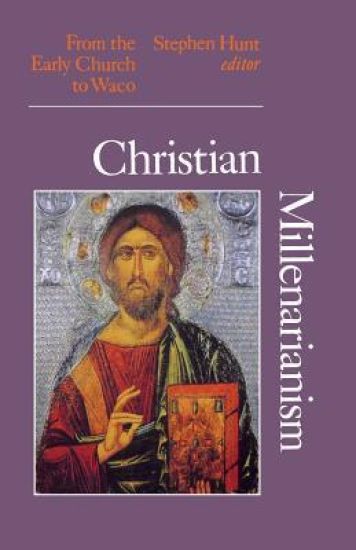
Christian Millenarianism: From the Early Church to Waco
" To grasp this subject] one needs a multifaceted, multidisciplinary approach by a variety of expert hands such as have been brought together in this book. Here one has the whole argument, from the inter-Testamental and earliest Christian periods through medieval and early modern times up to the complex overlaps with the New Age, or Pentecostalism and Neo-Pentecostalism, or Judaising movements like the Seventh-Day Adventists and the Peruvian 'Israelites.'" --from the Foreword by David Martin"Students with a serious interest in the manifestations of millennialism, and those concerned with the origins and motivations embraced by revolutionary ideologies will find this book an indispensable resource; . . . for laymen it offers a truly fascinating read." --Bryan R. WilsonThis timely book examines the impact of Christian millenarian ideas in a comparative and historical perspective with a special emphasis on contemporary religious movements inspired by such ideas. The contributors are Andrew Bradstock, Eugene Gallagher, Malcolm B. Hamilton, Massimo Introvigne, Orestis Lindermeyer, Kenneth Newport, Susan J. Palmer, Mark Patterson, Martyn Percy, Margaret Poloma, Stanley E. Porter, Ian Reader, Damian Thompson, Andrew Walker, Diane Watt, and Michael York.
Christian Millenarianism

Christian Millenarianism

INDIANA UNIVERSITY PRESS
2001
sidottu
"[To grasp this subject] one needs a multifaceted, multidisciplinary approach by a variety of expert hands such as have been brought together in this book. Here one has the whole argument, from the inter-Testamental and earliest Christian periods through medieval and early modern times up to the complex overlaps with the New Age, or Pentecostalism and Neo-Pentecostalism, or Judaising movements like the Seventh-Day Adventists and the Peruvian ‘Israelites.’" —from the Foreword by David Martin"Students with a serious interest in the manifestations of millennialism, and those concerned with the origins and motivations embraced by revolutionary ideologies will find this book an indispensable resource;... for laymen it offers a truly fascinating read." —Bryan R. WilsonThis timely book examines the impact of Christian millenarian ideas in a comparative and historical perspective with a special emphasis on contemporary religious movements inspired by such ideas. The contributors are Andrew Bradstock, Eugene Gallagher, Malcolm B. Hamilton, Massimo Introvigne, Orestis Lindermeyer, Kenneth Newport, Susan J. Palmer, Mark Patterson, Martyn Percy, Margaret Poloma, Stanley E. Porter, Ian Reader, Damian Thompson, Andrew Walker, Diane Watt, and Michael York.
Christian Theism and the Problems of Philosophy
Alvin Plantinga has done much to stimulate the resurgence of interest in the philosophy of religion. This collection of essays is written in response to his seminal paper Advice to Christian Philosophers, in which he issues a powerful, and inevitably controversial, challenge to religious philosophers to serve their own religious communities more faithfully. Plantinga advises Christian philosophers to expend more effort on issues of importance to the particular, concrete Christian communities of which they are members. In addition he urges them to use their distinctively theistic and Christian perspectives in working in the many traditional areas of philosophy, a task on which the present volume focuses.Christian Theism and the Problems of Philosophy begins by presenting Plantingas essay, and the chapters that follow address issues in three traditional areas of interest to philosophers: epistemology, metaphysics, and ethics. The first section Epistemology and Theism contains essays by Alvin Plantinga, Jonathan Kvanvig, Richard Otte, and Stephen Wykstra. The next section Metaphysics and Theism has essays by Linda Zagzebski, Del Ratzsch, Christopher Menzel, Charles Taliaferro, and Eleonore Stump. The final group, including Philip L. Quinn, William P. Alston, Scott MacDonald, and Carlton D. Fisher, addresses the subject of Moral Theory and Theism.While certainly intended for Christian philosophers, other instructors and students of philosophy will be interested as well because the book discusses several traditional philosophical issues in innovative ways, such as the nature of justification, the nature of probability, scientific rationality, religious rationality, the logic of counterfactuals, free will and moral responsibility, among others.
Christian Theism and the Problems of Philosophy
Alvin Plantinga has done much to stimulate the resurgence of interest in the philosophy of religion. This collection of essays is written in response to his seminal paper Advice to Christian Philosophers, in which he issues a powerful, and inevitably controversial, challenge to religious philosophers to serve their own religious communities more faithfully. Plantinga advises Christian philosophers to expend more effort on issues of importance to the particular, concrete Christian communities of which they are members. In addition he urges them to use their distinctively theistic and Christian perspectives in working in the many traditional areas of philosophy, a task on which the present volume focuses.Christian Theism and the Problems of Philosophy begins by presenting Plantingas essay, and the chapters that follow address issues in three traditional areas of interest to philosophers: epistemology, metaphysics, and ethics. The first section Epistemology and Theism contains essays by Alvin Plantinga, Jonathan Kvanvig, Richard Otte, and Stephen Wykstra. The next section Metaphysics and Theism has essays by Linda Zagzebski, Del Ratzsch, Christopher Menzel, Charles Taliaferro, and Eleonore Stump. The final group, including Philip L. Quinn, William P. Alston, Scott MacDonald, and Carlton D. Fisher, addresses the subject of Moral Theory and Theism.While certainly intended for Christian philosophers, other instructors and students of philosophy will be interested as well because the book discusses several traditional philosophical issues in innovative ways, such as the nature of justification, the nature of probability, scientific rationality, religious rationality, the logic of counterfactuals, free will and moral responsibility, among others.
Christian Polemic Against the Jews in the Middle Ages, the

Christian Polemic Against the Jews in the Middle Ages, the

Gilbert Dahan

University of Notre Dame Press
1998
nidottu
Gilbert Dahan offers a compact overview of Jewish conditions in medieval Western Christendom, then moves to a discussion of the changing patterns of Christian-Jewish polemical confrontation. Dahan lays particular emphasis on the shift during the twelfth and thirteenth centuries from a fairly open exchange of views to a concerted Christian effort to convert the Jews. After establishing this context, Dahan analyzes the most common literary genres (including disputatio) in which these arguments were couched, their underlying structures and the most important recurring themes. This volume is particularly useful for its clear delineation of the historical phases of Christian polemicizing, its cogent analysis of key aspects of Christian polemical literature, and its rich citation of illustrative texts. Whether it be shared examination of the sacred texts or impassioned discussion over the theses belonging to each of the two religions, the Judeo-Christian "dispute" continued throughout the Middle Ages, and seems to be carried on in some way even in the Judeo-Christian dialogue of today.
Christian Faith and Modern Democracy

Christian Faith and Modern Democracy

Kraynak Robert P.

UNIVERSITY OF NOTRE DAME PRESS
2001
sidottu
Do Christianity and modern liberal democracy share a common moral vision, or are they opposed and even hostile to each other? In Christian Faith and Modern Democracy, Robert Kraynak challenges the commonly accepted view that Christianity is inherently compatible with modern democratic society. Contrary to conventional wisdom, Kraynak argues that there is no necessary connection between Christianity and any form of government and that, in many important respects, Christianity is weakened by its close alliance with contemporary versions of democracy and human rights. Christian Faith and Modern Democracy was written, in part, to convince secular intellectuals that modern democracy needs God. But it was also written in response to the new consensus about politics that has emerged among Christian believers. Almost all churches and theologians now think that the form of government most compatible with Christianity is democracy and that the historic opposition of the Christian tradition to democracy and to various forms of liberalism was a mistake. What caused Christians to change their view of political authority and to embrace liberal democracy? Were they wise to change their view? This provocative book attempts to answer these questions by reexamining the relationship between democracy and Christianity through the lens of St. Augustine’s distinction between the city of God and the earthly city, applied to the conditions of the modern age. Kraynak argues that St. Augustine’s teaching provides the basis for a Christian theory of constitutional government and permits a variety of legitimate forms of government, including constitutional democracy. Yet, unlike contemporary Christian doctrines, it does so without embracing the subversive premises of liberalism that have threatened to turn the Christian faith into little more than a mirror image of the modern world. Sure to spark controversy among secular intellectuals and Christian believers alike, this insightful volume is an outstanding work of political philosophy with a firm foundation in theology.
Christian Faith and Modern Democracy

Christian Faith and Modern Democracy

Robert P. Kraynak

University of Notre Dame Press
2001
nidottu
Do Christianity and modern liberal democracy share a common moral vision, or are they opposed and even hostile to each other? In Christian Faith and Modern Democracy, Robert Kraynak challenges the commonly accepted view that Christianity is inherently compatible with modern democratic society. Contrary to conventional wisdom, Kraynak argues that there is no necessary connection between Christianity and any form of government and that, in many important respects, Christianity is weakened by its close alliance with contemporary versions of democracy and human rights. Christian Faith and Modern Democracy was written, in part, to convince secular intellectuals that modern democracy needs God. But it was also written in response to the new consensus about politics that has emerged among Christian believers. Almost all churches and theologians now think that the form of government most compatible with Christianity is democracy and that the historic opposition of the Christian tradition to democracy and to various forms of liberalism was a mistake. What caused Christians to change their view of political authority and to embrace liberal democracy? Were they wise to change their view? This provocative book attempts to answer these questions by reexamining the relationship between democracy and Christianity through the lens of St. Augustine's distinction between the city of God and the earthly city, applied to the conditions of the modern age. Kraynak argues that St. Augustine's teaching provides the basis for a Christian theory of constitutional government and permits a variety of legitimate forms of government, including constitutional democracy. Yet, unlike contemporary Christian doctrines, it does so without embracing the subversive premises of liberalism that have threatened to turn the Christian faith into little more than a mirror image of the modern world. Sure to spark controversy among secular intellectuals and Christian believers alike, this insightful volume is an outstanding work of political philosophy with a firm foundation in theology.
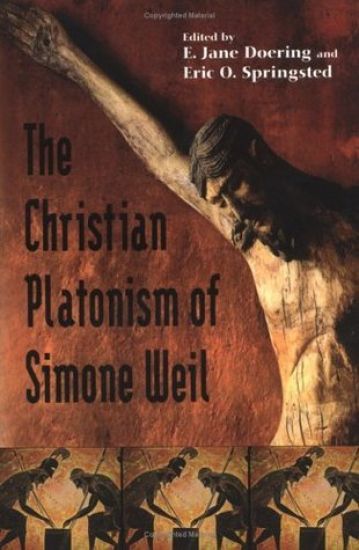
Christian Platonism of Simone Weil

Christian Platonism of Simone Weil

University of Notre Dame Press
2004
sidottu
In this book a group of renowned international scholars seek to discern the ways in which Simone Weil was indebted to Plato, and how her provocative readings of his work offer challenges to contemporary philosophy, theology, and spirituality. This is the first book in twenty years to systematically investigate Weil's Christian Platonism. The opening essays explore what actually constitutes Weil's Platonism. Louis Dupré addresses the Platonic and Gnostic elements of her thought with respect to her negative theology, and the Christian Platonism of her positive theology as found in her reflections on beauty and the Good. Michel Narcy provides a close historical reading of Weil and discusses the degree to which her teacher Alain influenced her Platonism. Michael Ross contends that Weil's interest in Plato is in "ethical Platonism." Essays by Robert Chenavier and by Patrick Patterson and Lawrence E. Schmidt consider the importance of matter and materialism in Weil's Platonism and argue that it is key to understanding her political thought. A middle group of essays addresses more classically metaphysical themes in Weil's thought. Vance G. Morgan examines her use of Greek mathematics. Florence de Lussy analyzes Weil's distinctive, mystical Platonic reflections on Being in the last notebooks from Marseilles. Emmauel Gabellieri discusses Weil's "metaxology," that is, the mediation and relatedness of Being, shown in her speculative thought. Martin Andic underlines the importance of her notion of attention. The final set of essays considers Weil's relevance for contemporary spirituality and moral theology. Cyril O'Regan examines her thinking on violence and evil. Eric Springsted looks at the conceptual links that exist between Weil and Augustine. Finally, David Tracy contends that Weil is the foremost predecessor of recent attempts to reunite the mystical and prophetic. Drawing together some of the top Weil scholars in the world, this collection offers important new insights into her thought, and will be appreciated by philosophers and theologians.
Christian Platonism of Simone Weil

Christian Platonism of Simone Weil

University of Notre Dame Press
2004
nidottu
In this book a group of renowned international scholars seek to discern the ways in which Simone Weil was indebted to Plato, and how her provocative readings of his work offer challenges to contemporary philosophy, theology, and spirituality. This is the first book in twenty years to systematically investigate Weil's Christian Platonism. The opening essays explore what actually constitutes Weil's Platonism. Louis Dupré addresses the Platonic and Gnostic elements of her thought with respect to her negative theology, and the Christian Platonism of her positive theology as found in her reflections on beauty and the Good. Michel Narcy provides a close historical reading of Weil and discusses the degree to which her teacher Alain influenced her Platonism. Michael Ross contends that Weil's interest in Plato is in "ethical Platonism." Essays by Robert Chenavier and by Patrick Patterson and Lawrence E. Schmidt consider the importance of matter and materialism in Weil's Platonism and argue that it is key to understanding her political thought. A middle group of essays addresses more classically metaphysical themes in Weil's thought. Vance G. Morgan examines her use of Greek mathematics. Florence de Lussy analyzes Weil's distinctive, mystical Platonic reflections on Being in the last notebooks from Marseilles. Emmauel Gabellieri discusses Weil's "metaxology," that is, the mediation and relatedness of Being, shown in her speculative thought. Martin Andic underlines the importance of her notion of attention. The final set of essays considers Weil's relevance for contemporary spirituality and moral theology. Cyril O'Regan examines her thinking on violence and evil. Eric Springsted looks at the conceptual links that exist between Weil and Augustine. Finally, David Tracy contends that Weil is the foremost predecessor of recent attempts to reunite the mystical and prophetic. Drawing together some of the top Weil scholars in the world, this collection offers important new insights into her thought, and will be appreciated by philosophers and theologians.
Christian Texts for Aztecs

Christian Texts for Aztecs

Jaime Lara

University of Notre Dame Press
2008
sidottu
Christian Texts for Aztecs: Art and Liturgy in Colonial Mexico is a cultural history of the missionary enterprise in sixteenth-century Mexico, seen primarily through the work of Catholic missionaries and the native populations, principally the Aztecs. Also known as the Mexica or Nahuas, speakers of the Nahuatl tongue, these Mesoamerican people inhabited the central plateau around Lake Texcoco and the sacred metropolis of Tenochtitlan, the site of present-day Mexico City. It was their language that the mendicant missionaries adopted as the lingua franca of the evangelization enterprise. Conceived as a continuation of his earlier, well-received City, Temple, Stage, Jaime Lara's new work addresses the inculturation of Catholic sacraments and sacramentals into an Aztec worldview in visual and material terms. He argues that Catholic liturgy—similar in some ways to pre-Hispanic worship—effectively "conquered"the religious imagination of its new Mesoamerican practitioners, thus creating the basis for a uniquely Mexican Catholicism. The sixteenth-century friars, in partnership with indigenous Christian converts, successfully translated the Christian message from an exclusively Eurocentric worldview to a system of symbols that made sense to the indigenous civilizations of Central Mexico. While Lara is interested in liturgical texts with novel or recycled metaphors, he is equally interested in visual texts such as neo-Christian architecture, mural painting, feather work, and religious images made from corn. These, he claims, were the sensorial bridges that allowed for a successful, if not wholly orthodox, inculturation of Christianity into the New World. Enriched by more than 280 color images and eleven appendices of translations from Latin and Nahuatl, Lara's study provides rich insights on the development of sacramental practice, popular piety, catechetical drama, and parish politics. Song, dance, flowers, and feathers—of utmost importance in the ancient religion of the Aztecs—were reworked in ingenious ways to serve the Christian cause. Human blood, too, found renewed importance in art and devotion when the indigenous religious leaders and the mendicant friars addressed the fundamental topic of the Man on the cross. An important work on worship, liturgy, and the visual imagination, Christian Texts for Aztecs: Art and Liturgy in Colonial Mexico is a vivid look at a unique cultural adaptation of Christianity. "I have deeply enjoyed and have been intellectually enriched by reading Jaime Lara's Christian Texts for Aztecs: Art and Liturgy in Colonial Mexico. This book will transform how we understand the process of evangelization of Mexico in the sixteenth-century. Clearly written and persuasively argued, Lara reveals how metaphor allows for cross-cultural communication as the deepest level of the Human experience, religious belief. This is demonstrated by a nuanced but richly documented history of the period. Drawing upon architecture, painting and a variety of different kinds of primary sources, this study blends a deep understanding of Aztec religious beliefs so as to articulate the very complex development of Colonial Mexican Christianity. Most importantly, Lara demonstrates how Aztec beliefs and practices were not only incorporated into Catholic teaching and ritual practice, but how they transformed that teaching and practice. Moreover, Lara makes so very evident the centrality of Music and Art in this complicated interaction."—Thomas Cummins, Dumbarton Oaks Professor of the History of Pre-Columbian and Colonial Art, Harvard University. "We have seen many interpretations of the story of the faith in America; some have called it 'black,' and others 'white' or 'grey.' Whatever version one may appropriate, Jaime Lara has provided us with a unique, rich focus: the worship experience of a people called to be renewed by Christianity and the creative expressions of Christian faith in unique images and paintings. Jaime Lara's book is a treasure to cherish for many years, an addition to any personal or public Library, and a legacy that engages readers to embark on a journey in which history, liturgical theology, and good art become one's traveling companions."—Rev. Fr. Juan J. Sosa, Presidente, Instituto Nacional Hispano de Liturgia, Inc.