Kirjojen hintavertailu. Mukana 11 244 527 kirjaa ja 12 kauppaa.

Kirjahaku

Etsi kirjoja tekijän nimen, kirjan nimen tai ISBN:n perusteella.

1000 tulosta hakusanalla Christian Rönnbacka

Christian Communities in the Arab Middle East
Existing before the Muslim conquest of the Middle East, and integrated into the Islamic political order, which for centuries has given full rights only to Muslims, the various Eastern Christian communities have represented an important element of pluralism within Middle Eastern Arab societies. The end of the twentieth century, however, marks a crucial period for the the Christian communities, who have witnessed their base decline from 24% of the general population in 1914 to a mere 7%. The rising tide of Christian emigration is just one of the most obvious signs of the communities growing unrest. Beginning with an examination of the role played by Eastern Christians in the history of Arab society, this ground-breaking study presents a comprehensive and detailed analysis of the many challenges facing the Christian communities today. Focusing on juridical status, social, political and economic dynamics, and relationships with the the Muslim majority culture, this intriguing study highlights the various political and cultural strategies employed by Eastern Christians as they attempt to guarantee their role and status as equal citizens in their own Arab states.
Christian Character Formation

Christian Character Formation

Gifford A. Grobien

Oxford University Press
2019
sidottu
Christian Character Formation investigates worship and formation in view of Christian anthropology, particularly union with Christ. Traditions which value justification by faith wrestle to some degree with how to describe and encourage ethical formation when salvation and righteousness are presented as gracious and complete. The dialectic of law and gospel has suggested to some that forgiveness and the advocacy of ethical norms contend with each other. By viewing justification and formation in light of Christ's righteousness which is both imputed and imparted, it is more readily seen that forgiveness and ethics complement each other. In justification, God converts a person, by which he grants new character. Traditional Lutheran anthropology says that this regeneration grants a new nature in mystical union with Jesus Christ. By exploring the Finnish Luther School led by Tuomo Mannermaa, Gifford A. Grobien explains how union with Christ imparts righteousness and the corresponding new character to the believer. Furthermore, as means of grace, the Word and sacraments are the means of establishing union with Christ and nurturing new character. Considering Oswald Bayer's "suffering" the word of Christ, Louis-Marie Chauvet's "symbolic order" and Bernd Wannenwetsch's understanding of worship as Christianity's unique "form of life," Grobien argues that worship practices are the foundational and determinative context in which grace is offered and in which the distinctively Christian ethos supports virtues consistent with Christian character. This understanding is also coordinated with Stanley Hauerwas's narrative ethics and Luther's teaching of virtue and good works in view of the Ten Commandments.
Christian Philosophical Theology

Christian Philosophical Theology

Stephen T. Davis

Oxford University Press
2016
nidottu
Christian Philosophical Theology constitutes a Christian philosopher's look at various crucial topics in Christian theology, including belief in God, the nature of God, the Trinity, christology, the resurrection of Jesus, the general resurrection, redemption, and theological method. The book is tightly argued, and amounts to a coherent explanation of and case for the Christian world view. While the work is written from a broadly Reformed Protestant perspective and the author does not avoid controversial topics, the aim is to present a 'merely Christian' world view (to adapt slightly C. S. Lewis's famous term). That is, Stephen T. Davis attempts to write as much as possible from the perspective of the broad centre of Christian understanding.
Christian Radicalism in the Church of England and the Invention of the British Sixties, 1957-1970
This study provides the first postsecular account of the moral revolution that Britain experienced in the 1960s. Beginning from the groundbreaking premise that secularity is not a mere absence, but an invented culture, it argues that a new form of British secularity achieved cultural dominance during an abrupt cultural revolution which occurred in the late 1950s and early 1960s. This moral revolution had little to do with affluence or technology, but was most centrally a cultural response to the terrors of the Cold War, which pitted Christian Britain against the secular Soviet Union. By exploring contemporary prophecies of the inevitable arrival of 'the secular society', Sam Brewitt-Taylor shows that, ironically, British secularity was given decisive initial momentum by theologically radical Christians, who destigmatized the idea of 'modern secularity' and made it available for appropriation by a wide range of Sixties actors. Further than this, radical Christians played a significant contributory role in deciding what kind of secularity Britain's Sixties would adopt, by narrating Britain's moral revolution as globalist, individualist, anti-authoritarian, sexually libertarian, and politically egalitarian. In all these ways, radical Christians played a highly significant role in the early stages of Britain's Sixties.
Christian Philosophy

Christian Philosophy

Oxford University Press
2018
sidottu
One of the marks of being a philosopher is participating in debates about what counts as "philosophy." Of particular note in such debates is the question of how to distinguish philosophy from theology. Although a variety of answers to this question have been offered in the history of philosophy, in recent decades, the prominence of Christian philosophy has been heralded by many as a genuine triumph over the problematic narrowness of strong foundationalism, positivism, and scientism. For others, however, it signals that philosophy continues to risk being replaced by confessional theology. Wherever one comes down on such issues, and however one interprets recent trends in philosophy of religion, the idea of Christian philosophy continues to present pressing questions for those working in meta-philosophy, epistemology, metaphysics, hermeneutics, and value theory. In this volume, established scholars representing a variety of cultural traditions, religious perspectives, and philosophical priorities all wrestle with how the idea of Christian philosophy should be understood, appropriated, and engaged in light of where philosophy is and where it is likely to go. The volume includes classical essays that have deeply marked the field and also new essays that explore the relevance of Christian philosophy to issues in disability studies, engaged pedagogy, lived phenomenology, the academic study of religion, and the workings of social power. Rather than offer a unified view that seeks to settle things, the contributors demonstrate that Christian philosophy remains a topic of lively debate. Wherever one comes down on the issues considered here, this volume shows that Christian philosophy is neither merely of historical interest, nor of interest only to Christians, but instead remains a thoroughly philosophical topic worthy of serious consideration and substantive critique. With a Foreword by Nicholas Wolterstorff, Noah Porter Professor Emeritus of Philosophical Theology at Yale University; Senior Research Fellow in the Institute for Advanced Studies in Culture at the University of Virginia; and Honorary Professor of Australian Catholic University.
Christian Nationalism, Nation-Building, and the Making of the Holocaust in Slovakia
Previous scholarship on fascism in Slovakia has focused on either state actors operating from urban centres or the mechanisms of violence on a grassroots level - with the result being that the Holocaust is seen as primarily a top-down and state-centred process. In contrast, Hana Kubátová reveals here a dynamic and unexplored centre-periphery relationship, and how violence against the Jewish population unfolded in both cities and the countryside, and on both national and local levels. As an integral component of broader nation-building efforts, the authority of the fascist regime and the newly-founded Slovak state hinged not only on appeasing Hitler but also on civilian populations of the nation's heterogenous eastern borderlands, especially local elites, such as priest and teachers, as well as the rural masses. The book explores how this relationship was forged, how it was maintained, and how, ultimately, Christian nationalism operated as a political strategy that brought differently positioned actors together - to broker deals over resources and power accrued through the co-enactment of genocide by a broad coalition of perpetrators on the ground. In so doing, this little-known chapter of Holocaust history offers a new way to understand the dynamics and escalations of mass violence, and how collaborations between elite and popular groups can pave the way for ethnic cleansing across different territories and, even, times.
Christian Identity in the Jewish and Graeco-Roman World
'I am a Christian' is the confession of the martyrs of early Christian texts and, no doubt, of many others; but what did this confession mean, and how was early Christian identity constructed? This innovative study sets the emergence of Christian identity in the first two centuries, as it is constructed by the broad range of surviving literature, within the wider context of Jewish and Graeco-Roman identity. It uses a number of models from contemporary constructionist views of identity formation to explore how what comes to be seen as 'Christian' literature creates a sense of what to be 'a Christian' means, and traces both continuities and discontinuities with the ways in which Jewish and Graeco-Roman identity were also being constructed through their texts. It seeks to acknowledge the centrality of texts in shaping early Christianity, historically as well as in our perception of it, while also exploring how we might move from those texts to the individuals and communities who preserved them. Such an approach challenges more traditional emphases on the development of institutions, whether structures or credal and ethical formulations, which often fail to recognize the rhetorical function of the texts on which they draw, and the uncertainties of how well these reflect the actual practice and experience of individuals and communities. While building on recent recognition of the diversity of early Christianity, the book goes on to explore the question whether it is possible to speak of a distinctive Christian identity across both the range of early texts and as a pressing historical and theological question in the contemporary world.
Christian Persecution, Martyrdom, and Orthodoxy

Christian Persecution, Martyrdom, and Orthodoxy

Geoffrey de Ste. Croix

Oxford University Press
2006
sidottu
This volume brings together seven seminal papers by the great radical historian Geoffrey de Ste. Croix, who died in 2000, on early Christian topics, with an especial focus on persecution and martyrdom. Christian martyrdom is a topic which conjures up ready images of inhumane persecutors confronted by Christian heroes who perish for the instant but win the long-term battle for reputation. In five of these essays Ste. Croix scrutinizes the evidence to reveal the significant role of Christian themselves, first as volunteer martyrs and later, after the triumph of Christianity in the early fourth century, as organizers of much more effective persecutions. A sixth essay pursues the question of the control of Christianity through a comprehensive study of the context for one of the Church's most important and divisive doctrinal decisions, at the Council of Chalcedon (AD 451); the key role of the emperor and his senior secular officials is revealed, contrary to the prevailing interpretation of Church historians. Finally the attitudes of the early Church towards property and slavery are reviewed, to show the divide between the Gospel message and actual practice.
Christian Philosophical Theology

Christian Philosophical Theology

Stephen T. Davis

Oxford University Press
2006
sidottu
Christian Philosophical Theology constitutes a Christian philosopher's look at various crucial topics in Christian theology, including belief in God, the nature of God, the Trinity, christology, the resurrection of Jesus, the general resurrection, redemption, and theological method. The book is tightly argued, and amounts to a coherent explanation of and case for the Christian world view. Although written from a broadly Reformed Protestant perspective, and although the author does not avoid controversial topics, the aim is to present a `merely Christian' world view (to adapt slightly C. S. Lewis's famous term). That is, Stephen T. Davis attempts to write as much as possible from the perspective of the broad centre of Christian understanding.
Christian Identity in the Jewish and Graeco-Roman World
'I am a Christian' is the confession of the martyrs of early Christian texts and, no doubt, of many others; but what did this confession mean, and how was early Christian identity constructed? This innovative study sets the emergence of Christian identity in the first two centuries, as it is constructed by the broad range of surviving literature, within the wider context of Jewish and Graeco-Roman identity. It uses a number of models from contemporary constructionist views of identity formation to explore how what comes to be seen as 'Christian' literature creates a sense of what to be 'a Christian' means, and traces both continuities and discontinuities with the ways in which Jewish and Graeco-Roman identity were also being constructed through their texts. It seeks to acknowledge the centrality of texts in shaping early Christianity, historically as well as in our perception of it, while also exploring how we might move from those texts to the individuals and communities who preserved them. Such an approach challenges more traditional emphases on the development of institutions, whether structures or credal and ethical formulations, which often fail to recognize the rhetorical function of the texts on which they draw, and the uncertainties of how well these reflect the actual practice and experience of individuals and communities. While building on recent recognition of the diversity of early Christianity, the book goes on to explore the question whether it is possible to speak of a distinctive Christian identity across both the range of early texts and as a pressing historical and theological question in the contemporary world.
Christian Identity, Jews, and Israel in 17th-Century England
Christian Identity, Jews, and Israel in 17th-Century England is a cultural history of seventeenth-century England. It assesses the complexity and fluidity of Christian identity from the reign of Elizabeth I and the early Stuart kings through the English Revolution, and into the Restoration, when the English Church and monarchy were restored. Throughout this tumultuous period, which included debate about readmission of the Jews, England was preoccupied with Jews and Israel. As the Reformation sharpened national identity and prompted reconsideration of the relation of Christianity to Judaism, English people showed intense interest in Jewish history and Judaism and appropriated biblical Israel's history, looking to the narratives in the Hebrew Bible, even as reformed Christianity was thought to be purged of Jewish elements. There was an unstable, shifting mix of identification and opposition, affinity and distance, in English attitudes towards Jews - a mix that held positive possibilities for Jewish/Christian relations as well as negative. Grounded in archival research, this book analyzes writings ranging from those of Foxe and Hooker to Milton and Dryden, from sermons to lyrics, from church polemic to proposals for legal and economic reform. Literary texts discussed include Herrick's Hesperides, Vaughan's Silex Scintillans, Bunyan's Grace Abounding, Milton's major prose and poems, and Dryden's Annus Mirabilis and Absalom and Achitophel. Attention is also paid to publications associated with James I, Charles I, and Cromwell, and writings by and about such figures as William Prynne, Gerrard Winstanley, Margaret Fell, George Fox, Menasseh Ben Israel, and self-proclaimed prophets such as John Rogers, Abiezzer Coppe, and Anna Trapnel.
Christian Ethics

Christian Ethics

D. Stephen Long

Oxford University Press
2010
nidottu
This Very Short Introduction to Christian ethics introduces the topic by examining its sources and historical basis. D. Stephen Long presents a discussion of the relationship between Christian ethics, modern, and postmodern ethics, and explores practical issues including sex, money, and power. Long recognises the inherent difficulties in bringing together 'Christian' and 'ethics' but argues that this is an important task for both the Christian faith and for ethics. Arguing that Christian ethics are not a precise science, but the cultivation of practical wisdom from a range of sources, Long also discusses some of the failures of the Christian tradition, including the crusades, the conquest, slavery, inquistions, and the Galileo affair. Placing them in the context of the theory and practice of ethics and their historical persepctive, he notes the challenges they raise for Christian ethics. He concludes with a discussion of their implications in the modern era, considering how this affects our lives in the present age. ABOUT THE SERIES: The Very Short Introductions series from Oxford University Press contains hundreds of titles in almost every subject area. These pocket-sized books are the perfect way to get ahead in a new subject quickly. Our expert authors combine facts, analysis, perspective, new ideas, and enthusiasm to make interesting and challenging topics highly readable.
Christian Identity, Jews, and Israel in 17th-Century England
Christian Identity, Jews, and Israel in 17th-Century England is a cultural history of seventeenth-century England. It assesses the complexity and fluidity of Christian identity from the reign of Elizabeth I and the early Stuart kings through the English Revolution, and into the Restoration, when the English Church and monarchy were restored. Throughout this tumultuous period, which included debate about readmission of the Jews, England was preoccupied with Jews and Israel. As the Reformation sharpened national identity and prompted reconsideration of the relation of Christianity to Judaism, English people showed intense interest in Jewish history and Judaism and appropriated biblical Israel's history, looking to the narratives in the Hebrew Bible, even as reformed Christianity was thought to be purged of Jewish elements. There was an unstable, shifting mix of identification and opposition, affinity and distance, in English attitudes towards Jews - a mix that held positive possibilities for Jewish/Christian relations as well as negative. Grounded in archival research, this book analyzes writings ranging from those of Foxe and Hooker to Milton and Dryden, from sermons to lyrics, from church polemic to proposals for legal and economic reform. Literary texts discussed include Herrick's Hesperides, Vaughan's Silex Scintillans, Bunyan's Grace Abounding, Milton's major prose and poems, and Dryden's Annus Mirabilis and Absalom and Achitophel. Attention is also paid to publications associated with James I, Charles I, and Cromwell, and writings by and about such figures as William Prynne, Gerrard Winstanley, Margaret Fell, George Fox, Menasseh Ben Israel, and self-proclaimed prophets such as John Rogers, Abiezzer Coppe, and Anna Trapnel.
Christian Doctrine from the Bible to the Present
Christianity has always been a "creedal" religion in that it has always been theological. It was rooted in the theological tradition of ancient Israel, which was unifi ed by its historical credos and declaratory affi rmations of faith. No pre-theological era has been discovered in the New Testament or in the history of the Christian community. From the beginning Christianity has been theological, involving men in theological refl ection and calling them to declarations of faith. A non-theological Christianity has simply never endured, although such has been attempted, for instance, by individual seers in the sixteenth century and also by collaborators with totalitarian ideologies in the twentieth century.The creeds presented here range from the ancient faith of the Hebrews and the creed-like formulas of the New Testament to the Barmen declaration of 1934 (framed by the Christians in Germany who faced the threat of Nazism) and the Batak Creed of 1951 (in which Indonesian Christians gave authentic expression to their religious belief in the idiom of their own culture. All the creeds are in some sense "offi cial," and every major division of Christendom is represented, including the Younger Churches. The volume ends with the messages of the most important assemblies dealing with the Ecumenical Movement.This single volume, containing all the major theological affi rmations of the Christian community, is a source book for the study of Christian theology. It comprises a record of the Church's interpretation of the Bible in the past and an authoritative guide to its interpretation on the present. Indeed, it is a guide to an understanding of the Christian interpretation of life.
Christian Celebration:The Mass

Christian Celebration:The Mass

J.D. Crichton

Geoffrey Chapman
1992
nidottu
This text covers changes in the Mass since publication in 1971, including the 1985 reprint revisions (notably Eucharistic Prayers and Eucharistic Prayers from Masses with children). It also describes the rites of the Church in the context of their theological and historical background and in relation to pastoral practice. It is aimed at theology students, students on liturgy courses especially those following the syllabus for liturgical formation issued by the Liturgy Office and all those seeking a deeper understanding of the Mass.
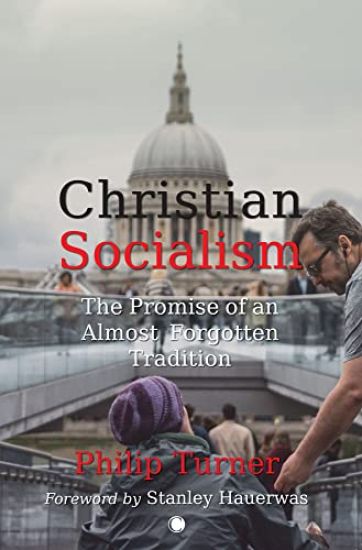
Christian Socialism

Christian Socialism

Philip Turner

JAMES CLARKE CO LTD
2022
nidottu
Christian Socialism arose in England in the mid-nineteenth century as a response to the philosophy of 'political economy'. Seeking a reform of the moral underpinnings of society, not simply institutional change or nationalisation, it refuted the assumption that people are essentially selfish, competitive individuals seeking nothing but personal happiness. Although they did not deny the presence of selfishness, its proponents believed that the social nature of humankind lies deeper than such egotism and conflict, and pursued a society built on this belief. Less prominent now than at the time of its inception, Christian Socialism nevertheless continues into the twenty-first century, its goal nothing less than a new society built upon the virtues of equality, fellowship, cooperation, service and justice. Philip Turner's careful exposition traces the history of this strand of Anglican political thought and restores confidence in its message for the future.
Christian Gnosis

Christian Gnosis

Ferdinand Christian Baur; Roger Hodgson

JAMES CLARKE CO LTD
2023
nidottu
Ferdinand Christian Baur's Die Christliche Gnosis, first published in 1835, is considered by many to be the most important book on Gnosticism published in the nineteenth century and is a pivotal work within Baur's canon. Baur's unique thesis of a link between ancient and modern religious philosophy, as well as his conception of Gnosticism - developed through dialogues with his predecessors and contemporaries - consolidate Christian Gnosis as an important contribution to Christian theology. In this seminal work, written over a hundred years before the manuscript discovery at Nag Hammadi, Baur classifies the gnostic systems in terms of how they conceive the relationship of Christianity to Judaism and paganism, describing them in detail. He then goes on to describe the criticism of and reaction to gnosis in church history, before contending with the modern religious philosophy of his time, discussing Boehme, Schelling, Schleiermacher and Hegel. Christian Gnosis is Baur's first great religio-historical study, and Robert Brown's masterful translation ensures the work is as impactful today as it was on its first publication.
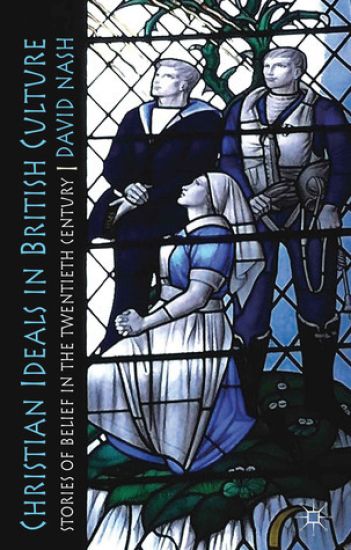
Christian Ideals in British Culture

Christian Ideals in British Culture

D. Nash

Palgrave Macmillan
2013
sidottu
This book offers a challenge to conventional histories of secularisation by focusing upon the importance of central religious narratives. These narratives are changed significantly over time, but also to have been invested with importance and meaning by religious individuals and organisations as well as by secular ones.
Christian Memories of the Maccabean Martyrs

Christian Memories of the Maccabean Martyrs

D. Joslyn-Siemiatkoski

Palgrave Macmillan
2009
sidottu
This book examines texts and materials, ranging from the eastern Mediterranean to northwestern Europe, related to the Maccabean martyrs. Joslyn-Siemiatkoski demonstrates that Christian thinkers constructed memories of the Maccabean martyrs that simultaneously appropriated Jewish traditions and obscured the Jewish origins of Christianity.