Kirjojen hintavertailu. Mukana 12 016 292 kirjaa ja 12 kauppaa.

Kirjahaku

Etsi kirjoja tekijän nimen, kirjan nimen tai ISBN:n perusteella.

1000 tulosta hakusanalla Christopher R. Seitz

Urban Politics in Early Modern Europe

Urban Politics in Early Modern Europe

Christopher R. Friedrichs

Routledge
2000
sidottu
Urban Politics in Early Modern Europe is an important survey of the complex relationships between urban politics and regional and national politics in Europe from 1500 to 1789. In an era when the national state was far less developed than today, crucial decisions about economic, religious and social policy were often settled at the municipal level. Cities were frequently the scenes of sudden tensions or bitter conflicts between ordinary citizens and the urban elite, and the threat of civic unrest often underlay the political dynamics of early modern cities. With vivid descriptions of events in cities in central Europe, England, France, Italy and Spain, this book outlines the forms of political interaction in the early modern city. Urban Politics in Early Modern Europe takes a fascinating comparative approach to the nature of conflict and conflict resolution in early modern communities throughout Europe.
The Third Chinese Revolutionary Civil War, 1945–49
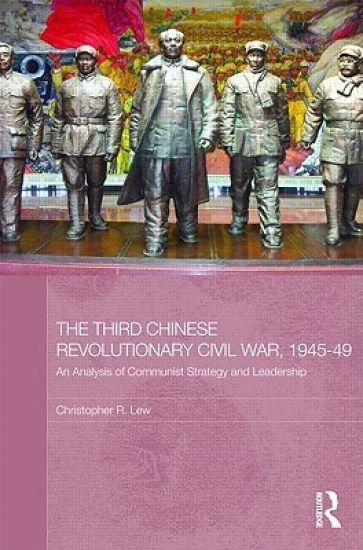
This book examines the Third Chinese Revolutionary Civil War of 1945–1949, which resulted in the victory of the Chinese Communist Party (CCP) over Chiang Kaishek and the Guomindang (GMD) and the founding of The People’s Republic of China in 1949. It provides a military and strategic history of how the CCP waged and ultimately won the war, the transformation its armed forces and how the Communist leadership interacted with each other. Whereas most explanations of the CCP’s eventual victory focus on the Sino-Japanese War of 1937–45, when the revolution was supposedly won as a result of the communists’ invention of "peasant nationalism", this book shows that the outcome of the revolution was not a foregone conclusion in 1945. It explains how the eventual victory of the communists resulted from important strategic decisions taken on both sides, in particular the remarkable transformation of the communist army from an insurgent / guerrilla force into a conventional army. The book also explores how the hierarchy of The People’s Republic of China developed during the war. It shows how Mao’s power was based as much on his military acumen as his political thought, above all his role in formulating and implementing a successful military strategy in the war of 1945–49. It also describes how other important figures, such as Lin Biao, Deng Xiaoping, Nie Rongzhen, Liu Shaoqi and Chen Yi, made their reputations during the conflict; and reveals the inner workings of the first political-military elite of the PRC. Overall, this book is an important resource for anyone seeking to understand the origins and early history of The People’s Republic of China, the Chinese Communist Party and the People’s Liberation Army.
The Third Chinese Revolutionary Civil War, 1945–49
This book examines the Third Chinese Revolutionary Civil War of 1945–1949, which resulted in the victory of the Chinese Communist Party (CCP) over Chiang Kaishek and the Guomindang (GMD) and the founding of The People’s Republic of China in 1949. It provides a military and strategic history of how the CCP waged and ultimately won the war, the transformation its armed forces and how the Communist leadership interacted with each other. Whereas most explanations of the CCP’s eventual victory focus on the Sino-Japanese War of 1937–45, when the revolution was supposedly won as a result of the communists’ invention of "peasant nationalism", this book shows that the outcome of the revolution was not a foregone conclusion in 1945. It explains how the eventual victory of the communists resulted from important strategic decisions taken on both sides, in particular the remarkable transformation of the communist army from an insurgent / guerrilla force into a conventional army. The book also explores how the hierarchy of The People’s Republic of China developed during the war. It shows how Mao’s power was based as much on his military acumen as his political thought, above all his role in formulating and implementing a successful military strategy in the war of 1945–49. It also describes how other important figures, such as Lin Biao, Deng Xiaoping, Nie Rongzhen, Liu Shaoqi and Chen Yi, made their reputations during the conflict; and reveals the inner workings of the first political-military elite of the PRC. Overall, this book is an important resource for anyone seeking to understand the origins and early history of The People’s Republic of China, the Chinese Communist Party and the People’s Liberation Army.
The Invention of Evening

The Invention of Evening

Christopher R. Miller

Cambridge University Press
2009
pokkari
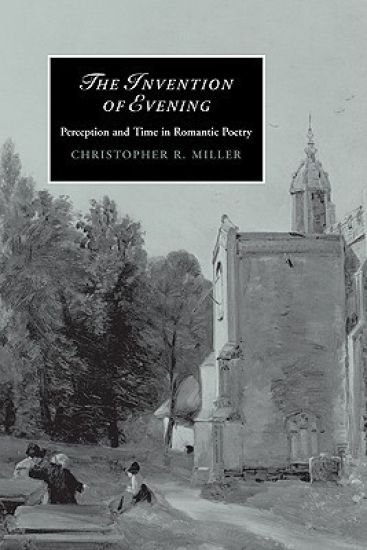
Lyric poetry has long been considered an art form of timelessness, but Romantic poets became fascinated by one time above all others: evening, the threshold between day and night. Christopher R. Miller investigates the cultural background of this development. The tradition of evening poetry runs from the idyllic settings of Virgil to the urban twilights of T. S. Eliot, and flourished in the works of Coleridge, Wordsworth, Shelley and Keats. In fresh readings of familiar Romantic poems, Miller shows how evening settings enabled poets to represent the passage of time and to associate it with subtle movements of thought and perception. This leads to new ways of reading canonical works, and of thinking about the kinds of themes the lyric can express.
The Path to Genocide

The Path to Genocide

Christopher R. Browning

Cambridge University Press
1992
sidottu
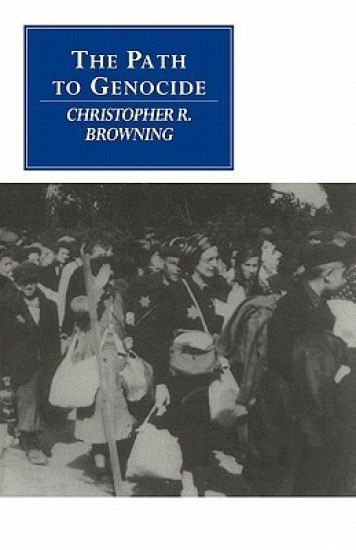
The Nazi Holocaust haunts the modern imagination as one of the most compelling examples of the human capacity for organised atrocity on a mass scale. This authoritative account of the evolution of Nazi Jewish policy from 1939 to 1942 seeks to answer some of the fundamental questions about what actually happened, and why, between the outbreak of war and the emergence of the Final Solution. Christopher Browning assesses the historians’ interpretations and offers his own insights, based on detailed case studies uncovering important and telling new evidence.
The Path to Genocide

The Path to Genocide

Christopher R. Browning

Cambridge University Press
1995
pokkari
The Nazi Holocaust haunts the modern imagination as one of the most compelling examples of the human capacity for organised atrocity on a mass scale. This authoritative account of the evolution of Nazi Jewish policy from 1939 to 1942 seeks to answer some of the fundamental questions about what actually happened, and why, between the outbreak of war and the emergence of the Final Solution. Christopher Browning assesses the historians’ interpretations and offers his own insights, based on detailed case studies uncovering important and telling new evidence. ‘The clarity as well as economy with which he writes, his firm grasp of the evidence and the balanced judgement he brings to its interpretation make this a most impressive performance … He uses his flair for uncovering new archive material to throw light on the attitudes and roles of a variety of people who became involved in carrying out the Final Solution.’ The Times Literary Supplement
Imperfect Union

Imperfect Union

Christopher R. Berry

Cambridge University Press
2009
pokkari
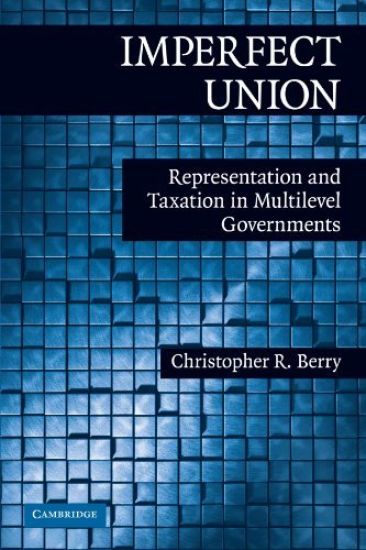
Imperfect Union offers the first political theory of special purpose jurisdictions, which constitute the most common form of local government in the United States today. Collectively, special purpose governments have more civilian employees than the federal government and spend more than all city governments combined. The proliferation of special purpose jurisdictions has fundamentally altered the nature of representation and taxation in local government. Citizens today are commonly represented by dozens - in some cases hundreds - of local officials in multiple layers of government. As a result, political participation in local elections is low and special interest groups associated with each function exert disproportionate influence. With multiple special-interest governments tapping the same tax base, the local tax base takes on the character of a common-pool resource, leading to familiar problems of overexploitation. Strong political parties can often mitigate the common-pool problem by informally coordinating the policies of multiple overlapping governments.
Imperfect Union

Imperfect Union

Christopher R. Berry

Cambridge University Press
2009
sidottu
Imperfect Union offers the first political theory of special purpose jurisdictions, which constitute the most common form of local government in the United States today. Collectively, special purpose governments have more civilian employees than the federal government and spend more than all city governments combined. The proliferation of special purpose jurisdictions has fundamentally altered the nature of representation and taxation in local government. Citizens today are commonly represented by dozens - in some cases hundreds - of local officials in multiple layers of government. As a result, political participation in local elections is low and special interest groups associated with each function exert disproportionate influence. With multiple special-interest governments tapping the same tax base, the local tax base takes on the character of a common-pool resource, leading to familiar problems of overexploitation. Strong political parties can often mitigate the common-pool problem by informally coordinating the policies of multiple overlapping governments.
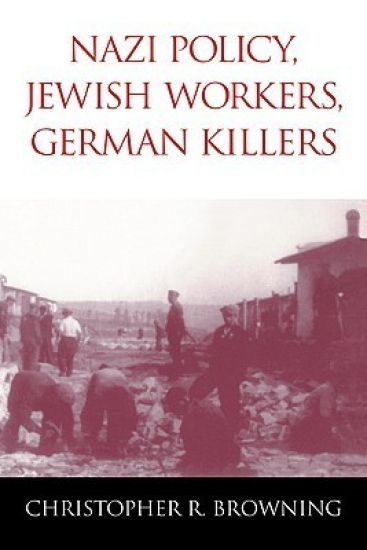
Nazi Policy, Jewish Workers, German Killers

Nazi Policy, Jewish Workers, German Killers

Christopher R. Browning

Cambridge University Press
2000
sidottu
Nazi Policy, Jewish Workers, German Killers focuses on controversial issues in current Holocaust scholarship. How did Nazi Jewish policy evolve during the first years of the war? When did the Nazi regime cross the historic watershed from population expulsion and decimation ('ethnic cleansing') to total and systematic extermination? How did Nazi authorities attempt to reconcile policies of expulsion and extermination with the wartime urge to exploit Jewish labor? How were Jewish workers impacted? What role did local authorities play in shaping Nazi policy? What more can we learn about the mindset and behavior of the local perpetrators? Using new evidence, this book attempts to shed light on these important questions.
Nazi Policy, Jewish Workers, German Killers

Nazi Policy, Jewish Workers, German Killers

Christopher R. Browning

Cambridge University Press
2000
pokkari
Nazi Policy, Jewish Workers, German Killers focuses on controversial issues in current Holocaust scholarship. How did Nazi Jewish policy evolve during the first years of the war? When did the Nazi regime cross the historic watershed from population expulsion and decimation (‘ethnic cleansing’) to total and systematic extermination? How did Nazi authorities attempt to reconcile policies of expulsion and extermination with the wartime urge to exploit Jewish labor? How were Jewish workers impacted? What role did local authorities play in shaping Nazi policy? What more can we learn about the mindset and behavior of the local perpetrators? Using new evidence, this book attempts to shed light on these important questions.
The Invention of Evening

The Invention of Evening

Christopher R. Miller

Cambridge University Press
2006
sidottu
Lyric poetry has long been considered an art form of timelessness, but Romantic poets became fascinated by one time above all others: evening, the threshold between day and night. Christopher R. Miller investigates the cultural background of this development. The tradition of evening poetry runs from the idyllic settings of Virgil to the urban twilights of T. S. Eliot, and flourished in the works of Coleridge, Wordsworth, Shelley and Keats. In fresh readings of familiar Romantic poems, Miller shows how evening settings enabled poets to represent the passage of time and to associate it with subtle movements of thought and perception. This leads to new ways of reading canonical works, and of thinking about the kinds of themes the lyric can express.
God is One'

God is One'

Christopher R. Bruno

T. T.Clark Ltd
2013
sidottu
In discussions of Paul's letters, much attention has been devoted to statements that closely identify Christ with Israel's God (i.e., 1 Cor 8:6). However, in Rom 3:30 and Gal 3:20, Paul uses the phrase "God is one" to link Israel's monotheistic confession and the inclusion of the Gentiles in the people of God. Therefore, this study traces the OT and early Jewish backgrounds of the phrase "God is one" and their possible links to Gentile inclusion. Following this, Christopher Bruno examines the two key Pauline texts that link the confession of God as one with the inclusion of the Gentiles. Bruno observes a significant discontinuity between the consistent OT and Jewish interpretations of the phrase and Paul's use of "God is one" in relation to the Gentiles. In the both the OT and earlyJewish literature, the phrase functions as a boundary marker of sorts, distinguishing the covenant people and the Gentiles. The key exception to this pattern is Zech 14:9, which anticipates the confession of God as one expanding to the nations. Similarly, in Romans and Galatians, the phrase is not aboundary marker, but rather grounds the unity of Jew and Gentile. The contextand arguments in Rom 3:30 and Gal 3:20 lead to the conclusion that Paul's monotheism must now be understood in light of the Christ event; moreover, Zech14:9 may play a significant role in the link between Paul's eschatological monotheism and his argument for the inclusion of the Gentiles in Romans and Galatians.
Ethics in the Presence of Christ

Ethics in the Presence of Christ

Christopher R. J. Holmes

T. T.Clark Ltd
2011
nidottu
This is an account of how the revealed truth, love, and power of God revealed in Jesus Christ are contemporary and transformative to human life. Christian ethics is a matter of grace, present to us in Jesus Christ. But so often Jesus is reduced to a kind of role model. He represents a way of being from the past that should be emulated and made relevant for today. What such an approach lacks, however, is consideration of Jesus as One who is savingly present and active today. Indeed, what if Jesus were not inert. What if his presence is constitutive of reality? Our task is to become participant in his work of making all things new. For by joining what he is doing, ethics fulfills its task, which it to become human. The purpose of this book is to account for the ways in which the revealed truth, love, and power of God revealed in Jesus Christ are contemporary to human life and transformative of human life. By learning to hear, obey, and serve, men and women become aligned to the ongoing and life-giving presence of the truth, love, and power of Jesus Christ.
God is One'

God is One'

Christopher R. Bruno

T. T.Clark Ltd
2015
nidottu
In discussions of Paul's letters, much attention has been devoted to statements that closely identify Christ with Israel's God (i.e., 1 Cor 8:6). However, in Rom 3:30 and Gal 3:20, Paul uses the phrase "God is one" to link Israel's monotheistic confession and the inclusion of the Gentiles in the people of God. Therefore, this study traces the OT and early Jewish backgrounds of the phrase "God is one" and their possible links to Gentile inclusion. Following this, Christopher Bruno examines the two key Pauline texts that link the confession of God as one with the inclusion of the Gentiles. Bruno observes a significant discontinuity between the consistent OT and Jewish interpretations of the phrase and Paul's use of "God is one" in relation to the Gentiles. In the both the OT and earlyJewish literature, the phrase functions as a boundary marker of sorts, distinguishing the covenant people and the Gentiles. The key exception to this pattern is Zech 14:9, which anticipates the confession of God as one expanding to the nations. Similarly, in Romans and Galatians, the phrase is not aboundary marker, but rather grounds the unity of Jew and Gentile. The contextand arguments in Rom 3:30 and Gal 3:20 lead to the conclusion that Paul's monotheism must now be understood in light of the Christ event; moreover, Zech14:9 may play a significant role in the link between Paul's eschatological monotheism and his argument for the inclusion of the Gentiles in Romans and Galatians.
Whither We Tend

Whither We Tend

Christopher R German

Charted Life
2021
pokkari
Simon Gates is a mild-mannered insurance agent from Stratford, Connecticut. Major Gus Spiros is a war-weary ex-contractor for the US Government. The two men meet by accident and start a series of events that will lead them both toward a war that will attempt to reclaim America. By writing "The Plan", Gus commits to driving the bigotry from the hearts and minds of the Alt-Right and rallying the extremes of both sides of the political fringe to fight for a common cause. He creates an Army from a group of Alt-right Travel-Trailer enthusiast Americans who tend toward the anti-government sentiment and sets the stage for a civil war that aims to reclaim the principles set forth by our founding fathers. Simon joins the Military in a new volunteer program that is designed to reinforce an Army that is reeling from Government cuts at the hands of a despotic President hell-bent on driving the Seditionist fringe into oblivion. Simon finds out in the end that sometimes your worst enemies come from your most trusted leaders. Their fates will bring them together in a symbolic way that represents the unification of both sides of the current political extremes in this Nation, to see that if you wipe away the hate, we are all fighting for the same thing. This political dystopian story tracks straight out of the political events of today and poses the question, where will we go from here? Just as Lincoln asked of the people in his House divided speech, Whither We Tend asks the question, whether we are heading towards a war that will tear us apart or a war that will unite us as a stronger and better Nation. The answer is entirely up to us.
The Sailboat

The Sailboat

Christopher R German

Christopher German
2021
pokkari
Phillip Winters is a computer guy with a dream to set sail. His lawyer wife Lucy only half shares his vision but begrudgingly follows Phillip to their first sailing class in the sailing capital of America, Annapolis, MD. She excels, while he falls behind. Setting out to find the perfect boat, whether his wife approves or not, Phillip finds a storm-ravaged boat and gets in over his head, much to his wife's disapproval. They move to Beaufort, NC, and fix up the derelict vessel without having the first clue of how to fix a boat or even how to sail for that matter. They quickly realize that it is a task they are ill-equipped to handle, and one which they lack the experience or know-how to tackle. Thankfully, like so many who have gone before them, they have the financial means to push forward, even if they should run away. A brief stay in a town that resembles a third-world banana republic and a run-in with what all Southerners affectionately call "water bugs", they manage to launch their dream boat and set sail after a rum-soaked christening in Oriental, the sailing capital of North Carolina. Bumping down the coast to Florida, hopping from port to port, the couple experiences the highs and lows of the live-aboard lifestyle, including surprise expenses, sweaty nights on the high seas, and morally questionable port adventures with fellow boat owners. The Sailboat is a cautionary tale about boat ownership and relationships and demonstrates to those who are dreaming of ditching their COVID cocoon by heading out on the high seas that the live-aboard life is rarely smooth sailing.
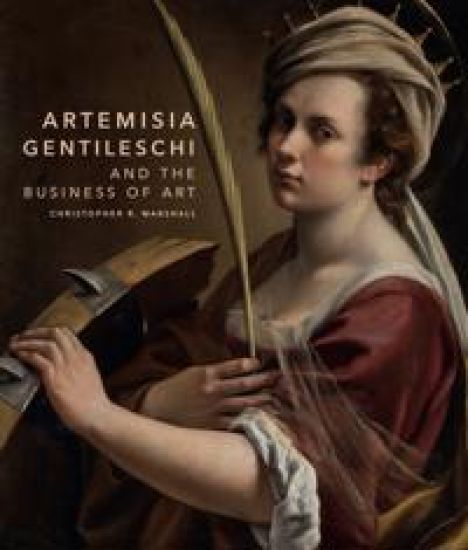
Artemisia Gentileschi and the Business of Art

Artemisia Gentileschi and the Business of Art

Christopher R. Marshall

PRINCETON UNIVERSITY PRESS
2024
sidottu
A new account of the renowned Baroque painter, revealing how her astute professional decisions shaped her career, style, and legacyArt has long been viewed as a calling—a quasi-religious vocation that drives artists to seek answers to humanity’s deepest questions. Yet the art world is a risky, competitive business that requires artists to make strategic decisions, especially if the artist is a woman. In Artemisia Gentileschi and the Business of Art, Christopher Marshall presents a new account of the life, work, and legacy of the Italian Baroque painter, revealing how she built a successful four-decade career in a male-dominated field—and how her business acumen has even influenced the resurrection of her reputation today, when she has been transformed from a footnote of art history to a globally famous artist and feminist icon.Combining the most recent research with detailed analyses of newly attributed paintings, the book highlights the business considerations behind Gentileschi’s development of a trademark style as she marketed herself to the public across a range of Italian artistic centers. The disguised self-portraits in her early Florentine paintings are reevaluated as an effort to make a celebrity brand of her own image. And, challenging the common perception that Gentileschi’s only masterpieces are her early Caravaggesque paintings, the book emphasizes the importance of her neglected late Neapolitan works, which are reinterpreted as innovative responses to the conventional practices of Baroque workshops.Artemisia Gentileschi and the Business of Art shows that Gentileschi’s remarkable success as a painter was due not only to her enormous talent but also to her ability to respond creatively to the continuously evolving trends and challenges of the Italian Baroque art world.