The World Displayed - Vol. 1 is an unchanged, high-quality reprint of the original edition of 1795. Hansebooks is editor of the literature on different topic areas such as research and science, travel and expeditions, cooking and nutrition, medicine, and other genres. As a publisher we focus on the preservation of historical literature. Many works of historical writers and scientists are available today as antiques only. Hansebooks newly publishes these books and contributes to the preservation of literature which has become rare and historical knowledge for the future.
The World Displayed - Vol. 4 is an unchanged, high-quality reprint of the original edition of 1795. Hansebooks is editor of the literature on different topic areas such as research and science, travel and expeditions, cooking and nutrition, medicine, and other genres. As a publisher we focus on the preservation of historical literature. Many works of historical writers and scientists are available today as antiques only. Hansebooks newly publishes these books and contributes to the preservation of literature which has become rare and historical knowledge for the future.
The World Displayed - A curious collection of voyages and travels - Vol. 6 is an unchanged, high-quality reprint of the original edition of 1795. Hansebooks is editor of the literature on different topic areas such as research and science, travel and expeditions, cooking and nutrition, medicine, and other genres. As a publisher we focus on the preservation of historical literature. Many works of historical writers and scientists are available today as antiques only. Hansebooks newly publishes these books and contributes to the preservation of literature which has become rare and historical knowledge for the future.
The World Displayed - A curious collection of voyages and travels - Vol. 7 is an unchanged, high-quality reprint of the original edition of 1795. Hansebooks is editor of the literature on different topic areas such as research and science, travel and expeditions, cooking and nutrition, medicine, and other genres. As a publisher we focus on the preservation of historical literature. Many works of historical writers and scientists are available today as antiques only. Hansebooks newly publishes these books and contributes to the preservation of literature which has become rare and historical knowledge for the future.
The World Displayed - A curious collection of voyages and travels - Vol. 8 is an unchanged, high-quality reprint of the original edition of 1795. Hansebooks is editor of the literature on different topic areas such as research and science, travel and expeditions, cooking and nutrition, medicine, and other genres. As a publisher we focus on the preservation of historical literature. Many works of historical writers and scientists are available today as antiques only. Hansebooks newly publishes these books and contributes to the preservation of literature which has become rare and historical knowledge for the future.
With the rapid development of the Internet of Things, a gap has emerged in skills versus knowledge in an industry typically segmented into hardware versus software. Practitioners are now expected to possess capabilities across the spectrum of hardware and software skills to create these smart devices.This book explores these skill sets in an instructive way, beginning at the foundations of what makes “smart” technology smart, addressing the basics of hardware and hardware design, software, user experiences, and culminating in the considerations and means of building a fully formed smart device, capable of being used in a commercial capacity, versus a DIY project. Practical Smart Device Design and Construction includes a set of starter projects designed to encourage the novice to build and learn from doing. Each project also includes a summary guiding you where to go next, and how to tie the practical, hands-on experience together with what they have learned to take the next step on their own.What You'll LearnPractical smart device design and construction considerations such as size, power consumption, wiring needs, analog vs digital, and sensor types and usesMethods and tools for creating their own designs such as circuit board designs; and wiring and prototyping toolsHands-on guidance through their own prototype projects and building it alongside the projects in this bookSoftware considerations for speed versus ease, security, and basics of programming and data analytics for smart devicesWho This Book Is ForThose with some technical skills, or at least a familiarity with technical topics, who are looking for the means and skills to start experimenting with combined hardware and software projects in order to gain familiarity and comfort with the smart device space.
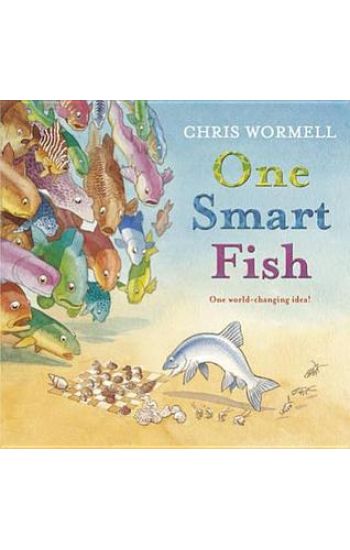
Long ago in the deep ocean, there lived . . . one smart fish! He wasn't the biggest and he wasn't the boldest, but he was the cleverest. What this smart fish wanted more than anything else was to walk upon the land. But everyone knows that fish can't walk . . . can they?
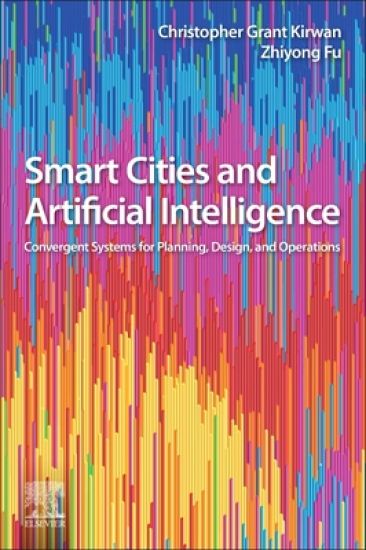
Smart Cities and Artificial Intelligence offers a comprehensive view of how cities are evolving as smart ecosystems through the convergence of technologies incorporating machine learning and neural network capabilities, geospatial intelligence, data analytics and visualization, sensors, and smart connected objects. These recent advances in AI move us closer to developing urban operating systems that simulate human, machine, and environmental patterns from transportation infrastructure to communication networks. Exploring cities as real-time, living, dynamic systems, and providing tools and formats including generative design and living lab models that support cities to become self-regulating, this book provides readers with a conceptual and practical knowledge base to grasp and apply the key principles required in the planning, design, and operations of smart cities. Smart Cities and Artificial Intelligence brings a multidisciplinary, integrated approach, examining how the digital and physical worlds are converging, and how a new combination of human and machine intelligence is transforming the experience of the urban environment. It presents a fresh holistic understanding of smart cities through an interconnected stream of theory, planning and design methodologies, system architecture, and the application of smart city functions, with the ultimate purpose of making cities more liveable, sustainable, and self-sufficient.
There is a strong link between organisational culture and profit after all a happy workforce is a productive workforce. Yet a culture of inertia rather than innovation prevails in many organisations. Wise leaders, however, know how to work with the grain of human value and worth, harnessing it, so as to add shared value both for the organisation and for the good of society. So, how can astute leaders set the right conditions for creativity and cultivate non-economic goods, such as time and relationships, that make for a happy, effective workforce? The author proposes the notion of organisational culture as ’environments of value’ wherein inner value translated into external value is embedded within the triple bottom line and indeed an awareness of how an organisation is like a force field: it exercises power and leaves a footprint. This construct informs the emerging concept of Shared Value as requiring five literacies about: ¢ Shareholder value and return for risk ¢ Value for the social environment linked to respect for the natural environment ¢ Inner value of those in the enterprise, which, when unlocked, releases energies and adds value ¢ Nurture of non-quantifiable qualities that promote human flourishing ¢ Understandings of how power relations distort the way organisations operate He clearly signposts the link between promoting an environment of value within which these literacies flourish and the added value for the organisation arising from such a culture.
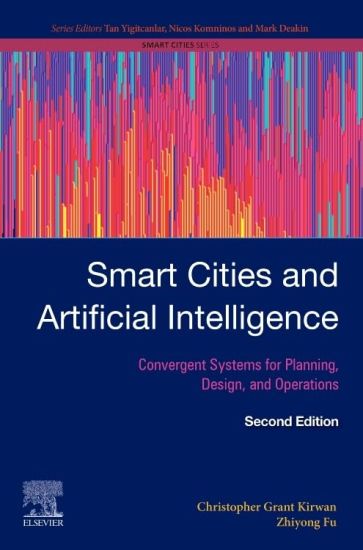
Smart Cities and Artificial Intelligence: Convergent Systems for Planning, Design, and Operations, Second Edition delves into the evolution of urban ecosystems through the integration of advanced technologies like machine learning, geospatial intelligence, and smart connected objects. By examining cities as dynamic, real-time systems and providing tools such as generative design and living lab models, this book equips readers with both conceptual and practical knowledge for planning, designing, and operating smart cities. The book adopts a multidisciplinary approach, emphasizing the convergence of digital and physical realms and the transformative impact of human and machine intelligence on urban environments. It offers a holistic understanding of smart city functions, aiming to make cities more livable and sustainable. New sections include a focus on the Metaverse, comparisons of global smart city models, and updated use cases and applications of AI since the first edition.
This work has been selected by scholars as being culturally important and is part of the knowledge base of civilization as we know it.This work is in the public domain in the United States of America, and possibly other nations. Within the United States, you may freely copy and distribute this work, as no entity (individual or corporate) has a copyright on the body of the work.Scholars believe, and we concur, that this work is important enough to be preserved, reproduced, and made generally available to the public. To ensure a quality reading experience, this work has been proofread and republished using a format that seamlessly blends the original graphical elements with text in an easy-to-read typeface.We appreciate your support of the preservation process, and thank you for being an important part of keeping this knowledge alive and relevant.
This work has been selected by scholars as being culturally important and is part of the knowledge base of civilization as we know it.This work is in the public domain in the United States of America, and possibly other nations. Within the United States, you may freely copy and distribute this work, as no entity (individual or corporate) has a copyright on the body of the work.Scholars believe, and we concur, that this work is important enough to be preserved, reproduced, and made generally available to the public. To ensure a quality reading experience, this work has been proofread and republished using a format that seamlessly blends the original graphical elements with text in an easy-to-read typeface.We appreciate your support of the preservation process, and thank you for being an important part of keeping this knowledge alive and relevant.
There is a strong link between organisational culture and profit after all a happy workforce is a productive workforce. Yet a culture of inertia rather than innovation prevails in many organisations. Wise leaders, however, know how to work with the grain of human value and worth, harnessing it, so as to add shared value both for the organisation and for the good of society. So, how can astute leaders set the right conditions for creativity and cultivate non-economic goods, such as time and relationships, that make for a happy, effective workforce? The author proposes the notion of organisational culture as ’environments of value’ wherein inner value translated into external value is embedded within the triple bottom line and indeed an awareness of how an organisation is like a force field: it exercises power and leaves a footprint. This construct informs the emerging concept of Shared Value as requiring five literacies about: ¢ Shareholder value and return for risk ¢ Value for the social environment linked to respect for the natural environment ¢ Inner value of those in the enterprise, which, when unlocked, releases energies and adds value ¢ Nurture of non-quantifiable qualities that promote human flourishing ¢ Understandings of how power relations distort the way organisations operate He clearly signposts the link between promoting an environment of value within which these literacies flourish and the added value for the organisation arising from such a culture.
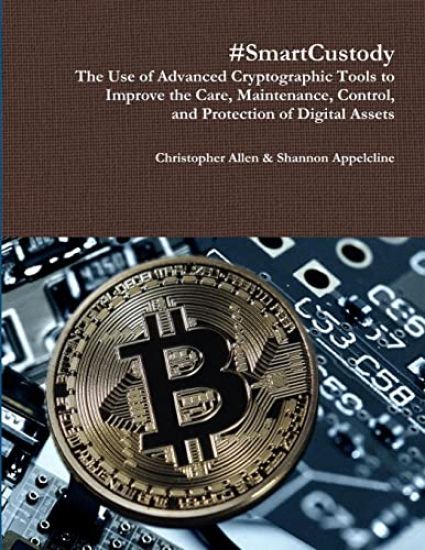
Your digital assets are more vulnerable you might think. They could be stolen by hackers, extorted by the mob, expropriated by the government, or lost by you #SmartCustody details what you need to ensure that you don't lose your Bitcoins, your Ether, or your self-sovereign identity. It teaches you how to protect your digital data and cryptocurrencies with procedural solutions. A risk-modeling methodology leads you through the process of sketching out your digital-asset processes, identifying your vulnerabilities, determining your true risks, and correcting those dangers. It's built upon a 14-step cold-storage scenario and a set of 27 personified adversaries. Case studies help to make the adversaries real, and identify both abstract and historic attacks for each. If you're a small Bitcoin holder, a cryptocurrency trader, or a small fund manager, #SmartCustody can offer you procedural techniques and adversarial insights to improve the security of your digital assets.
Christopher Meinecke setzt sich mit der Frage auseinander, inwieweit private Haushalte in einem von erneuerbaren Energiequellen getragenen digitalen Stromnetz (Smart Grid) adaptive Stromverbraucher sein können. Basierend auf einem einjährigen Feldtest mit mehr als 650 Privathaushalten untersucht er unter Anwendung multivariater statistischer Längsschnittverfahren, welche Wirkung Smart Meter-basierte Feedback-Systeme und variable Tarif-Modelle auf ihren Stromverbrauch haben. Darüber hinaus werden die politischen, rechtlichen und wirtschaftlichen Rahmenbedingungen des noch ausstehenden Rollouts von Smart Metern in Deutschland beleuchtet.