
Kirjahaku
Etsi kirjoja tekijän nimen, kirjan nimen tai ISBN:n perusteella.
1000 tulosta hakusanalla Christopher W. Calvo


Logistical Support of Amphibious Operations in Atomic and Guided Missile Warfare
Christopher W Chaney
Hutson Street Press
2025
sidottu
Logistical Support of Amphibious Operations in Atomic and Guided Missile Warfare
Christopher W Chaney
Hutson Street Press
2025
pokkari
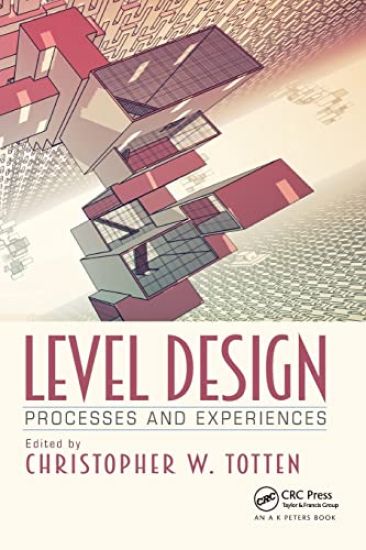
In this book, veteran game developers, academics, journalists, and others provide their processes and experiences with level design. Each provides a unique perspective representing multiple steps of the process for interacting with and creating game levels – experiencing levels, designing levels, constructing levels, and testing levels. These diverse perspectives offer readers a window into the thought processes that result in memorable open game worlds, chilling horror environments, computer-generated levels, evocative soundscapes, and many other types of gamespaces. This collection invites readers into the minds of professional designers as they work and provides evergreen topics on level design and game criticism to inspire both new and veteran designers.Key Features: Learn about the processes of experienced developers and level designers in their own words Discover best-practices for creating levels for persuasive play and designing collaboratively Offers analysis methods for better understanding game worlds and how they function in response to gameplay Find your own preferred method of level design by learning the processes of multiple industry veterans

This accessible book provides a practical discussion of the main elements of argumentation as illustrated by 30 public arguments from a recent year on a wide variety of social, cultural, and scientific topics. Arguing is an important form of communication in any society and a principal way in which ideas are exposed, discussed, and modified. The real-life examples examined in this book reflect the different considerations that go into composing arguments and the range of strategies that can be chosen as vehicles for our positions. They demonstrate the roles that emotion can play along with other modes of conveying evidence, from the use of images to the use of gestures. They show the power of threats, comparisons, and consequences. What emerges is an instructive discussion that illustrates the way we argue and that shows argument, invention, and evaluation in action.This book is a stimulating read for anyone interested in argument and public discourse and can be used as a supplemental text for courses in argumentation, persuasive communication, critical thinking, composition, and informal logic.
This accessible book provides a practical discussion of the main elements of argumentation as illustrated by 30 public arguments from a recent year on a wide variety of social, cultural, and scientific topics. Arguing is an important form of communication in any society and a principal way in which ideas are exposed, discussed, and modified. The real-life examples examined in this book reflect the different considerations that go into composing arguments and the range of strategies that can be chosen as vehicles for our positions. They demonstrate the roles that emotion can play along with other modes of conveying evidence, from the use of images to the use of gestures. They show the power of threats, comparisons, and consequences. What emerges is an instructive discussion that illustrates the way we argue and that shows argument, invention, and evaluation in action.This book is a stimulating read for anyone interested in argument and public discourse and can be used as a supplemental text for courses in argumentation, persuasive communication, critical thinking, composition, and informal logic.

World Design for 2D Action-Adventures
Christopher W. Totten; Adrian Sandoval
TAYLOR FRANCIS LTD
2024
sidottu
Award-winning action-adventure designers Christopher Totten and Adrian Sandoval guide you on a quest to create levels for different styles of 2D action-adventure games, from top-down dungeon-crawler adventures to side-scrolling non-linear “Metroidvania” titles. Blending theory and practical analysis, this book shows how principles of game and level design are applied in some of your favorite 2D action-adventure games. It uses examples from popular games such as The Legend of Zelda and Hollow Knight, while also providing insights from the authors’ own experiences creating independent games in the genre.This book also intersperses these examples with practical exercises in 2D action-adventure world design using the free and easy-to-use GB Studio engine, allowing readers to practice their skills and see how lessons from the theory chapters apply in real game development environments. These practical chapters cover the basics of using GB Studio and related software, such as Aseprite and Tiled, to help readers create their own action-adventure characters, monsters, quest systems, switches, keys, and other mechanics - all the way up to designing their own dungeon!World Design for 2D Action-Adventures will be of great interest to all those looking to improve their level design skills within this genre.

World Design for 2D Action-Adventures
Christopher W. Totten; Adrian Sandoval
TAYLOR FRANCIS LTD
2024
nidottu
Award-winning action-adventure designers Christopher Totten and Adrian Sandoval guide you on a quest to create levels for different styles of 2D action-adventure games, from top-down dungeon-crawler adventures to side-scrolling non-linear “Metroidvania” titles. Blending theory and practical analysis, this book shows how principles of game and level design are applied in some of your favorite 2D action-adventure games. It uses examples from popular games such as The Legend of Zelda and Hollow Knight, while also providing insights from the authors’ own experiences creating independent games in the genre.This book also intersperses these examples with practical exercises in 2D action-adventure world design using the free and easy-to-use GB Studio engine, allowing readers to practice their skills and see how lessons from the theory chapters apply in real game development environments. These practical chapters cover the basics of using GB Studio and related software, such as Aseprite and Tiled, to help readers create their own action-adventure characters, monsters, quest systems, switches, keys, and other mechanics - all the way up to designing their own dungeon!World Design for 2D Action-Adventures will be of great interest to all those looking to improve their level design skills within this genre.

Classical Mechanics: A Computational Approach with Examples using Python and Mathematica provides a unique, contemporary introduction to classical mechanics, with a focus on computational methods. In addition to providing clear and thorough coverage of key topics, this textbook includes integrated instructions and treatments of computation.This newly updated and revised second edition includes two new appendices instructing the reader in both the Python and Mathematica languages. All worked example problems in the second edition contain both Python and Mathematica code. New end-of-chapter problems explore the application of computational methods to classical mechanics problems.Full of pedagogy, it contains both analytical and computational example problems within the body of each chapter. The example problems teach readers both analytical methods and how to use computer algebra systems and computer programming to solve problems in classical mechanics. End-of-chapter problems allow students to hone their skills in problem solving with and without the use of a computer. The methods presented in this book can then be used by students when solving problems in other fields both within and outside of physics.It is an ideal textbook for undergraduate students in physics, mathematics, and engineering studying classical mechanics.Key Features:Gives readers the "big picture" of classical mechanics and the importance of computation in the solution of problems in physicsNumerous example problems using both analytical and computational methods, as well as explanations as to how and why specific techniques were usedOnline resources containing specific example codes to help students learn computational methods and write their own algorithmsA solutions manual is available via the Routledge Instructor Hub and all example codes in the book are available via the Support Material tab, and at the book’s GitHub page: https://github.com/vpagonis/Classical_Mechanics_2nd_Edition
Classical Mechanics: A Computational Approach with Examples using Python and Mathematica provides a unique, contemporary introduction to classical mechanics, with a focus on computational methods. In addition to providing clear and thorough coverage of key topics, this textbook includes integrated instructions and treatments of computation.This newly updated and revised second edition includes two new appendices instructing the reader in both the Python and Mathematica languages. All worked example problems in the second edition contain both Python and Mathematica code. New end-of-chapter problems explore the application of computational methods to classical mechanics problems.Full of pedagogy, it contains both analytical and computational example problems within the body of each chapter. The example problems teach readers both analytical methods and how to use computer algebra systems and computer programming to solve problems in classical mechanics. End-of-chapter problems allow students to hone their skills in problem solving with and without the use of a computer. The methods presented in this book can then be used by students when solving problems in other fields both within and outside of physics.It is an ideal textbook for undergraduate students in physics, mathematics, and engineering studying classical mechanics.Key Features:Gives readers the "big picture" of classical mechanics and the importance of computation in the solution of problems in physicsNumerous example problems using both analytical and computational methods, as well as explanations as to how and why specific techniques were usedOnline resources containing specific example codes to help students learn computational methods and write their own algorithmsA solutions manual is available via the Routledge Instructor Hub and all example codes in the book are available via the Support Material tab, and at the book’s GitHub page: https://github.com/vpagonis/Classical_Mechanics_2nd_Edition
Music poses unique and complex challenges for artificial intelligence, even as 21st-century AI grows ever more adept at generating compelling content. The AI Music Problem: Why Machine Learning Conflicts With Musical Creativity probes the challenges behind AI-generated music, with an investigation that straddles the technical, the musical, and the aesthetic. Bringing together the perspectives of the humanities and computer science, the author shows how the difficulties that music poses for AI connect to larger questions about music, artistic expression, and the increasing ubiquity of artificial intelligence. Taking a wide view of the current landscape of machine learning and Large Language Models, The AI Music Problem offers a resource for students, researchers, and the public to understand the broader issues surrounding musical AI on both technical and artistic levels. The author breaks down music theory and computer science concepts with clear and accessible explanations, synthesizing the technical with more holistic and human-centric analyses. Enabling readers of all backgrounds to understand how contemporary AI models work and why music is often a mismatch for those processes, this book is relevant to all those engaging with the intersection between AI and musical creativity today.

Music poses unique and complex challenges for artificial intelligence, even as 21st-century AI grows ever more adept at generating compelling content. The AI Music Problem: Why Machine Learning Conflicts With Musical Creativity probes the challenges behind AI-generated music, with an investigation that straddles the technical, the musical, and the aesthetic. Bringing together the perspectives of the humanities and computer science, the author shows how the difficulties that music poses for AI connect to larger questions about music, artistic expression, and the increasing ubiquity of artificial intelligence. Taking a wide view of the current landscape of machine learning and Large Language Models, The AI Music Problem offers a resource for students, researchers, and the public to understand the broader issues surrounding musical AI on both technical and artistic levels. The author breaks down music theory and computer science concepts with clear and accessible explanations, synthesizing the technical with more holistic and human-centric analyses. Enabling readers of all backgrounds to understand how contemporary AI models work and why music is often a mismatch for those processes, this book is relevant to all those engaging with the intersection between AI and musical creativity today.
Jerk: The Digital Transformation Cookbook
Christopher W. Surdak
Independently Published
2019
nidottu
Digital Transformation isn't consultant gibberish, rather, it is a historic social and economic dislocation exactly like the Industrial Revolution, or the Agricultural Revolution. Recently, Uber, Airbnb, Lyft and Waze are examples of a whole generation of new companies taking the world by storm. Using data, analytics and the sharing economy they come out of nowhere to take over industries once dominated by huge companies. How do they cause such disruption? How do they take their new business models and jerk entire industries in a year or two? In "Jerk: The Digital Transformation Cookbook" award-winning author Christopher Surdak explains how these companies do what they do, why they are successful, and why their rise to dominance may be inevitable. According to global Big Data expert Douglas Laney of Gartner, "Chris Surdak takes the reader on a wild ride through space and time to encapsulate our information-driven economy, and how a special class of people and organizations - 'Jerks' - are poised to capitalize best on this phenomenon."

ACE THE 2020 COURT OFFICER-TRAINEE EXAM (NEW YORK STATE COURTS) NEW EXAM GUIDE PREPARES YOU FOR THIS CHALLENGING EXAM ALL content prepared in consultation with present and former New York State Court Officers and New York State Courts personnel.Contents include: Court Officer jobPensionHiring requirementsSalary and benefitsPromotional opportunitiesExamination announcementVeteran creditsGetting ready for the examFormula for successDo's and don'tsAll types of exam questions, including Remembering Facts and Information, Reading, Understanding and Interpreting Written Material, Applying Facts and Information to given Situations, Clerical Checking, Record Keeping, andFULL practice test with answers explained
The Philosophy of Argument and Audience Reception
Christopher W. Tindale
Cambridge University Press
2015
sidottu
Recent work in argumentation theory has emphasized the nature of arguers and arguments along with various theoretical perspectives. Less attention has been given to the third feature of any argumentative situation - the audience. This book fills that gap by studying audience reception to argumentation and the problems that come to light as a result of this shift in focus. Christopher W. Tindale advances the tacit theories of several earlier thinkers by addressing the central problems connected with audience considerations in argumentation, problems that earlier philosophical theories overlook or inadequately accommodate. The main tools employed in exploring the central issues are drawn from contemporary philosophical research on meaning, testimony, emotion and agency. These are then combined with some of the major insights of recent rhetorical work in argumentation to advance our understanding of audiences and suggest avenues for further research.

The Philosophy of Argument and Audience Reception
Christopher W. Tindale
Cambridge University Press
2018
pokkari
Recent work in argumentation theory has emphasized the nature of arguers and arguments along with various theoretical perspectives. Less attention has been given to the third feature of any argumentative situation - the audience. This book fills that gap by studying audience reception to argumentation and the problems that come to light as a result of this shift in focus. Christopher W. Tindale advances the tacit theories of several earlier thinkers by addressing the central problems connected with audience considerations in argumentation, problems that earlier philosophical theories overlook or inadequately accommodate. The main tools employed in exploring the central issues are drawn from contemporary philosophical research on meaning, testimony, emotion and agency. These are then combined with some of the major insights of recent rhetorical work in argumentation to advance our understanding of audiences and suggest avenues for further research.
The term 'civil rights' has such a familiar presence in discussions about American politics and law that we tend to use it reflexively and intuitively, but rarely do we stop to think about what exactly we mean when we use the term and why certain uses strike us as right or wrong. In this book, Professor Christopher W. Schmidt tells the story of how Americans have fought over the meaning of civil rights from the Civil War through today. Through their struggles over what it means to live in a nation dedicated to protecting civil rights, each generation has given the label new life and new meaning. Civil Rights in America shows how the words we use to understand our world become objects of contestation and points of leverage for social, political, and legal action.
The term 'civil rights' has such a familiar presence in discussions about American politics and law that we tend to use it reflexively and intuitively, but rarely do we stop to think about what exactly we mean when we use the term and why certain uses strike us as right or wrong. In this book, Professor Christopher W. Schmidt tells the story of how Americans have fought over the meaning of civil rights from the Civil War through today. Through their struggles over what it means to live in a nation dedicated to protecting civil rights, each generation has given the label new life and new meaning. Civil Rights in America shows how the words we use to understand our world become objects of contestation and points of leverage for social, political, and legal action.