
Kirjahaku
Etsi kirjoja tekijän nimen, kirjan nimen tai ISBN:n perusteella.
1000 tulosta hakusanalla Christy Distler
Spread Open by Christy Part Two: Seducing Lindsay: A Lesbian Seduction Romance
Emilia Jade
Createspace Independent Publishing Platform
2016
nidottu

Spread Open by Christy: A Lesbian Seduction Romance
Emilia Jade
Createspace Independent Publishing Platform
2016
nidottu
A Snitch in Time: Christy Bristol Astrology Mysteries Book 3
Sunny Frazier
Black Opal Books
2015
nidottu

Where Angels Fear: Christy Bristol Astrology Mysteries Book 2
Sunny Frazier
Black Opal Books
2016
nidottu

Dumping Corporate Garbage: Christy O'Hara Books 1, 2, 3 (Disaster Recovery, Blink of an Eagle's Eye, Dancing with a Dragon)
Marvin C. McMaster
ReadersMagnet LLC
2018
nidottu
"What do you do if you are a teenage genius who has just been raped by your step-father, who has stolen a million dollars from your mother's business?" You get revenge If you are Christy O' Hara, you trap yourself a husband, a genius college student, bring charges against your rapist, use your investigative business to prove his theft, and recover the money. When he strikes back you permanently eliminate the source. You start a family, move your business to Ireland, and start cleaning out cockroaches and rats infecting other banks and business. You write music, put together a singing group with an Irish band, and record an album. Investigations by your company lead to assassination and kidnapping attempts against the family. Following links from their investigations leads them to the Dragon behind the attempts on Christy's life. While continuing to build an international music career they close in on the third generational criminal behind their problems. In a confrontation in an Austrian castle they eliminate the villain behind their problems and rescue and adopt his children.
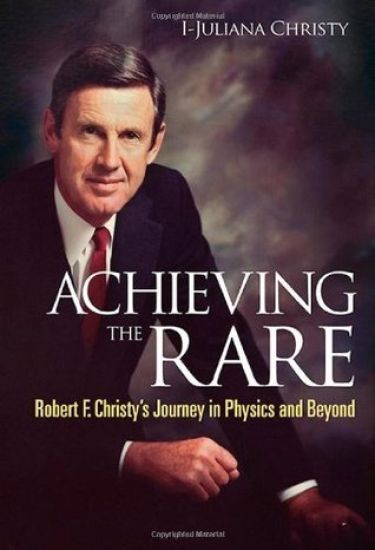
Achieving The Rare: Robert F Christy's Journey In Physics And Beyond
I-juliana Christy
World Scientific Publishing Co Pte Ltd
2013
nidottu
Robert F Christy was a legendary physicist, one of the key players in some of the most dramatic events of the 20th century. He was a student of Oppenheimer, who called him “one of the best in the world.” He was a crucial member of Fermi's team when they first unleashed the unheard-of energies of nuclear power, creating the world's first nuclear reactor on December 2, 1942. On the Manhattan Project he was the key physicist in the successful test of the world's first atomic bomb, the “Christy Gadget”, at Alamogordo on July 16, 1945. Almost immediately he turned his talents to promoting the peaceful uses of atomic energy. He successfully opposed atmospheric testing of atomic bombs and fought nuclear proliferation, a campaign that eventually led to the SALT talks with the Soviet Union. His favorite subject was astrophysics where he made fundamental contributions to the understanding of Cepheids, variable stars that are crucial distance indicators in the universe.Robert was equally fascinating as a man. In his mid-50's he became irresistably attracted to an astrophysicist, but they were a continent and a generation apart. Near his 60's they started a happy and fulfilling life together. He remained vigorous both mentally and physically into his 90's: he was still galloping his horse at age 93.Robert's story is one of overcoming obstacles, of hope, and of fulfillment.
The Descendants of James Campbell and Christy MacDonald
Selkirk Stories
2022
pokkari
Mrs. Christy's Bridge Party
Sara Ware Bassett
Createspace Independent Publishing Platform
2013
nidottu
About the Author- Sara Ware Bassett (1872-1968) was a prolific American author of fiction and nonfiction. Her novels primarily deal with New England characters, and most of them are set in two fictional Cape Cod villages she created, Belleport and Wilton. Her first novel, "Mrs. Christy's Bridge Party", was published in 1907. She subsequently wrote over forty additional novels, continuing to write and publish into the late 1950s. Many of her novels focus on love stories and humorously eccentric characters. -Wikipedia For more eBooks visit www.kartindo.com
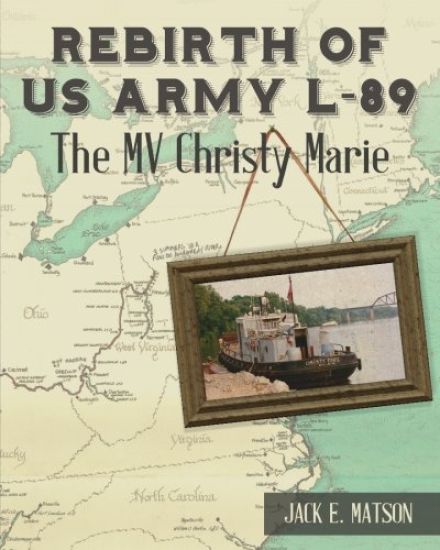
Rebirth of US Army L-89: The MV Christy Marie
Jack E. Matson
Createspace Independent Publishing Platform
2016
nidottu
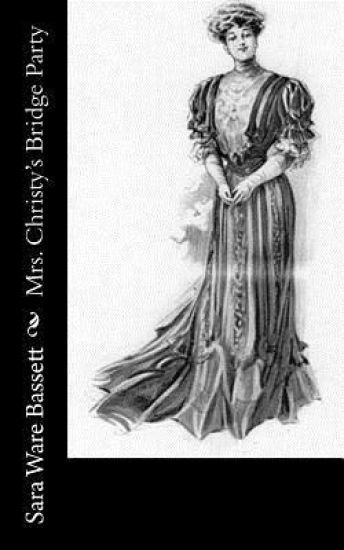
Mrs. Christy's Bridge Party
Sara Ware Bassett
Createspace Independent Publishing Platform
2017
nidottu
About the Author- Sara Ware Bassett (1872-1968) was a prolific American author of fiction and nonfiction. Her novels primarily deal with New England characters, and most of them are set in two fictional Cape Cod villages she created, Belleport and Wilton. Her first novel, "Mrs. Christy's Bridge Party," was published in 1907. She subsequently wrote over forty additional novels, continuing to write and publish into the late 1950s. Many of her novels focus on love stories and humorously eccentric characters. -Wikipedia For more eBooks visit www.kartindo.com

A personalised storybook for girls called CHRISTY. The story is based on the letters of the child's own name. All books are different from one another. The girl wakes up but can't remember her name. Magic Mouse knows how to solve the problem. They go on a wonderful adventure in the Magic Bus Translated and adapted by the author from the top-selling Finnish language children's namebook series "Tytt /Poika, joka unohti nimens ". The beautiful hand-drawn pictures will delight both the young and the young-at-heart Looking for a namebook "What's my name?" but couldn't find a book for the name you are looking for? Please don't hesitate to contact me with your name request -Tiina Walsh Author fb.me/whatsmynamestorybooks for more details about the storybooks

Signs Of Life: Kiki Smith, Rebecca Howland, Cara Perlman & Christy Rupp
Illinois State University, University Galleries
1993
pokkari
Four women artists create works addressing ecological issues, the unsettling interface between biology and technology, and humanist cultural concerns.

Complete Repertoire of the Songs, Ballads, and Plantation Melodies, Sung by the ... Christy Minstrels ... the Three Hundred and Fourth Thousand, Etc.
British Library, Historical Print Editions
2011
pokkari
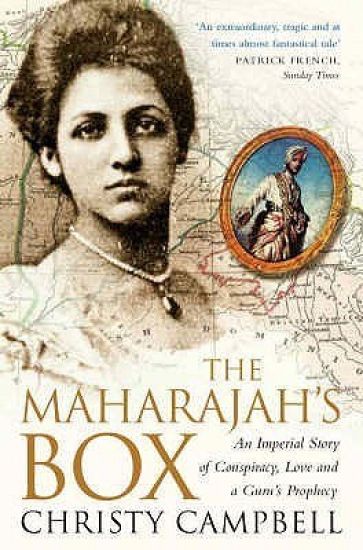
The colourful narrative history of Duleep Singh, the last Emperor of the Sikhs and protégé of Queen Victoria, and his bizarre attempts to regain his kingdom of the Punjab from the British Empire in the late 19th century. In July 1997 the Swiss Bankers’ Association, under international pressure to atone for wartime compliance with Hitler’s Germany, published a list of over 1,700 ‘dormant accounts’, untouched for over fifty years. The names were supposedly those of Jewish victims of the Holocaust, but among them was an Indian princess, ‘last heard of in 1942 living in Penn, Bucks’. Intrigued, Christy Campbell, a journalist on the Sunday Telegraph, started to search the records, and so uncovered the remarkable story of how Maharajah Duleep Singh, the last Emperor of the Sikhs, was made by the British – as a nine-year-old in 1849 – to sign away his kingdom of the Punjab and give Queen Victoria the Koh-i-Noor diamond (the most celebrated diamond in the world, and the jewel in Britain’s Crown). Duleep Singh, a virtual prisoner of Queen Victoria in England, began to dream of regaining his kingdom, and so embarked on a series of adventures (involving Russia and the ‘Great Game’ of Central Asia) before finally begging Victoria’s forgiveness. He had six children and died in 1893. Today the Sikhs still claim their inheritance, including the Koh-i-Noor and the now-divided Punjab.

The most serious of eight attempts on the life of Queen Victoria, four of which were of Irish origin, the "plot" planned for her 50th jubilee celebrations ostensibly implicated the "Fenian Brotherhood", but in fact came from the heart of the British establishment.
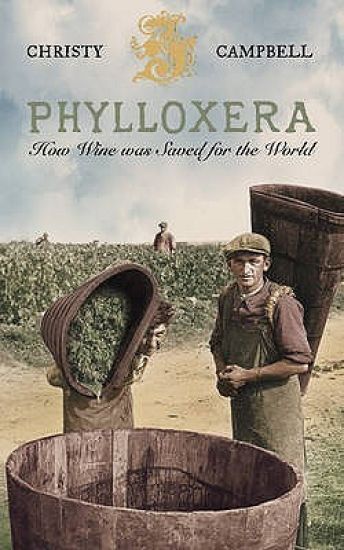
A historical investigation into the mysterious bug that wiped out the vineyards of France and Europe in the 1860s – and how one young botanist eventually ‘saved wine for the world’. In the early 1860s, vines in the lower Rhône valley, and then around Bordeaux, inexplicably began to wither and die. Panic seized France, and Jules-Émile Planchon, a botanist from Montpellier, was sent to investigate. Magnifying glass in hand, he discovered the roots of a dying vine covered in microscopic yellow insects. The tiny aphid would be named Phylloxera vastatrix – 'the dry leaf devastator'. Where it had come from was utterly mysterious, but it advanced with the speed of an invading army. As the noblest vineyards of France came under biological siege, the world's greatest wine industry tottered on the brink of ruin. The grand owners fought the aphid with expensive insecticide, while peasant vignerons simply abandoned their ruined plots in despair. Within a few years the plague had spread across Europe, from Portugal to the Crimea. Planchon, aided by the American entomologist Charles Riley, discovered that the parasite had accidentally been imported from America. He believed that only the introduction of American vines, which appeared to have developed a resistance to the aphid, could save France's vineyards. His opponents maintained that this would merely assist the spread of the disease. Meanwhile, encouraged by the French government's offer of a prize of 300,000 gold francs for a remedy, increasingly bizarre suggestions flooded in, and many wine-growing regions came close to revolution as whole local economies were obliterated. Eventually Planchon and his supporters won the day, and phylloxera-resistant American vines were grafted onto European root-stock. Despite some setbacks – the first fruits of transplanted American vines were universally pronounced undrinkable – by 1914 all vines cultivated in France were hybrid Americans. Phylloxera is an entertaining, revealing and frequently astonishing account of one of the earliest and most successful applications of science to an ecological disaster.
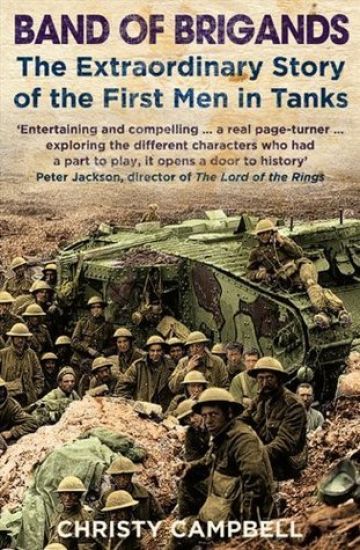
The dramatic story of the men who fought a new and terrifying kind of war amidst the carnage of the trenches in World War I: the British pioneer volunteers who were the first tank-men into battle. Inspired by a visit to northeast France to witness the excavation of a remarkably intact First World War tank from beneath a suburban vegetable plot near the town of Cambrai, Christy Campbell – then defence correspondent of the Sunday Telegraph – began to piece together the little-known story of the young men who formed the British Tank Corps. Very few of them had been professional soldiers; they were motoring enthusiasts and mechanics, plumbers, motorcyclists, circus performers and polar explorers. One officer declared: 'I have never seen such a band of brigands in my life.' They had trained in conditions of great secrecy in the grounds of a mock-oriental stately home in East Anglia and were originally known as the 'Heavy Branch, Machine Gun Corps'. The word 'tank' itself was deliberately chosen to mislead. Men in tanks saw the face of battle at its most brutal. Their task was to crush and burn the enemy out of his fortifications, and to carve a path for the infantry so they could finish the job with bayonet and grenade. Captured tank crews were beaten up or sometimes shot out of hand by the Germans. They fought in their stifling armoured boxes packed with petrol and explosives, aware that at any moment a shell-hit might incinerate them all. Christy Campbell has combed contemporary diaries and letters and later recollections to tell properly for the first time the robust yet harrowing story of how the first men in tanks went to war. The time frame is 1916-18, with a coda on how German blitzkrieg ideas developed from an English root.