Kirjahaku
Etsi kirjoja tekijän nimen, kirjan nimen tai ISBN:n perusteella.
1000 tulosta hakusanalla Clarence L. Partee

L'anémie par carence en fer chez une population infantile Algérienne
Mohammed Yehya El Amin Aissiou
ÉDITIONS UNIVERSITAIRES EUROPÉENNES
2022
nidottu

LA CARENCE EN SIRT1 COMPROMET L'HÉMATOPOÏÈSE EMBRYONNAIRE ET ADULTE CHEZ LA SOURIS
Xuan Ou
Editions Notre Savoir
2022
nidottu

Carence en micronutriments effet du BCC sur la croissance de l'enfant
Abebe Ferede
Editions Notre Savoir
2024
pokkari

Effet de la carence en vitamine D sur l'ICAM dans la CU
Romany Thabet; Lamees Hezam Alruwaili; Abeer Ahmad Sharahili
Editions Notre Savoir
2025
pokkari
Effets de la carence en iode sur la reproduction et le développement de l'homme
Haghamad Allzain
Editions Notre Savoir
2021
nidottu
Published in 1890, this novel reflects the social reform ideology of the US women's movement in the late nineteenth century. Its theme is the destructive effect of the 'demon' alcohol on the family. The Baptist Messenger, a black religious publication, called it `one of the silent, yet powerful agents at work to break down unreasonable prejudice, which is a hindrance to both races.'
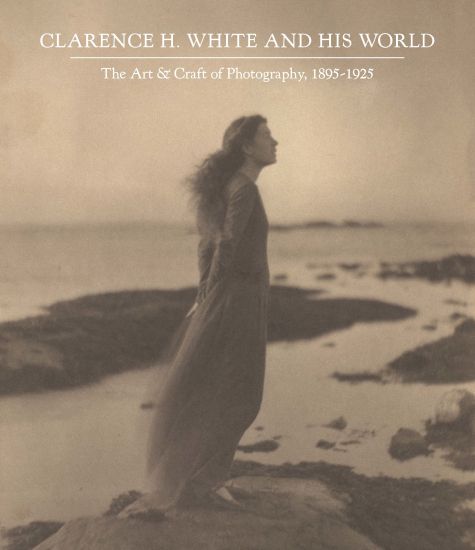
Restoring a gifted art photographer to his place in the American canon and, in the process, reshaping and expanding our understanding of early 20th-century American photography Clarence H. White (1871–1925) was one of the most influential art photographers and teachers of the early 20th century and a founding member of the Photo-Secession. This beautiful publication offers a new appraisal of White’s contributions, including his groundbreaking aesthetic experiments, his commitment to the ideals of American socialism, and his embrace of the expanding fields of photographic book and fashion illustration, celebrity portraiture, and advertising. Based on extensive archival research, the book challenges the idea of an abrupt rupture between prewar, soft-focus idealizing photography and postwar “modernism” to paint a more nuanced picture of American culture in the Progressive era. Clarence H. White and His World begins with the artist’s early work in Ohio, which shares with the nascent Arts and Crafts movement the advocacy of hand production, closeness to nature, and the simple life. White’s involvement with the Photo-Secession and his move to New York in 1906 mark a shift in his production, as it grew to encompass commercial portraiture and an increasing commitment to teaching, which ultimately led him to establish the first institutions in America to combine instruction in both technical and aesthetic aspects of photography.The book also incorporates new formal and scientific analysis of White’s work and techniques, a complete exhibition record, and many unpublished illustrations of the moody outdoor scenes and quiet images of domestic life for which he was revered. Distributed for the Princeton University Art MuseumExhibition Schedule:Princeton University Art Museum (10/07/17–01/07/18)Davis Museum, Wellesley College (02/07/18–06/03/18)Portland Museum of Art, Maine (06/30/18–09/16/18)Cleveland Museum of Art (10/21/18–01/21/19)
He reviled the rich for their cupidity and they found his rhetoric repulsive. Plebians believed him their champion and patricians knew he was their bete noire, remarks Halford Ryan in his eloquent foreword to this definitive survey of Clarence Darrow's development as orator and unique American myth. As a writer, lecturer, debater, and trial lawyer Darrow spoke for the have-nots and cultivated an image of mythic proportions as the underdog's advocate. Many of the more than 2,000 trials in which he was active reflected the major social and philosophical issues of the last quarter of the nineteenth and first third of the twentieth centuries in America. Read today, Darrow's speeches still ring true both as political statements and as models of persuasive pleading and pathos--reason enough to study the work of this uncommon advocate who stood perpetually opposed to the great and powerful of the earth. Richard J. Jensen has written a clearsighted volume that documents how Darrow created and then enlarged his personal myth through speeches, writings, and actions. Each chapter focuses on particular segments of that creation. Half of the book consists of authoritative texts of several of Darrow's most influential and rhetorically brilliant speeches, and a speech chronology simplifies the work of researchers.The study opens with a brief biography, an overview of Darrow's rhetoric, along with the forces that affected it, and some initial comments on the elements that make up the myth. The next chapter, Schoolmaster of the Courtroom, chronicles the origins of Darrow's image as a defender of the downtrodden and his early trials in defense of labor unions and their leaders. What is considered to be one of the most famous speeches in American legal history, that given by Darrow at the conclusion of the 1924 Leopold and Loeb trial, is the focus of Chapter Three. Chapter Four centers on the Scopes Trial, perhaps the most famous trial in recent American history, during which the dramatic confrontation with William Jennings Bryan occurred. The penultimate chapter explains the arguments Darrow used to defend the poor, radicals, Blacks, and other less fortunate members of society. Finally, Darrow's rhetoric as a writer and as an active speaker and debater on the lecture circuit is examined. Part II contains the authoritative texts of seven speeches including those given during the Leopold and Loeb Trial and the Scopes Trial, among others. The Chronology of Speeches, Bibliography, and Index close the volume. The speeches along with Jensen's intelligent, readable analysis and criticism will be an important resource for those teaching and studying Legal Rhetoric and the History of Public Address.


Clarence V1: Or A Tale Of Our Own Times (1830)
Catharine Maria Sedgwick
KESSINGER PUBLISHING, LLC
2008
sidottu

Take three kids, one adventurous morning, and mix well with one magic spell that seemingly turns a whole town into monkeys. Clarence, along with his sister and brother, try to figure out what has happened to their tiny town and where have all the monkeys come from-and more importantly, if they were the cause of the whole trouble.
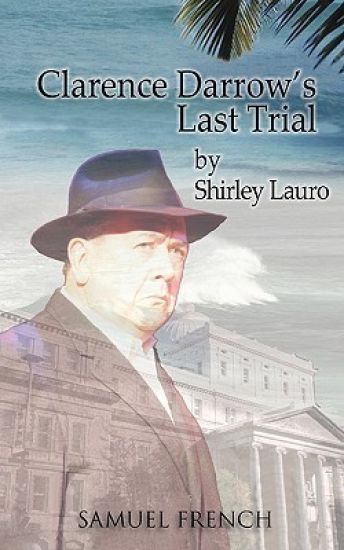
Drama / Characters: 5m, 3f Winner! 2004 NEA "Access to Excellence Award", in collaboration with New Theatre, FL, Finalist! 2001 New American History Play Prize The story takes place in 1932, the last time Clarence Darrow pleads in a criminal court of law. Set in various places in Chicago and Hawaii, Darrow with his wife, Ruby, travels to Honolulu to defend a Pearl Harbor Naval Lieutenant accused of shooting a Hawaiian who allegedly led a gang rape on the Lieutenant's wife.