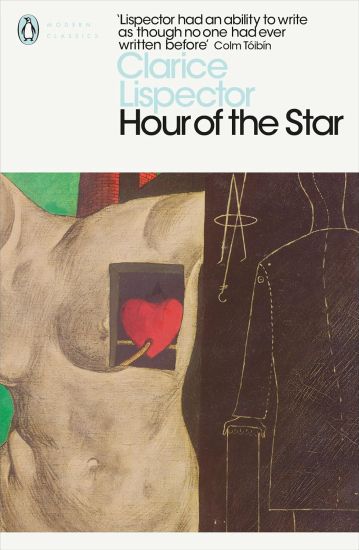
Living in the slums of Rio and eking out a living as a typist, Macabéa loves movies, Coca-Cola and her philandering rat of a boyfriend; she would like to be like Marilyn Monroe, but she is ugly and unloved. Yet telling her story is the narrator Rodrigo S.M., who tries to direct Macabéa's fate but comes to realize that, for all her outward misery, she is inwardly free. Slyly subverting ideas of poverty, identity, love and the art of writing itself, Clarice Lispector's audacious last novel is a haunting portrayal of innocence in a bad world.
'The morning became a long, drawn-out afternoon that became depthless night dawning innocently through the house'Tales of desire and madness from this giant of Brazilian literature.Penguin Modern: fifty new books celebrating the pioneering spirit of the iconic Penguin Modern Classics series, with each one offering a concentrated hit of its contemporary, international flavour. Here are authors ranging from Kathy Acker to James Baldwin, Truman Capote to Stanislaw Lem and George Orwell to Shirley Jackson; essays radical and inspiring; poems moving and disturbing; stories surreal and fabulous; taking us from the deep South to modern Japan, New York's underground scene to the farthest reaches of outer space.
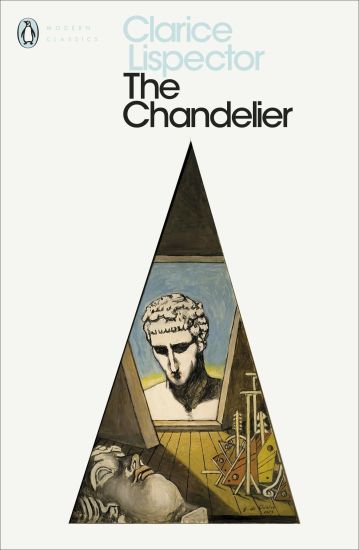
Clarice Lispector's masterly second novel, now available in English for the first time'She found the best clay that one could desire: white, supple, sticky, cold ... She would get a clear and tender material from which she could shape a world'Like the clay from which she sculpts figurines as a girl, Virginia is constantly shifting and changing. From her dreamlike childhood on Quiet Farm with her adored brother Daniel, through an adulthood where the past continues to pull her back and shape her, she moves through life, grasping for the truth of existence. Illuminating Virginia's progress through intense flashes of image, sensation and perception, The Chandelier, Lispector's landmark second novel, is a disorienting and exhilarating portrait of one woman's inner life. 'Utterly original and brilliant, haunting and disturbing' Colm TóibínTranslated by Benjamin Moser and Magdalena Edwards
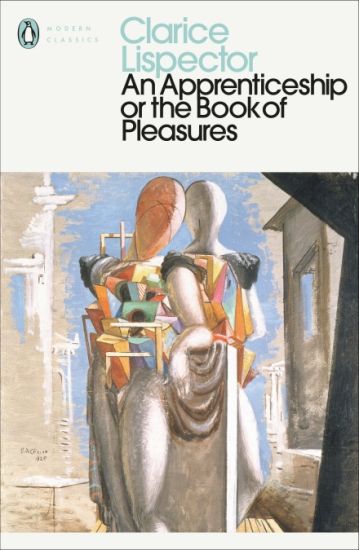
'One of the very great writers of the last century' Guardian'Lispector had an ability to write as though no one had ever written before' Colm Tóibín'He'd wait for her, she knew that now. Until she learned'Lóri yearns for love yet is scared of herself, and of connecting with another human. When she meets Ulisses, a Professor of Philosophy, she is forced to confront her fears. As both of them will learn, to be worthy of another person, they must first be fully themselves. The book of which Clarice Lispector said, 'I humanized myself', An Apprenticeship is about the ultimate unknowability of the other in a relationship, and what it means to love and be loved.Translated by Stefan ToblerEdited by Benjamin Moser with an Afterword by Sheila Heti
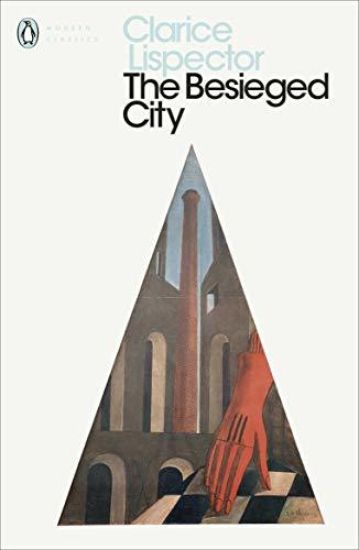
'One of the hidden geniuses of the twentieth century' Colm Tóibín'She suddenly leaned toward the mirror and sought the loveliest way to see herself'Lucrécia Neves is vain, unreflective, insolently superficial, almost mute. She may have no inner life at all. As she morphs from small-town girl to worldly wife of a rich man, and her small home town surrenders to the forces of progress, Lucrécia seeks perfection: to be an object, serene, smooth, beyond the burden of words or even thought itself. A book that obsessed its author, The Besieged City is unlike any other work in Lispector's canon: a story of transformation, of what it means to see and to be seen.
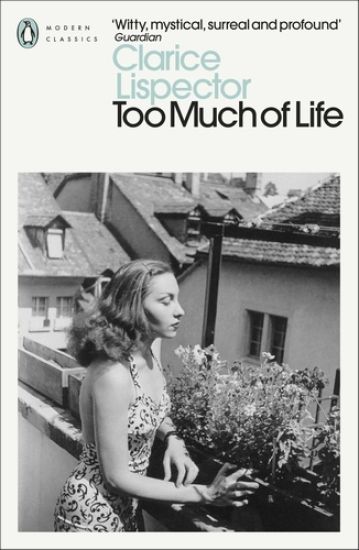
A TLS Book of the Year This exhilarating collection of non-fiction sees one of the greatest twentieth-century writers meditating on the moments that make up a life'How did I so unwittingly transform the joy of living into the great luxury of being alive?'Between 1967 and 1977, the internationally renowned author Clarice Lispector wrote weekly dispatches from her desk in Rio for the Jornal do Brasil. Already famous for her revolutionary, interior, metaphysical novels and short stories, in her Chronicles she turned her attention to the everyday, reshaping the material of her life into profound, touching and funny, tiny revelations.Observing the world around her, small encounters like hearing tales of the lost loves of a taxi driver, or the bitterness lurking beneath the prettiness of an old friend, become an exposition of the currents and foibles that define our lives. Everything from the meaning of cosmonauts to the new ideas, writers and artists that populate the sparkling international world of the sixties and seventies are considered and transformed into jewels of insight, delight and devastation.Sincere and playful, exhilarating and contemplative, Too Much of Life: Complete Chronicles opens up a new way of seeing the world.
90 classic titles celebrating 90 years of Penguin Books'One of the hidden geniuses of the twentieth century' - Colm TóibínA housewife’s life is shattered by a sudden epiphany. A simple tale of killing cockroaches fragments into multiple narratives, each uncovering new truths. In this selection of haunting short stories, Lispector reveals the permeable boundaries between past and present, the real and the surreal, showing ordinary moments to contain the deepest existential truths.
Tells the stories of a fearful adolescent, an angry old woman, a dog's burial, a possessive mother and her son, a businessman's dinner, and a French explorer in Africa
"In 1967, Brazil's leading newspaper asked the avant-garde writer Lispector to write a weekly column on any topic she wished. For almost seven years, Lispector showed Brazilian readers just how vast and passionate her interests were. This beautifully translated collection of selected columns, or cr nicas, is just as immediately stimulating today and ably reinforces her reputation as one of Brazil's greatest writers. Indeed, these columns should establish her as being among the era's most brilliant essayists. She is masterful, even reminiscent of Montaigne, in her ability to spin the mundane events of life into moments of clarity that reveal greater truths."--Publishers Weekly
The Besieged City's Lucr cia is unlike any of her heroines--mute and unreflective, she may have no inner life. And its plot resembles no other Lispector narrative: small town gal marries rich man, sees the world, and lives happily ever after. That said, there are miraculous horses, linguistic ecstasy, catty remarks, minor characters' visions, music from unknown sources. But centrally, there is Lucr cia, the heroine free of the burden of thought, who "leaned over without any individuality, trying merely to look at things directly." As Lispector's biographer Benjamin Moser writes in his introduction: "Lucr cia is vain and pretentious, content to remain on the surface. Lucr cia--there it is in her name--is lucre, just another one of the porcelain knickknacks in her mother's sitting room: 'Behold, behold, all of her, terribly physical, one of the objects.' Her ambitions are material, and she is the most insolently superficial woman Clarice ever portrayed." And yet, with this astonishing writer, a fascination with superficiality pulls the reader into very deep waters. As Lispector remarked: "The object--the thing--always fascinated me and in a certain sense destroyed me. In my book The Besieged City I speak indirectly about the mystery of the thing. The thing is a specialized and immobilized animal."
The things I've learned from taxi drivers would be enough to fill a book. They know a lot: they really do get around. I may know a lot about Antonioni that they don't know. Or maybe they do even when they don't. There are various ways of knowing by not-knowing. I know: it happens to me too.The cr nica, a literary genre peculiar to Brazilian newspapers, allows writers (or even soccer stars) to address a wide readership on any theme they like. Chatty, mystical, intimate, flirtatious, and revelatory, Clarice Lispector's pieces for the Saturday edition of Rio's leading paper, the Jornal do Brasil, from 1967 to 1973, take the forms of memories, essays, aphorisms, and serialized stories. Endlessly delightful, her insights make one sit up and think, whether about children or social ills or pets or society women or the business of writing or love. This new, large, and beautifully translated volume, Too Much of Life: The Complete Cr nicas presents a new aspect of the great writer--at once off the cuff and spot on.
Here, gathered in one volume, are the stories that made Clarice a Brazilian legend. Originally a cloth edition of eighty-six stories, now we have eighty- nine in all, covering her whole amazing career, from her teenage years to her deathbed. In these pages, we meet teenagers becoming aware of their sexual and artistic powers, humdrum housewives whose lives are shattered by unexpected epiphanies, old people who don't know what to do with themselves-- and in their stories, Clarice takes us through their lives--and hers--and ours.
The Chandelier, written when Lispector was only twenty-three, reveals a very different author from the college student whose debut novel, Near to the Wild Heart, announced the landfall of "Hurricane Clarice." Virginia and her cruel, beautiful brother, Daniel, grow up in a decaying country mansion. They leave for the city, but the change of locale leaves Virginia's internal life unperturbed. In intensely poetic language, Lispector conducts a stratigraphic excavation of Virginia's thoughts, revealing the drama of Clarice's lifelong quest to discover "the nucleus made of a single instant"--and displaying a new face of this great writer, blazing with the vitality of youth.
“That woman who killed the fish unfortunately is me,” begins the title story, but “if it were my fault, I’d own up to you, since I don’t lie to boys and girls. I only lie sometimes to a certain type of grownup because there’s no other way.” Enumerating all the animals she’s loved—cats, dogs, lizards, chickens, monkeys—Clarice finally asks: “Do you forgive me?” “The Mystery of the Thinking Rabbit” is a detective story which explains that bunnies think with their noses: for a single idea a bunny might “scrunch up his nose fifteen thousand times” (he may not be too bright, but “he’s not foolish at all when it comes to making babies”). The third tale, “Almost True,” is a shaggy dog yarn narrated by a pooch who is very worried about a wicked witch: “I am a dog named Ulisses and my owner is Clarice.” The wonderful last story, “Laura’s Intimate Life” stars “the nicest hen I’ve ever seen.” Laura is “quite dumb,” but she has her “little thoughts and feelings. Not a lot, but she’s definitely got them. Just knowing she’s not completely dumb makes her feel all chatty and giddy. She thinks that she thinks.” A one-eyed visitor from Jupiter arrives and vows Laura will never be eaten: she’s been worrying, because “humans are a weird sort of person” who can love hens and eat them, too. Such throwaway wisdom abounds: “Don’t even get me started.” These delightful, high-hearted stories, written for her own boys, have charm to burn—and are a treat for every Lispector reader.
The Hour of the Star, Clarice Lispector's consummate final novel, may well be her masterpiece. Narrated by the cosmopolitan Rodrigo S.M., this brief, strange, and haunting tale is the story of Macab a, one of life's unfortunates. Living in the slums of Rio and eking out a poor living as a typist, Macab a loves movies, Coca-Cola, and her rat of a boyfriend; she would like to be like Marilyn Monroe, but she is ugly, underfed, sickly, and unloved. Rodrigo recoils from her wretchedness, and yet he cannot avoid the realization that for all her outward misery, Macab a is inwardly free. She doesn't seem to know how unhappy she should be. As Macab a heads toward her absurd death, Lispector employs her pathetic heroine against her urbane, empty narrator--edge of despair to edge of despair--and, working them like a pair of scissors, she cuts away the reader's preconceived notions about poverty, identity, love, and the art of fiction. In her last book she takes readers close to the true mystery of life and leaves us deep in Lispector territory indeed.