Kirjojen hintavertailu. Mukana 11 717 486 kirjaa ja 12 kauppaa.

Kirjahaku

Etsi kirjoja tekijän nimen, kirjan nimen tai ISBN:n perusteella.

1000 tulosta hakusanalla Claude Matoux

Claude Chabrol

Claude Chabrol

Guy Austin

Manchester University Press
1999
nidottu
This is the first book-length study in English on Chabrol since 1970. Chabrol has always been a neglected figure in the French New Wave but has recently been declared 'possibly the greatest living film director in France'.. Coincides with the recent renewal of interest in Chabrol, which has seen his back catalogue released in the UK on video.. Celebration of Chabrol's fiftieth film recently, Rien ne va plus prompted many festivals and retrospectives. Publication coincides with Chabrol's new film which is discussed in this study.. Writtten by one of the liveliest critics in French cinema - author of Contemporary French Cinema.
Claude Chabrol's Aesthetics of Opacity

Claude Chabrol's Aesthetics of Opacity

Edinburgh University Press
2017
nidottu
Claude Chabrol's cinema is generally associated with a specific type of psychological thriller, one set in the French provinces and fascinated with murder, incest, fragmented families, unstable spaces and inscrutable female characters. But Chabrol's films are both deceptively accessible and deeply reflexive, and in this innovative reappraisal of his filmography Catherine Dousteyssier-Khoze explores the Chabrol who was influenced by Balzac, Magritte and Stanley Kubrick. Bringing to the fore Chabrol's 'aesthetic of opacity', the book deconstructs the apparent clarity and comfort of his chosen genre, encouraging the viewer to reflect on the relationship between illusion and reality, and the status of the film image itself.
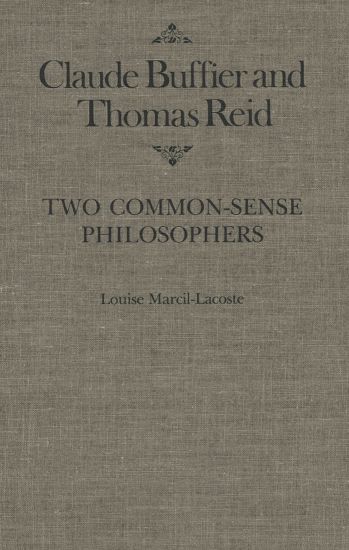
Claude Buffier and Thomas Reid

Claude Buffier and Thomas Reid

Louise Marcil-Lacoste

McGill-Queen's University Press
1982
sidottu
Claude Buffier (1661-1737) was a French Jesuit whose philosophy earned Voltaire's praise. Thomas Reid (1710-96) was the one Scottish philosopher whose response to David Hume is still taken seriously. In this comparative study Professor Marcil-Lacoste not only refutes common assumptions, but also shows that, despite their similar concerns and the unfounded charge that Reid plagiarized from Buffier, a comparison of Reid and Buffier illuminates a range of significant epistemological issues. Further, she demonstrates that common-sense philosophies can be varied, subtle, and original. This book also includes an edited and annotated version of Reid's hitherto unpublished curâ primâ on common sense prepared by David Fate Norton.
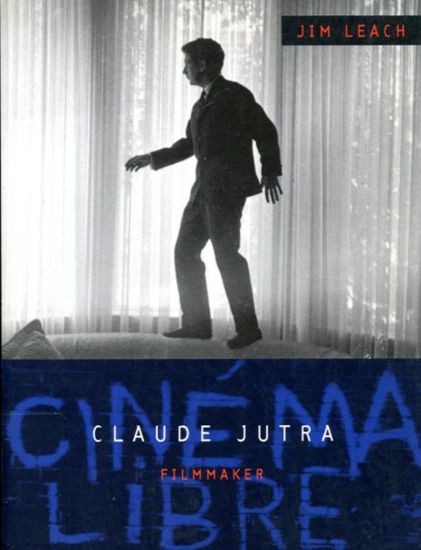
Claude Jutra

Claude Jutra

Jim Leach

McGill-Queen's University Press
1999
nidottu
Through close readings of Jutra's major films, Jim Leach analyses their distinctive cinematic qualities and discusses the responses they have received from reviewers and critics. He focuses both on the films and the historical and cultural contexts in which they were made, arguing that critics have frequently used inappropriate criteria to judge them and that these misunderstandings reveal much about attitudes to Canadian cinema in general. Jutra's films are shown to reflect the instability of their cinematic and cultural contexts and raise important questions about nationhood. Jutra always identified himself as a separatist and his films were shaped by the rapid changes in Quebec society during the Quiet Revolution and by the political tensions of the sixties and seventies. At the same time his work was often appreciated by English Canadian critics and audiences and was affected by federal film policy and institutions. Although Jutra died in 1986, his films and career still have much to tell us about Canadian cinema and media production, and about the complex cultural contexts that underlie the ongoing debates on Canadian and Quebec nationhood.
Claude E. Shannon

Claude E. Shannon

IEEE Publications,U.S.
1993
sidottu
Claude Elwood Shannon: Collected Papers This collection contains all of Claude Elwood Shannon’s published works, as well as many that have never before been published. The published papers include his classic papers on information theory and switching theory. Among the unpublished works are his once-secret war-time reports, his Ph.D. thesis on population genetics, unpublished Bell Labs memoranda, and a paper on the theory of juggling. Also of Interest… Multiple Access Communications Foundations for Emerging Technologies Edited by Norman Abramson, University of Hawaii The first book to explain the connection between spread spectrum and ALOHA channels in a coherent fashion. Multiple Access Communications provides a collection of key developments in the theory and practice of multiple user communication channels. Of particular interest to engineers working with packet radio networks, local networks, personal communication networks, and very small aperture terminal satellite networks, this book offers authoritative information on the theory of multiple access which is involved in techniques including: spread spectrum, ALOHA, and spread ALOHA. 1993 Hardcover; 528 pp; IEEE Order No. PC0287-3; ISBN 0-87942-292-0 Contemporary Cryptology: The Science of Information Integrity Edited by Gustavus J. Simmons, Sandia National Laboratories Written by those at the very forefront of the field, Contemporary Cryptology offers all aspects of the science of information integrity — from the simplest concepts to the latest research. It provides a practical guide to the algorithms, protocols, applications, and essential literature on information integrity for engineers and scientists in need of a coherent view of the most recent developments. 1992; Hardcover; 656 pp; IEEE Order No. PC0271-7; ISBN 0-87942-277-7 Key Papers in the Development of Coding Theory Edited by E. R. Berlekamp, Cyclotomics Composed of key papers in the field, this book delivers concrete information from foremost experts on the beginnings of coding theory straight through important developments which have led this technology to its thriving state. This indispensable reference tool offers a variety of significant applications of coding theory in deep space communication systems including: military communication systems, data communication systems, information retrieval systems, and large secondary memories for computer systems. 1974; Hardcover; 296 pp; IEEE Order No. PC0032-3; ISBN 0-87942-031-6 Key Papers in the Development of Information Theory Edited by David Slepian Together with its companion, Key Papers in the Development of Coding Theory, this volume provides the reader with a detailed reference guide to the many developments that followed C. E. Shannon’s profound observations on communication systems. Written by those at the forefront of the field, Key Papers in the Development of Information Theory guides the reader through a chronological discussion of 25 years of active research in the classical source and channel, rate distortion theory, and many terminal channels. 1974; Hardcover; 472 pp; IEEE Order No. PC0029-9; ISBN 0-87942-027-8
Claude McKay

Claude McKay

Kotti Sree Ramesh; Kandula Nirupa Rani

McFarland Co Inc
2006
pokkari
"This study explores the life and works of Claude McKay. As it traces his life, it also considers how a subject dwells in limbo between native and adopted cultures, and how this influenced McKay's writing. This work examines all the facets of this influential early 20th century author"--Provided by publisher.
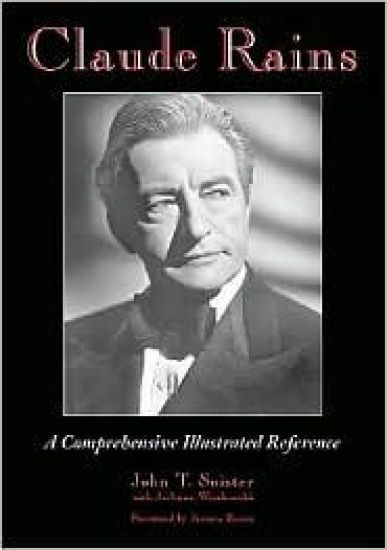
Claude Rains

Claude Rains

John T. Soister; Joanna Wioskowski

McFarland Co Inc
2006
pokkari
The career of Claude Rains is often, and unfairly, overshadowed by the careers of the ever-popular Karloff, Lugosi, Chaney and Rathbone, but few can dispute that he was truly one of the world's foremost character actors. The Invisible Man, ironically, made him quite the visible star. In his own inimitable way, Rains later became John Jasper (in Mystery of Edwin Drood), Louis Renault (Casablanca), Julius Caesar (Caesar and Cleopatra), and Mr. Dryden (Lawrence of Arabia). While concentrating on Rains' more than fifty films, this book also comprehensively examines his work in other media: the stage, radio, television and recordings. His only child, Jessica, in the foreword, provides a brief biography of her father. There are many rare photographs.
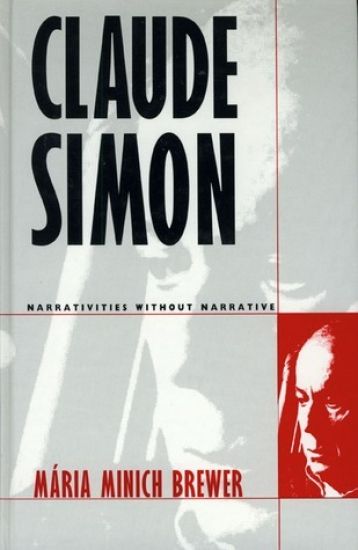
Claude Simon

Claude Simon

Maria Minich Brewer

University of Nebraska Press
1995
sidottu
Reputed to be a conservative group, the Nobel Prize committee astonished the world in 1985 by giving its prize to Claude Simon, one of the most adventurous and challenging of modern authors whose writing defies easy classification. This study shows exactly how inventive and challenging he is. Simon's works run the gamut from first-person narratives to narratives without a stable perspective. His novels deal with minute details of the grand stages of history—world war, for instance—and with the historical dimensions of everyday life. Mária Minich Brewer demonstrates that Simon has reformulated the standard forms of fiction to expose the logic of narrative, a complex and powerful legacy populated with stereotypes too easily accepted as natural. Her book brings into focus the cultural legacies embedded in narrative as well as the narrative dimensions of culture and history. Simon has voiced suspicion of narrative order. He never underestimates, however, either its pervasiveness or its powers. In his novels, he never dismisses narrative order as being "merely" a matter of formal conventions. On the contrary, he reveals narrative representation to be a powerful agent of some of the most violent events to which an individual is subject.
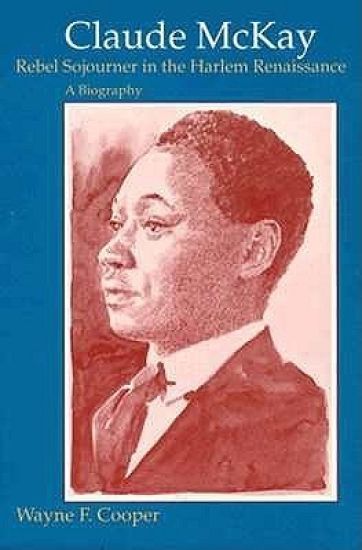
Claude McKay, Rebel Sojourner in the Harlem Renaissance

Claude McKay, Rebel Sojourner in the Harlem Renaissance

Wayne F. Cooper

Louisiana State University Press
1996
nidottu
Cooper paints a meticulous and absorbing portrait of McKay's restless artistic, intellectual, and political odyssey... The definitive biography on McKay. - Choice Although recognised today as one of the genuine pioneers of black literature in this century, the author of If We Must Die, Home to Harlem, Banana Bottom, and A Long Way from Home, among other works, Claude McKay (1890-1948) died penniless and almost forgotten in a Chicago hospital. In this masterly study, Wayne Cooper presents a fascinating, detailed account of McKay's complex, chaotic, and frequently contradictory life. In his poetry and fiction, as well as in his political and social commentaries, McKay searched for a solid foundation for a valid black identity among the working-class cultures of the West Indies and the United States. He was an undeniably important predecessor to such younger writers of the Harlem Renaissance as Langston Hughes and Countee Cullen, and also to influential West Indian and African writers such as C. L. R. James and Aimé Césaire. Knowledge of his life adds important dimensions to our understanding of American radicalism, the expatriates of the 1920s, and American literature. ""Mr. Cooper's most original contribution is his careful and perceptive analysis of McKay's nonfiction writing, especially his social and political commentary, which often contained 'prophetic statements' on a range of important social, political, and historical issues."" - New York Times Book Review
Claude before Time and Space

Claude before Time and Space

Claudia Emerson

Louisiana State University Press
2018
sidottu
In Claude before Time and Space, her final collection, Pulitzer Prize-winning poet Claudia Emerson quietly but fiercely explores the themes of mortality and time.In the first section of this book, ""The Wheel,"" Emerson uses a rural southern setting in poems that reflect on memory, the self, and relationships. In section two, ""Bird Ephemera,"" she explores historical figures, from an early naturalist and writer who raised her children in poverty to a small-town doctor. The collection concludes with a series of poems named after the poet's father. This illuminating body of work displays a master poet at the height of her craft.
Claude before Time and Space

Claude before Time and Space

Claudia Emerson

Louisiana State University Press
2018
nidottu
In Claude before Time and Space, her final collection, Pulitzer Prize- winning poet Claudia Emerson quietly but fiercely explores the themes of mortality and time.In the first section of this book, The Wheel, Emerson uses a rural southern setting in poems that reflect on memory, the self, and relationships. In section two, Bird Ephemera, she explores historical figures- from an early naturalist and writer who raised her children in poverty to a small-town doctor. The collection concludes with a series of poems named after the poet's father. This illuminating body of work displays a master poet at the height of her craft.
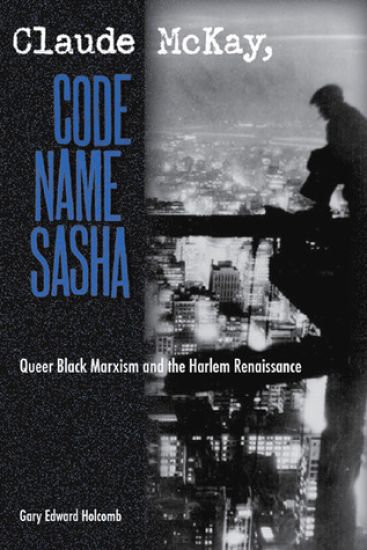
Claude McKay, Code Name Sasha

Claude McKay, Code Name Sasha

Gary Edward Holcomb

University Press of Florida
2007
sidottu
Sasha was the code name adopted by Harlem Renaissance writer Claude McKay (1889-1948) to foil investigations of his life and work. In this study of four of McKay's texts - the first literary, cultural, and historical analysis to address the multilayered ""queer black anarchism"" in McKay's writings - Holcomb argues that McKay's ""fringe"" perspective not only targeted him for investigation but also contributed to a declining literary reputation. Perceived as mystifying and unacceptable because of his dedication to communism, McKay is perplexing and difficult to classify within the traditional constructs of the Harlem Renaissance. The problem that McKay's transnational, aesthetically itinerant writing inevitably has posed is where to locate him. Holcomb analyzes three of the most important works in McKay's career - the Jazz Age bestseller ""Home to Harlem"", the negritude manifesto Banjo, and the unpublished ""Romance in Marseilles"". Holcomb uncovers ways in which Home to Harlem assembles a homefront queer black anarchism, and treats Banjo as a novel that portrays Marxist internationalist sexual dissidence. Finally, he examines McKay's extensive FBI file and his late-1930s autobiography, ""A Long Way from Home"", in which McKay disguises his past as a means of eluding his harassers. The memoir is essential to understanding McKay's first three novels.
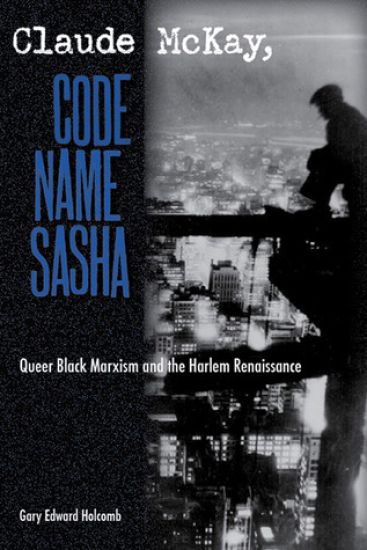
CLAUDE MCKAY, CODE NAME SASHA

CLAUDE MCKAY, CODE NAME SASHA

University Press of Florida
2009
nidottu
"An original book on a neglected figure of the Harlem Renaissance . . . Holcomb is the first scholar to offer a coherent account of the different aspects of McKay's career and life without treating them as contradictions."--John Carlos Rowe, University of Southern California"This project of intellectual, cultural, aesthetic history is a major undertaking . . . sure to become an indispensable point of reference for students and scholars in American, African American, Caribbean, diaspora, colonial and postcolonial studies, race, and gender studies."--Sandra Pouchet Paquet, University of Miami"Sasha" was the code name adopted by Harlem Renaissance writer Claude McKay (1889-1948) to foil investigations of his life and work. Over a period of two decades, the FBI, U.S. State Department, British police and intelligence, and French law enforcement and colonial authorities took turns harassing McKay, an openly gay, Marxist, Jamaican expatriate who had left the United States and was living in Europe. In this study of four of McKay's texts--the first literary, cultural, and historical analysis to address the multilayered "queer black anarchism" in McKay's writings--Holcomb argues that McKay's "fringe" perspective not only targeted him for investigation but also contributed to a declining literary reputation. Perceived as mystifying and unacceptable because of his dedication to communism, McKay is perplexing and difficult to classify within the traditional constructs of the Harlem Renaissance. The problem that McKay's transnational, aesthetically itinerant writing inevitably has posed is where to locate him.In recent years, access into McKay's work has been transformed by new methods of interpreting the politics of literary texts, the growing significance of transnationality in literary and cultural analysis, and the impact of "queer theory." Holcomb analyzes three of the most important works in McKay's career--the Jazz Age bestseller Home to Harlem, the negritude manifesto Banjo, and the unpublished Romance in Marseille. Holcomb uncovers ways in which Home to Harlem assembles a homefront queer black anarchism, and treats Banjo as a novel that portrays Marxist internationalist sexual dissidence. Among the most notable contributions to black modernist study, Holcomb's scholarship is the first to assess the consequence of McKay's landmark Romance in Marseille, a text that is, despite its absence from broad public access for nearly 80 years, conceivably the most significant early black diaspora text. Finally, he examines McKay's extensive FBI file and his late-1930s autobiography, A Long Way from Home, in which McKay disguises his past as a means of eluding his harassers. The memoir is essential to understanding McKay's first three novels. Relying on queer theory and related language-oriented approaches, moreover, this study emphasizes that the key to McKay's queer black Marxism lies as much in confronting his textual absence as it does in rereading the author historically.
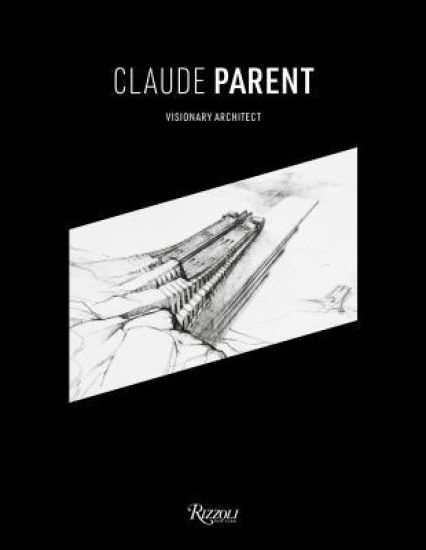
Claude Parent

Claude Parent

Chloe Parent

Rizzoli International Publications
2019
sidottu
The influence of the idealistic French architect Claude Parent (1923-2016) extends far beyond the legacy he left in iconic commercial and residential built works such as the Villa Drusch in Versailles (1963), the church of Sainte-Bernadette du Banlay in Nevers (1966), and GEM shopping centre in Sens (1970). Movement was at the heart of Parent s vision, and is nowhere more evident than in his drawings, many of which are published in this book for the first time drawings which, according to Frank Gehry, are extraordinary beautiful fantasies, full of poetry, and which Edwin Eathcote, writing for the Financial Times, described as breathtaking in their ambition they not only presage Daniel Libeskind and Zaha Hadid, they arguably surpass them. Parent s work manifests the oblique function theory he developed with Paul Virilio in 1963, that dictates that buildings should feature slopes, be wall-free where possible and have a predominance of space over surface. Featuring contributions by some of today s most renowned architects, this long-overdue publication is a must-have for students of architecture and architects alike. Including initial sketches for his best known buildings and never-before-seen drawings of unbuilt works, Claude Parent: Visionary Architect reveals the genius of a man who unquestionably changed the history of architecture.
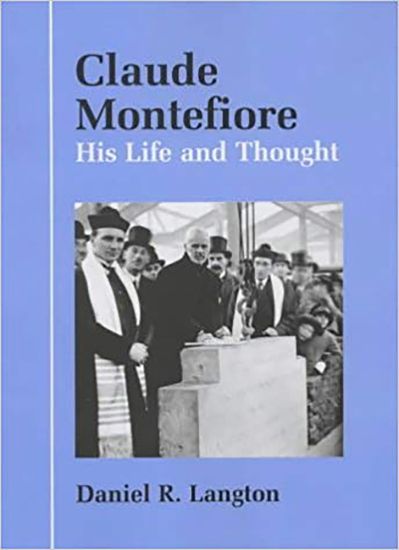
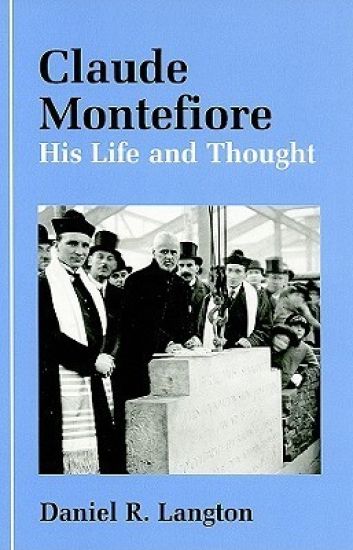
Claude Montefiore

Claude Montefiore

Daniel R. Langton

Vallentine Mitchell Co Ltd
2002
sidottu
As a revered scholar, philanthropist and spiritual authority, Claude Montefiore belongs to that important group of learned laymen who have sought to revolutionise Judaism. He was a founder of British Liberal Judaism at the turn of the century, considered to be the most original Anglo-Jewish religious thinker of his day, and still remains a highly controversial figure. Montefiore infuriated his enemies and often alientated his supporters with his radical agenda in which he applied the findings of historical and literary analysis to the Jewish scriptures, attempted to radically systemise rabbinic thought, and by his desire to learn from and re-express aspects of Christian theology. The extent to which he incorporated the teachings of Jesus and Paul into his own ethical and theological musings makes him unique among Jewish reformers. In his dealings with Christians and Christian thought, he can also be regarded as a forerunner to those who would later fully partake in Jewish-Christian dialogue. The Life and Thought of Claude Montefiore is an intellectual history and biography, together with an attempt to place Montefiore within the context of Jewish thought during the late nineteenth and early twentieth centuries. Controversially, it argues that Montefiore's own personal conception of Liberal Judiasm, which was never fully appreciated by his followers, should be regarded as more than simply a progressive Jewish denomination, and rather as an attempt to re-mould Reform Judaism in terms of contemporary liberal Christianity. Montefiore is an important figure in Anglo-Jewish history, not least for the way in which his complex identity reflects the difficulty inherent in attempting to make Judaism genuinely relevant to the modern world.
Claude Montefiore

Claude Montefiore

Daniel R. Langton

Vallentine Mitchell Co Ltd
2002
nidottu
As a revered scholar, philanthropist and spiritual authority, Claude Montefiore belongs to that important group of learned laymen who have sought to revolutionise Judaism. He was a founder of British Liberal Judaism at the turn of the century, considered to be the most original Anglo-Jewish religious thinker of his day, and still remains a highly controversial figure. Montefiore infuriated his enemies and often alientated his supporters with his radical agenda in which he applied the findings of historical and literary analysis to the Jewish scriptures, attempted to radically systemise rabbinic thought, and by his desire to learn from and re-express aspects of Christian theology. The extent to which he incorporated the teachings of Jesus and Paul into his own ethical and theological musings makes him unique among Jewish reformers. In his dealings with Christians and Christian thought, he can also be regarded as a forerunner to those who would later fully partake in Jewish-Christian dialogue. The Life and Thought of Claude Montefiore is an intellectual history and biography, together with an attempt to place Montefiore within the context of Jewish thought during the late nineteenth and early twentieth centuries. Controversially, it argues that Montefiore's own personal conception of Liberal Judiasm, which was never fully appreciated by his followers, should be regarded as more than simply a progressive Jewish denomination, and rather as an attempt to re-mould Reform Judaism in terms of contemporary liberal Christianity. Montefiore is an important figure in Anglo-Jewish history, not least for the way in which his complex identity reflects the difficulty inherent in attempting to make Judaism genuinely relevant to the modern world.