Kirjojen hintavertailu. Mukana 11 244 527 kirjaa ja 12 kauppaa.

Kirjahaku

Etsi kirjoja tekijän nimen, kirjan nimen tai ISBN:n perusteella.

215 tulosta hakusanalla Comenius

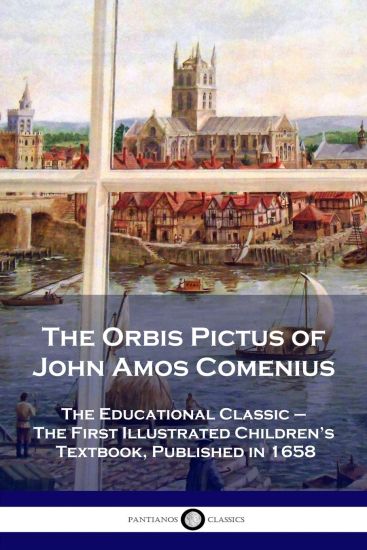
The Orbis Pictus of John Amos Comenius

The Orbis Pictus of John Amos Comenius

John Amos Comenius

Pantianos Classics
2020
pokkari
The Orbis Pictus was the first ever illustrated children's textbook, first published in 1658. This edition is based upon a reprint dated to 1728, and contains 155 drawings, and the full text in both English and Latin.Intended to provide children with a basic level of familiarity with the principal phenomena of the natural world and human life, the Orbis Pictus - the Visible World - is filled with wide-ranging subjects. Descriptions of plants, animals and the elements, are followed by an anatomical discussion of man. Though the medical knowledge of the time was simple compared with today, the author nevertheless describes the body's functions - digestive and circulatory - with some accuracy.Later the text moves onto human life. The various professional trades receive chapters; baking, fishing, farming, cookery, brewing and various handicrafts are discussed. The various tools and equipment found in a tailor's shop or a blacksmith's forge are described. The construction of homes and other buildings are elaborated upon, while professional services such as shipping and papermaking are also explained. Though simple, the contents are incredibly rich - since the book dates to the 17th century, its contents carry historical insights.John Amos Comenius was a leading educator and theologian from the Czech Republic. He travelled and worked throughout Europe, advocated critical and logical thinking over rote memorization, and advocated for funding education for the poor and for the tutoring of women.
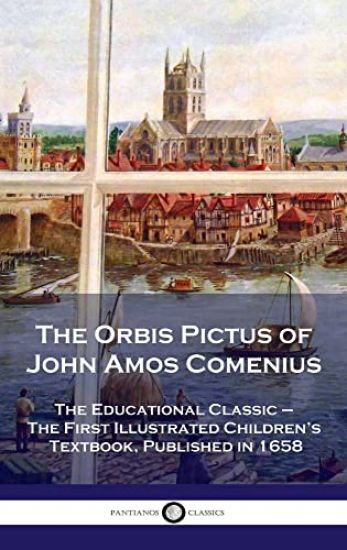
Orbis Pictus of John Amos Comenius

Orbis Pictus of John Amos Comenius

John Amos Comenius

Pantianos Classics
2020
sidottu
The Orbis Pictus was the first ever illustrated children's textbook, first published in 1658. This edition is based upon a reprint dated to 1728, and contains 155 drawings, and the full text in both English and Latin.Intended to provide children with a basic level of familiarity with the principal phenomena of the natural world and human life, the Orbis Pictus - the Visible World - is filled with wide-ranging subjects. Descriptions of plants, animals and the elements, are followed by an anatomical discussion of man. Though the medical knowledge of the time was simple compared with today, the author nevertheless describes the body's functions - digestive and circulatory - with some accuracy.Later the text moves onto human life. The various professional trades receive chapters; baking, fishing, farming, cookery, brewing and various handicrafts are discussed. The various tools and equipment found in a tailor's shop or a blacksmith's forge are described. The construction of homes and other buildings are elaborated upon, while professional services such as shipping and papermaking are also explained. Though simple, the contents are incredibly rich - since the book dates to the 17th century, its contents carry historical insights.John Amos Comenius was a leading educator and theologian from the Czech Republic. He travelled and worked throughout Europe, advocated critical and logical thinking over rote memorization, and advocated for funding education for the poor and for the tutoring of women.
Panorthosia by Comenius 19-26

Panorthosia by Comenius 19-26

A.M.O. Dobbie

Continuum International Publishing Group - Sheffie
1993
sidottu
Panorthosia (Universal Reform) is the essential theme of John Amos Comenius's famous Consultation on the Reform of Human Affairs, and chapters 19-26 represent its climax. In this volume is presented the first English translation of this major work of Comenius, which was lost from about 1672 until 1934 when the Latin scholars of Czechoslovakia had it edited for publication in Prague in 1960.
John Amos Comenius - Bishop of the Moravians

John Amos Comenius - Bishop of the Moravians

Simon Somerville Laurie

Hansebooks
2017
pokkari
John Amos Comenius - Bishop of the Moravians - his life and educational works is an unchanged, high-quality reprint of the original edition of 1887. Hansebooks is editor of the literature on different topic areas such as research and science, travel and expeditions, cooking and nutrition, medicine, and other genres. As a publisher we focus on the preservation of historical literature. Many works of historical writers and scientists are available today as antiques only. Hansebooks newly publishes these books and contributes to the preservation of literature which has become rare and historical knowledge for the future.
The great didactic of John Amos Comenius

The great didactic of John Amos Comenius

Johann Amos Comenius

Hansebooks
2018
pokkari
The great didactic of John Amos Comenius is an unchanged, high-quality reprint of the original edition of 1896. Hansebooks is editor of the literature on different topic areas such as research and science, travel and expeditions, cooking and nutrition, medicine, and other genres. As a publisher we focus on the preservation of historical literature. Many works of historical writers and scientists are available today as antiques only. Hansebooks newly publishes these books and contributes to the preservation of literature which has become rare and historical knowledge for the future.
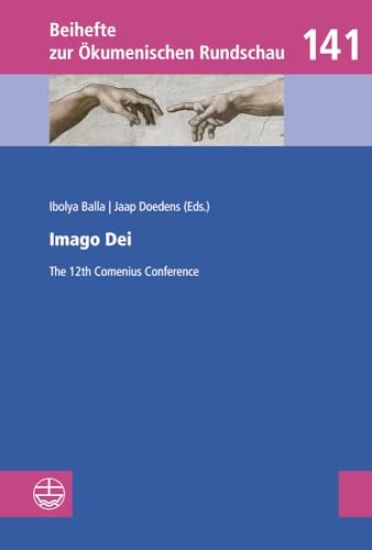
Imago Dei: The 12th Comenius Conference

Imago Dei: The 12th Comenius Conference

Evangelische Verlagsanstalt
2024
nidottu
The papers of the 12th Comenius Conference titled Imago Dei (20-23 April 2022, Papa Reformed Theological Seminary, Hungary) discussed especially the question what it means to be human. Are we just biological beings, not substantially different from other living beings? Or are we created in the image of God, having a special value and dignity over all creatures? The special place of humankind in creation is often recognized in the ability of (abstract) thinking, speaking, creativity. However, can rationality define humans and set them apart from other creatures? How can we communicate the rule of God, or the responsibility and accountability of humankind toward the Creator and the people of modern ages?
Der Anschauungsbegriff Bei Comenius, Basedow Und Hartwig
Von jeher war das Prinzip -Sehen lernen- als Orientierungshilfe ein zentrales Ziel kunstpadagogischer Wahrnehmungstheorien. In diesem Sinne setzt sich die vorliegende Arbeit erstmals umfassend mit dem Anschauungsbegriff bei Comenius, Basedow und Hartwig im Blick auf die anschauungsbezogenen methodischen Anforderungen im heutigen Fach Kunst auseinander. Das Ergebnis der Untersuchung zeigt, dass die auf die objektive Weltordnung gerichtete Anschauungskraft des Comenius bei Basedow verlorengeht, weil dieser die visuelle Wahrnehmung der rationalen Begrifflichkeit beliebig unterordnet, wohingegen Hartwig wieder die grundlegende Bedeutung der Vermittlung von Anschauungszusammenhangen erkennt. Innerhalb dieses Bezugsrahmens wurden die aktuelle Notwendigkeit einer weltanschaulich offenen Fachdidaktik und das Verhaltnis des jeweiligen Anschauungsbegriffs zur Wort-Bild-Korrelation nachgewiesen."
Lernen Mit Comenius

Lernen Mit Comenius

Heidemarie Gamm

Peter Lang AG
2008
nidottu
Mit Comenius soll eine entscheidende Figur aus der Fruhgeschichte europaischer Padagogik mit der Befindlichkeit heutiger Generationen in Verbindung gebracht werden, um damit wenig beachtete Grundlagen der Menschenbildung neu zu verdolmetschen. Genutzt wird die historisch-hermeneutische Methode und auf den realgeschichtlichen Hintergrund unserer Epoche bezogen. Das fundamentale Verstandnis des Christentums, wie es Comenius kennzeichnete und in immer neuen Varianten jahrzehntelang vortrug, bietet besondere Schwierigkeiten der gedanklichen Einfugung in eine Epoche, deren Skeptizismus unabweisbar ist. Denken auf den Bahnen von Comenius fuhrt schliesslich in Bereiche, in denen deutlich zu werden vermag, wie die Menschheit, sofern sie gemeinsam uberleben will, sich zu einem Gesamtverstandnis ihres universalen Auftrags voranzuarbeiten hat.
Das Prinzip der Anschaulichkeit - Comenius und sein Orbis sensualium pictus
Studienarbeit aus dem Jahr 2000 im Fachbereich P dagogik - Geschichte der P d., Note: 1,0, Universit t Potsdam (P dagogisches Institut), Veranstaltung: Die P dagogik des Jan Amos Comenius, Sprache: Deutsch, Abstract: Das Prinzip der Anschaulichkeit Comenius und sein Orbis sensualium pictus "Nichts darf gelehrt werden auf Grund blo er Autorit t, sondern alles dadurch, da es den Sinnen und dem Verstand vorgef hrt wird." Johann Amos Comenius Inhaltsverzeichnis: 1. Entstehung und Drucklegung 2. Tradition und Neuansatz im Orbis pictus 3. Nachwirkung des Orbis pictus 4. Das p dagogische System des Comenius 5. Aufbau des Orbis pictus 6. Anhang 7. Literatur- und Bildnachweis 1. Entstehung und Drucklegung Als Comenius im Oktober 1650 in Sarospartak eine dreiklassige Lateinschule einrichtet, f hrte er dort im Unterricht stufenweise seine Lateinb cher "Vestibulum," "Janua linguarum" und dass bis dahin noch ungedruckte "Atrium" ein, welche somit auch die Grundlage f r seinen Unterricht bildeten. Da der Erfolg dieser Werke in bezug auf den Unterrichtserfolg und somit das Weiterkommen der Sch ler im behandelten Stoff nicht gerade sehr zufriedenstellend war, versuchte Comenius als Erg nzung zu den bereits bestehenden Materialien ein Bilderwerk zu schaffen, als dessen Titel er noch 1657, abweichend vom Erstdruck 1658 angibt: "Orbis sensualium pictus, hoc est omnium fundamentalium in mundo rerum et in vita actionum nomenclatura ad ocularem demonstrationem deducta, ut sit Vestibuli et Januae linguarum lucidarium." ...