Kirjojen hintavertailu. Mukana 11 244 527 kirjaa ja 12 kauppaa.

Kirjahaku

Etsi kirjoja tekijän nimen, kirjan nimen tai ISBN:n perusteella.

1000 tulosta hakusanalla Conrad Mbewe

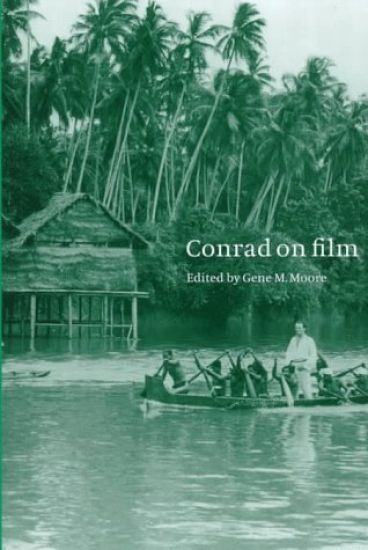
Conrad on Film

Conrad on Film

Cambridge University Press
1997
sidottu
This book offers the first comprehensive, international survey of more than eighty films and videos based on the life and work of Joseph Conrad. Essays by leading film and literary scholars examine the films, both in the context of film history and technology, and in terms of the theoretical and practical problems facing directors - including Alfred Hitchcock, Orson Welles, Francis Ford Coppola and Andrzej Wajda - who have attempted to put Conrad on film. Conrad was the first major English author to adapt his work for the screen, and the story of his unpublished 'film-play' is told in an important chapter. The challenges of finding visual analogues for Conrad's narrative irony and filmic equivalents for his narrators are also examined. The volume is well illustrated and includes a detailed filmography and film bibliography, making it a landmark study of Conrad films and film adaptations in general.
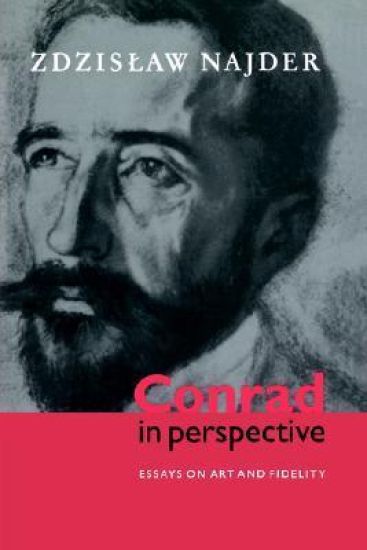
Conrad in Perspective

Conrad in Perspective

Zdzislaw Najder

Cambridge University Press
1997
sidottu
Zdzislaw Najder, one of the world’s leading authorities on Joseph Conrad and author of the major biography Joseph Conrad: A Chronicle (1983), is widely acclaimed for his particular insights into Conrad’s Polish background. The fruits of thirty years of Conrad study appear in this landmark volume of his essays, which explore a wide range of topics: Conrad’s national and cultural heritage; his fictions, from the unfinished ‘Sisters’ and Lord Jim to The Secret Agent; his attitude towards Russia in general and Dostoevsky in particular; his concepts of man and society; and the role of the idea of honour in his work. In a series of more general essays Najder goes on to place Conrad’s work within a broad European philosophical, political, and literary context. Conrad in Perspective offers new insights into the life and work of one of the twentieth century’s greatest novelists by one of his most perceptive critics.
Conrad and Impressionism

Conrad and Impressionism

John G. Peters

Cambridge University Press
2001
sidottu
In this 2001 book, John Peters investigates the impact of Impressionism on Conrad and links this to his literary techniques as well as his philosophical and political views. Impressionism, Peters argues, enabled Conrad to encompass both surface and depth not only in visually perceived phenomena but also in his narratives and objects of consciousness, be they physical objects, human subjects, events or ideas. Though traditionally thought of as a sceptical writer, Peters claims that through Impressionism Conrad developed a coherent and mostly traditional view of ethical and political principles, a claim he supports through reference to a broad range of Conrad's texts. Conrad and Impressionism investigates the sources and implications of Conrad's impressionism in order to argue for a consistent link between his literary technique, philosophical presuppositions and socio-political views. The same core ideas concerning the nature of human experience run throughout his works.
Conrad, Language, and Narrative

Conrad, Language, and Narrative

Michael Greaney

Cambridge University Press
2001
sidottu
In this re-evaluation of the writings of Joseph Conrad, Michael Greaney places language and narrative at the heart of his literary achievement. A trilingual Polish expatriate, Conrad brought a formidable linguistic self-consciousness to the English novel; tensions between speech and writing are the defining obsessions of his career. He sought very early on to develop a 'writing of the voice' based on oral or communal modes of storytelling. Greaney argues that the 'yarns' of his nautical raconteur Marlow are the most challenging expression of this voice-centred aesthetic. But Conrad's suspicion that words are fundamentally untrustworthy is present in everything he wrote. The political novels of his middle period represent a breakthrough from traditional storytelling into the writerly aesthetic of high modernism. Greaney offers an examination of a wide range of Conrad's work which combines recent critical approaches to language in post-structuralism with an impressive command of linguistic theory.
Conrad vs Conrad

Conrad vs Conrad

Galen B Conrardy

Conrardy-Story Books
2021
pokkari
Itchy's law firm no longer adhered to the practice of chasing ambulances. Their motto was: Everyone is a victim. Don't call us, we're already there The firm took great pride in being at the scene in a matter of minutes. "Conrad, I'm going to jump right to the point. You have an excellent opportunity to cash in your misfortune " "I guess I don't understand." "I'm ready to bring litigation against several entities on your behalf, including against yourself." "I am confused, mostly because the entire incident was my fault." "Don't you see Conrad, regardless of the outcome of a lawsuit like this, we have the chance to become famous It will not only enhance my stature in the legal community, but it will give you tremendous notoriety as a writer. You'll no longer be an unknown " ********* At the world news center, GNN, Winnie Chen answered the phone. "This is Winnie Chen, how may I help you?" "Uh...this is Gene Acknee. I work for a lawyer in Wayward County, state of Colorado." "How may I help you?" "I've got some information you might be interested in. There seems to be a sensational trial starting here tomorrow." "And what is that about?" "Some dude is suing himself "
Conrad's Marlow

Conrad's Marlow

Paul Wake

Manchester University Press
2007
sidottu
Variously described as ‘the average pilgrim’, a ‘wanderer’, and ‘a Buddha preaching in European clothes’, Charlie Marlow is the voice behind Joseph Conrad’s ‘Youth’ (1898), Heart of Darkness (1899), Lord Jim (1900) and Chance (1912). Conrad’s Marlow offers a comprehensive account and critical analysis of one of Conrad’s most celebrated creations, asking both who and what is Marlow: a character or a narrator, a biographer or an autobiographical screen, a messenger or an interpreter, a bearer of truth or a misguided liar?Reading Conrad’s fiction alongside the work of Walter Benjamin, Maurice Blanchot, Jacques Derrida and Martin Heidegger, and offering an investigation into the connection between narrative and death, this book argues that Marlow’s essence is located in his liminality – in his constantly shifting position – and that the emergence of meaning in his stories is at all points bound up with the process of his storytelling.
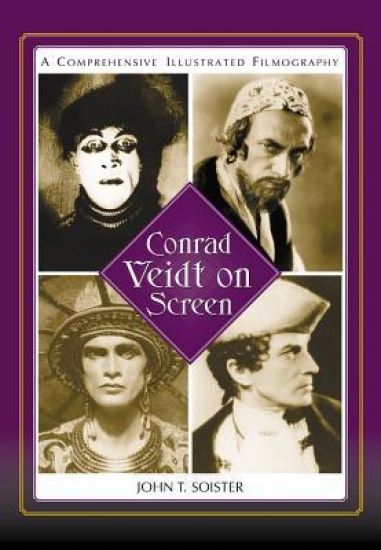
Conrad Veidt on Screen

Conrad Veidt on Screen

John T. Soister

McFarland Co Inc
2009
pokkari
Conrad Veidt, a native of Berlin, began acting in small parts as an extra until called into service during World War I. After his discharge he began a theater career that subsequently led to films and more than one turn as a director. This work thoroughly details Veidt's film career. It lists all movies that he was involved in and provides a synopsis, cast and crew, and reviews of each film. There are many photographs, a list of films that he is thought possibly to have been involved in, and an extensive bibliography.
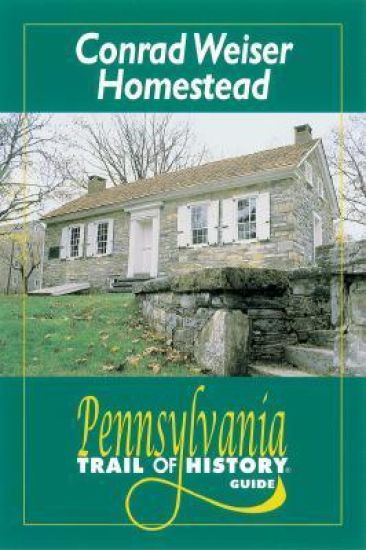
Conrad Weiser Homestead

Conrad Weiser Homestead

Bradley John

Stackpole Books
2001
nidottu
Conrad Weiser (1696-1760), was an interpreter of Indian languages who negotiated treaties between the proprietors of Pennsylvania and the Iroquois Confederacy and was responsible for keeping peace on the frontier for two decades. This guide provides a look at his life plus an armchair tour of Weiser's house and the homestead's buildings and memorials.
Conrad Aiken - American Writers 38

Conrad Aiken - American Writers 38

Denney Reuel

UNIVERSITY OF MINNESOTA PRESS
1964
nidottu
Conrad Aiken - American Writers 38 was first published in 1964. Minnesota Archive Editions uses digital technology to make long-unavailable books once again accessible, and are published unaltered from the original University of Minnesota Press editions.
Conrad's Models of Mind

Conrad's Models of Mind

Bruce Johnson

University of Minnesota Press
1971
nidottu
Conrad's Models of Mind was first published in 1971. Minnesota Archive Editions uses digital technology to make long-unavailable books once again accessible, and are published unaltered from the original University of Minnesota Press editions.In a new approach to understanding the psychological assumptions that lie behind the creation of a work of fiction, Professor Johnson analyzes a number of Joseph Conrad's novels and short stories, identifying and explaining Conrad's changing conceptions or models of mind. As he points out in his introduction: "Every writer makes assumptions about the nature of the mind, whether they may be elaborate theories, metaphors that seem simple but imply a great deal, downright beliefs, or vague gestalten. And such assumptions color his whole creation, the way his characters think and feel and react, possibly even his choice of subject matter."The author traces Conrad's steady progression away from deductive psychology, involving such entities as will, passion, ego, or sympathy, toward a flexible, and, for the period, new psychology that had implications for his entire development as a writer. Professor Johnson finds certain affinities between Conrad's models of mind and those of a number of other writers, among them, Schopenhauer, Sartre, and Pascal. He shows that one aspect of Conrad's psychology was closely allied to the Schopenhauerian concept of will but that when he wrote Lord Jim, Heart of Darkness, and Nostromo Conrad moved toward an existential concept of self-image and self-creation similar to Sartre's psychology in Being and Nothingness. Finally, Professor Johnson examines Conrad's novel The Rescue and shows how hopeless it was for Conrad to return to earlier conceptions of mind after he had explored the new existential models.
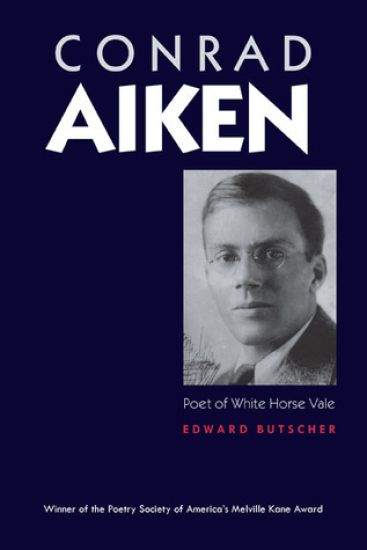
Conrad Aiken

Conrad Aiken

Edward Butscher

University of Georgia Press
2010
pokkari
The first of a planned two-volume biography, Conrad Aiken: Poet of White Horse Vale follows Aiken’s early life from his birth in 1889 to 1925 when he stood on the threshold of both nervous breakdown and poetic success. It was then that Aiken began to face his paradoxically idyllic and tragic Savannah childhood and to confront the events of February 27, 1901. On that day, the eleven-year-old Aiken heard gunshots punctuate a nightlong argument between his mother and father. Running into the next room, he discovered his mother murdered and his father dead by suicide.Sounding the deep reverberations of those events in Aiken’s mind, Edward Butscher follows the poet’s life and work as he sought to regain, in some permanent form, the idyll he had lost as a child. Butscher tells of Aiken’s determined efforts to gain recognition for his verse in the fevered cultural circuits of the early twentieth century—from his friendship, begun at Harvard, with T. S. Eliot, through frustrating excursions into the literary society of England and repeated trips on the poetic “trade route” from his home in Boston to Chicago and New York, to often sharp encounters with such powerful cultural barons as Ezra Pound, Amy Lowell, and Harriet Monroe. Hoping to build his reputation on a series of detached poetic “symphonies,” to keep depression from boiling over into madness and suicide, Aiken skirted the border of his deepest memories and fears—a border he would cross in the works that lay ahead.
Conrad's Heart of Darkness

Conrad's Heart of Darkness

Allan Simmons

Continuum International Publishing Group Ltd.
2007
sidottu
"Reader's Guides" provide a comprehensive starting point for any advanced student, giving an overview of the context, criticism and influence of key works. Each guide also offers students fresh critical insights and provides a practical introduction to close reading and to analysing literary language and form. They provide up-to-date, authoritative but accessible guides to the most commonly studied classic texts. Joseph Conrad's novella, "Heart of Darkness" (1902), is a key text in the development of modernism and one of the most important literary works of the early twentieth century. This guide provides an invaluable introduction to reading Conrad's "Heart of Darkness" and includes sections on its contexts, language and style, critical reception and literary and film adaptations, including Coppola's "Apocalypse Now", and finally an annotated guide to further reading.
Conrad's Heart of Darkness

Conrad's Heart of Darkness

Allan Simmons

Continuum International Publishing Group Ltd.
2007
nidottu
"Reader's Guides" provide a comprehensive starting point for any advanced student, giving an overview of the context, criticism and influence of key works. Each guide also offers students fresh critical insights and provides a practical introduction to close reading and to analysing literary language and form. They provide up-to-date, authoritative but accessible guides to the most commonly studied classic texts. Joseph Conrad's novella, "Heart of Darkness" (1902), is a key text in the development of modernism and one of the most important literary works of the early twentieth century. This guide provides an invaluable introduction to reading Conrad's "Heart of Darkness" and includes sections on its contexts, language and style, critical reception and literary and film adaptations, including Coppola's "Apocalypse Now", and finally an annotated guide to further reading.