

Kirjahaku
Etsi kirjoja tekijän nimen, kirjan nimen tai ISBN:n perusteella.
1000 tulosta hakusanalla Craig H. Bennett


Media Relations in Sport 5th Edition
Craig Esherick; Philip H Caskey; Brad Schulz
FITNESS INFORMATION TECHNOLOGY, INC, U.S.
2024
pokkari
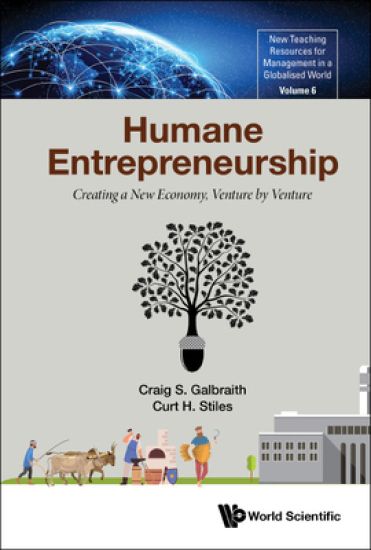
Humane Entrepreneurship: Creating A New Economy, Venture By Venture
Craig S Galbraith; Curt H Stiles
WORLD SCIENTIFIC PUBLISHING CO PTE LTD
2023
sidottu
This treatise defines humane to mean that which is natural to human beings. It then suggests that much of the economic activity and many of the structures of modern business are inhumane. In response to this possibility, the book examines the nature of the humane in society and business and reviews the literature, beliefs, and standards of human behavior that would lead to the growth of a truly humane economy. Questions are raised about the virtue of current structure and practice. A strikingly positive proposition underlies the critique: new entrepreneurial ventures are by their nature humane. The way to make the economy and the practice of business more humane is not to encourage a routinized script of business ethics but instead to permit entrepreneurs to follow their desire to create and to build. This desire is natural to human beings and therefore deeply humane.
A detailed, modern introduction to semiconductors made in silicon and III-V compounds. This book develops the device physics of pn junctions, bipolar transistors, Schottky barriers, MOS capacitors, and MOS field-effect transistors (MOSFETs). Basic concepts from quantum and statistical mechanics are used to describe electrons and holes in semiconductors. Figures and examples based on realistic device parameters are used to illustrate important concepts. The book uses spice tools to analyze complex devices. Design specifications are stressed in building or modeling complicated semiconductor devices.
Demographic Projection Techniques for Regions and Smaller Areas
H. Craig Davis
University of British Columbia Press
1995
pokkari
The ability to project population trends is of vital importance foranyone involved in planning -- in the public as well as the privatesector. This book provides the tools for making such projections anddiscusses four principal approaches: mathematical extrapolation,comparative methods, cohort survival and migration models. Following the introductory chapter, which considers the need anduses for population projections, the next two chapters are concernedwith mathematical extrapolation techniques, as they are the tools mostcommonly used to project the size of a population and are alsofrequently employed in projecting components of one or more of theother three approaches. In Chapter 3, the author outlines a four-step projection procedurewhich is used throughout the remainder of the book. Chapter 4 describeshow to project population size by comparing the growth pattern of thepopulation under study with that of another population. The nextchapter covers one of the most commonly employed techniques ofpopulation projection -- the cohort-survival model, which is used notonly to project the size of a population but also its composition interms of age and sex groupings. The final chapter focuses on migration,generally the most volatile component of the basic demographicsequation. Primarily written for courses in planning, this book is also usefulfor anyone having to make decisions affected by population trends,whether they involve planning for future growth or alerting localdecisionmakers to external uncertainties that could have a seriousimpact on the future of the community.
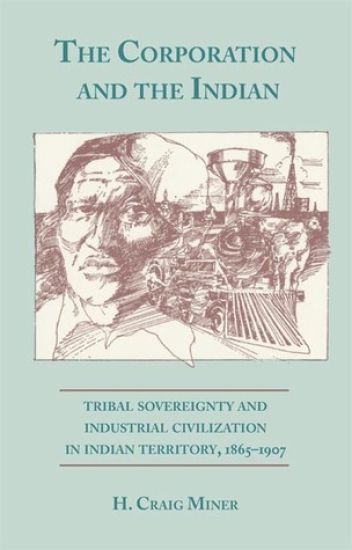
In 1865, Indian tribes could not know that in just over forty years their greatest natural possession, their tribal lands, would be largely controlled by powerful contenders for their riches, American corporations. Significant as those tangible losses were, the Indian tribes parted with an even more valuable possession, their tribal sovereignty.H. Craig Miner explains that once the large and powerful railway, livestock, coal, and oil companies realized the potential of Indian Territory, they sought to enter the area and utilize its natural resources. The tribes, plagued by a lack of unified purpose, saw their losses occur before any effective protection procedure could be established. Because many whites married to Indians and mixed-blood members of the tribes were concerned with their own financial development, their decisions were of long term benefit to the corporations.In this unique, pioneering study, Miner reinforces his argument that Indian-white coexistence through market negotiation was thought by both sides to be possible in 1865. Each side had things the other wanted, and there was no sympathy for taking Indian property by military force. Yet the history of relations between the corporation and the Indian became a history of increasing political intervention to enforce various abstract solutions to the ""Indian Question.''The Corporation and the Indian leaves the strong impression that, while the Indians might have done no better had their own stratagems in dealing with American corporations been allowed to develop more freely, they hardly could have done any worse.
Salem County, New Jersey Wills, 1831-1860. Vol. #2: (Recorded in the Office of the Surrogate at Salem, New Jersey)
H. Stanley Craig
Southern Historical Press
2018
nidottu
By: Stanley Craig, Pub. 1932 Reprinted 2019, 202 pages, Index, ISBN #0-89308-727-0.Salem County was created in 1694 from the Salem Tenth. It is located on the southwestern side of the state boarding the Delaware River. Settlers from England were showing up to this area and settling both sides of the Delaware River as early as the 17th century. Wills are one of the go to records or research tools that the family historian love to get their hands on due to the various family members being mentioned within. These records cover the time frame 1831-1860 and picks up where the first volume ends with its years covering 1804-1830.
Developing Semantic Web Services is "well-informed about work on WS [Web Services] and the SemWeb [Semantic Web], and in particular . . . understand[s] OWL-S . . . very well . . .. Also, the book . . . fill[s] a need that, to my knowledge, hasn't been met at all." ---David Martin, editor OWL-S Coalition The inventor of the World Wide Web, Tim Berners-Lee, is also the originator of the next generation Web architecture, the Semantic Web. Currently, his World Wide Web consortium (W3C) team works to develop, extend, and standardize the Web's markup languages and tools. The objective of the Semantic Web Architecture is to provide a knowledge representation of linked data in order to allow machine processing on a global scale. The W3C has developed a new generation of open standard markup languages which are now poised to unleash the power, flexibility, and above all---logic---of the next generation Web, as well as open the door to the next generation of Web Services. There are many ways in which the two areas of Web Services and the Semantic Web could interact to lead to the further development of Semantic Web Services. Berners-Lee has suggested that both of these technologies would benefit from integration that would combine the Semantic Web's meaningful content with Web Services' business logic. Areas such as UDDI and WSDL are ideally suited to be implemented using Semantic Web technology. In addition, SOAP could use RDF payloads, remote RDF query and updates, and interact with Semantic Web business rules engines, thereby laying the foundation for Semantic Web Services. This book presents the complete Language Pyramid of Web markup languages, including Resource Description Framework (RDF), Web Ontology Language (OWL) and OWL-Services (OWL-S) along with examples and software demos. The source code for the "Semantic Web Author," an Integrated Development Environment for Semantic Markup Languages is available on CD-ROM with the book.
Developing Semantic Web Services is "well-informed about work on WS [Web Services] and the SemWeb [Semantic Web], and in particular . . . understand[s] OWL-S . . . very well . . .. Also, the book . . . fill[s] a need that, to my knowledge, hasn't been met at all." ---David Martin, editor OWL-S Coalition The inventor of the World Wide Web, Tim Berners-Lee, is also the originator of the next generation Web architecture, the Semantic Web. Currently, his World Wide Web consortium (W3C) team works to develop, extend, and standardize the Web's markup languages and tools. The objective of the Semantic Web Architecture is to provide a knowledge representation of linked data in order to allow machine processing on a global scale. The W3C has developed a new generation of open standard markup languages which are now poised to unleash the power, flexibility, and above all---logic---of the next generation Web, as well as open the door to the next generation of Web Services. There are many ways in which the two areas of Web Services and the Semantic Web could interact to lead to the further development of Semantic Web Services. Berners-Lee has suggested that both of these technologies would benefit from integration that would combine the Semantic Web's meaningful content with Web Services' business logic. Areas such as UDDI and WSDL are ideally suited to be implemented using Semantic Web technology. In addition, SOAP could use RDF payloads, remote RDF query and updates, and interact with Semantic Web business rules engines, thereby laying the foundation for Semantic Web Services. This book presents the complete Language Pyramid of Web markup languages, including Resource Description Framework (RDF), Web Ontology Language (OWL) and OWL-Services (OWL-S) along with examples and software demos. The source code for the "Semantic Web Author," an Integrated Development Environment for Semantic Markup Languages is available on CD-ROM with the book.
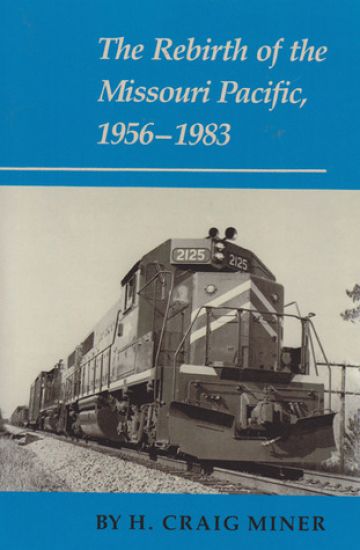
The Rebirth of the Missouri Pacific, 1956-1983
H. Craig Miner
Texas A M University Press
2000
nidottu
In 1956, the era of tail-finned cars and nineteen-cents-a-gallon gasoline, the Missouri Pacific Railroad emerged on the corporate scene as a private company after twenty-three years in a receivership. In its past lay a collapsed rail empire, a sensational bankruptcy struggle that shattered dreams and betrayed trusts, an emotional battle over stockholders' interests, and the flamboyant maneuvers of the railroad's overseers. In its future lay two computerized, merger-dominated decades in which the railroad business would serve as a classic example of a tradition-bound industry forced to adapt to "future shock." The transition from crippled line to prime property would become, as one politician later put it, "a lawyers' paradise, and a security-holders' nightmare." H. Craig Miner, using a wealth of oral and written primary sources, with the cooperation of the company and complete access to records and personnel, describes and critically analyzes, the physical and financial revolution of the Missouri Pacific.
Genealogical Data, The Salem Tenth in West New Jersey
H. Stanley Craig
Southern Historical Press
2022
nidottu
By: H. Stanley Craig, Pub. 1926, reprinted 2022, 100 pages, Index, ISBN #978-1-63914-038-1.The Salem Tenth encompassed approximately 350 square miles in the Southwestern part of the state which includes present day Salem and Cumberland Counties. It was founded by a Quaker named John Fenwick in 1665. This was the first English settlement established in west portion of the state of New Jersey following the English defeat of the Dutch in 1664. It had become the first Quaker colony in North America, predating any settlements in Philadelphia. In 1665, John Fenwick was involved in a financial dispute when acquiring these lands from Lord Berkeley. Lord Berkeley had also sold lands to Edward Billinge in New Jersey. The final outcome of the dispute was that for financial considerations Fenwick was granted a tenth of West Jersey.
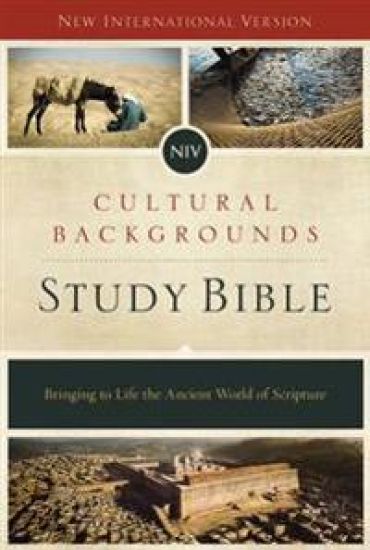
2017 ECPA BIBLE OF THE YEAR RECIPIENT"How I wish someone had put a book like this into my hands 50 years ago." - N.T. Wright, Research Professor of New Testament and Early Christianity, University of St. Andrews, Scotland"I cannot recommend a study Bible any more than this one: Five stars!" - Scot McKnight, Julius R. Mantey Professor of New Testament, Northern SeminaryCONTEXT CHANGES EVERYTHINGYou've heard many Bible stories hundreds of times, but how many behind-the-scenes details are you missing? Sometimes a little context is all you need to discover the rich meaning behind the stories of Scripture.That's what the NIV Cultural Backgrounds Study Bible provides. Every page is packed with expert insight into the customs, culture, and literature of Bible times. These fascinating explanations will serve to clarify your study of the Scriptures, reinforcing your confidence and bringing difficult passages of Scripture into sharp focus.Discover new dimensions of insight to even the most familiar Bible passages as you take a behind-the-scenes tour into the ancient world.The Bible was originally written to an ancient people removed from us by thousands of years and thousands of miles. The Scriptures include subtle culturally based nuances, undertones, and references to ancient events, literature and customs that were intuitively understood by those who first heard the Scriptures read. For us to hear the Scriptures as they did, we need a window into their world.The NIV Cultural Backgrounds Study Bible, with notes from Dr. John H. Walton (Wheaton College) in the Old Testament and Dr. Craig S. Keener (Asbury Theological Seminary) in the New Testament, brings to life the ancient world of Scripture for modern readers. Features: The full text of the NIVTargeted book introductions explain the context in which each book of the Bible was writtenInsightful and informative verse-by-verse study notes reveal new dimensions of insight to even the most familiar passagesKey Old Testament (Hebrew) and New Testament terms are explained and expanded upon in two helpful reference featuresOver 300 in-depth articles on key contextual topics375 full-color photos, illustrations, and images from around the worldDozens of charts, maps, and diagrams in vivid colorWords of Jesus in redAdditional study Bible tools: cross references, a concordance, indexes and other helps

Muller and Kirk's Small Animal Dermatology
William H. Miller; Craig E. Griffin; Karen L. Campbell
Elsevier Science Publishing Co Inc
2024
sidottu
Exploring Zynq MPSoC
Louise H Crockett; David Northcote; Craig Ramsay
Strathclyde Academic Media
2019
pokkari

Exploring Zynq MPSoC
Crockett H Louise; Northcote David; Ramsay Craig
Strathclyde Academic Media
2019
sidottu

Muller and Kirk's Small Animal Dermatology
William H. Miller; Craig E. Griffin; Karen L. Campbell
W B Saunders Co Ltd
2012
sidottu
Covering the diagnosis and treatment of hundreds of dermatologic conditions, Muller and Kirk's Small Animal Dermatology, 7th Edition is today's leading reference on dermatology for dogs, cats, and pocket pets. Topics include clinical signs, etiology, and pathogenesis of dermatologic conditions including fungal, parasitic, metabolic, nutritional, environmental, and psychogenic. This edition includes full updates of all 21 chapters, and more than 1,300 full-color clinical, microscopic, and histopathologic images. Written by veterinary experts William Miller, Craig Griffin, and Karen Campbell, this resource helps students and clinicians distinguish clinical characteristics and variations of normal and abnormal facilitating accurate diagnosis and effective therapy. Over 1,300 high-quality color images clearly depict the clinical features of hundreds of dermatologic disorders, helping to ensure accurate diagnoses and facilitating effective treatment. Comprehensive coverage includes environmental, nutritional, behavioral, hereditary, and immune-mediated diseases and disorders. Well-organized, thoroughly referenced format makes it easy to access information on skin diseases in dogs, cats, and exotic pets. UPDATES of all 21 chapters include the most current dermatologic information. NEW editors and contributors add new insight and a fresh perspective to this edition.

International Law, 3/e
John H. Currie; Craig Forcese; Joanna Harrington; Valerie Oosterveld
IRWIN LAW INC
2022
pokkari