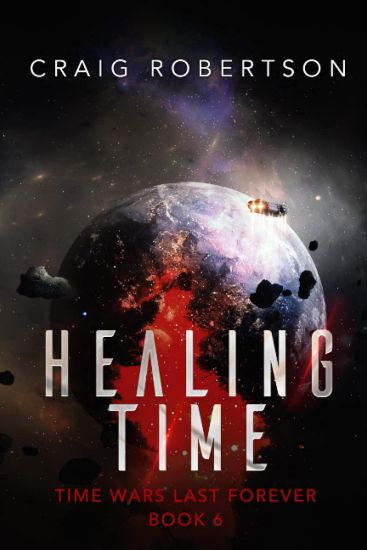
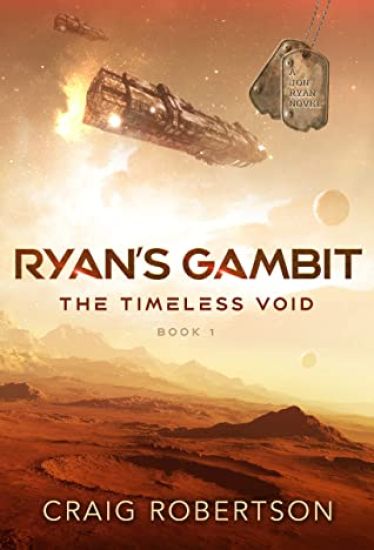
Time is literally running out for Jon and his team. He is armed with only a vague set of instructions from Time as to how the Earth can be resurrected. The worst part is there is no way to know if such a miracle can even be achieved. Time told Jon specifically that what he was attempting had never been done. Then again, that type of dire warning has never discouraged Jon in the past. The dude's practically worryproof.The odds against humankind could not be longer. The clan's leader, the time maker, is still avoiding a confrontation with Sachiko's powerful time ship, Aramthella. And the sociopathic security forces of the Brother-Sisterhood of Time are unrelenting in their pursuit of Jon and his crew. They are able to come at him from the past, present, and future. Not only that, but the inquisitors have a technology that allows them to return to an earlier time in their own lives. So even if Jon kills them, they will never stay dead. How can he dream of defeating them?Working with the alien creature Plesmus, Jon must forge a set of markers to function as a framework for Earth to be reanimated. But there are no precedents or blueprints available to guide him. Jon must achieve the impossible entirely on his own, yet again. How many times can he go to that well and have the good fortune of drawing water? His luck is bound to run out sooner or later. May it'll be today...Join Jon Ryan as the adventure of Time Wars Last Forever draws to its tumultuous conclusion. Spoiler alert: You'll likely fall off the edge of your seat, so be ready
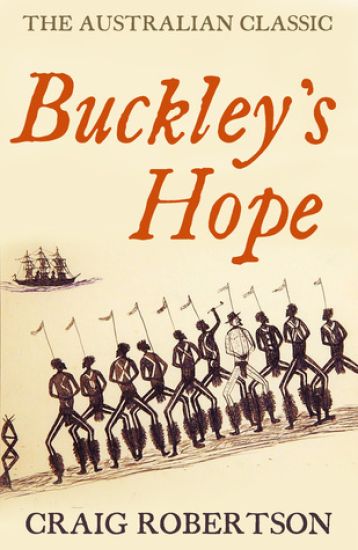
Buckley’s Hope is based on the true story of a young English convict named William Buckley who, on Boxing Day 1803, escaped from an abortive first settlement in Victoria, Australia, and then survived in the wilderness for 32 years, after he was adopted and helped by local Aboriginal tribes. In 1835, Buckley emerged with his tribal friends to meet Melbourne’s founders, and quickly became an important guide and interpreter in the crucial first years of the European conquest of the Port Phillip region. Suddenly, trapped in the rapidly ensuing conflict between two vastly different societies, Buckley found himself mistrusted by his former black friends and by his white compatriots. He was so harshly reviled that his reputation has suffered to this day. With great sensitivity, and based on meticulous research, Craig Robertson has re-created the fateful encounter between Australia’s ‘wild white man’ and the original inhabitants of the Australian continent. Remarkably, through Buckley’s eyes we can see how much was at stake and how much was lost when two worlds collided.
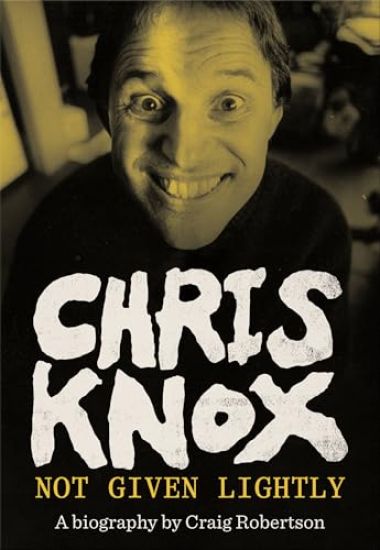
‘I’ve got things I can’t recall Like the colours of my bedroom wall Oh, I can’t decide if I Want to know these things or why They bother me and tantalise me so’ — from ‘I’ve Left Memories Behind’ In the mid-1990s, the Village Voice described Chris Knox as ‘indie rock’s premier oddball singer songwriter’ and, when Knox suffered a stroke a decade later, music icons such as Yo La Tengo, Bill Callahan, Neil Finn and Shayne Carter all showed up for concerts and a tribute album. Who is this epileptic, opinionated, shorts-and-jandals-wearing, endlessly creative musician and artist from New Zealand? This is his story – from a childhood in ‘flat, rectangular and boring’ Invercargill to years of creative experimentation in Dunedin to family life in Auckland; from The Enemy’s first gig at Dunedin’s Beneficiaries Hall to Toy Love’s tour of Australia and on to Tall Dwarfs’ escapades around the globe; from tape loops and crashing cutlery recorded on a TEAC 4-track to the biting satire of Jesus on a Stick comics and Listener opinion pieces; and from home-recorded LPs delivered by hand to the ubiquitous voice on ads for Vogels and Heineken. Chris Knox: Not Given Lightly tells the story of one extraordinarily creative man’s journey from the obscurity of punk rock to the heart of New Zealand culture. ‘Then again, all the time, every minute, neverending, unrelenting, all around us, without pausing, endless endless, all-pervading, movement motion, this way that way, ticktock, freefall, love love, kiss kiss, make do be is was I me b c d e f g h I think nothing’s going to happen.’ — from ‘Nothing’s Going to Happen’
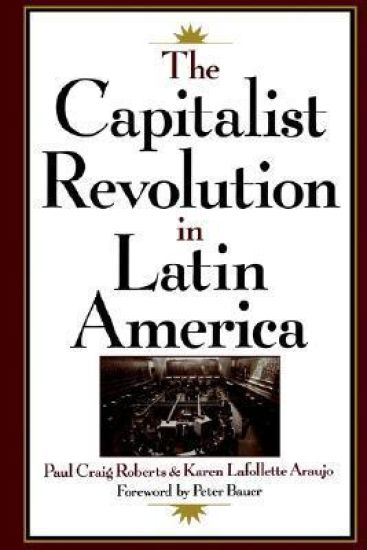
The political and social upheavals that have transformed the economies of Eastern Europe and the former Soviet Union during the past ten years have sparked considerable interest and speculation on the part of Western observers. Less noted, though hardly less dramatic, has been the revolutionary spread of free market capitalism throughout much of Latin America during the same period. In a wide-ranging survey that illuminates both the history and present business climate of the region, Paul Roberts and Karen Araujo describe the economic transformation currently taking place in Latin America. And as they do so, they also reexamine many of the prevailing orthodoxies concerning international development and the regulation of markets, and point to the success of privatization and free enterprise in Mexico, Argentina, and Chile as harbingers of the economic future for both hemispheres. The potential strength of the economies of Central and South America has always been obvious, the authors point out. Abundant natural resources, combined with vast expanses of fertile land and a sophisticated and relatively cohesive social culture, are found throughout the region. But the authors show that the Latin American nations were slow to discard the economic and social climate that they had inherited from their Spanish colonial masters, who had ruled by selling government jobs--creating a network of privilege--and by suppressing through over-regulation the development of markets for goods, services, and capital. The prevalent cultural attitude in Latin America was hostile to commerce, trade, and work--indeed, it was more socially acceptable to court government privilege than to compete in markets. The authors further show that U.S. aid packages to the region actually reinforced this culture of privilege and further hampered the growth of a free economy. Not until the 1980s did the picture begin to change, largely in response to the economic crises brought on through catastrophic national debts and hyperinflation. The book describes the efforts of the Salinas, Pinochet, and Menem governments to combat the established interests of the local elites and the international development agencies, to privatized state industries, and to established independent markets. In this new climate, private capitalists and entrepreneurs are feted and celebrated, and productivity has risen to levels unimagined only a few years before. But this dramatic economic turnaround, the authors show, is a mixed blessing for the U.S. For if it provides us with a vast new market for our goods, it has also created a powerful new competitor for capital investment. To keep American and foreign capitalists investing in America, the government needs to make changes, which the authors outline in a provocative conclusion. Central and South America have a combined population of 460 million people, a potential market greater than the United States and Canada combined or the European Community. Thus the rise of free market capitalism in Latin America is of vital interest to the United States. The Capitalist Revolution in Latin America provides an insightful portrait of this dramatic economic turn-around, illuminating the economic consequences for our own society.
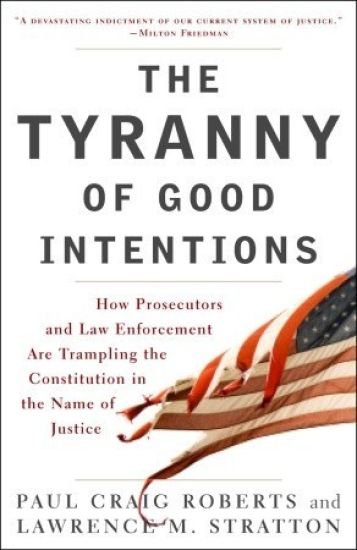
In this updated and expanded edition of The Tyranny of Good Intentions, Paul Craig Roberts and Lawrence M. Stratton renew their valiant campaign to reclaim that which is rightly ours-liberty protected by the rule of law. They show how crusading legislators and unfair prosecutors are remaking American law into a weapon wielded by the government and how the erosion of the legal principles we hold dear-such as habeas corpus and the prohibition against self-incrimination-is destroying the presumption of innocence. A new introduction and new chapters cover recent marquee cases and make this provocative book essential reading for anyone who cringes at the thought of unbridled state power and sees our civil liberties slowly slipping away in the name of the War on Drugs, the War on Crime, and the War on Terror.
This collection of Paul Craig Roberts essays explores the extreme dangers in Washington's imposition of vassalage on other countries and Washington's resurrection of distrust among nuclear powers, the very distrust that Reagan and Gorbachev worked to eliminate. Roberts explains how the collapse of the Soviet Union in 1991 removed the only check on Washington's ability to act unilaterally. The United States' position as the sole remaining superpower led to the euphoric proclamation of "the end of history" and to Washington's presumption of the victory of "American democratic-capitalism" over all other systems. The neoconservatives became entrenched in successive American administrations, both Republican and Democratic. Their ideology of US global hegemony, the doctrine that no other power will be allowed to arise that could constrain US unilateral action, has become a foundational premise of US foreign policy and has led to reckless intervention in Ukraine and an irresponsible assault on Russian national interest. In pursuit of hegemony, Washington has expanded NATO to Russia's border, instigated "colour revolutions" in former constituent parts of the Soviet Union, announced a "pivot to Asia" to encircle China, orchestrated a coup in Ukraine, demonized Putin, and imposed warlike sanctions against Russia. These reckless and irresponsible actions have brought back the risk of nuclear war. This succession of events has impelled Roberts, following an illustrious career in government, journalism and academia, to perform the clarifying function abandoned by the mainstream media of examining the agendas at work and the risks entailed. His insightful commentary is followed all over the world. In February 2015, Roberts was invited to address a major International conference in Moscow hosted by Institutes of the Russian Academy of Sciences and Moscow State Institute of International Relations, where he delivered the address which is the title of this book. In Roberts' assessment, Washington's drive for hegemony is not only unnecessary but unrealistic and filled with peril for the world at large. This book is a call to awareness that ignorance and propaganda are leading the world toward unspeakable disaster.
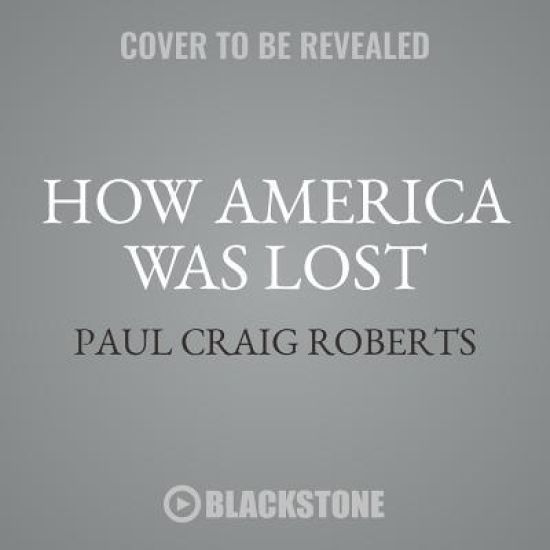
Even as the view of America as a rogue state consolidates abroad, Americans appear largely bystanders at the spectacle of their government running amok. People forget the myriad instances of their government's flouting of the Constitution and international legal norms--if they were ever aware of them in the first place--accepting to live in the increasingly pernicious "new normal" with little protest.This remarkable anthology of columns documents and reminds us of the extraordinary developments that, in their accumulation, have led to the destruction of accountable and moral government in the United States.Few American commentators have cut more clearly through the deepening deceit, hypocrisy, and outright criminality that has infested official Washington since 9/11 than Paul Craig Roberts. His scathing critique sheds much-needed light on the country's impending nightmare--economic collapse, internal repression, ongoing wars, and rising rejection by friends and foes alike.How America Was Lost marks Roberts as one of the most prescient and courageous moral commentators in America today.America's fate was sealed when the public and the antiwar movement bought the government's 9/11 conspiracy theory. The government's account of 9/11 is contradicted by much evidence. Nevertheless, this defining event of our time, which has launched the United States on interminable wars of aggression and a domestic police state, is a taboo topic for investigation in the media. It is pointless to complain of war and a police state when one accepts the premise upon which they are based.These trillion-dollar wars have created financing problems for Washington's deficits and threaten the US dollar's role as world reserve currency. The wars and the pressure that the budget deficits placed on the dollar's value have put Social Security and Medicare on the chopping block. Former Goldman Sachs chairman and US Treasury Secretary Hank Paulson is after these protections for the elderly. Fed chairman Bernanke is also after them. The Republicans are after them as well. These protections are called "entitlements" as if they are some sort of welfare that people have not paid for in payroll taxes all their working lives.With over 21 percent unemployment as measured by the methodology of 1980, with American jobs, GDP, and technology having been given to China and India, with war being Washington's greatest commitment, with the dollar overburdened with debt, with civil liberty sacrificed to the "war on terror," the liberty and prosperity of the American people have been thrown into the trash bin of history.The militarism of the US and Israeli states, and Wall Street and corporate greed, will now run their course.
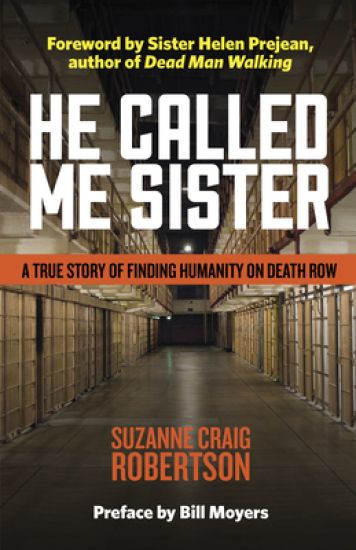
Deeply poignant and astonishingly personal, this “moving story of a death in Tennessee” (Bill Moyers) shows hope can endure, grace can redeem, and humanity can exist—even in the darkest of placesIt was a clash of race, privilege, and circumstance when Alan Robertson first signed up through a church program to visit Cecil Johnson on Death Row, to offer friendship and compassion. Alan's wife Suzanne had no intention of being involved, but slowly, through phone calls and letters, she began to empathize and understand him. That Cecil and Suzanne eventually became such close friends—a white middle-class woman and a Black man who grew up devoid of advantage—is a testament to perseverance, forgiveness, and love, but also to the notion that differences don’t have to be barriers.This book recounts a fifteen-year friendship and how trust and compassion were forged despite the difficult circumstances, and how Cecil ended up ministering more to Suzanne’s family than they did to him. The story details how Cecil maintained inexplicable joy and hope despite the tragic events of his life and how Suzanne, Alan, and their two daughters opened their hearts to a man convicted of murder. Cecil Johnson was executed Dec. 2, 2009.
What are the benefits of owning a dog on health and well-being? Why does a problem dog behave as it does and how can owners deal with unwanted behaviour? How do dogs communicate with humans and each other? The Psychology of Dog Ownership explores the nature of our unique relationship with dogs and its effect on our mental and physical welfare. The book uses psychological learning theory to examine dog behaviour and highlights the importance of determining between typical dog behaviour and behaviour disorders that need treatment. Focusing on how dog owners can communicate effectively with their pets, and always with the dogsbest interests in mind, The Psychology of Dog Ownership enhances our understanding of the modern human-canine bond and shows how important and enjoyable this relationship can be.
What are the benefits of owning a dog on health and well-being? Why does a problem dog behave as it does and how can owners deal with unwanted behaviour? How do dogs communicate with humans and each other? The Psychology of Dog Ownership explores the nature of our unique relationship with dogs and its effect on our mental and physical welfare. The book uses psychological learning theory to examine dog behaviour and highlights the importance of determining between typical dog behaviour and behaviour disorders that need treatment. Focusing on how dog owners can communicate effectively with their pets, and always with the dogsbest interests in mind, The Psychology of Dog Ownership enhances our understanding of the modern human-canine bond and shows how important and enjoyable this relationship can be.
Now in its second edition, An Introduction to Psychology for Health Carers provides an accessible grounding for all nursing and health care students who have little previous experience of studying psychology, but who within their first year courses need to quickly understand how psychological research and theory is invaluable in interpreting, explaining and actively influencing clinical practice. As a discipline, Psychology makes an important contribution to health care practitioners’ understanding of health and health promotion, treatment, stress, pain, emotion, bereavement and loss. This engaging text introduces basic psychological concepts and techniques and applies them directly to nursing, encouraging all health care students to make the most of their experiences in the practice environment, to learn from these, and to become a reflective, psychologically-informed practitioner.
Mardi Gras in Mobile began its carnival celebration years before the city of New Orleans was founded. In the 1700s, mystic societies formed in Mobile, such as the Societe de Saint Louis, believed to be the first in the New World. These curious organizations brought old-world traditions as they held celebrations like parades and balls with themes like Scandinavian mythology and the dream of Pythagoras. Today, more than 800,000 people annually take in the sights, sounds and attractions of the celebration. Historian and preservationist L. Craig Roberts, through extensive research and interviews, explores the captivating and charismatic history of Mardi Gras in the Port City.
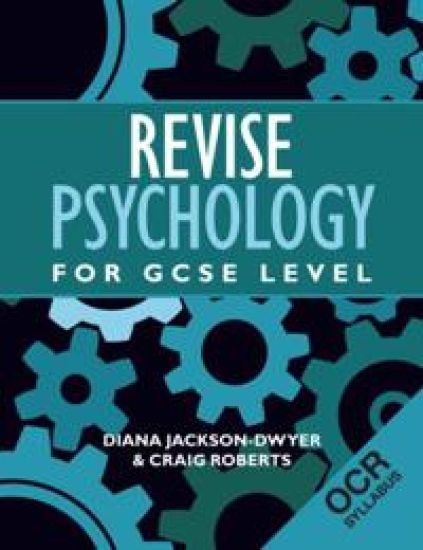
This is a comprehensive student revision guide for those taking the GCSE OCR Psychology exam. It summarises the specification material clearly and attractively, enabling students to easily digest and retain the information.Packed full of revision tips and techniques, the book includes a number of unique and helpful features: Overviews of the OCR specification content Summaries of the major research studies Practical and innovative suggestions for revision techniques at the end of each chapter Example exam questions and model answers A separate chapter dedicated to preparing for the exam, giving practical advice on getting organised, techniques for maximising revision time, and advice on structuring exam time appropriately for optimum performance A comprehensive glossary of important terms and their definitions, to aid understanding of the material. Revise Psychology for GCSE Level gives excellent guidance, not only on how to pass the exam, but also on how to avoid the panic and pitfalls that so many students face at exam time. Although a companion to the bestselling Psychology for GCSE Level, 2nd edition by Dwyer and Roberts, this revision guide can be used alongside any GCSE psychology textbook.
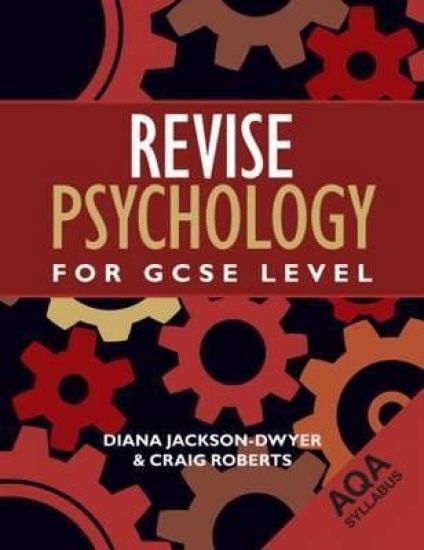
This is a comprehensive student revision guide for those taking the GCSE AQA Psychology exam. It summarises the specification material clearly and attractively, enabling students to easily digest and retain the information.Packed full of revision tips and techniques, the book includes a number of unique and helpful features: Overviews of the AQA specification content Summaries of the major research studies Practical and innovative suggestions for revision techniques at the end of each chapter Example exam questions and model answers A separate chapter dedicated to preparing for the exam, giving practical advice on getting organised, techniques for maximising revision time, and advice on structuring exam time appropriately for optimum performance A comprehensive glossary of important terms and their definitions, to aid understanding of the material. Revise Psychology for GCSE Level gives excellent guidance, not only on how to pass the exam, but also on how to avoid the panic and pitfalls that so many students face at exam time. Although a companion to the bestselling Psychology for GCSE Level, 2nd edition by Dwyer and Roberts, this revision guide can be used alongside any GCSE psychology textbook.