Title: A History of England, principally in the seventeenth century. Translated from the German by C. W. Boase, W. W. Jackson, H. B. George, H. F. Pelham, M. Creighton, A. Watson, G. W. Kitchin and A. Plummer. Edited by C. W. Boase and G. W. Kitchin.]Publisher: British Library, Historical Print EditionsThe British Library is the national library of the United Kingdom. It is one of the world's largest research libraries holding over 150 million items in all known languages and formats: books, journals, newspapers, sound recordings, patents, maps, stamps, prints and much more. Its collections include around 14 million books, along with substantial additional collections of manuscripts and historical items dating back as far as 300 BC.The HISTORY OF BRITAIN & IRELAND collection includes books from the British Library digitised by Microsoft. As well as historical works, this collection includes geographies, travelogues, and titles covering periods of competition and cooperation among the people of Great Britain and Ireland. Works also explore the countries' relations with France, Germany, the Low Countries, Denmark, and Scandinavia. ++++The below data was compiled from various identification fields in the bibliographic record of this title. This data is provided as an additional tool in helping to insure edition identification: ++++ British Library Ranke, Leopold; Boase, Charles; 1875. 6 vol.; 8 . 9503.aaaa.1.
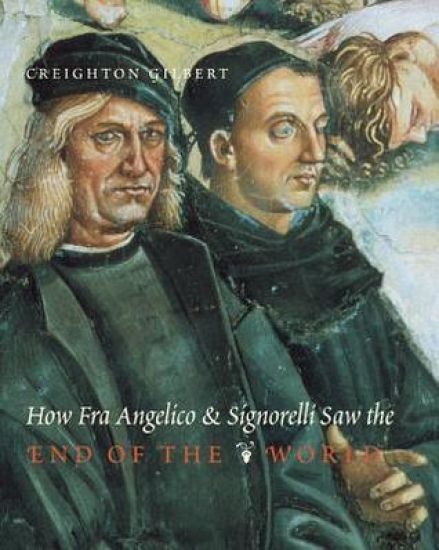
The frescoes of the Cappella Nuova in the Cathedral of Orvieto have fascinated visitors from Michelangelo to Freud and Czelaw Milosz because of their dramatic portrayal of the end of the world and the Last Judgment. Creighton Gilbert’s study draws on previously overlooked documents to explain the commissioning of this extraordinary cycle of paintings, begun by Fra Angelico in the early 1400s and completed a half-century later by Luca Signorelli. In contrast to most other art historians, who ascribe the iconographic and formal structure of the paintings to Signorelli, Gilbert contends that his predecessor, Fra Angelico, devised the entire program of decoration. Gilbert also situates the cycle in the contexts of liturgical practice, humanistic studies, and the rich body of texts and images shaping the Renaissance conception of the coming of the Antichrist and the world’s final moments.How Fra Angelico and Signorelli Saw the End of the World examines every element in the Cappella Nuova’s architecture and complex decoration, which not only represents the coming of the Antichrist, the end of the world, and the Last Judgment but also, on a high dado, features portraits of Dante and other poets, scenes from their texts, and sinuous grotesque ornament. Although Dante’s likeness has long been recognized, Gilbert is the first scholar to establish that his great epic, The Divine Comedy, exerted a profound influence on the Chapel’s iconographic program.
In the summer of 1863, as Union and Confederate armies converged on southern Pennsylvania, the town of Gettysburg found itself thrust onto the centre stage of war. The three days of fighting that ensued decisively turned the tide of the Civil War. In The colours of Courage , Margaret Creighton narrates the tale of this crucial battle from the viewpoint of three unsung groups- women, immigrants, and African Americans- and reveals how wide the conflict's dimensions were. A historian with a superb flair for storytelling, Creighton draws on memoirs, letters, diaries, and newspapers to bring to life the individuals at the heart of her narrative. The colours of Courage is a stunningly fluid work of original history-one that redefines the Civil War's most remarkable battle.
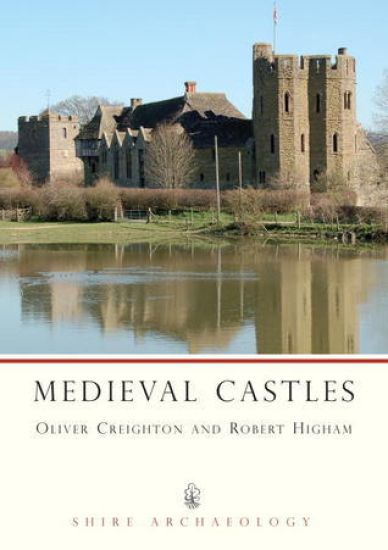
Castles were among the most dramatic features of the medieval landscapes of Europe and are still often dominant elements of our surroundings. They have been an enduring subject of fascination for professional and amateur alike for well over a century. This book offers an accessible and portable guide to the archaeology and architecture of castles in England and Wales, an area whose castles had some common developments in the medieval period and which now provides numerous and rich sites for both study and visit. A particular quality of the book is that it approaches the subject from a variety of perspectives. Architectural aspects of masonry castles are examined, as are the remains of earth and timber sites. Throughout, attention is given to the social and domestic, as well as to the military significance of castles and the aspirations of their builders. The authors explore many recent and exciting developments in the field of castles studies. The contribution of landscape history to the study of castles in their wider contexts is highlighted, as are innovative ways of analysing the fabric of masonry castles and the social messages which they contain. Finally, emphasis is given to the new light cats by archaeological excavation on the enigmatic timber castles that were such common features of the medieval world.
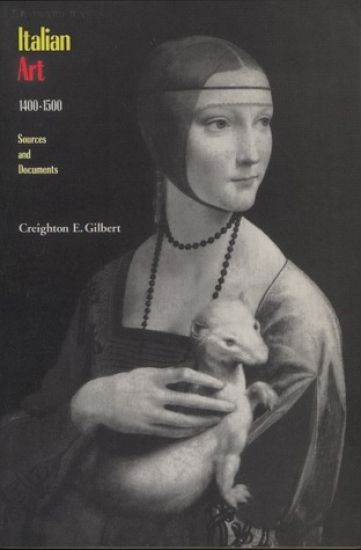
Creighton E. Gilbert captures the spirit of the early Renaissance in this remarkable collection of primary texts by and about artists of the fifteenth century. Italian Art makes a valuable contribution not only to the field of art history, but also to social and intellectual history. Almost all aspects of the life of the period—war, fashion, travel, communication—are documented. Revealing significant aspects of the practice of art, the process of patronage, and the way of life and social position of early Renaissance artists, Italian Art brings this fascinating period to life for students and scholars.